New paper out in Oikos: 15 years of bird monitoring in agricultural landscapes show declining functional diversity and clear functional clustering, while species richness has increased. How are communities' traits changing? What is the effect of land use?
https://t.co/T4a4RMhv5T
We’ve officially kicked off #ECR2025 here in L’Aquila! President (Michela Pacifici) and Vice President (Lisa Tedeschi), together with our Segretary (Michele Lussu), took the stage to open the conference. Exciting days ahead!🔜
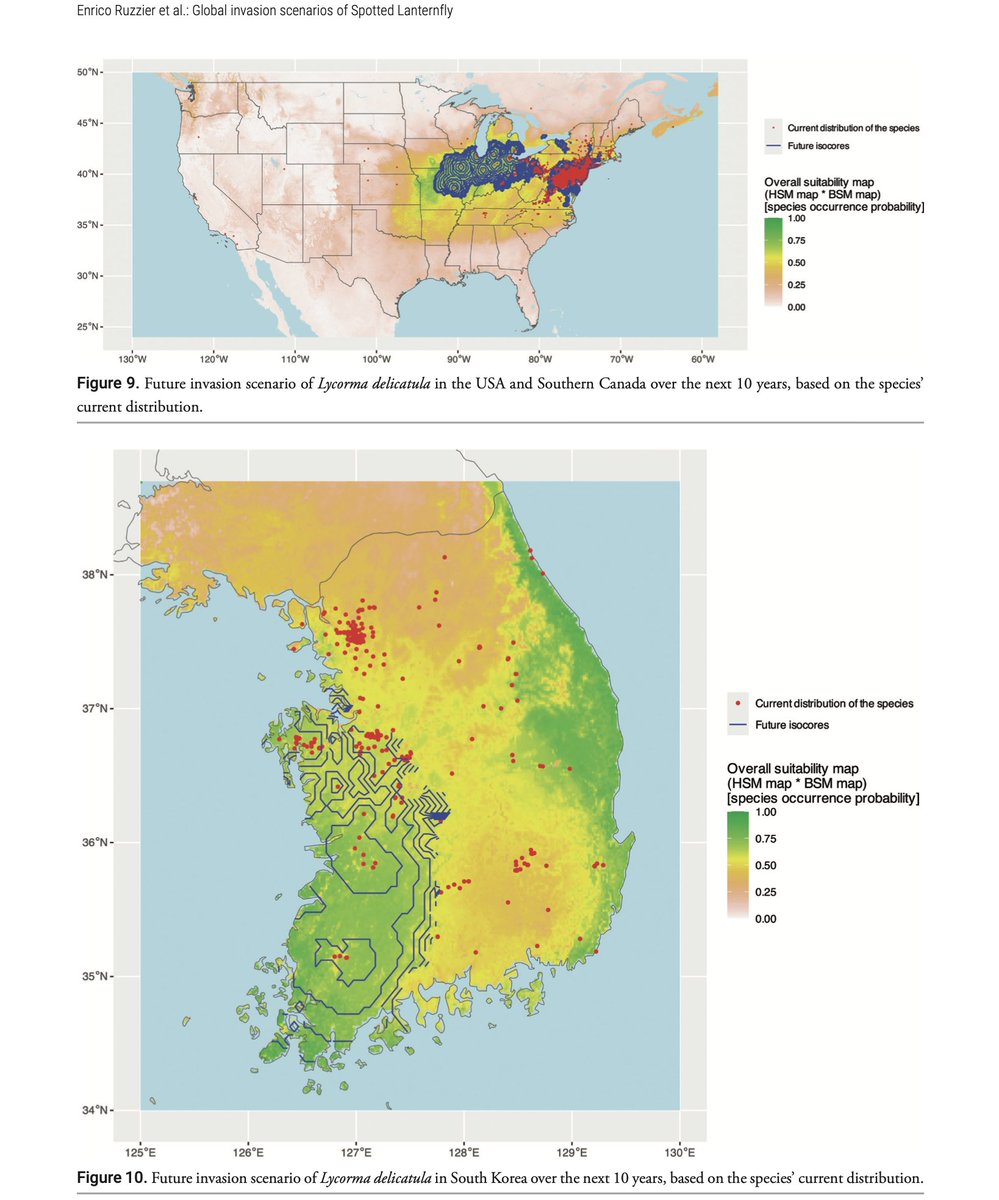
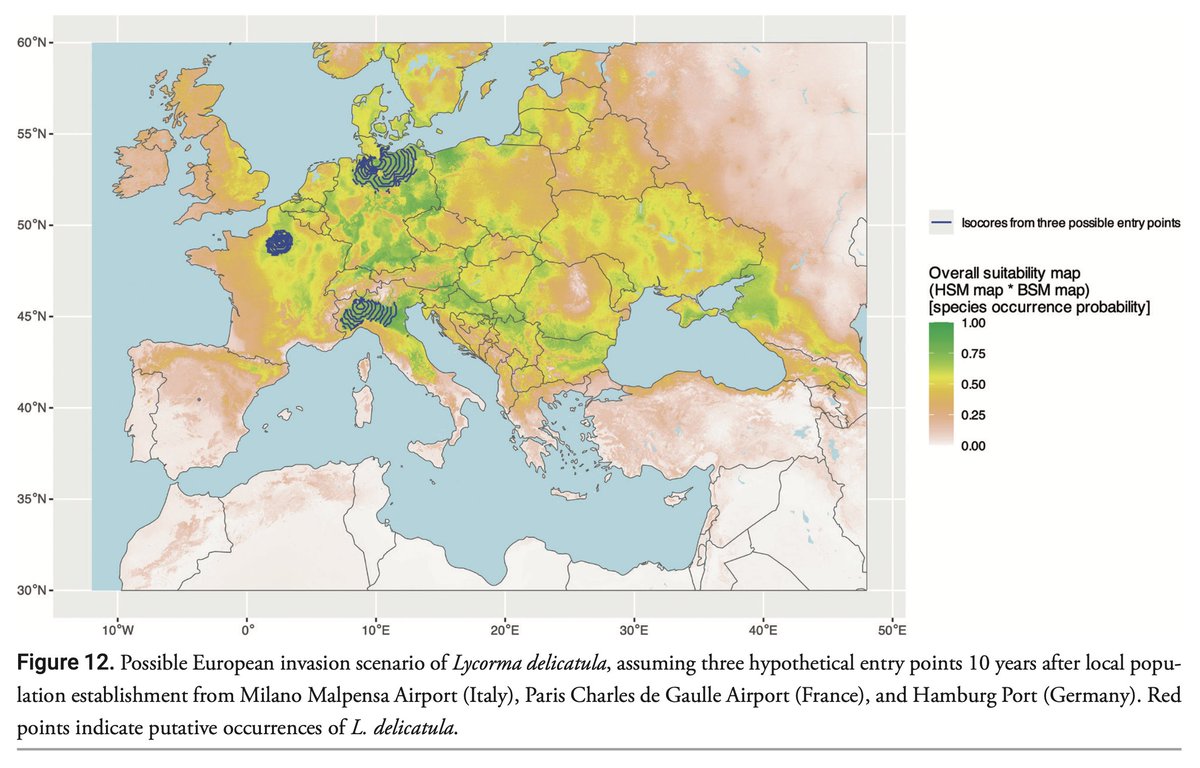
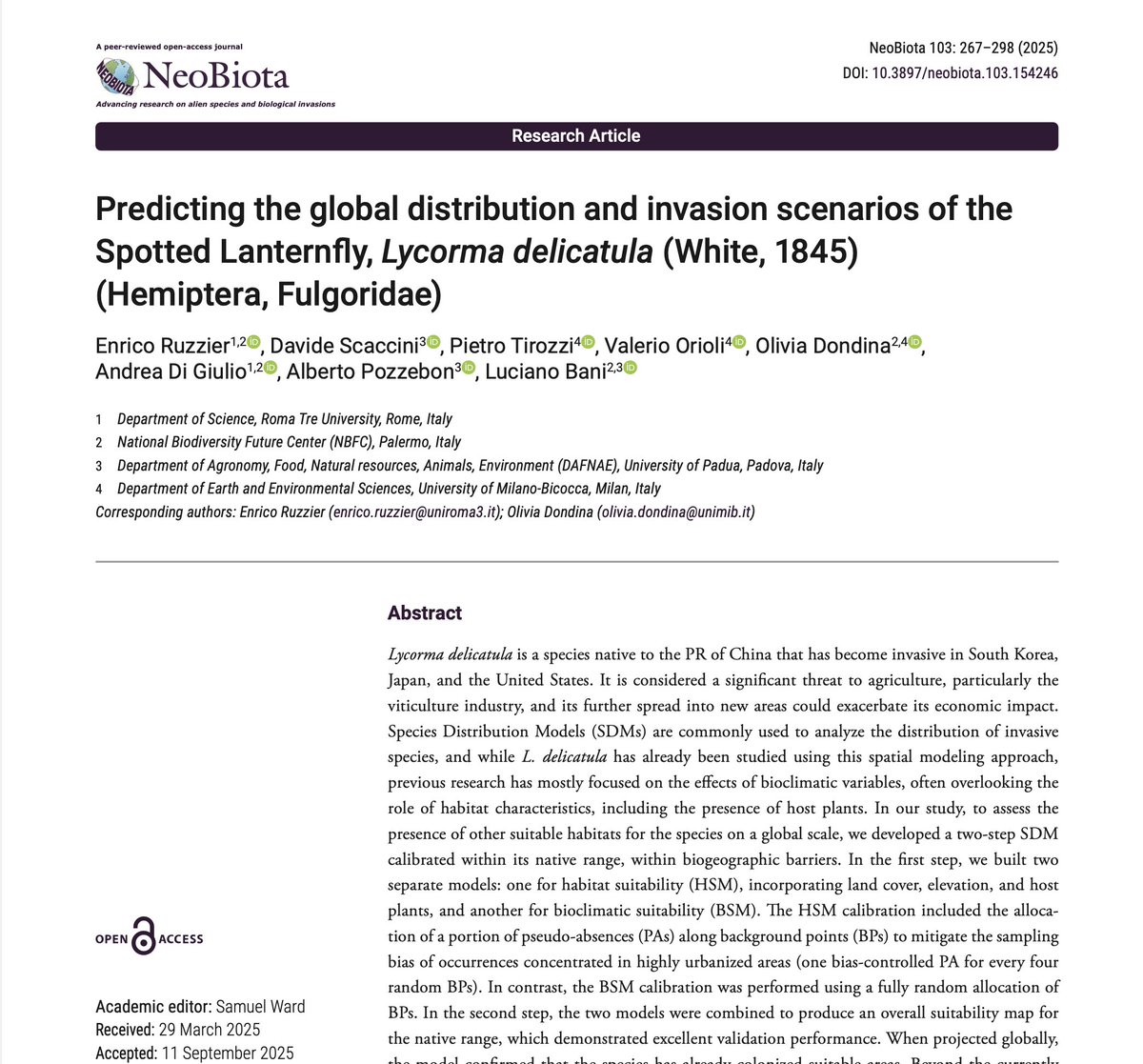
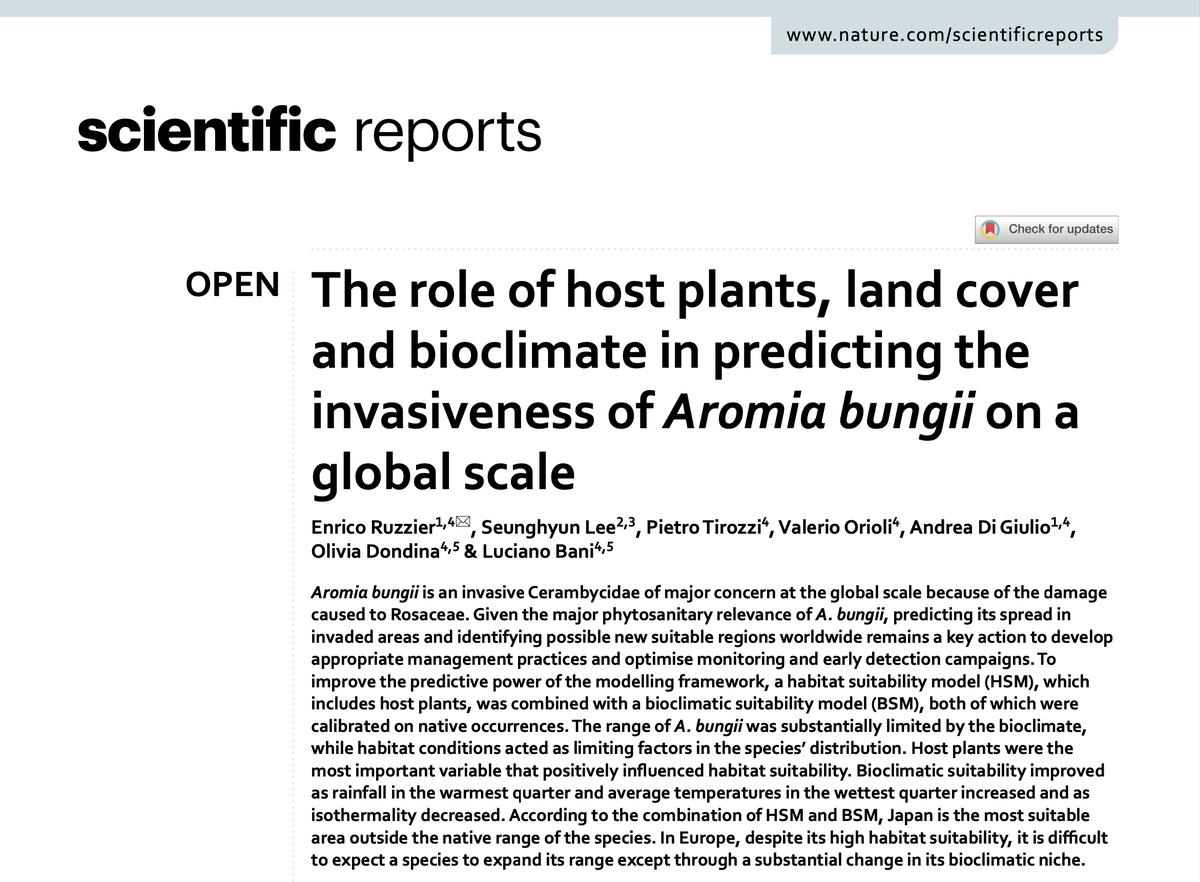
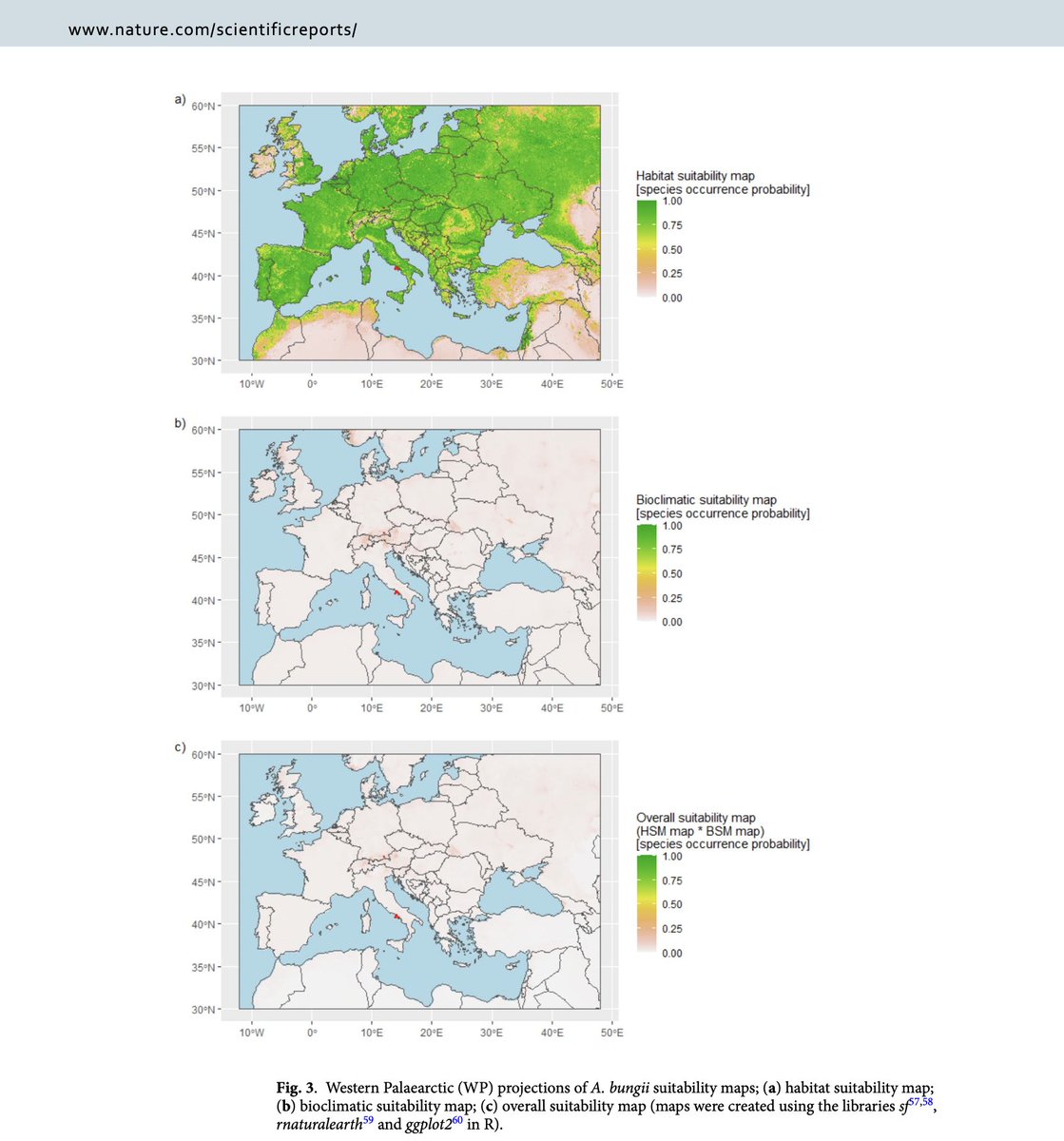
Here is our latest paper, which focuses on predicting the invasiveness of Aromia bungii by separately #modeling habitat and bioclimate.
Research supported by @nbfc_italy
https://t.co/1gcN5O4BzL
https://t.co/yuVBZ0muJZ
#SDM#invasivespecies#biodiversity#Cerambycidae
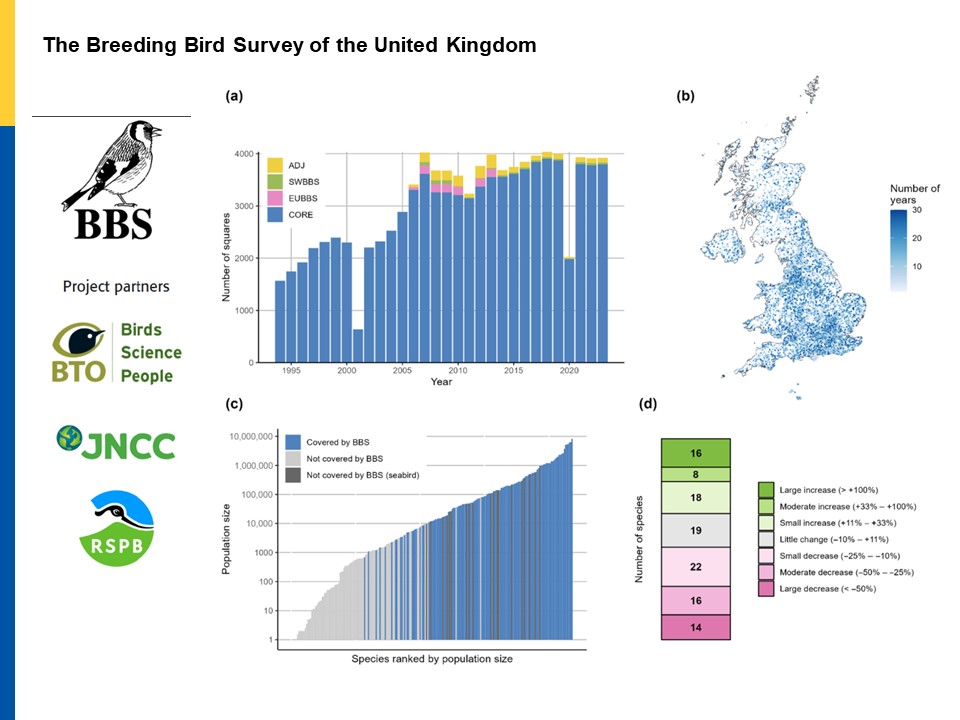
New📄Here we present the dataset of the Breeding Bird Survey, the main scheme monitoring population changes of common & widespread breeding birds in UK, through a randomised sampling scheme & defined field methodology @_BTO@RSPBScience#ornithology
https://t.co/YfkH0vQFV3🐦
🌍 Calling all early-career researchers!
Join the Conference of Society for Conservation Biology - Italy Chapter @scb_italy.
L'Aquila (IT) 6-9 May 2025 🗓
📢 Hurry up, the abstract submission deadline is fast approaching! 🚀
https://t.co/uYaoik05Mn
#ConservationBiology
📣Autumn issue of the EBCC Newsletter is out!
Read about:
🔷Establishing a new Audio Monitoring Group (AMOG)
🔷Effective learning of bird identification and online tests which reflect field skills
🔷Dutch Breeding Bird Report 2023 online
And more: https://t.co/aMRPwmr7y3
We are hosting an MEE live! Join Michela Leonardi to find out more about the R package tidysdm
📆 24th October 15:00pm BST
You can find more information and register here👇
https://t.co/TmXeWrBSVj
REMINDER! You have a month to submit your SYMPOSIUM PROPOSAL for the next EOU Conference in Bangor, Wales from 18-22 August 2025. Details at https://t.co/lxSBDOgId2 Follow @EOUnion or check https://t.co/E4OBAjtb4H updates #EOU2025#ornithology
New research suggests that environmental constraints could limit the number of eggs that urban female birds lay. 🐦⬛ @Mark__Pitt
Read the full paper here: https://t.co/T0AoDwusEI
Hybrid course (onsite and online): Zero-inflated GAMs for the analysis of spatial and spatial-temporal correlated data using R-INLA. Wageningen, The Netherlands. 23 - 27 September 2024. Flyer: https://t.co/On04Yni0iW
SAVE THE DATE! The next EOU Conference will be in Bangor, Wales from 18-22 August 2025. The call for symposia, round tables & pre-conference meetings is now open. Details at https://t.co/lxSBDOgId2 Follow @EOUnion or check https://t.co/E4OBAjtb4H updates #EOU2025#ornithology
Now available at https://t.co/RCVt648teE: 'The World of Zero-Inflated Models - Volume 2: Using GLMM.
Although this book is published under the umbrella of 'The World of Zero-Inflated Models', it also provides a good introduction to ordinary linear mixed-effects models and GLMMs.
Chapter 11 contains an extensive explanation of linear mixed-effects models. Originally, we used a dataset of bears and ants, but after discovering that the covariates only explained 2% of the variation, we decided to completely rewrite this chapter with a different dataset on painted turtles. At that point, we had forgotten that the chapter on zero-inflated binomial GLMMs also uses painted turtle data. So, we hope you like turtles. In Chapter 12, we first introduce Poisson GLMM using a squirrel dataset and discuss marginal and conditional predicted values. The chapter also covers zero-inflated Poisson and generalised Poisson GLMMs. A zero-inflated Poisson GLMM is applied to a humphead fisheries dataset in Chapter 13.
In Chapter 14, we discuss how to handle nested and crossed random effects, as well as auto-correlation, using a dataset on zero-inflated tree hyrax count data. A detailed explanation of zero-inflated binomial GLMMs is provided in Chapter 15. We use a dataset on painted turtles and also touch upon beta-binomial models. In contrast, Chapter 16 utilises beta GLMMs, zero-inflated beta GLMMs, zero-altered beta GLMMs, and ordered beta GLMMs for the analysis of zero-inflated caribou data. Finally, Chapter Chap17 presents an application of the Tweedie GLMM to zero-inflated biomass data.
🚨 Science Alert for World Sea Bird Day🌊🐦
Did you know that 200,000 seabirds die as bycatch in European waters every year?
Our latest co-authored paper highlights that especially threatened species such as the Northern fulmar (Fulmarus glacialis) and Balearic Shearwater (Puffinus mauretanicus) suffer from additional pressure on their declining populations due to gillnet and longline fisheries. These methods have shown the highest rates of bycatch.
Unfortunately, the numbers only reflect the tip of the iceberg, as there is a huge lack of data and gaps in monitoring.
Losing thousands of seabirds to nets is preventable!
There are low-cost solutions that fishers can implement but we need Member States to enforce new methods and support fishers in the transition to decrease bycatch.
Read more here 👉https://t.co/sBYXbDtpiG
🗓️ 26 Congreso Español de #Ornitología, 11 al 15 de diciembre de 2024 en #Valencia, coincidiendo con el 70 aniversario de @SEO_BirdLife
🪶 Te esperamos para conocer y exponer los principales avances en la investigación científica sobre #avifauna
https://t.co/wgNhFRhSaE #CEO26
We are hosting a MEE live! Join Lydia Morley and find out more about using betadiversity to capture key features of generalized relationships
📆 17th May 14:30 BST, 09:30 EST
You can find more information and register here👇
https://t.co/pwPApjyE1s