$SE published it’s annual report for FY2025 few days ago. I read every single page (like every investor should). I decided to give few thoughts, that aren’t as widely talked, or wasn’t published before this report. Let’s go! 🎞️👇
1/
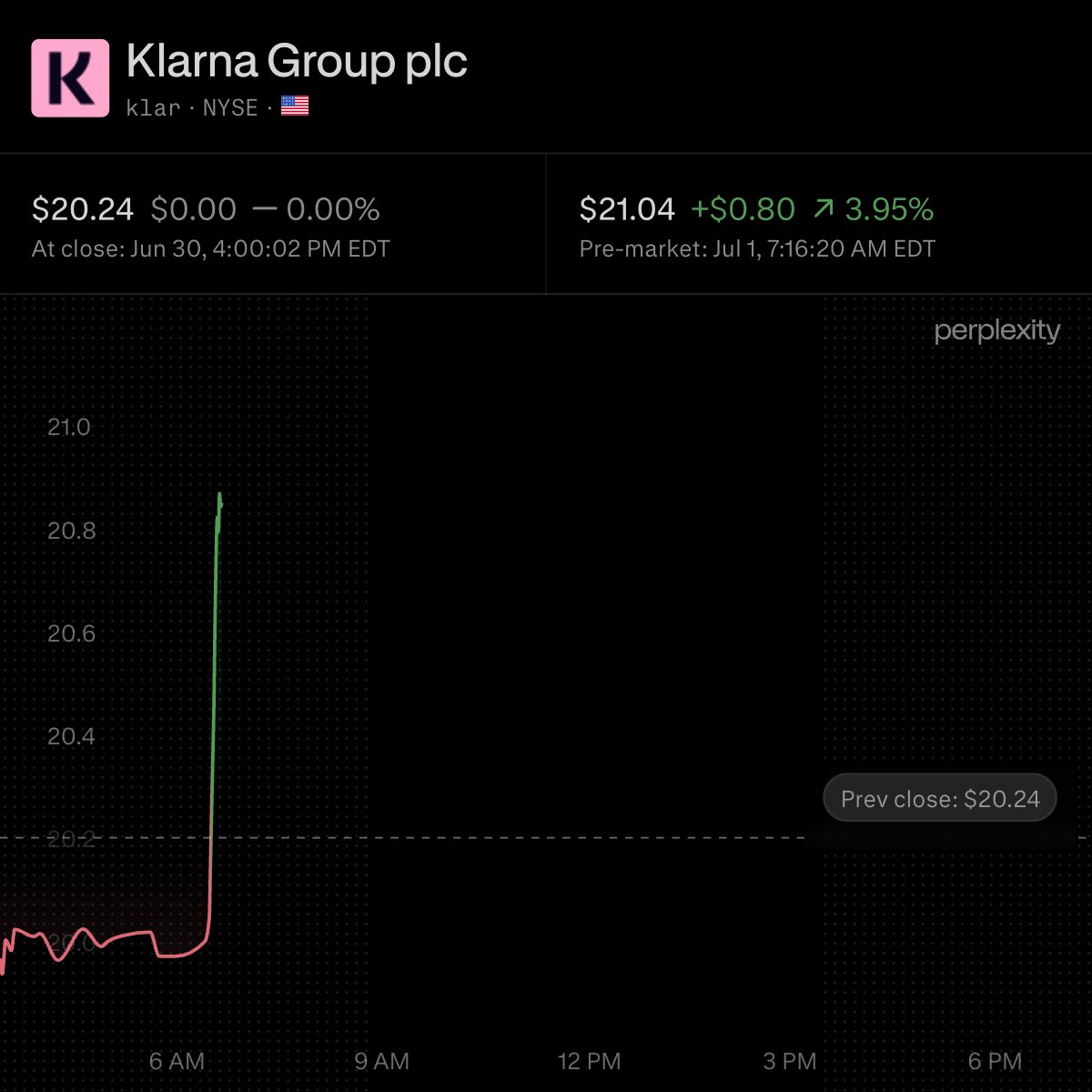
Apple is partnering with $KLAR for a new leasing program called Apple Upgrade.
The program will allow consumers to lease and regularly upgrade Apple products, iPhones, Macs, iPads, and Watches using Klarna’s flexible financing infrastructure.
Partnering with Apple grants Klarna direct access to high-ticket, high-frequency transactions across Apple’s vast user base.
Apple is essentially moving to a Devices-as-a-Service model.
📢 𝐉𝐔𝐒𝐓 𝐈𝐍: $AAPL Apple to Launch ‘Upgrade’ Device Leasing Program to Spur Sales, Apple Is Partnering With $KLAR Klarna On New 'apple Upgrade' Program - Bloomberg
Highly probably $STNE will become major buyback compounder, as they are purchasing closer to 20% a year back, and current board and management focus is on shareholder returns.
In my view, the most important factor for long term investing is identifying businesses capable of durable, sustained growth.
Businesses that will be meaningfully larger in ten years than they are today.
Over a decade or more, our return tends to converge towards the rate at which the business compounds intrinsic value.
Of course what you pay is important, especially in the short term, but businesses that grow at a quick enough rate eventually outgrow its valuation.
For instance, if we pay 20x for a company growing value at 5% a year, even a re-rating to 30x leaves us with a mediocre outcome. Over 10 years, earnings grow 1.63x and the multiple expands 1.5x, for a total return of 2.44x, or 9.3% a year. This is roughly market returns, despite the market handing us a 50% multiple expansion.
Now let’s say we pay 40x for a company growing value at 25% a year. A brutal de-rating to 20x leaves us with 4.66x our money, or 16.6% a year.
Despite drastically different scenarios in terms of pricing, the expensive fast growth business still beats the cheap slow grower.
Also, this is the 10 year scenario. If we stretch this to 20 years, the multiple becomes even more irrelevant. The reason is actually quite simple, multiple expansion is a one-time gift while growth is an annuity.
Therefore, this remains the most important factor I look at when finding long-term winners.
I think there are a few ways things to look out for:
1. How long is the runway? Growth usually requires an under-penetrated market that is itself expanding at a fast enough pace.
This is one of the reasons I like emerging market businesses. E-commerce, digital payments and consumer credit in Southeast Asia and Latin America are years behind their endgame penetration, and rising incomes act as a natural tailwind.
2. Can growth be defended?
An attractive market is sure to invite fierce competition. Therefore, finding businesses with widening moats is key. These are crucial in converting today's growth into pricing power rather than a price war.
3. Does the growth fund itself?
If the business wants to sustainably grow, it has to fund its own initiatives. We no longer live in a free-money ZIRP style era. For instance, the businesses that survived 2022 were the ones that could move towards profitability on their own cash flow.
Finding businesses that fulfil all 3 objectives are paramount for a successful long-term investment. Other factors such as valuation, timing, etc are important, but secondary.
Sure! $KLAR is the most undervalued BNPL in the market and one of the easiest buy opportunities!
$KLAR has more merchants, more customers, and a larger global reach than any other BNPL.
Most of the BNPL is about availability, and $KLAR is available just about everywhere!
Klarna says PriceRunner won a favorable antitrust ruling against Google, with the court awarding $1.97B in damages.
Note: $KLAR market cap is around $8B. FY25 operating profit was only $65M on $3.5B of revenue The award is equal to roughly 25% of Klarna’s market cap
Indonesia now requires Shopee, TikTok Shop, Lazada, and other major e-commerce platforms to reduce service fees by at least 50% for eligible micro and small enterprises (MSEs) selling locally made products. The policy, introduced through a ministerial regulation that took effect on June 17, aims to improve the competitiveness and profitability of small businesses operating on digital marketplaces.
At first glance, the policy is clearly pro-SME. Service fees alone can account for 40%–50% of a seller’s total operating costs on many platforms once commissions, advertising, fulfillment, logistics, and promotional expenses are included. A 50% reduction in platform fees could therefore provide meaningful relief to small merchants that have struggled with rising customer acquisition costs and intense online competition.
However, the broader economic impact is more complicated. E-commerce platforms are not charities. If revenue from seller fees falls materially, platforms will likely seek to recover lost income elsewhere, whether through higher advertising fees, logistics charges, fulfillment services, premium features, or reduced promotional subsidies. In other words, part of the cost may simply be shifted rather than eliminated.
The bigger question is whether Indonesia is moving toward a more interventionist approach to the digital economy. Investors generally favor clear competition rules but become cautious when governments directly dictate pricing structures for private platforms. The risk is that regulatory uncertainty could discourage future investment in Indonesia’s digital ecosystem, particularly as platforms are already facing pressure to achieve profitability after years of subsidized growth.
There is also a potential trade-off between supporting small merchants today and encouraging innovation tomorrow. Platform fees fund logistics networks, payment systems, fraud prevention, customer acquisition, and technology investments. If profitability is squeezed too aggressively, investment in these services could slow.
That said, the policy reflects a broader political objective. Indonesia wants digital commerce to benefit domestic SMEs rather than concentrating gains among large platforms. With millions of small businesses depending on e-commerce channels, the government is effectively redistributing part of the digital economy’s profits back to merchants.
The key metric to watch is not fee reductions themselves, but whether merchant incomes actually improve over the next 12–24 months. If platforms offset the cuts through other charges, the policy may have little net benefit. If sellers retain most of the savings, it could strengthen the resilience of Indonesia’s SME sector, which remains one of the largest contributors to employment and household income.
Ultimately, this is a classic balancing act between protecting small businesses and maintaining an attractive investment environment. The success of the policy will depend on whether it increases merchant profitability without undermining the economics that made Indonesia’s digital platforms successful in the first place.
@GabGrowth Yeah, I think it’s just necessary to partnership with these large AI apps, or otherwise they’d left out of this option, and potentially lose some customer stickiness to competitiors. Long term, the real competition could come from AI firms own ecom biz’ should they expand to that
Very informative $KLAR AGM yesterday.. Four generic questions, no one in the room, nor in telephone bothered to ask anything, and room probably almost empty (as seen from broadcast). Well, business keeps executing and some institutions buying, as is share price now showing that.
@the_zack_zhu@CapexAndChill Thanks, very interesting analysis! It’s true, that essentially low barriers drive failure, which drives innovation, which leads to cheaper consumer prices and better advantages for the platform who provides these opportunities.