Today we're launching Intercept: a $500M philanthropic initiative to make respiratory infections, like the common cold and flu, a thing of the past.
We treat respiratory infections as a minor nuisance, but that’s really not the case. Most of us will spend 5% of our lives (!) sick from these viruses, they kill 1M people a year, cost $600B annually in productivity, and periodically threaten civilization through pandemics.
So, if they’re such a big problem, why haven’t we dealt with them yet? Last year we convened ~40 leading scientists, pharma R&D leaders, biotech investors, and regulatory experts to better understand that.
We heard two main reasons:
(1) First, it’s just technically very challenging: respiratory viruses represent hundreds of distinct, mutating strains across several families. Fortunately, recent breakthroughs make this newly possible.
(2) Second is a lack of funding: broad-spectrum solutions have historically been underfunded, in part because they’re not a great fit for most philanthropic or commercial funding (and while COVID generated a burst of activity around preventing and understanding respiratory infections through an influx of new funding, that hasn't been sustained).
We think that with enough focus and funding, this might be solvable. Intercept is a $500 million philanthropic initiative that will take advantage of new tools to catalyze the development and deployment of two types of products: broad-spectrum preventatives and air cleaning technologies.
This problem is undoubtedly difficult. But it’s more tractable now than it’s ever been. We think we should give it our best shot.
We’re enormously grateful to our anchor funders: @stripe, @AnthropicAI, @TheFluLab, @FoundationOAI and individuals from Jane Street.
And, I’m very excited to be building this with @incredutility and the rest of the team.
"Every major American city has a land shortage. But we have more than enough shallow water, dredging capacity, and market incentive to make more land, just like we did 150 years ago. The only obstacle is our own choice to make making land illegal."
Read the full story in Issue 24 of Works in Progress Magazine.
The Iliad and the Odyssey, Greek and English side by side, free.
Click any Greek word for LSJ and Cunliffe. Scene summaries, maps, genealogies, a character network, hexameter scansion.
The digital Landmark Homer that never existed in print.
https://t.co/L20gGV1ZEX
Came across this terrific resource on understanding India through its cinema. The vision statement also struck me:
"We beseech all students and teachers of the world to unite, to raise your expectations, to demand further excellence from yourselves and the systems that must serve your spirit, to be true to the fullest life possible, to be unrelenting in your quest to know yourself, to be yourself."
हम दुनिया के सभी छात्रों को एकजुट होने के लिए, अपनी उम्मीदों को बढ़ाने के लिए, अपने आप से उत्कृष्टता की मांग करने के लिए और उन प्रणालियों को जो आपकी आत्मा की सेवा करनी चाहिए, पूर्ण जीवन के लिए सच्चे होने के लिए, अपने आप को जानने के लिए अपनी खोज में अडिग रहने के लिए, स्वयं। आग्रह करते हैं।
@acorn@saurabhchandra@thescribblebee@theChinaDude
https://t.co/IdBh8EmRT7
HILARIOUS: President Trump: “When I’m gone, you’re all going to be broke. Your business model is going to be finished… That’s why tonight, to show how much I care about the press and I want to save your ratings, I am pleased to announce my intention to—and this is somewhat of a scoop—my intention to run for a fourth term as President of the United States… I won 3 times, now I’m going to do it again.” *Puts on ‘Trump 2028 Hat*
At a time when so much what we read is rage bait or trolling, may I ask you to watch this 7-minute video from a talk I gave about a teacher of mine. I hope you'll find it uplifting and funny -- and maybe even moving.
https://t.co/BCQPhk6AZ9
Asimov’s Foundation series was a major influence on me.
That and the fall of Rome, from which Foundation takes inspiration, is what convinced me that we need to extend consciousness beyond Earth to avoid a potentially infinite dark age.
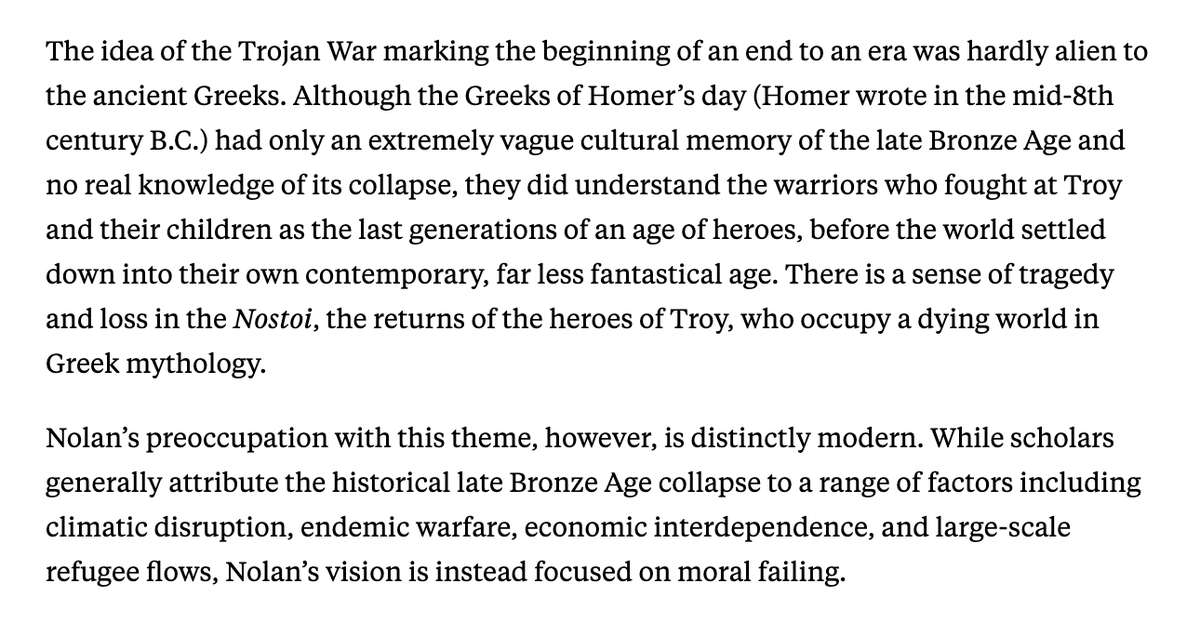
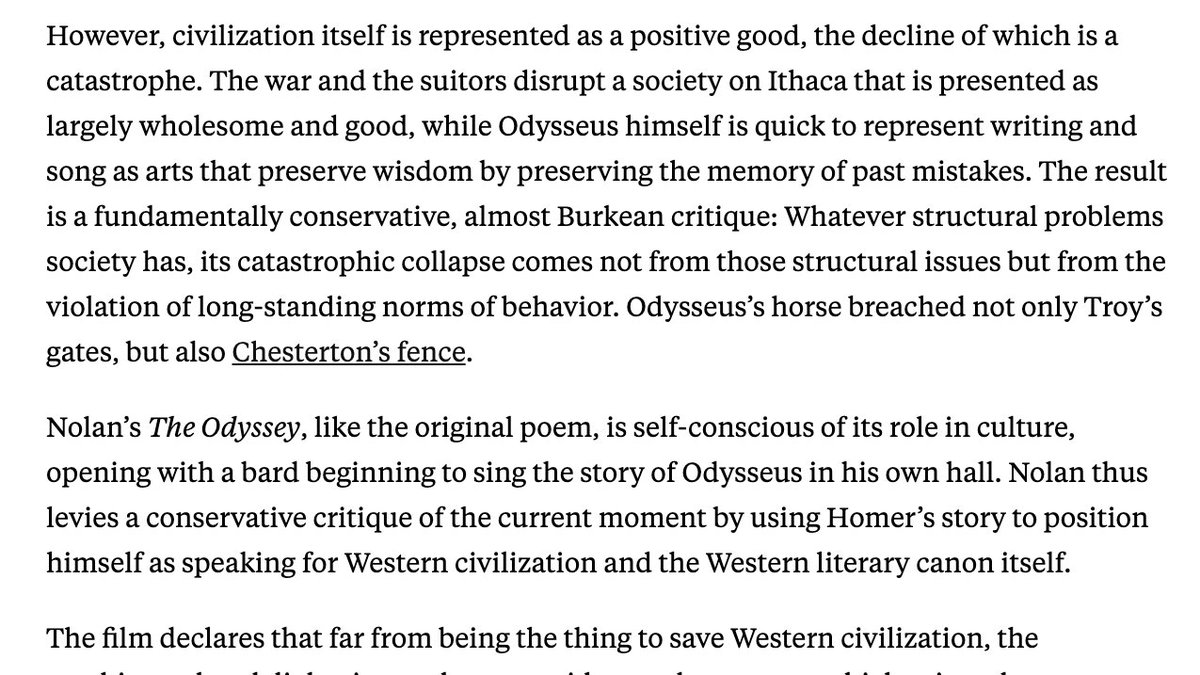
This is by far the most insightful review of The Odyssey I've read--it meets the movie on it's own terms and genuinely engages with the theme of civilizational collapse that Nolan is addressing.
This pro-#NEET post on rising bars, big multipliers, govt-school students winning more MBBS seats than ever. It looks DECISIVE. IT ISN'T.
Let me present a different reading of the same govt data that points to the OPPOSITE conclusion. Pls bear with me for a long thread, but it will definitely give you a fresh perspective! 1/15
#BanNEET
Great Books for Summer or Winter Reading!
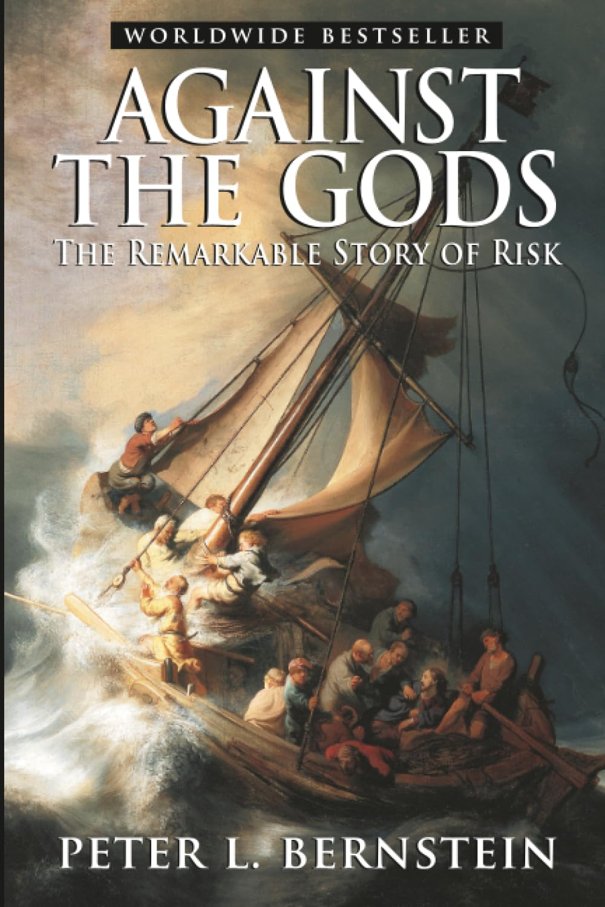
"Against the Gods: The Remarkable Story of Risk" by Peter L. Bernstein.
"In this unique exploration of the role of risk in our society, Peter Bernstein argues that the notion of bringing risk under control is one of the central ideas that distinguishes modern times from the distant past. Against the Gods chronicles the remarkable intellectual adventure that liberated humanity from oracles and soothsayers by means of the powerful tools of risk management that are available to us today."
https://t.co/gFfUai8jLy
What the names “Odysseus” and “Achilles” mean is fascinating. It reveals the terrifying reality of what a Greek hero is.
• Achilles can be read as ἄχος (grief) + λαός (fighting men) = grief of the fighting men.
• We are told that Odysseus is given the name by his grandfather from ὀδύσσομαι (to hate) = Mr. Hatred.
• The non-ionic pronunciation from which we get Ulysses sounds like οὐλή (scar) which is of course the defining physical feature by which Odysseus is identified. (These are all “folk” etymologies)
The Greek hero is a man of pain and suffering. They cause enormous pain to their rivals: Achilles to Hector and Agamemnon; Odysseus to the Trojans, suitors, and cyclops. But they also cause enormous pain to their friends: Achilles to the Achaeans; Odysseus to his family and the Phaeacians. Lastly, they cause enormous pain to themselves: both lives are riddled with suffering.
While both heroes are men of pain and suffering they are also clearly different. Wily Odysseus is a different archetype than godlike Achilles. So who is the greater hero?
That’s what I try to answer in this video essay filmed in Ithaca.
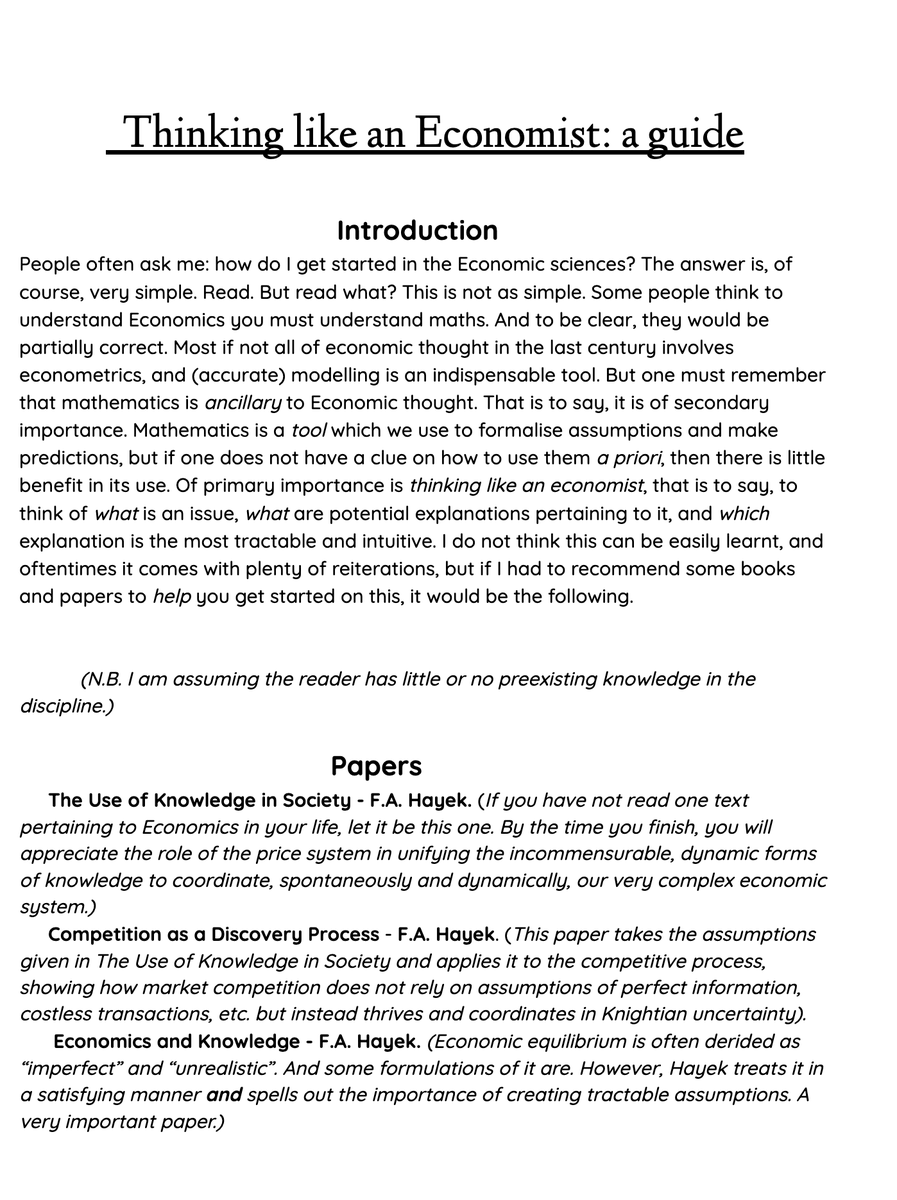
People asked me for a comprehensive reading list for beginners in Economics, and inspired by Prof. McCloskey's short list, I made one of my own. (NOTE: this list is not meant to be exhaustive, and I acknowledge that some people find more value in some books than others.)
Geoffrey Hinton’s diagnosis is sharp:
100T connections + 2B seconds of life vs 1T connections + thousands of times more data.
We evolved to extract maximum signal from scarcity.
They were engineered to compress oceans into a tight parameter box.
That’s why the failure modes flip. Humans break from under-sampling. Models break from over-compression.
We’re still only testing the outputs while shipping these black-box compressors into hospitals and courts.
Until we can inspect the packing itself, every high-stakes deployment is a bet on a system that has seen more than any of us… and still can’t show its work.
State of Sociology
This article is being lauded by the usual suspects. IMO it is a failure because it fails to recognize that sociology is producing much great research. Here are four examples of great books by sociologists published in 2025/2026 that rival those of any social scientists.
For inequality, here are two books which I rank among the most important I have read in the last several years. Neither, IMO could have been written by an economist. The natural kinds undergirding their logic, the ways that evidence is evaluated, are essential complements to the ways that economists, including me, normally think.
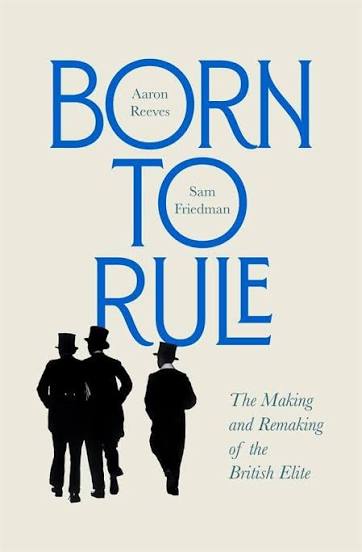
1. Aaron Reeves @aaronsreeves and Sam Friedman @SamFriedmanSoc , Born to Rule: The Making and Remaking of the British Elite
is a tour de force in analyzing the ways that British elites have reproduced themselves since the 1890s, finding relatively little changes in the rates of elite reproduction during this period. The book characterizes the ways that elites have evolved in the ways that they conceptualize themselves and present themselves to others. As such, Reeves and Friedman provide deep insights into the nature of intergenerational mobility and of meritocracy for Great Britain, past and present. All of this is done using an amazing array of qualitative and quantitative information that the authors constructed.
2. Michelle Jackson @mivich, The Division of Rationalized Labor
is a remarkable analysis of the nature of modern jobs. The book argues that contrary to the classical idea that increasing division of labor would leads to job simplification, the modern economy has produced jobs of increasing complexity as a given position involves more complex and heterogeneous objectives. Teachers are one example that is discussed in detail. Michelle argues that rationalization of the economy facilitated by increased capacity to understand and measure how productivity of individuals and organizations is determined, underlies this evolution. This vision contains deep implications for labor market and intergenerational inequality.
Methodology. These two books stand on par with the best econometrics texts.
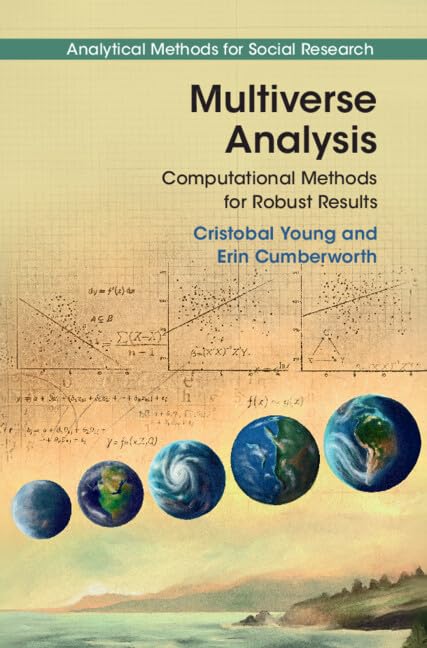
3. Cristobal Young and Erin Cumberworth, Multiverse Analysis: Computational Methods for Robust Results
defines an important frontier in the analysis of the effects of model assumptions on empirical claims, by constructing ways to communicate information about objects of interest across model spaces, which define different portfolios of assumptions. This vision of empirics is the next generation after model averaging, which has been important in the economic growth literature.
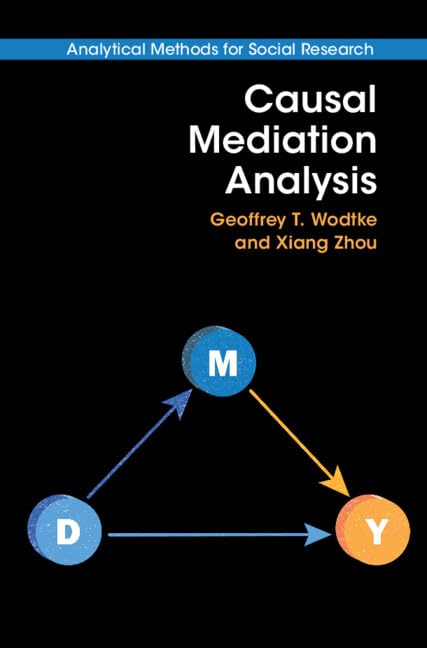
4. Geoffrey Wodtke and Xiang Zhou, Causal Mediation Analysis
is a masterful synthesis and will become a standard citation and the essential reference for students and researchers.
To be clear, my objection to the WSJ article and the way it is being is fully consistent with my endorsement of the Vanderbilt-Washington report. The fact that I know world class sociologists who have dropped their memberships in the American Sociological Association over its politicization (while many others have expressed misgivings to me) speaks volumes. But the idea that the field is a systematic failure is nonsense.