@brttlebxnes@weimin_suozhi This is exactly what I find funny but not surprising, that you think it was a joke…Really shows how strongly brainwashing the media have been…
It’s like saying “look I found a Mexican American restaurant how funny is that”, as if they shouldn’t exist…
We'll be spending a lot more time trying to understand the outputs of language models. A few thoughts, tips & tricks:
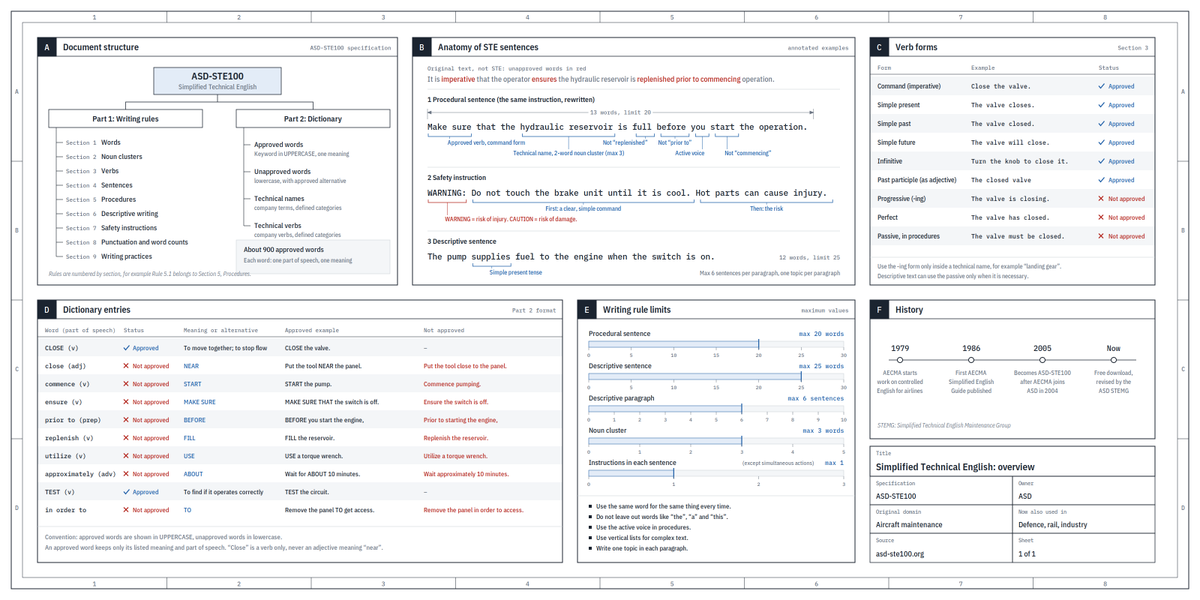
Writing. Something I've had success with: Ask your LLM to explain something in ASD-STE100, it's a controlled language specification originally developed for aerospace maintenance documentation. LLMs well-versed in this language and it comes with heavy constraints on clean writing style that I often find a lot more readable. Sometimes I've tried to soften it a bit e.g. ask for "80% of the way to ASD-STE100" because the spec is quite stringent. But even better:
Diagrams / images. Instead of writing, ask your LLM to create a diagram. These can be a lot easier to process, parse, and understand. But even better:
Web pages. Ask for output "in HTML" to get a beautiful, interactive webpage. LLMs are getting really good at frontend and can create beautiful experiences, animations, etc. But even better:
Explainer videos. The output format I am most bullish on is fully custom / bespoke explainer videos generated on any arbitrary topic. Experiment with things like "Create a 3b1b style video explainer on X. Use my ElevenLabs API key for audio narration". (you'd need an API key for the latter or you can ask your LLM to find you decent free alternatives that use your local compute). This is actually starting to work!
In summary:
- As LLMs get better, they will do more and more of the legwork autonomously, and a lot more of our work will rise up the abstractions into oversight and understanding.
- Luckily, LLMs can help here too because as intelligence and code are increasingly abundant, you can ask for large, custom, discardable software artifacts (e.g. web apps, video explainers) that would have never made sense to create before. Push the boundaries here and you'll be surprised.
Andrej Karpathy:
"Prompting is going away. Delete everything, keep Graph."
In 69 minutes he shows how to build Graphs, and why it's the only thing that will be left standing at the end
Prompts → Agents → Loops → Graphs
a loop keeps one agent working until the job is done
a graph decides which agents exist and what each one hands to the next
anyone can build an agent, almost no one builds the graph that runs them
watch it today, then save the full guide on Graphs below before everyone catches up ↓
Andrej Karpathy spent 8 years at OpenAI and Tesla
Last week, he condensed everything he knows into one free 2-hour lecture
Agents → Loops → Harness → Self-Improving Systems
People pay $14K for bootcamps that teach less than this
This lecture beats most paid AI engineering courses
You probably don't have 2 hours right now
Don't let this disappear from your feed
Watch it
Then read the article below
GPT-6时代是一个他妈非常神奇的时代。
半年前技术圈认为,cli和mcp是最适合agent使用的两个UI,认为万事万物都必须包装成cli或者mcp给agent去用,
结果gpt-6太聪明了,高智力可以代偿复杂设计,GUI这种桌面窗口的傻逼人类UI专属,现在coding agent也可以直接上手了,适应力拉满。
半年前技术圈认为 ,机器人必须走vision language action model(vla model),必须沿着LLM和VLM的路径去特殊训练一个VLA series,50个人的中型团队(人均UCLA CS PhD)折腾一年做训练和采集数据,结果做出来的东西是纯狗屎,跟大傻逼一样,基本pick and place tasks都完成不了。
结果到了gpt-6时代,高中生给gpt-6 astra接入一个手柄tool calling,居然就直接跑起来了,pick and place task虽然慢,但是居然零门槛把机器人本体和控制原封不动地给gpt-6,居然经过reasoning和正确的学习,就能用起来了。
前面三五十人的人均robotics和CS PhD的团队傻眼了,还他妈天天蹲实验室里采集数据盯着屏幕做training呢,自己彻底沦为大傻逼了。
没人知道这是怎么回事儿,现在大家都有点懵。
This classic FREE 280-page PDF report from @JPMorgan provides an excellent framework for Machine Learning, AI, and Data Science investors, including an overview of types of alternative data and a brilliant tutorial on ML methods to analyze the data: https://t.co/YXQ9YEgZKu