In 1997, kids cried when their Tamagotchi died.
In 2026, adults keep a 900 day streak so a green owl doesn't get sad.
Same mechanism. Bigger business.
We broke down how apps turn caretaking instinct into retention, and what Microsoft's Clippy got wrong. https://t.co/cXvxfRI2eg
Apple Ads Platform API v1 and ASO: everything you need to know, no clickbait.
On August 14, 2026, Apple released version 1 of the Apple Ads Platform API.
An API for managing Apple Ads campaigns already existed: the Campaign Management API, which this one supersedes and which Apple will sunset on January 26, 2027.
With the introduction of ads on Apple Maps, Apple decided to rebuild it into a single API covering both surfaces.
Here's what actually matters for ASO.
1. There's still no way to look up the popularity of a keyword you choose
Two new endpoints get close, and neither does it.
POST /v1/insights/apps/search-term-popularity/query
returns the top search terms for a given App Store country and genre, weekly or monthly, each with a rank and a popularity score. It's genuinely useful. But the only filters it accepts are countryOrRegion and genre. There is no searchTerm filter, so you get popularity for the terms the report hands you, not for the ones you ask about.
It answers "what's popular in Productivity in the US," never "how popular is my keyword."
Worth noting: category-level popularity was already available inside Apple Ads, and the same information has been on Astro for free, for about a year.
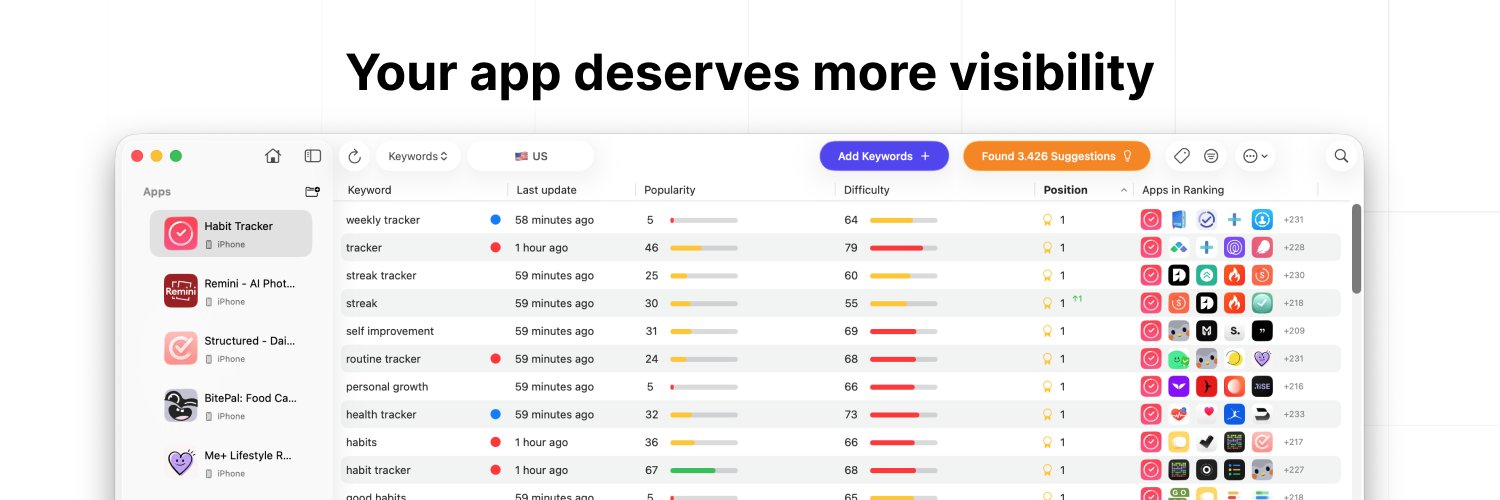
You can browse the full database here:
https://t.co/rRvot4JKqO
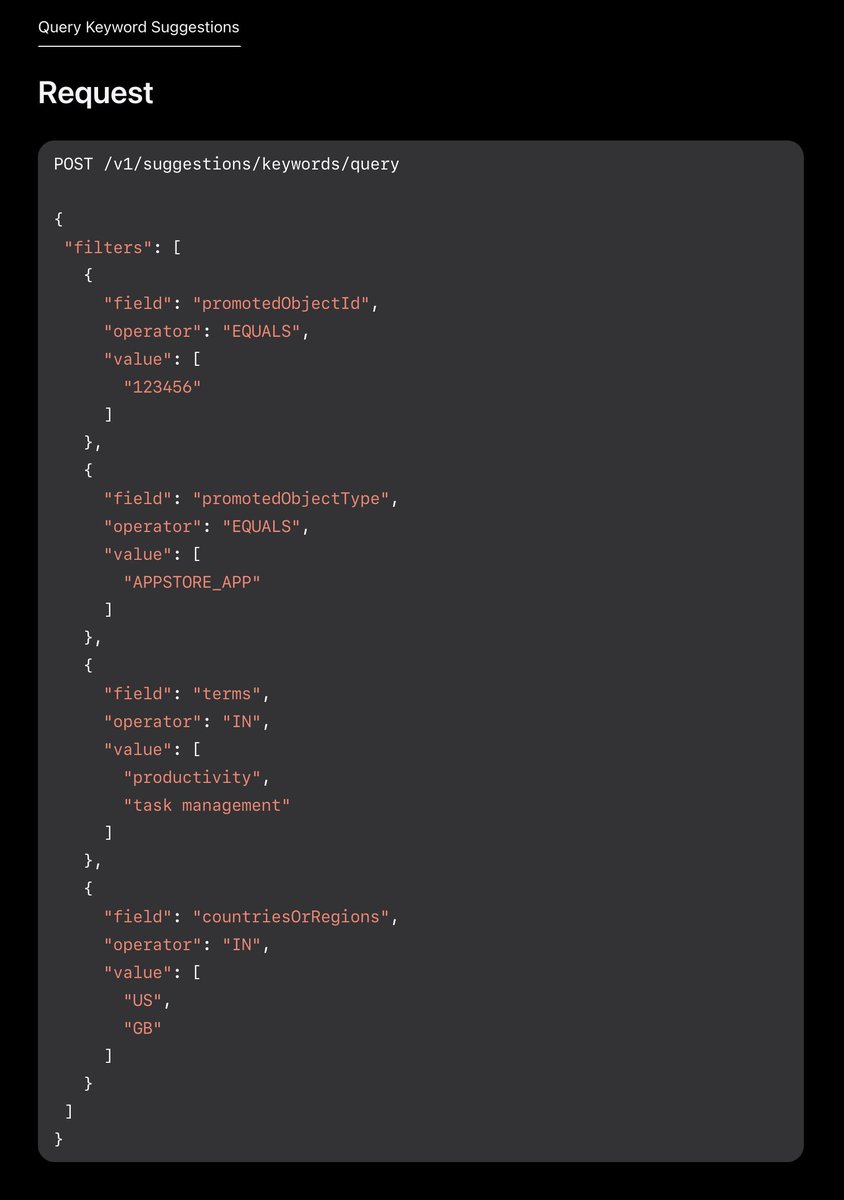
POST /v1/suggestions/keywords/query
accepts a terms filter, which looks like a lookup but isn't.
Apple's own wording is that you "seed with specific terms to get related suggestions." Pass productivity and you get back productivity app, task manager, to do list: related candidates, with no guarantee your own term appears among them.
2. The new Suggestions endpoints
There are four: keywords, phrases, categories, and target CPA. The first three take a seed (an app, a brand, or a set of terms) and return ranked results with a popularity score on a 0-100 scale.
https://t.co/NFbBU6V5m5
From the analysis I've run, they share the limitations of the unofficial endpoints Astro relies on, which is why on Astro this data goes through additional verification before it reaches our users.
You can see it in the attached screenshots, and Apple's documentation confirms it.
Even when you scope a request to two storefronts via countriesOrRegions, the response carries no country field.
A KeywordSuggestion is just text and popularity, and Apple defines that score as relative popularity "across App Store countries or regions." There is no way to tell which store a given number refers to.
What changes for Astro
Little, in practice. You can pull ranked top terms per genre and country in bulk, which is useful for discovery.
What you still can't do is submit your own keyword list and get storefront-level popularity back, so that data still comes from Apple's unofficial endpoints.
Hopefully this clears things up. For anything else, Apple's documentation covers the release in detail:
https://t.co/VmCI914Avn
@fromtibo Hi! What do your mean corrected?
By the way we suggest you do a little competitor work you can check out our documentation for more: https://t.co/FfoKkm0t1h
@itsdevdaniel Hi Daniel! If you have some particular examples to share with us you can write to our support email and we will be happy to help: [email protected]👍