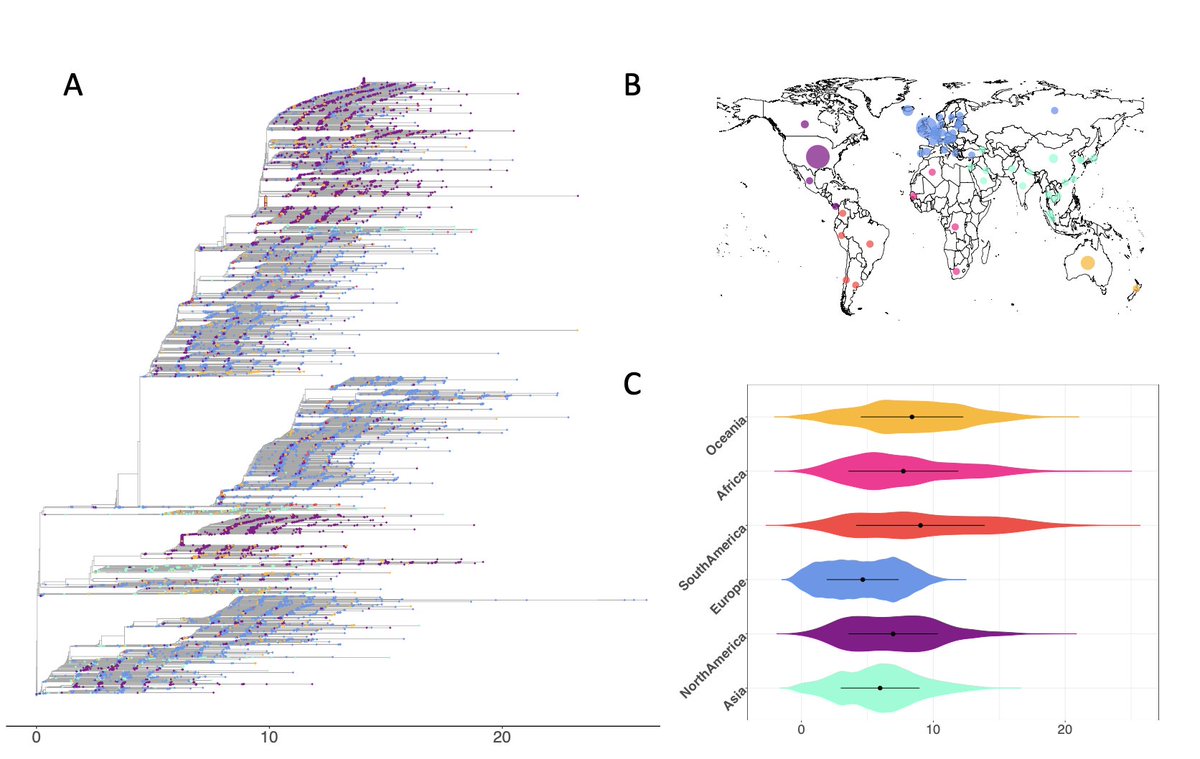
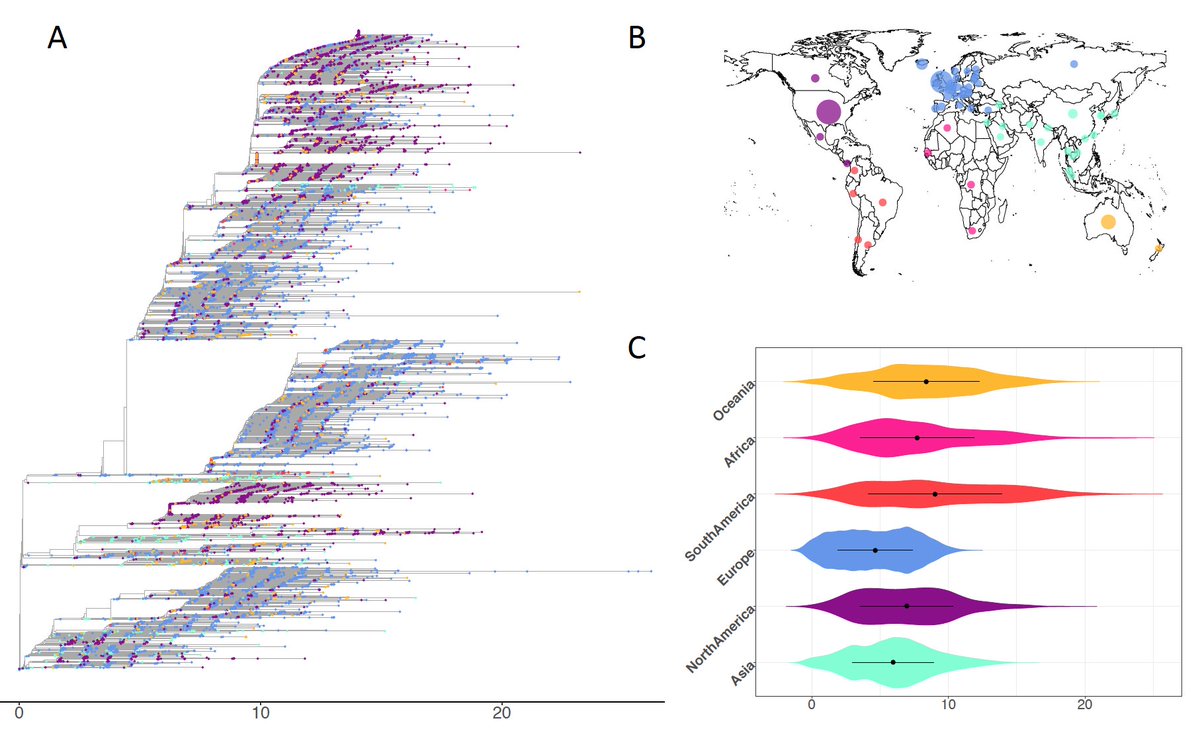
There have been claims that #COVID19 has acquired mutations leading to more transmissible strains. We formally tested whether this was the case using 15,000 #SARSCoV2 genomes from all over the world:
... and the answer is no, not at all!
(1/5)
https://t.co/NxIlUcFDE9
Our work highlights that, to date, there is no strong evidence for the emergence of more transmissible lineages of #SARSCoV2 due to recurrent #mutations and suggests the important role of host RNA editing in shaping viral genomic diversity.
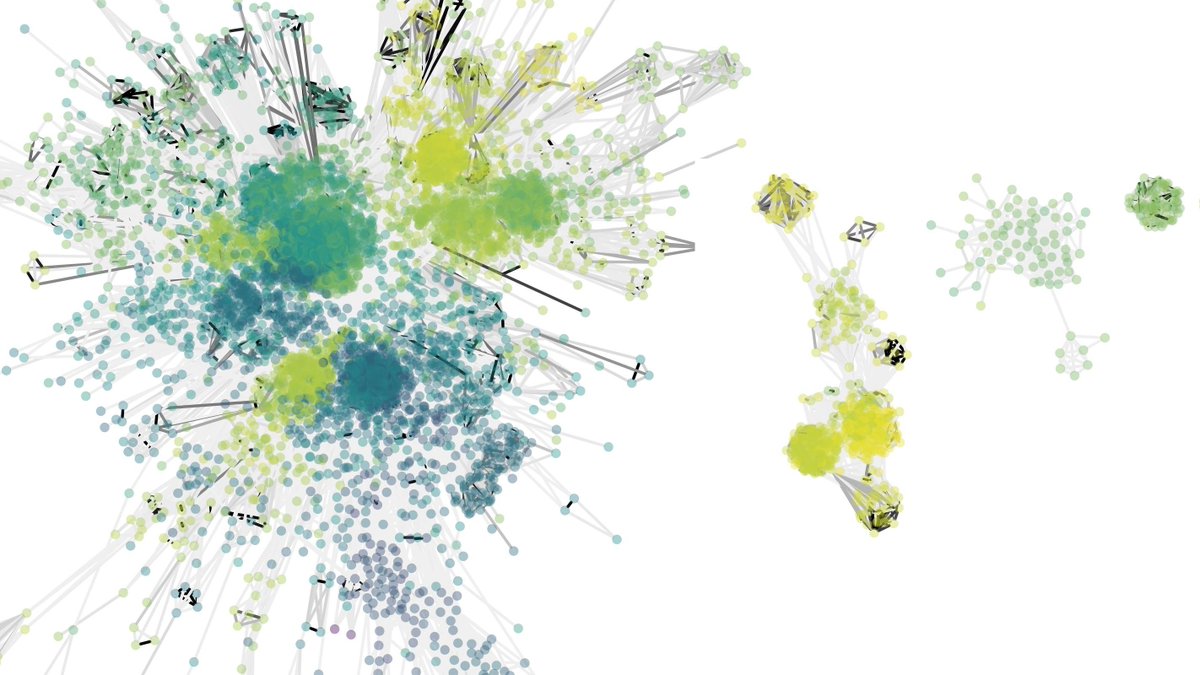
In our latest @NatureComms paper we reconstruct an alignment-free distance network comprising >10000 bacterial #plasmids.
Link ➡️ https://t.co/EvLRPf7kwC
Plasmids are mobile extra-chromosomal elements & important vehicles of #AMR exchange between species.
#stopsuperbugs
I am so happy this piece of work is out! 🥳
👉Large-scale network analysis captures biological features of bacterial plasmids (https://t.co/jLCyJCZ6zx). Hopefully a guide on how to study and classify #plasmids based on their genetic similarity
#microbiology#genomics
More below👇
I've seen many alarmist and incorrect claims about mutations in #SARSCoV2 . In this thread I will address some of the major misconceptions. Parts of the material I cover can be found expressed more formally in an article we published recently. https://t.co/p4BDOTmuFM.
(1/11)
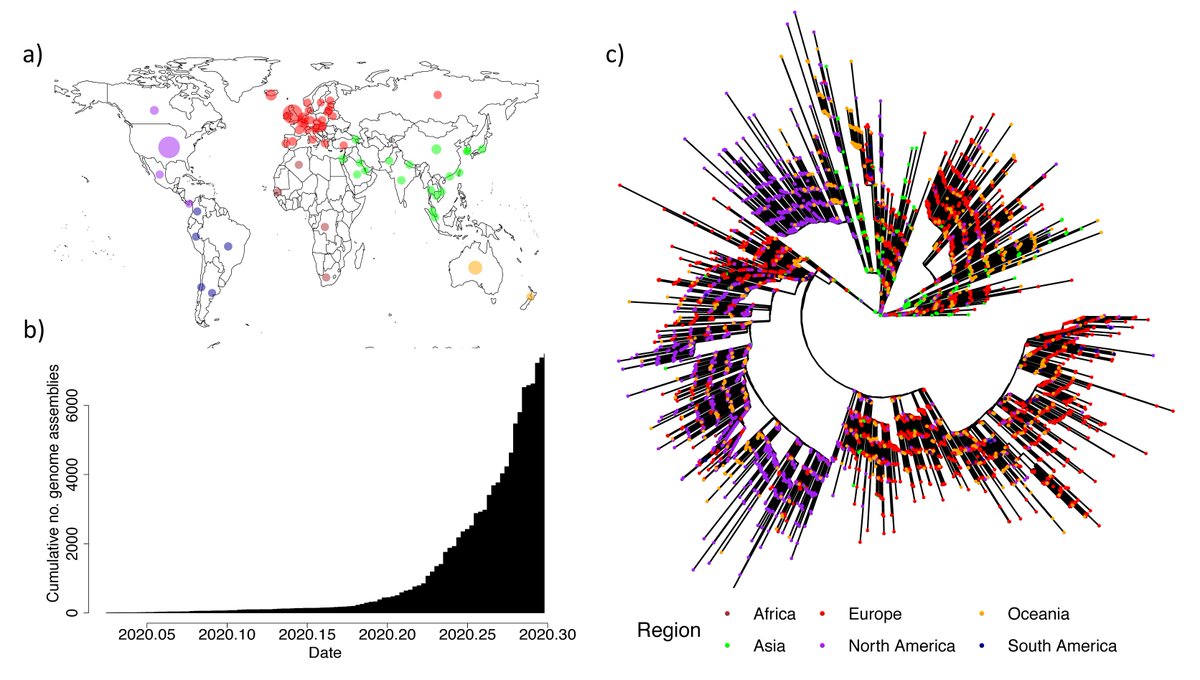
There are a lot of phylogenetic trees 🌳getting bounced about in the midst of #COVID19 and they’re getting really really big. A phylogenetic tree is a valuable resource mid #pandemic but they're not always easy to interpret.
Here's a brief explainer on just one aspect. 1/11
Our response to Angela Saini's misleading piece in @nature 9 March 2020.
https://t.co/D9rPdujUU9
Her statement "... it was not the university’s biologists, but its humanities scholars ... who forced their workplace to confront a sordid history ..." is untrue.
Good read.
‘In other words, what you'd expect from a dynamic interconnected patchwork of populations that were at times more or less isolated from each other.’
Statement could be applied to entirety of human history to be fair.
My new paper for Forensic Science International on "Using genetic genealogy databases in missing persons cases and to develop suspect leads in violent crimes" https://t.co/nzqweTNbuB
Our imaginatively-titled liquorice pizza ‘Ancient Genomes Indicate Population Replacement in Early Neolithic Britain’ feat. Cheddar Man dropped in @NatureEcoEvo today. Props to @LucyvanDorp whose haplotype matching took it beyond ‘just another aDNA paper’.
https://t.co/FbDzj99wCD
Very exciting to share #AncientGenomes from Britain dating to 8500-2500BCE including ~2X #Mesolithic and a ~10X #Neolithic individual. These genomes revealed the story of how farming arrived in #Britain around 4000BCE (2/5)
Great to work on “Ancient Genomes Indicate Population Replacement in Early Neolithic Britain” published today in @NatureEcoEvo https://t.co/jj4r6ZjETF #aDNA#popgen (1/5)