This serene video is actually unnerving af.
The metaverse is what you think.
We won't be "hanging out" in Decentraland or Sandbox.
We'll be toe-to-toe with AI agents.
This one agent's scheme nearly crashed his ecosystem, and it's a glimpse of things to come... 👇👇👇👇🧵🧵🧵
Hiring RL Engineer!
Started off as a curious project at @lossfunk to push the boundaries of LLMs in social reasoning - we are now building RL environments, data, and benchmarks to simulate more real-world scenarios.
If you want to train SoTA RL models over multi-GPUs (H200s/B200s) to unlock next AI frontier, this is for you.
@RobertJALA This won't be till mid 2029 you know? And that's just deprecation, not deletion. You have until the 2030s and surely you can see they can get tooling there for quick iteration by then.
@Sydnus83 Looking great.
Remember not to crowdsource your ideas too much. Your original vision was fantastic, so trust yourself.
There's a real danger you become an averaged mess. The masses don't share your imagination.
What in the world did we just see!
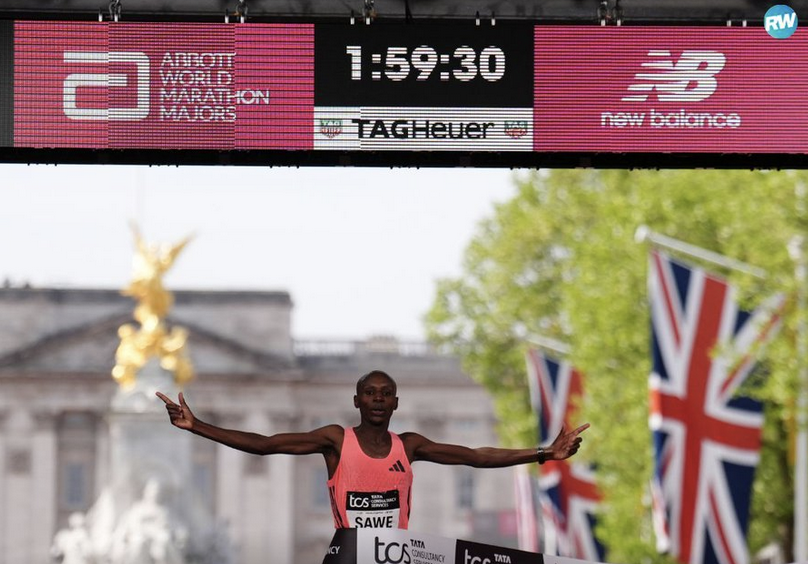
The 2 hour marathon barrier has been broken. Three guys went under the old world record...
Sabastian Sawe just ran 1:59:30 with crazy negative splits, closing the last half in 59:01....faster than the American Record in the half.
One of the most mind blowing performances we've seen. How did we get here?
Every breakthrough is a mixture of belief and progress.
It takes folks daring to see what's possible, surrounding themselves with a quality team and doing the work to give themselves a shot.
You've got to bet on yourself in a big way.
When asked whether he believed he could run a sub-2-hour marathon before the race, Sawe answered with one word:
"Yes."
Let's get the obvious out of the way. Performance enhancing drugs are the legitimate question mark to every breakthrough.
So Sawe did as much as he could about taking that off the table.
He and his team asked to be tested all the time. His sponsor put up 50K to the Athlete Integrity Unit. The tests are run independently, no advance notice. Over a 2 month stretch, he went through 25 drug tests.
There's always a doubt. There has to be given what we know. Hopefully there's transparency in the results. But hats off to Sawe for addressing it:
"I want to prove that I am clean when I set foot at the start line."
But how'd we actually get here where two guys went sub 2 in the same race?
1. Shoe tech
We've had a revolution in shoe technology that boosts running economy.
For years shoe companies said their shoe would make you faster and was mostly marketing. Until 2016, when it actually did.
Initial research showed a 3-4% saving in economy, while subsequent work has shown it's highly variable.
Now, it's a matching game. Find the perfect shoe for your form and you can get a big boost.
Normally, it takes years of lots of miles and strength training to boost economy.
But now we get that instant boost that not only helps boost performance but often leaves us feeling less beat up in the later stages of the marathon.
So we get a little bit less hitting of the wall...
2. The fuel
For a long time, fueling was limited by biology. You can only take in and process so much.
Then in the 2000s, researchers found if we mixed sugars, we can boost intake because they're processed differently.
Then recently, Maurten found if you use a hydrxogel, you boost utilization without GI distress anymore.
We've gone from pushing 60g/hr to 120g/hr in a few decades.
Again...less bonking.
3. Depth
A few decades ago, you spent your career racing on the track and then once your speed started to fade a bit you went to the marathon.
Now, many skip right to the marathon. That's where the money is.
And with the economy boost from the shoes, you can make that jump quickly.
More depth of talent means more competitors in their prime pushing barriers.
4. Belief
Even with the shoes and tech, a few years ago sub 2 hours seemed a long way off, until Kipchoge pushed that barrier in a series of time trials.
Yes, they weren't official races and had contrived pacing. But it absolutely shifted everyone's thinking on what is possible.
A generation of runners saw Kipchoge go for it.
Our prediction of what is possible changed.
It's mind blowing how far we've come in such a short time.
What once seemed decades away, just got smashed twice in the same race.
Hats off to Sawe, especially for addressing the scourge of doping and showing folks what is possible with a lot of hard work, some crazy belief, and some fortuitous advances.
@JustACreepz@B3nLunt@creepz They rugged the guys who made all the floating island graphics and videos and came up with the ideas for shards etc. When Portal was going to drop Joe ghosted them then said sorry, you'll get Odyssey instead 🤣🤣. Never got paid.
@ggsimm Hahahaha, 99.99% demos of one feature of a non-working game that's a clone of a game twenty years old.
"wHy Can'T aNyOne sEE the PoTeNTiaL????!"
I’m making a show about buildings.
The concept is simple: do for the man-made world what Planet Earth did for the natural world.
But, when I pitched the idea, the answer was that nobody would watch it.
So I released a pilot episode on YouTube. It’s got 5.4 million views, 379k likes, and 23k comments.
People are interested, and now it’s time to make the full show.
Six episodes, filming in the UK, France, Belgium, Germany, Italy, and the USA, and releasing on a streaming service like HBO, Netflix, or Prime.
Why does this show matter?
First: we’re surrounded by buildings all the time. Look around yourself, right now… what do you see? Buildings are the logical conclusion of everything a society believes in. That’s the real focus of this show: not the buildings themselves, but what they say about us.
Second: there’s global dissatisfaction with modern architecture. This feeling gets written about online, but nobody’s given a voice to it on film or TV. That’s what this show will be. But this isn’t just about criticising modernity. That’s easy. This is about learning from the past in order to understand and improve the present, for everybody.
Third: there’s a drought of high-quality culture shows. When I spoke to film executives they said that only documentaries about sports, music, or true crime get funded. That’s a colossal missed opportunity. Galleries are always full, content about architecture goes viral online all the time, and people spend their precious holidays visiting beautiful cities.
Why no shows about architecture, then?
Tourists flock in their millions to see (for example) the buildings of Antoni Gaudí in Barcelona. But, if you asked those same people if they’re interested in “architecture”, they’d probably say no.
To put that another way: not many people want to watch “a show about architecture”, but lots of people want to watch a show that illuminates the real world they’re living in, each and every day.
What will the show be like?
Six episodes, going chronologically through history and arriving at the present, each focussing on the architecture and design of a specific period:
1. Middle Ages
2. Renaissance
3. Enlightenment
4. The Nineteenth Century
5. Art Nouveau & Art Deco
6. Present Day
But, in each case, the point isn’t just to learn about that era; the point is to learn about our modern world through those eras and what they’ve left behind. If you watch the pilot episode (included below) you’ll see what I mean.
So the show’s not really “about” the past; it’s about the twenty-first century.
That’s why it’s called The Modern World.
When you think of a typical history show there are loads of interviews, stock footage, archive photos, historical recreations, and graphics. We’re doing none of that. Everything will be filmed on location, because we’re telling our story only through the real world that exists right now. And, rather than going to the most obvious places, we’ll focus on buildings that aren’t well-known but should be more famous.
But that’s all big picture; what will it be like on screen?
Buildings used to look different in every country, and now they look the same. Why? Because the weather is different everywhere, and buildings were always a way of dealing with that weather, using local materials. Now we have air conditioning and we ship concrete around the world, so we don’t need to design our buildings with regard to local weather or rely on local materials.
Look at really old clocks and you’ll notice something: they don’t have a second hand… because it was only invented 300 years ago! Then you look at the present and you realise we’re surrounded by timers, by seconds ticking down and ticking up relentlessly. If we’re looking for a cause of our anxiety-inducing culture, that might be it.
When you spend time with the sun-softened bricks and time-warped timbers of old cities you notice that synthetic materials like plastic have taken over. When we’re surrounded by things that feel temporary, how do you think it makes us feel?
It’s only by seeing 19th century train stations, designed like cathedrals, that you realise tradition and technology aren’t enemies. New things don’t have to look boring: if the Victorians had designed AI data centres, they’d look like Medieval castles.
In the 1920s, at the zenith of Art Deco, people believed technology would uplift humanity. That’s why they decorated their buildings with statues inspired by electricity. Only by seeing their enthusiasm can we realise our own cynicism, and perhaps begin to fix it.
All of that… and much, much more.
But, above all else, this show is about a way of seeing. If you want to understand any society then you need to look at what it creates, not what it says about itself.
There’s a worldview in every single object; our skyscrapers are designed the same way as our phones. Learn to look at this world, to notice its details, and everything else starts to make sense.
What now?
I’ve been quiet online recently because I’ve been researching and working on scripts for six full-length episodes. Production begins when we’ve raised the funding.
The Modern World is coming.