In case the cicadas haven't told you, fall is just around the corner.
See what we've done this summer!
Read the latest Michigan Robotics newsletter:
https://t.co/eFaJIMa6iW
We invite applications and nominations for the position of Department Chair.
Find out more about this position and tenure-track faculty positions:
https://t.co/xTeCm1p7So
We invite applicants to join our mission to accelerate advances in robotics for the benefit of society.
We're looking for a new Department Chair to lead in defining the discipline of robotics.
We're also hiring tenure track faculty.
Find out more:
https://t.co/xTeCm1p7So
We're looking for a new Department Chair.
And tenure-track faculty.
Join us in our mission of creating the next generation of robotics and roboticists as force-multipliers for the benefit of society.
Learn more and apply: https://t.co/xTeCm1pFHW
Join our faculty!
@UMRobotics is searching for both:
• A new Department Chair to lead and shape the future of robotics.
• Tenure track faculty in the area of Human-Centered AI.
Get all the information and apply: https://t.co/xTeCm1p7So
SKF is accepted for @NeurIPSConf as spotlight!
Wow, I didn't expect it. Kudos to AC and reviewers for valuing basic research. We feel extra rewarded and motivated!
NEW ARTICLE: “Small robot propulsion: low-power twisting enables hopping, swimming.”
The mechanism works on challenging surfaces such as slippery cloth and grass-covered ground, producing frog-like motion. https://t.co/RqRgtviqnS
Big congrats to @XinYe_Eva on our new paper, Mitigating Human–Security Robot Conflict Through Fairness. We found that distributive and informational fairness reduce conflict and boost security robot acceptance.
@umsi@UMRobotics@BlackInRobotics
https://t.co/awSZ07prpz
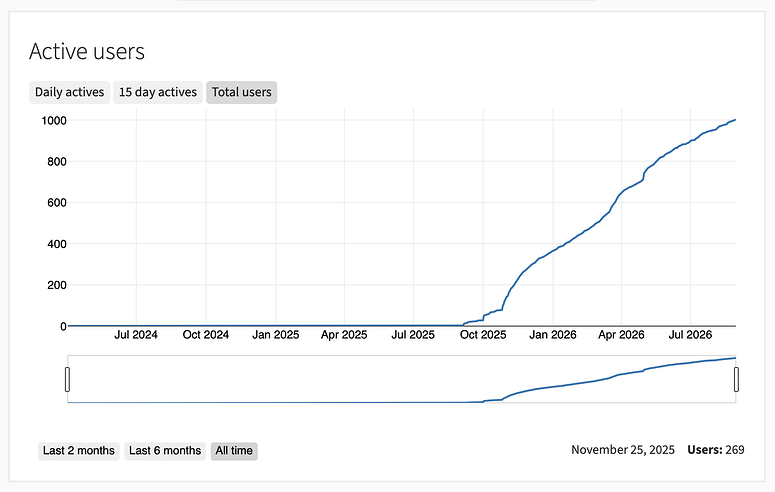
We just hit 1000 users on our Open Robotics @zulip server.
Zulip is our open source alternative to Discord.
We migrated late last year and the experience has been nothing short of fantastic; no bots, no spam, and threaded conversations!
⬇️⬇️⬇️
It's not yet September, but we have #IROS2026 on the mind.
Get tips for visiting Pittsburgh and the latest robotics research from Michigan roboticists in our IROS summary.
Read:
https://t.co/YvOTJyvRAN
We locally calibrate uncertainty in approximate dynamics models! By conditioning on latent observation embeddings, states, and actions, we enable uncertainty-aware planning in u̲n̲s̲e̲e̲n̲ test environments!
More on this @wafr_conf paper w/ @TheLuisMarques@UMRobotics below ⬇
The University of Michigan put their entire robotics degree on GitHub.
Not one course. The whole curriculum.
ROB 101 — Computational Linear Algebra for Robotics
ROB 311 — How to Build Robots and Make Them Move
ROB 501 — Mathematics for Robotics
ROB 530 — Mobile Robotics
Every lecture video on YouTube. Every textbook on GitHub. Every problem set, every exam, every line of code.
Professor Jessy Grizzle said it best when they launched it:
"Linear algebra has become the language of computer vision, machine learning, robotics, and autonomy."
So instead of making students wait four semesters of calculus before touching a robot... they built a curriculum that starts with the math that actually matters, applied to real robotics problems from day one.
This is what open education looks like when a top-10 engineering school decides to mean it.
Free. GitHub. YouTube.
📌 [https://t.co/3STu1hzAz2]
Follow for more robotics resources!
——
Weekly robotics and AI insights.
Subscribe free: https://t.co/9Nm01QUcw3
What if robot hands could acquire dexterity once, then reuse it to learn downstream tasks much faster?
Introducing ADEPT: a pre-training & post-training paradigm using RL entirely in sim, then zero-shot deploying visuo-tactile policies in the real world.
🔗https://t.co/jdIR1CnG4c with Dex team @NVIDIAAI
Robotics at University of Michigan is on 🔥!
Plus, it's completely open-sourced and free.
@UMRobotics put their entire robotics program on GitHub.
Everything. Code. Textbooks. Examples. Simulations.
That's what inside:
→ ROB 101: Computational Linear Algebra. Foundation course on the math that actually powers robots.
→ ROB 201: Calculus for the Modern Engineer. They wrote a textbook from scratch (GPL-licensed, on GitHub) because standard calculus doesn't address what engineers need.
→ ROB 204: Introduction to Human-Robot Systems. How humans and robots actually interact.
→ ROB 311: How to Build Robots and Make Them Move. The gap between theory and practice.
→ ROB 501: Mathematics for Robotics. Graduate-level rigor with code examples and interactive Jupyter notebooks.
If you want to learn robotics math from one of the world's best robotics departments, it's free.
Over 2,800 GitHub stars on the math courses alone.
Thousands of people learning robotics, just because it's open for everyone :)
This is how you build the next generation of roboticists.
🔗 Access it here: https://t.co/jpXNy15ad3
~~
♻ Join the weekly robotics newsletter, and never miss any news → https://t.co/GoA3ZuwoPB