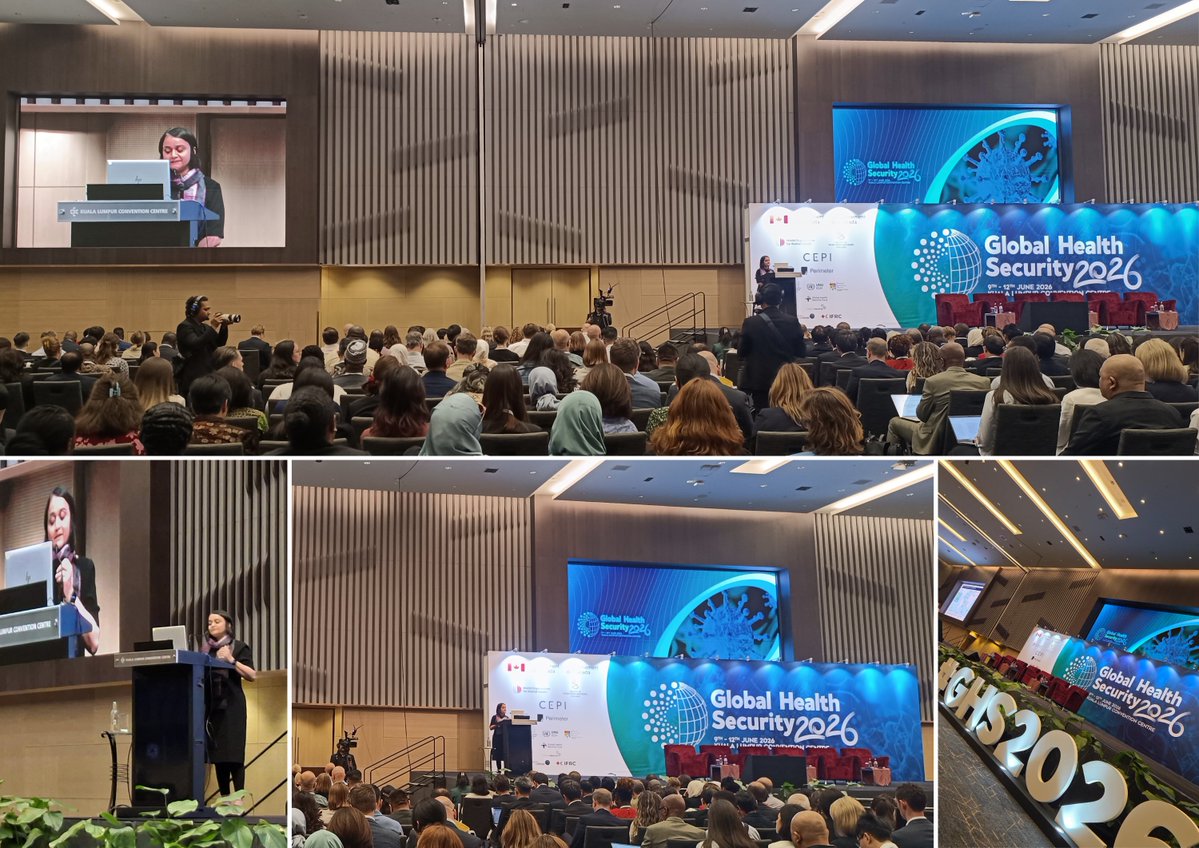
UNU Global Health at #GHS2026 | 🗒️ Recap
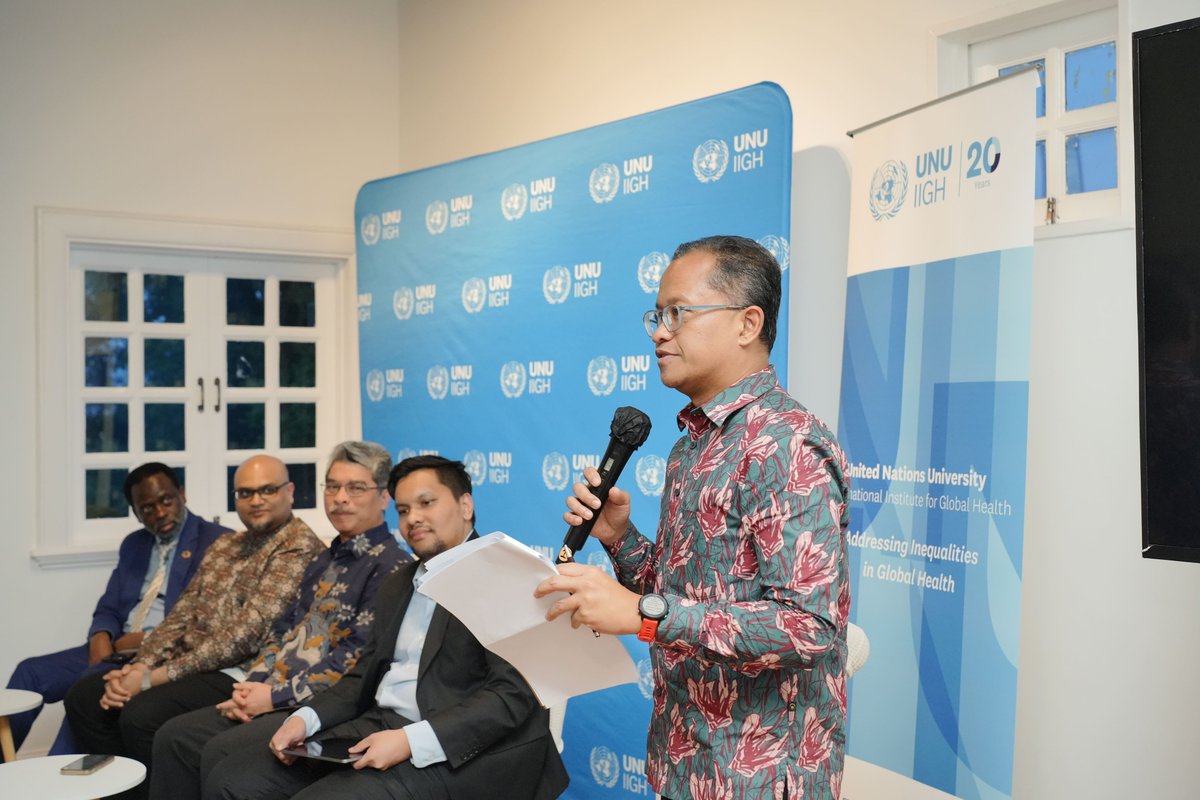
Last week, @UNUGlobalHealth organized a panel during the Global Health Security Conference 2026 in Kuala Lumpur titled “𝗔 𝗦𝘁𝗿𝘂𝗰𝘁𝘂𝗿𝗮𝗹 𝗢𝗻𝗲 𝗛𝗲𝗮𝗹𝘁𝗵 𝗢𝗿𝗶𝗲𝗻𝘁𝗮𝘁𝗶𝗼𝗻 𝗧𝗿𝗮𝗻𝘀𝗳𝗼𝗿𝗺𝗶𝗻𝗴 𝗣𝗮𝗻𝗱𝗲𝗺𝗶𝗰 𝗮𝗻𝗱 𝗖𝗹𝗶𝗺𝗮𝘁𝗲 𝗥𝗶𝘀𝗸𝘀.”
The discussion explored how current One Health approaches can include action on the upstream social, ecological and structural drivers of pandemic and climate risks. Speakers examined how holistic and rights-based approaches can strengthen health security while tackling the underlying determinants of health across human, animal and environmental systems.
Dr. Remco van de Pas (@Rvandepas), Policy Research Lead at UNU Global Health, emphasized that the majority of One Health approaches are dominated by a biomedical scientific discourse with only limited representation of environmental and earth-system disciplines, not to mention social and political science expertise.
As a continuation of this dialogue, a dedicated seminar further extended the conversation on “Structural One Health” beyond the GHS2026 panel, interrogating the political economy, legal, biodiversity, and local knowledge aspects within One Health implementation.
The events brought together representatives and experts from international organizations, civil society and academia, including Dr. Cushla Coffey, Australian Centre for Disease Control, Prof. Unnikrishnan Payyappallimana (@payyappallimana), The University of Transdisciplinary Health Sciences and Technology (@TDUPGConnect), Bengaluru, India; Prof. Dr. Hidayatulfathi Othman, Centre for Toxicology & Health Risk Studies, Faculty of Health Science, Universiti Kebangsaan Malaysia (@ukm_my); and Prof Gorik Ooms, Health Policy Unit at Institute of Tropical Medicine, Antwerp (@ITMantwerp).
𝗡𝗲𝘄 𝘄𝗼𝗿𝗸𝗶𝗻𝗴 𝗽𝗮𝗽𝗲𝗿: 𝗥𝗲𝘁𝗵𝗶𝗻𝗸𝗶𝗻𝗴 𝗴𝗹𝗼𝗯𝗮𝗹 𝗵𝗲𝗮𝗹𝘁𝗵 𝗴𝗼𝘃𝗲𝗿𝗻𝗮𝗻𝗰𝗲 𝗳𝗿𝗼𝗺 𝗮 𝗦𝗼𝘂𝘁𝗵 & 𝗦𝗼𝘂𝘁𝗵𝗲𝗮𝘀𝘁 𝗔𝘀𝗶𝗮 𝗽𝗲𝗿𝘀𝗽𝗲𝗰𝘁𝗶𝘃𝗲
How can countries in South and Southeast Asia shape global health outcomes through improved regional health cooperation?
Our new working paper, produced with the Centre for Social and Economic Progress (@CSEP) and UNU Global Health (formerly @UNU_IIGH) under The Asian Collective for Health Systems (@asianhealthcol), presents information about the state of global and regional health governance, examining the role of @WHO, development banks, public-private partnerships, as well as as ASEAN, G20, G7, BRICS and G77+China.
The information presents a fragmented landscape of institutions, programmes and policies with strengths and weaknesses. But what is clear is that in the current geopolitical context, including attacks on the UN-based system of multilateralism, and the collapse of foreign aid budgets for global health, there is a need for countries in South and Southeast Asia to improve international health cooperation at the regional levels and collectively exert greater influence at the global level.
The working paper presents information that can be used by multiple stakeholders in the region to identify and explore pathways toward more equitable and effective regional health governance and a global health system that better reflects the perspectives of Global South constituencies.
Read the full working paper here: https://t.co/eemKgeiDKX
Advancing Climate and Health Action Ahead of COP31 and COP32 🌍
Our Director, Dr. Revati Phalkey (@RPhalkey), participated yesterday in the Africa Group of Negotiators (AGN) and World Health Organization (@WHO) Session on Climate and Health, held in Bonn. The session brought together key stakeholders to develop a common position and finalize Africa’s Roadmap on Climate and Health ahead of #COP31 and #COP32.
During her opening remarks, Dr. Phalkey reaffirmed the commitment from the United Nations University system to support countries in advancing climate and health action specifically through:
🔹 UNU’s role as a partner for technical support and capability strengthening initiatives under the UNFCCC PCCB program and the Santiago Network.
🔹 Supporting the piloting, development, and operationalization of the Global Goal on Adaptation (GGA) indicators in partnership with the National Public Health Institutions.
🔹 Providing leadership through ATACH in integrating gender and equity considerations into climate change and health policies and practice as the newly appointed co-chair of the ATACH task team on gender and health together with @UNFPA.
🔹 Developing and certifying capability-strengthening programs on climate and health.
The session brought together a distinguished panel of experts, including Dr. Ama Essel, Chair of the Africa Group of Negotiators (AGN); Dr. Diarmid Campbell-Lendrum, Head of the Climate Change, Energy and Air Quality Unit at @WHO Headquarters; Dr. Jeremiah Mushosho, @WHOAFRO Regional Team Lead for Climate Change; Ms. Lynn M. Wagner (@LynnMWagner), Senior Director of the International Environmental Governance Program at the International Institute for Sustainable Development (@IISD_news); and Dr. Friday Phiri, Climate Change Health Advocacy Lead at Amref Health Africa (@Amref_Worldwide).
HAPPENING TODAY❗
Our Director, Dr. Revati Phalkey (@RPhalkey), will be moderating the side event “𝗔𝗰𝘁𝗶𝗼𝗻 𝗳𝗼𝗿 𝗛𝗲𝗮𝗹𝘁𝗵, 𝗘𝗾𝘂𝗶𝘁𝘆 𝗮𝗻𝗱 𝗥𝗲𝘀𝗶𝗹𝗶𝗲𝗻𝗰𝗲 𝗶𝗻 𝘁𝗵𝗲 𝗚𝗹𝗼𝗯𝗮𝗹 𝗖𝗹𝗶𝗺𝗮𝘁𝗲 𝗔𝗴𝗲𝗻𝗱𝗮: 𝗣𝗿𝗼𝗴𝗿𝗲𝘀𝘀 𝗳𝗿𝗼𝗺 𝗥𝗲𝗰𝗲𝗻𝘁 𝗖𝗢𝗣𝘀” at the UNFCCC SB64 Climate Conference in Bonn. The event is co-organized by @WHO, the @UNUniversity, @Save_Children, and the 𝗠𝗶𝗻𝗶𝘀𝘁𝗿𝘆 𝗼𝗳 𝗛𝗲𝗮𝗹𝘁𝗵 𝗼𝗳 𝗕𝗿𝗮𝘇𝗶𝗹.
This session will reflect on progress made in integrating health into the global climate policy agenda across recent @UNFCCC COP processes, while exploring priorities for advancing health, equity and resilience through future climate negotiations and implementation efforts.
🗓 15 June 2026 | 🕑 16:30–17:45 (CEST) | 📍 World Conference Center Bonn, Kaminzimmer Room
🗣️ Speakers:
🔹 Prof. Ethel Maciel (@EthelMaciel), COP30 Special Envoy for Health, Brazil
🔹 Mr. Benoît Faraco, Ambassador for Climate Negotiations, France
🔹 Dr. Youssef Nassef (@YNassef), Director of Adaptation Division, UNFCCC
🔹 Dr. Christian Schweizer (@Schweizerch), Scientist, Climate Change and Health, WHO
🔹 Representative of Save the Children
🔹 Mr. Pedro Hartung, CEO, Instituto Alana
🔹 Dr. Gül Mersinlioğlu Serin, Health Expert, Ministry of Health, Türkiye
📌Final Day of #GHS2026
On the final day of the Global Health Security Conference in Kuala Lumpur, Prof. Tshilidzi Marwala (@tmarwala), Rector of the United Nations University and United Nations Under-Secretary-General, participated in the session “Future of Multilateralism in Global Health Security”, moderated by Dr. Revati Phalkey (@RPhalkey), Director of @UNU_IIGH.
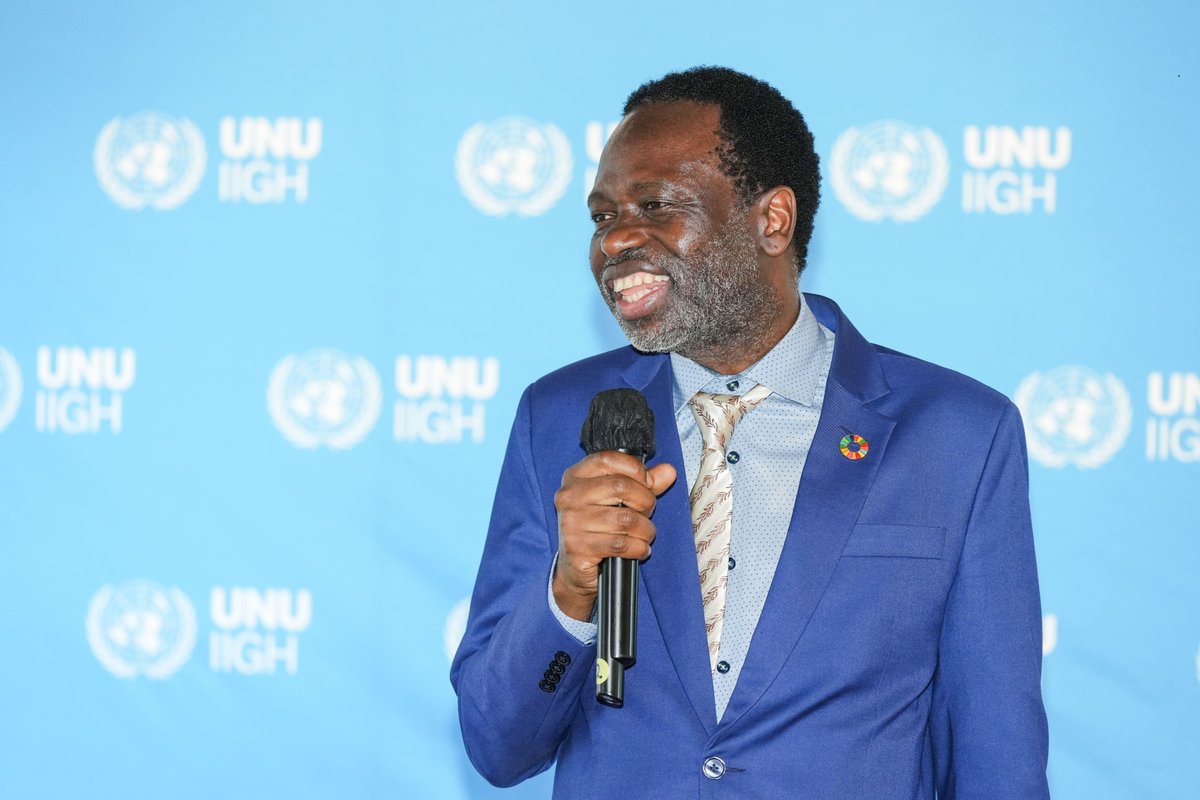
In his keynote remarks, Prof. Marwala reflected on the future of multilateral cooperation in a period marked by geopolitical fragmentation, fiscal constraints, and intersecting global crises. While acknowledging that multilateralism is increasingly contested, he stressed that it remains essential for addressing global health threats, noting that global health security represents one of the clearest tests of whether multilateralism can be renewed for the twenty-first century.
He emphasized that national capacity and international cooperation are mutually reinforcing, and highlighted that translating commitments into preparedness, trust, and effective response will be critical. Looking ahead, he argued that the future of multilateralism in global health security must be “fairer, faster, and more distributed,” ensuring equitable access, more timely and coordinated responses, and stronger linkages across national, regional, and global systems.
The discussion also brought together diverse perspectives on the future of global health security. Prof. Dato’ Dr. Sufian Jusoh, Vice-Chancellor, Universiti Kebangsaan Malaysia (@ukm_my), contributed the academic perspective, Duncan Selbie, President, International Association of National Public Health Institutes (@IANPHIhealth), shared insights from national public health institutes, Dr. Baba Soumare, Deputy Director General, @WOAH, highlighted the importance of One Health and animal health approaches, and Chee Yoke Ling, Executive Director, Third World Network (@3rdworldnetwork), provided the civil society perspective.
Together, the panel explored how multilateral cooperation can adapt and remain effective in an increasingly complex and interconnected world.
🌟 A new visual identity for a new phase!
As part of its 20th anniversary celebrations, the @UNU_IIGH officially unveiled its new logo during a high-level event held in Kuala Lumpur, in a ceremony featuring His Royal Highness Tuanku Muhriz Ibni Almarhum Tuanku Munawir, Yang di-Pertuan Besar of Negeri Sembilan, and Her Royal Highness Tunku Aishah Rohani Binti Almarhum Tengku Besar Mahmud.
As the institute enters its third decade, UNU-IIGH is moving towards a new visual identity: 𝗨𝗡𝗨 𝗚𝗹𝗼𝗯𝗮𝗹 𝗛𝗲𝗮𝗹𝘁𝗵
The new logo reflects the institute’s broader strategic direction and offers a clearer and more immediately recognizable presence while retaining the breadth of its mandate across research, policy, convening, and capacity-building.
A new visual identity for a new phase — and a renewed call for collaboration.
Many thanks to all who joined us to mark this important milestone for the institute!
🌐 Happened today!
As part of its 20th anniversary celebrations, the @UNU_IIGH hosted a high-level event in Kuala Lumpur.
The evening brought together representatives from ministries, diplomatic missions, the @UN Country Team, local partners, and members of UNU-IIGH’s International Advisory Board.
A key highlight was the lightning panel, “Advancing Data Sovereignty for Equitable Digital Transformation in Health Systems,” moderated by Dr. Revati Phalkey (@RPhalkey), Director of UNU-IIGH, and featuring Prof. Tshilidzi Marwala (@tmarwala), Under-Secretary-General of the United Nations; Dr. Mahesh Appannan (@maheshappannan), Director of the Digital Health Department, Ministry Of Health, Malaysia (@KKMPutrajaya); Prof. Dato’ Dr. Sufian Jusoh, Vice Chancellor of Universiti Kebangsaan Malaysia (@ukm_my); and Mr. Alhafidz Yahya, Acting Head and Director of Innovation at the National AI Office Malaysia (NAIO). The session opened and concluded with remarks by Dato’ Dr. Feisul Mustapha (@feisul), Director of the Perak State Health Department.
The discussion explored the evolving landscape of health data sovereignty, with the aim of fostering strategic dialogue between global and national leaders on digital health governance, and positioning Malaysia as a regional thought leader in responsible digital health transformation.
UNU-IIGH warmly thanks all who joined and contributed to making this celebration a success! 🎉
📌UNU‑IIGH at hashtag#GHS2026
Today at the Global Health Security Conference 2026 in Kuala Lumpur, Dr. Revati Phalkey (@RPhalkey), Director of the @UNU_IIGH, moderated the session “𝗠𝗮𝗹𝗮��𝘀𝗶𝗮’𝘀 𝗟𝗲𝗮𝗱𝗲𝗿𝘀𝗵𝗶𝗽 𝗶𝗻 𝗔𝗱𝘃𝗮𝗻𝗰𝗶𝗻𝗴 𝗚𝗹𝗼𝗯𝗮𝗹 𝗛𝗲𝗮𝗹𝘁𝗵 𝗦𝗲𝗰𝘂𝗿𝗶𝘁𝘆”, highlighting Malaysia’s leadership and commitment to advancing global health security.
The session featured YBhg. Datuk Dr. Mahathar Abd Wahab, Director General of Health Malaysia, Ministry Of Health, Malaysia (@KKMPutrajaya), and Professor Dr Sharifa Ezat Wan Puteh, Dean, Faculty of Liberal Studies, National University of Malaysia (@ukm_my), as speakers.
Reflecting on lessons from COVID‑19, Dr. Mahathar emphasized the need to completely dismantle silos for effective health governance. Health extends beyond the health sector and is closely linked to national resilience, economic stability, and international cooperation. In particular, he shared Malaysia’s experience in strengthening preparedness through regional collaboration and multilateral partnerships.
Dr. Mahathar further stressed the need to bring together medicine and public health disciplines, technology and data, community engagement, governance and diplomacy, with a focus on equity and ensuring that policies are translated into action.
From the academic perspective, Prof. Puteh highlighted the role of universities in research, capacity building, and collaboration to support the prevention, detection, and response to infectious disease threats. Prof. Puteh emphasized that decisions must be guided by science and grounded in research, which requires well-funded, cross-country, multi-center collaboration, making it essential to work together, break silos, and move beyond competition.
A key message resonated throughout the panel discussion: no country can address future health threats alone and global health security is "not defined by what we say during a crisis, but by what we build before the next one". This underscores the importance of working across sectors, strengthening partnerships, and building resilient systems for future health threats.
HAPPENING TOMORROW❗
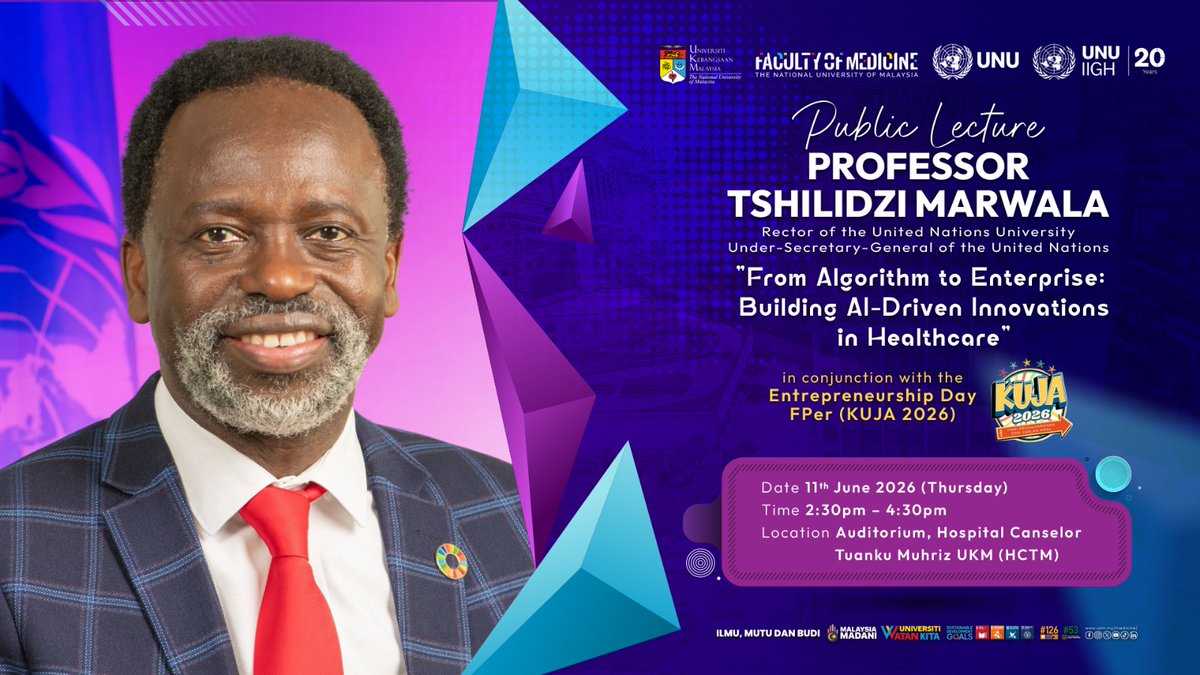
Prof. Tshilidzi Marwala (@tmarwala), @UN Under Secretary-General and Rector of the @UNUniversity, will deliver a public lecture in Kuala Lumpur titled “𝗙𝗿𝗼𝗺 𝗔𝗹𝗴𝗼𝗿𝗶𝘁𝗵𝗺 𝘁𝗼 𝗘𝗻𝘁𝗲𝗿𝗽𝗿𝗶𝘀𝗲: 𝗕𝘂𝗶𝗹𝗱𝗶𝗻𝗴 𝗔𝗜-𝗗𝗿𝗶𝘃𝗲𝗻 𝗜𝗻𝗻𝗼𝘃𝗮𝘁𝗶𝗼𝗻𝘀 𝗶𝗻 𝗛𝗲𝗮𝗹𝘁𝗵𝗰𝗮𝗿𝗲.”
🗓 11 June 2026 | 🕑 2:30–4:30 PM | 📍 Auditorium, Hospital Canselor Tuanku Muhriz (HCTM), UKM | 🔗 Registration link: https://t.co/exJhPgCZnZ
The @UNU_IIGH, in collaboration with the Faculty of Medicine of the National University of Malaysia (@ukm_my), will host a public lecture “𝗙𝗿𝗼𝗺 𝗔𝗹𝗴𝗼𝗿𝗶𝘁𝗵𝗺 𝘁𝗼 𝗘𝗻𝘁𝗲𝗿𝗽𝗿𝗶𝘀𝗲: 𝗕𝘂𝗶𝗹𝗱𝗶𝗻𝗴 𝗔𝗜-𝗗𝗿𝗶𝘃𝗲𝗻 𝗜𝗻𝗻𝗼𝘃𝗮𝘁𝗶𝗼𝗻𝘀 𝗶𝗻 𝗛𝗲𝗮𝗹𝘁𝗵𝗰𝗮𝗿𝗲.” by Prof. Tshilidzi Marwala (@tmarwala), Under-Secretary-General @UN and Rector of the @UNUniversity.
In this talk, he will explore the transformative role of Artificial Intelligence (AI) in healthcare, innovation, research, and the development of future talent.
USG Prof. Marwala brings extensive experience in higher education, research, innovation, and the application of artificial intelligence to global challenges. He previously served as Vice-Chancellor and Principal of the University of Johannesburg, as well as visiting scholar and Professor at universities in the United States, the United Kingdom, China, and South Africa.
🗓️ 11 June 2026, 2:30–4:30 PM
📍 Auditorium, Hospital Canselor Tuanku Muhriz (HCTM), UKM
🔗 Register here: https://t.co/exJhPgCZnZ
📄 𝗡𝗲𝘄 𝗶𝗻 𝗧𝗵𝗲 𝗟𝗮𝗻𝗰𝗲𝘁: Ronald Tundang (@RonaldTundang), Policy Research Fellow at @UNU_IIGH, co-authors a Comment on how @CEPIvaccines can enhance global vaccine equity and transparency.
The authors recognize CEPI’s important role in epidemic and pandemic vaccine preparedness while arguing that its next phase should further strengthen transparency, access provisions, technology transfer, and regional manufacturing capacity.
The Comment highlights why publicly and philanthropically funded R&D should deliver public goods through transparent rules, shared know-how, diversified production, and equitable access during health emergencies.
Read the full article here: https://t.co/Z0D1pRVnvP
Today at the Global Health Security Conference 2026 #GHS2026 in Kuala Lumpur, our Director, Dr. Revati Phalkey (@RPhalkey), moderated the plenary session “𝗥𝗲𝗶𝗺𝗮𝗴𝗶𝗻𝗶𝗻𝗴 𝗚𝗹𝗼𝗯𝗮𝗹 𝗛𝗲𝗮𝗹𝘁𝗵 𝗦𝗲𝗰𝘂𝗿𝗶𝘁𝘆 𝗚𝗼𝘃𝗲𝗿𝗻𝗮𝗻𝗰𝗲 𝗮��𝗱 𝗖𝗼𝗼𝗿𝗱𝗶𝗻𝗮𝘁𝗲𝗱 𝗔𝗰𝘁𝗶𝗼𝗻.”
The discussion examined how the governance structures and mechanisms that underpin global health security—from multilateral institutions and international agreements to regional frameworks and national authorities—must evolve to meet the demands of an increasingly complex and multipolar world.
The session brought together a distinguished panel of experts, including Ms. Laura Rissanen (@LauraRissanen), Political State Secretary to the Minister of Social Security at Finland’s Ministry of Social Affairs and Health; Dr. Maria Van Kerkhove (@mvankerkhove), Acting Director of the Department of Epidemic and Pandemic Preparedness and Prevention at the @WHO; Prof. 𝗭𝗼𝗲 𝗪𝗮𝗶𝗻𝗲𝗿, Director-General of the Australian Centre for Disease Control; and Associate Prof. 𝗣𝗲𝗸 𝗪𝗲𝗲 𝗬𝗮𝗻𝗴, Deputy Chief Executive Officer of the Communicable Diseases Agency of Singapore.
The Global Health Security Conference 2026 #GHS2026 has officially started in Kuala Lumpur, with the @UNU_IIGH and the National University of Malaysia (@ukm_my) as proud local partners.
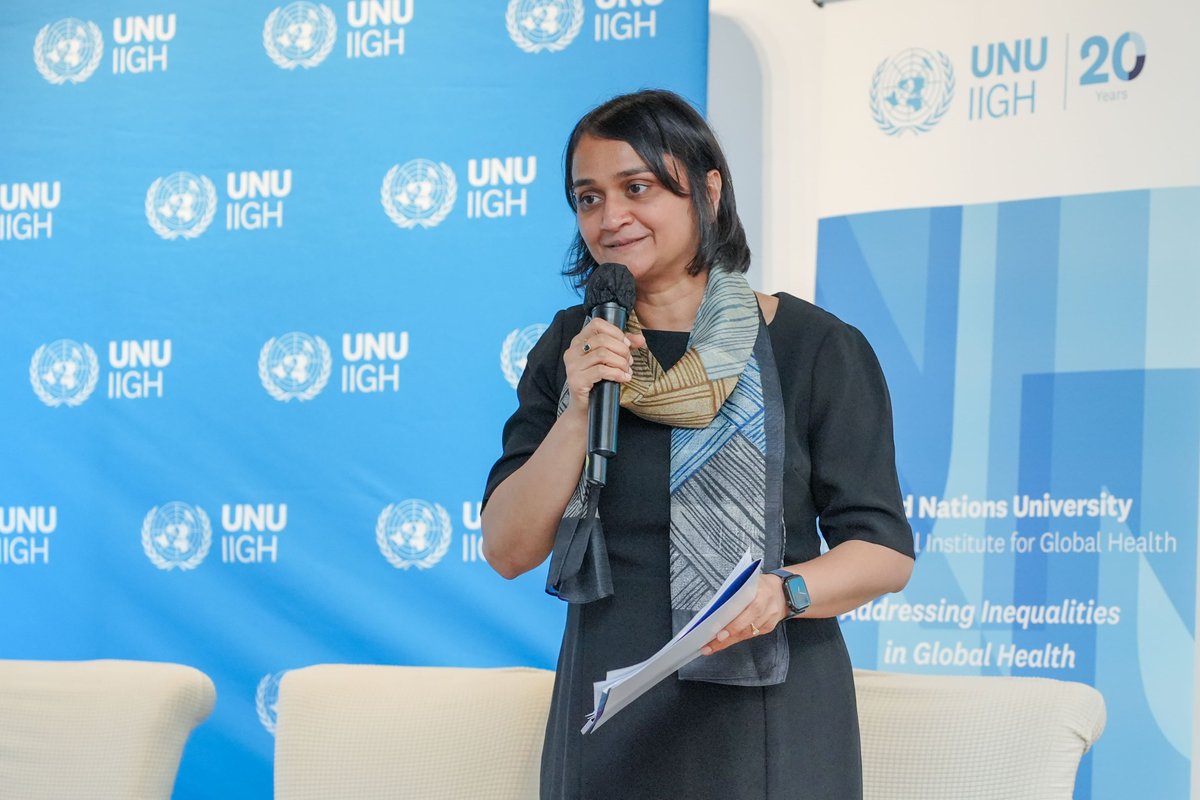
At the opening ceremony, Dr. Revati Phalkey (@RPhalkey), Director of UNU-IIGH, emphasized the need to translate policy into meaningful investments, and investments into sustainable operational capability at all levels. She underscored the importance of strengthening links between science and decision-making, highlighting the critical role of science diplomacy and the need to equip diplomats to effectively engage with scientific evidence in global negotiations.
Dr. Phalkey further stressed that greater interoperability between national and regional systems is essential and called for a shift from problem characterization to solution specification, identifying practical pathways to strengthen preparedness, accelerate collaboration, and build systems capable of managing future uncertainties.
The official conference welcome also featured Dr. Saskia Popescu (@SaskiaPopescu), PhD, Chief Executive Officer of the Global Health Security Network Ltd (@GHS_Network); Dr. Andrew Nerlinger (@AndrewNerlinger), Executive Director of the Global Health Security Fund (@ghsfund) and Chair of the Board of the Global Health Security Network; and Dr. Saia Ma'u Piukala (@RD_WPRO), Regional Director of the World Health Organization Regional Office for the Western Pacific (@WHOWPRO).
The @UNU_IIGH, in collaboration with the Faculty of Medicine of the National University of Malaysia (@ukm_my), will host a public lecture “𝗙𝗿𝗼𝗺 𝗔𝗹𝗴𝗼𝗿𝗶𝘁𝗵𝗺 𝘁𝗼 𝗘𝗻𝘁𝗲𝗿𝗽𝗿𝗶𝘀𝗲: 𝗕𝘂𝗶𝗹𝗱𝗶𝗻𝗴 𝗔𝗜-𝗗𝗿𝗶𝘃𝗲𝗻 𝗜𝗻𝗻𝗼𝘃𝗮𝘁𝗶𝗼𝗻𝘀 𝗶𝗻 𝗛𝗲𝗮𝗹𝘁𝗵𝗰𝗮𝗿𝗲.” by Prof. Tshilidzi Marwala (@tmarwala), Under-Secretary-General @UN and Rector of the @UNUniversity.
In this talk, he will explore the transformative role of Artificial Intelligence (AI) in healthcare, innovation, research, and the development of future talent.
USG Prof. Marwala brings extensive experience in higher education, research, innovation, and the application of artificial intelligence to global challenges. He previously served as Vice-Chancellor and Principal of the University of Johannesburg, as well as visiting scholar and Professor at universities in the United States, the United Kingdom, China, and South Africa.
🗓️ 11 June 2026, 2:30–4:30 PM
📍 Auditorium, Hospital Canselor Tuanku Muhriz (HCTM), UKM
🔗 Register here: https://t.co/exJhPgCZnZ
.@UNU_IIGH present at the Global Health Security Conference 2026 #GHS2026 in Kuala Lumpur! 🌍
Next week, UNU-IIGH will participate as a Local Organizing Partner in one of the leading global gatherings focused on health security, resilience, and international cooperation.
Bringing together leaders, policymakers, researchers, practitioners, international organizations, civil society, and private sector representatives from around the world, discussions at #GHS2026 will explore solutions to emerging health threats, strengthen cross-sector collaboration, and advance efforts to build more resilient and equitable health systems.
We look forward to engaging with partners and stakeholders, contributing regional perspectives, sharing insights, and supporting collective action towards a safer, healthier, and more secure future for all.
Learn more here 👉 https://t.co/0jaXC1nVaE
.@UNU_IIGH congratulates Nikolas Myint on his appointment as the United Nations Resident Coordinator in Malaysia🇲🇾!
We look forward to continuing our collaborations with the Resident Coordinator's Office and the @UNinMalaysia Team to advance health, equity, and sustainable development in #Malaysia and across the region.
We wish you every success in this important role. Welcome!
We are happy to announce that @UN 🇺🇳 chief @antonioguterres has appointed Nikolas Myint to lead @UNinMalaysia 🇲🇾, Singapore 🇸🇬 & Brunei Darussalam 🇧🇳.
We look forward to working with him and his team to advance the #GlobalGoals 🌍 & #LeaveNoOneBehind.
⏩ https://t.co/fC6ES5vRM6
🩺 𝗘𝗺𝗽𝗼𝘄𝗲𝗿𝗶𝗻𝗴 𝗡𝘂𝗿𝘀𝗲𝘀 𝗳𝗼𝗿 𝗦𝘁𝗿𝗼𝗻𝗴𝗲𝗿 𝗮𝗻𝗱 𝗠𝗼𝗿𝗲 𝗥𝗲𝘀𝗶𝗹𝗶𝗲𝗻𝘁 𝗦𝘆𝘀𝘁𝗲𝗺𝘀: 𝗜𝗻𝘀𝗶𝗴𝗵𝘁𝘀 𝗳𝗿𝗼𝗺 𝗡𝘂𝗿𝘀𝗲𝘀’ 𝗗𝗮𝘆 𝟮𝟬𝟮𝟲 𝗶𝗻 𝗦𝗮𝗯𝗮𝗵
UNU-IIGH’s Policy Research Fellow 𝗗𝗿 𝗦𝗲𝗿𝗴𝗼 𝗖𝗵𝗶𝗸𝗵𝗹𝗮𝗱𝘇𝗲 recently participated in the Nurses’ Day Celebration 2026 in Kota Kinabalu, Sabah, organised by the 𝗦𝗮𝗯𝗮𝗵 𝗠𝗲𝗱𝗶𝗰𝗮𝗹 𝗦𝗲𝗿𝘃𝗶𝗰𝗲𝘀 𝗨𝗻𝗶𝗼𝗻 (𝗦𝗠𝗦𝗨). The event brought together over 200 nurses and healthcare professionals to discuss the evolving role of nurses in modern healthcare.
Dr Chikhladze delivered a keynote address titled “𝗧𝗵𝗲 𝗘𝘃𝗼𝗹𝘃𝗶𝗻𝗴 𝗥𝗼𝗹𝗲 𝗼𝗳 𝗡𝘂𝗿𝘀𝗲𝘀 𝗶𝗻 𝗠𝗼𝗱𝗲𝗿𝗻 𝗛𝗲𝗮𝗹𝘁𝗵𝗰𝗮𝗿𝗲,” linking the 2026 International Nurses Day theme “Our Nurses. Our Future. Empowered Nurses Save Lives” to the realities in Sabah and across global health systems. In his remarks, he highlighted the critical role of nurses as trusted links between patients, families, communities and the health system.
A central message of the keynote was that empowering nurses requires concrete action, including safe staffing, fair pay, protection from violence, mental health support, continuous professional development, and greater involvement in decision-making.
Dr Chikhladze emphasised that sustained investment in nurses, alongside primary healthcare and prevention, is essential to building safer, more resilient and equitable health systems. As nursing remains a highly gendered workforce, investing in nurses also means investing in women, families and communities.
#UNU #IND2026 #nurses #OurNursesOurFutur #healthcare #HealthcareWorkforce #HealthEquity #HealthJustice #genderequality #GenderInHealth #nursing #NursingWorkforce
𝗨𝗡𝗨-𝗜𝗜𝗚𝗛 𝗮𝘁 #𝗪𝗛𝗔𝟳𝟵 | 🗒️ 𝗥𝗲𝗰𝗮𝗽
@UNU_IIGH, in collaboration with the 𝗥𝗲𝗽𝘂𝗯𝗹𝗶𝗰 𝗼𝗳 𝗩𝗮𝗻𝘂𝗮𝘁𝘂, Medicus Mundi International (@mmi_updates), and Geneva Global Health Hub (@G2H2_Geneva), convened a side event during the 79th World Health Assembly in Geneva to strengthen global engagement on the @CIJ_ICJ Advisory Opinion on the Obligations of States in respect of Climate Change.
On 20 May, the 𝗨𝗡 𝗚𝗲𝗻𝗲𝗿𝗮𝗹 𝗔𝘀𝘀𝗲𝗺𝗯𝗹𝘆, backed by 141 Member States, adopted the Vanuatu-initiated resolution endorsing the ICJ Advisory Opinion. It marks a historic moment as Member States have chosen to stand behind the ICJ legal blueprint and reaffirm that the rule of law must guide the global response to climate change.
Dr. 𝗣𝗼𝘀𝗶𝗸𝗮𝗶 𝗦𝗮𝗺𝘂𝗲𝗹, Director of Corporate Services of the Ministry of Health of Vanuatu🇻🇺, stated in his intervention that for countries like Vanuatu, this is not about politics — it is about survival. The right to health cannot exist where communities are submerged, where families lose access to food and clean water, and where repeated climate disasters overwhelm fragile systems. Health must be at the center of climate financing mechanisms and global climate action.
Dr. Revati Phalkey (@RPhalkey), Director of UNU-IIGH, emphasized that this moment reflects years of sustained advocacy, legal effort, and multilateral collaboration to position climate change as a critical health and human rights issue. Dr. Phalkey also highlighted the central role of Small Island Developing States (SIDS) and youth movements in advancing this agenda.
Dr. Remco van de Pas (@Rvandepas), Research Lead of UNU-IIGH, moderated the side event and, in his closing remarks, stressed that the health movement has successfully addressed major international crises in the past, including nuclear disarmament, HIV treatment and prevention, sexual and reproductive rights, and access to essential medicines. We can learn from these past struggles and tactics.
The discussion explored:
🔹 The origins and global momentum behind the ICJ Advisory Opinion, and what the ruling means for the health sector
🔹 Practical and governance pathways for implementation
🔹 Vanuatu’s and other Pacific SIDS leadership and support for the ICJ Advisory Opinion, alongside broader multilateral efforts
🔹 Perspectives from delegates from the Philippines, Mozambique, Papua New Guinea, and Colombia
🔹 The role of equity and youth advocacy in advancing climate and health action
🔹 Platforms for awareness-raising, advocacy, policy dialogue, and strengthened collaboration
The event brought together representatives from international organizations, governments, diplomatic missions, civil society, youth movements, and academia, including the @UN, the @WHO, the 𝗠𝗶𝗻𝗶𝘀𝘁��𝘆 𝗼𝗳 𝗛𝗲𝗮𝗹𝘁𝗵 𝗼𝗳 𝗩𝗮𝗻𝘂𝗮𝘁𝘂, 𝗚𝟮𝗛𝟮, and several country delegations and research institutions from across the Global South.
𝗛𝗮𝗽𝗽𝘆 𝗘𝗶𝗱 𝗮𝗹-𝗔𝗱𝗵𝗮!
May this Eid inspire compassion, generosity, and solidarity, while strengthening the values of peace, unity, and mutual care across communities around the world.
From all of us at @UNU_IIGH, we extend our warmest wishes for a peaceful and meaningful celebration.
𝗔𝗱𝘃𝗮𝗻𝗰𝗶𝗻𝗴 𝗰𝗹𝗶𝗺𝗮𝘁𝗲 𝗮𝗻𝗱 𝗵𝗲𝗮𝗹𝘁𝗵 𝘀𝗼𝗹𝘂𝘁𝗶𝗼𝗻𝘀 🌍🤝
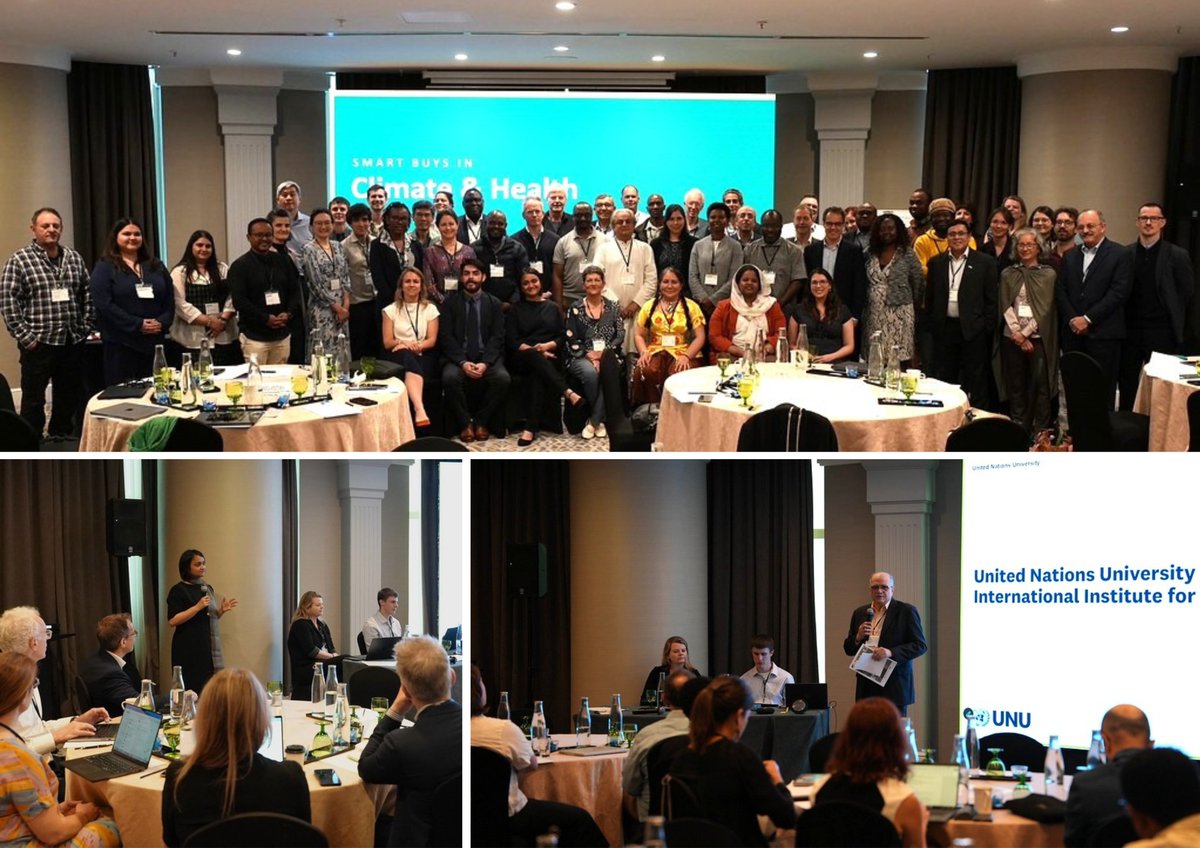
@UNU_IIGH co-hosted the “𝗦𝗲𝗰𝗼𝗻𝗱 𝗦𝗺𝗮𝗿𝘁 𝗕𝘂𝘆𝘀 𝗶𝗻 𝗖𝗹𝗶𝗺𝗮𝘁𝗲 𝗮𝗻𝗱 𝗛𝗲𝗮𝗹𝘁𝗵 𝗰𝗼𝗻𝘀𝘂𝗹𝘁𝗮𝘁𝗶𝗼𝗻 𝗺𝗲𝗲𝘁𝗶𝗻𝗴” together with the @WorldBankGroup, @KfW_int and @Heidelberg_HIGH during a two-day consultation meeting convened on 11–12 May.
The meeting brought together representatives from international organizations, development banks, academia, research institutions, civil society, and policy experts from across regions to exchange perspectives on climate adaptation and mitigation interventions with health benefits.
Discussions focused on identifying highly promising interventions for climate adaptation and mitigation within the health sector, examining how investments can sustainably strengthen climate resilience within health systems, and contributing to an expanded set of high-value investments for climate adaptation and mitigation, building on the Smart Buys report presented at #COP30: https://t.co/JziezUf8Yv
Key messages from the discussions included:
✅ Health adaptation remains politically recognized but significantly underfunded, highlighting the need for stronger evidence and communication to make health investments more visible and bankable.
✅ Moving beyond traditional “Best Buys” approaches towards context-sensitive “Smart Buys” is essential to address the complexity of climate and health challenges.
✅ Equity must remain central to climate and health interventions, ensuring vulnerable communities are not excluded from adaptation and mitigation efforts.
✅ Cross-sector collaboration across food systems, biodiversity, urban planning, energy, and WASH is critical to advancing climate action with health co-benefits.
✅ Health adaptation planning requires a foresight approach that accounts for climate uncertainty, emerging technologies, and diverse knowledge systems, including indigenous perspectives.