Borrowing an idea from one research discipline to solve a thorny problem in another is an age-old scientific trick. Charles Darwin’s theory of natural selection, for example, famously inspired algorithms in computer science that “evolve” solutions to complex problems.
But such clever leaps are fleetingly rare. For #AI, however, hopping between fields can be a breeze.
Researchers highlighted that ability with the release of 36 preprints produced with a single suite of AI tools called BootLoops. The so-called harness can be used with any large language model, such as Anthropic’s Claude or OpenAI’s ChatGPT.
And in just 3 months, researchers used Claude outfitted with BootLoops to cross-pollinate at a massive scale, spotting—and precisely solving—problems in seemingly unrelated fields that share the same mathematical structures.
The resulting papers range widely, from figuring out the age of sunspots, to analyzing government health policies, to attempting to decipher a mysterious medieval manuscript.
Learn more: https://t.co/pVe3lPXagt
A research into cat behavior shows that domestic cats regard humans as social peers rather than superiors, often perceiving their owners as large, awkward kittens.
Far from being aloof or defiant, a cat’s apparent indifference stems from a profound interspecies mismatch in social expectations.
As anthrozoologist John Bradshaw explains, cats—unlike dogs—never evolved to recognize humans as dominant leaders or authority figures. Instead, they filter all interactions through an exclusively feline framework. Behaviors like kneading on your lap or licking your hair are not mere displays of affection; they are the same grooming and bonding rituals cats reserve for close kin or pride members. In their eyes, we are simply enormous, somewhat clumsy fellow cats who require inclusion in the group.
This absence of hierarchical deference accounts for cats’ frequent disregard of commands or household rules. Treating us as equals, they follow cat-to-cat social protocols in every encounter. The “gifts” of dead prey on the doorstep or constant shadowing around the home are acts of care toward what they see as a big, furless, rather inept companion.
Recognizing this mindset transforms the human-cat relationship from one based on authority and obedience to one of mutual companionship. It turns out that while many owners believe they have domesticated their cats, the cats themselves are quietly convinced they are patiently tending to their oversized, adopted family members.
[Bradshaw, J. (2013). Cat Sense: How the New Feline Science Can Make You a Better Friend to Your Pet. Basic Books]
These trees grow wood without being cut down. In Japan, an ancient technique called Daisugi has been doing exactly that since the 14th century.
[🎞️ thebrainmaze]
Raccoons tackle complex puzzle boxes even after the food reward is gone, indicating intrinsic curiosity, flexible problem-solving, and cognitive traits well suited to urban environments. https://t.co/oXvSCCDUHZ https://t.co/LdFxu41oQO
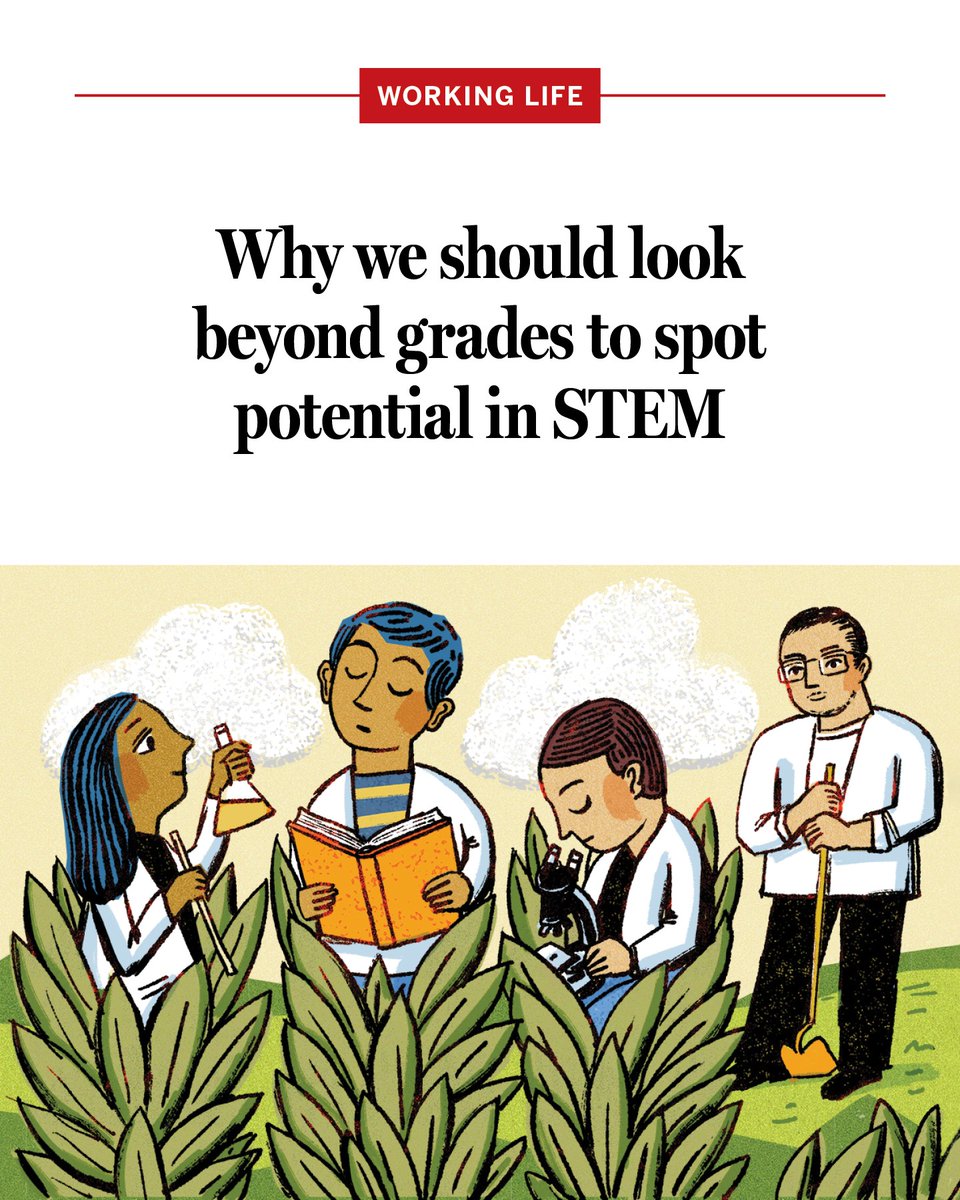
"… watching these students, I am reminded how transformative that moment can be when someone finally sees in you what you could not yet see in yourself." #ScienceWorkingLife https://t.co/hx7se9GCjb
The NYT just asked 86,000 people to pick between two paragraphs and called it a writing test.
Quiz-takers saw 10 pairs of short passages. One from a notable human author like Cormac McCarthy or Carl Sagan. The other generated by AI prompted to write in that author’s style. 54% picked the AI version.
AI is structurally designed to win this test. Models trained on millions of texts have seen every rhetorical pattern McCarthy or Sagan ever used. They can recombine those patterns into something that feels smooth, cohesive, and familiar in a 150-word sample. The human passages, meanwhile, are ripped from longer works where a paragraph might be doing structural work that only pays off 40 pages later. Strip that context and you strip the purpose.
A 2025 Columbia/Stony Brook study actually tested this rigorously. With basic prompting, MFA-trained experts overwhelmingly preferred human writing. But when researchers fine-tuned GPT-4o on individual authors’ complete works, the preference flipped. Experts then favored the AI output for stylistic fidelity at an 8x odds ratio. Cost per author to fine-tune? $81. A 99.7% reduction compared to paying a professional writer.
That study tells you where the real pressure is building. AI paragraph mimicry is a solved problem. What nobody’s tested is whether it can sustain a narrative across 300 pages, track character motivation through a plot, or make a single structural choice that surprises you.
The readers who spotted the AI passages noticed something consistent. The AI text felt “cohesive” and “smooth.” The human text had rough edges, unexpected word choices, moments that made you pause. People who picked AI were optimizing for readability. People who picked human were optimizing for something harder to name.
54% of 86,000 people preferred the paragraph that went down easiest. That tells you more about how people consume text online in 2026 than it tells you about AI’s ability to write.
This is really cool (and wild):
Scientists simulated a complete living cell for the first time. Every molecule, every reaction, from DNA replication to cell division.
The paper (Luthey-Schulten et al., Cell 2026, https://t.co/PXxXWKC8yp), just out today, used JCVI-Syn3A — a synthetic minimal bacterium with fewer than 500 genes. A 3D+time simulation of the full 105-minute cell cycle: DNA replication, protein translation, metabolism, division. Every gene, protein, RNA, and chemical reaction tracked through physical space.
It took years to build. Multiple GPUs. Six days of compute time per run.
And this is the simplest possible cell.
A human cell has ~20,000 genes. It lives in tissue. It interacts with neighbors. It differentiates. It responds to drugs in ways that depend on context we haven't fully measured.
Mechanistic simulation of the minimal cell costs 6 GPU-days for 105 minutes of biology. You cannot scale that to human cells. The complexity isn't 40x harder. It's exponentially harder.
This is why the field pivoted to data-driven models. You can't hand-encode the regulatory wiring of a human hepatocyte. But you can learn it — if you have the right perturbation data collected across enough diverse biological contexts.
The two approaches aren't competing. Papers like this generate the ground truth that future ML models need for validation. But the path to a clinically useful virtual cell runs through foundation models, not through scaling up mechanistic simulation.
Amazing work!
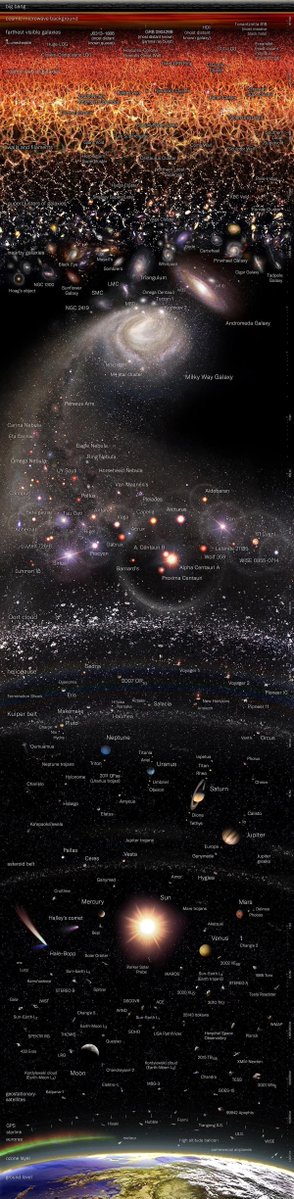
This is going to make you feel very small.
Fly away from the surface of Earth, past the Sun, out of the Solar System, through the closest stars, leave the Milky Way, to the cosmic web of galaxies in the nearby Universe.
In 2008, evolutionary anthropologist Katie Hinde began studying breast milk from rhesus macaque mothers. What started as a routine study turned into a groundbreaking discovery. She found that mothers raising sons produced milk richer in fat and protein, while those raising daughters had different nutrient balances. This led Katie to a radical conclusion: milk is not just nutrition—it’s information.
Her research revealed that milk shapes behavior, not just growth. For instance, first-time mothers produced milk with higher levels of cortisol, influencing their babies to grow faster but also become more anxious. Katie also discovered that milk changes based on the baby’s immune needs. When a baby is sick, the mother’s milk quickly adapts by producing more white blood cells and targeted antibodies.
Katie’s work, which challenged the scientific consensus, was largely ignored. She launched a blog, Mammals Suck Milk, to spark discussions, and her findings, including that every mother’s milk is unique, gained widespread attention. In 2017, she took her research to a TED stage, and in 2020, her work was featured in Netflix’s Babies. Today, as a professor at Arizona State University, Katie continues to revolutionize our understanding of infant development and lactation.
Katie Hinde didn’t just study milk—she uncovered a living, responsive communication system, revealing that nourishment is intelligence. Her discovery shows that sometimes the biggest revolutions begin by listening to what others ignore.
An underwater encounter with the strange but beautiful feather star (Crinoid sp.), these ancient invertebrates first appeared in the fossil record about 300 million years before the dinosaurs.
📽: Marcelo Johan Ogata
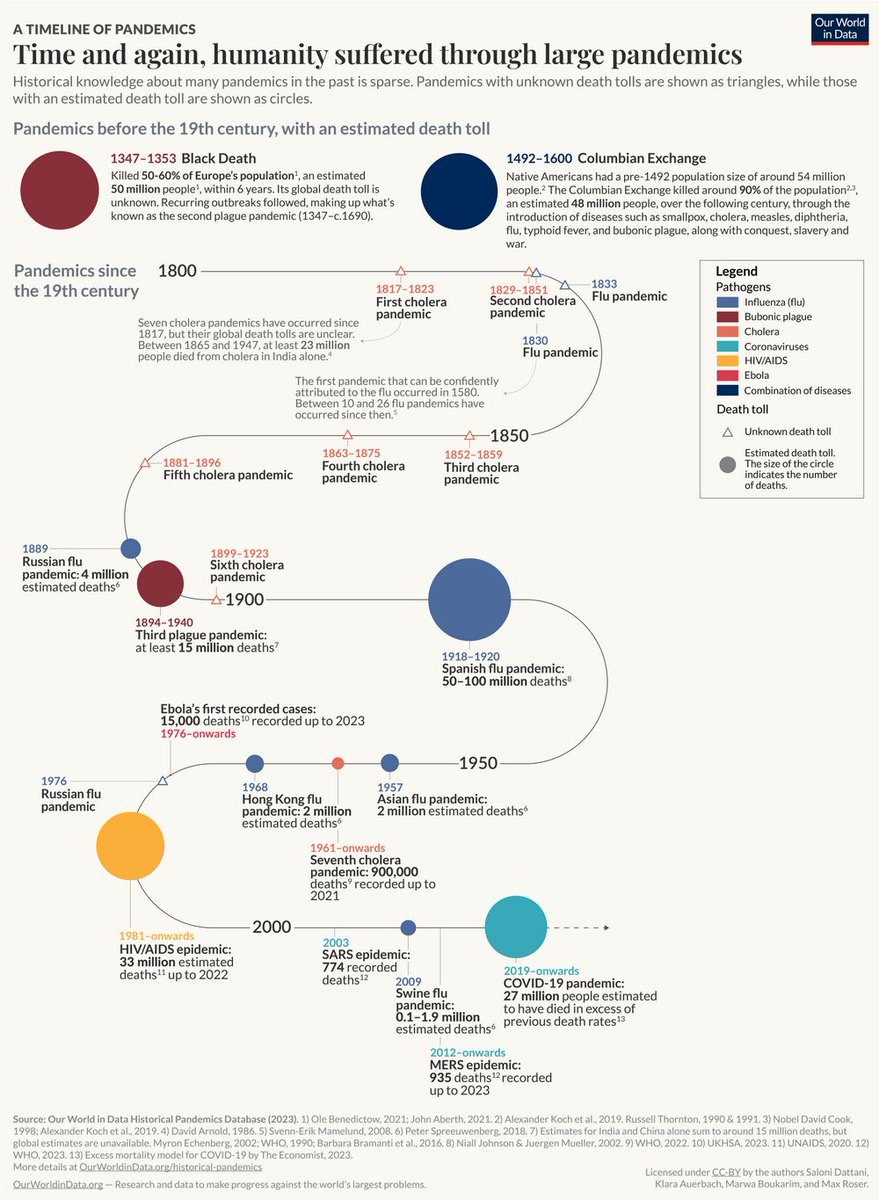
For most of human history, pandemics weren’t rare events.
Plague. Smallpox. Cholera. Influenza.
Entire generations erased without knowing why.
No vaccines. Just death.
What changed isn’t luck.
It’s science.
Romanticizing the past is easy
when you’ve never had to live in it.
The math on this image is insane.
New Horizons transmitted at 2,000 bits per second from 3 billion miles away. Slower than a 1990s dial-up modem. It took 16 months to download all the flyby data.
The spacecraft had to hit a target box 100km wide, arriving within 150 seconds of schedule, after 9 years of flight. Miss it and the preloaded observation commands point at empty space.
Ten days before arrival, the spacecraft crashed and went into safe mode. Engineers had 72 hours to restore everything.
The probe is now 5 billion miles out, still whispering data back to Earth. We got 50 gigabits of Pluto photos using technology slower than your phone’s bluetooth.





![Rainmaker1973's tweet photo. A research into cat behavior shows that domestic cats regard humans as social peers rather than superiors, often perceiving their owners as large, awkward kittens.
Far from being aloof or defiant, a cat’s apparent indifference stems from a profound interspecies mismatch in social expectations.
As anthrozoologist John Bradshaw explains, cats—unlike dogs—never evolved to recognize humans as dominant leaders or authority figures. Instead, they filter all interactions through an exclusively feline framework. Behaviors like kneading on your lap or licking your hair are not mere displays of affection; they are the same grooming and bonding rituals cats reserve for close kin or pride members. In their eyes, we are simply enormous, somewhat clumsy fellow cats who require inclusion in the group.
This absence of hierarchical deference accounts for cats’ frequent disregard of commands or household rules. Treating us as equals, they follow cat-to-cat social protocols in every encounter. The “gifts” of dead prey on the doorstep or constant shadowing around the home are acts of care toward what they see as a big, furless, rather inept companion.
Recognizing this mindset transforms the human-cat relationship from one based on authority and obedience to one of mutual companionship. It turns out that while many owners believe they have domesticated their cats, the cats themselves are quietly convinced they are patiently tending to their oversized, adopted family members.
[Bradshaw, J. (2013). Cat Sense: How the New Feline Science Can Make You a Better Friend to Your Pet. Basic Books]](https://pbs.twimg.com/media/HUcSKfRWYAAEDg-.png)