Spent the day inside the Life Sciences Glovebox with @astro_jessica, who is patiently teaching the new guy. She’s running IVGEN Mini, our IV fluid generation experiment, and the idea is simple to say and hard to do: turn the station’s drinking water into sterile, medical-grade IV fluid.
Why it matters: IV bags expire in about 16 months, and a Mars mission could run a few years. You also can’t launch the 100+ liters a sick crew member might need. So instead of packing saline, we pack a filter and salt. Station water gets purified to pharmaceutical grade, mixes with premeasured sodium chloride, and comes out the other side as normal saline.
As a physician, this one hits close to home. If we can make IV fluid 250 miles up, we can make it in a field hospital, a disaster zone, or anywhere the supply chain doesn’t reach.
For years, Dr. Anil Menon watched over Soyuz crews as a NASA flight surgeon. This morning the roles reversed — the UTMB Aerospace Medicine alumnus launched to the International Space Station aboard Soyuz MS-29 for an eight-month mission.
📷 Robert Markowitz NASA-JSC
NB: Astronaut Frank Rubio holds the American record for the longest single Spaceflight with 371 days aboard the ISS. He’s also a former US Army flight surgeon and a family physician.
Introducing Artemis III.
Four astronauts. Three launches. Two dockings. One splashdown.
In 2027, the Artemis III mission will practice docking the Orion spacecraft with two lunar landers in low Earth orbit — the capability we need to return humanity to the Moon’s surface.
Exercise in space is a daily countermeasure, not just a workout. In microgravity, muscles and bones lose the normal loading they get on Earth, so compact systems like ESA’s E4D matter for future exploration missions and moon bases.
tbh between Optimus and data centers in space, I was worried that the human spaceflight priority may be slipping.
“Making something disappear isn't enough; you have to bring it back. That's why every magic trick has a third act, the hardest part, which we call ‘The Prestige’.”
from the SpaceX S1: part of @elonmusk's new pay package only vests when SpaceX establishes "a permanent human colony on Mars with at least one million inhabitants"
When Richard first sent this to me, even though I was primed to look for the image shenanigans, I only really saw it after spotting this asterism, to borrow a term from astronomy.
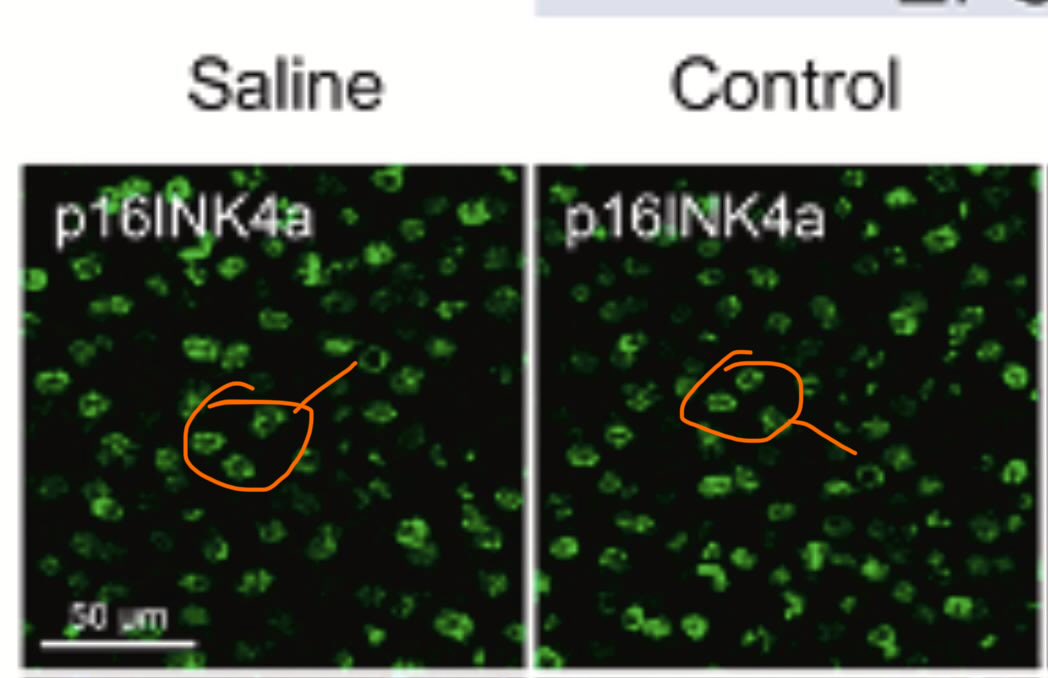
We should run astronomy software on cell images in papers to stack and blink for difference imaging
New in @theammind:
Freedom in space won't emerge by default. It has to be engineered into the systems that sustain life.
Microgravity, radiation, closed life support. Every constraint of off-world living pushes toward centralized control. The first durable space societies risk becoming ruthlessly optimized systems where dissent destabilizes survival and exit is impossible.
Those foundational architectures will persist for generations. We get one chance to build them right.
A case for why the American political project belongs in orbit, and what it will take to keep it alive there.
Link in comments.
We're sending a back-up copy of all known DNA to the moon! The Lunar Genome Project and BioVault has officially started. Thanks to @Spaceomix and Space Applications Services: https://t.co/yBaQlK8p89
“if you don’t do your job properly, these specific people will die. look at their faces.” is a safety message that should be used more often. it at least worked this time
Muita gente não sabe, mas a Força Aérea dos EUA usava ursos pretos reais para testar cápsulas de ejeção em aviões supersônicos nos anos 60.
Como era impossível garantir a segurança dos pilotos no B-58 Hustler sem dados biológicos, eles ejetavam os ursos em velocidades absurdas.
"We are a mirror, reflecting you."
Artemis II mission specialist Jeremy Hansen discusses ways that the crew worked together and supported each other throughout their lunar mission.
Big smiles from Christina and Victor on the deck of the USS John P. Murtha, as they waited to be escorted for their routine post-mission medical checks.
Our crew on the @Space_Station caught a glimpse of the @NASAArtemis II crew as they re-entered the atmosphere from their journey to the Moon! We first saw a bright light and a trail as the service module burned up. We didn’t see the Orion capsule itself as it re-entered, but we saw the wispy trail it left behind in the upper atmosphere. Overjoyed that our friends are safely back on Earth after their awe-inspiring mission!
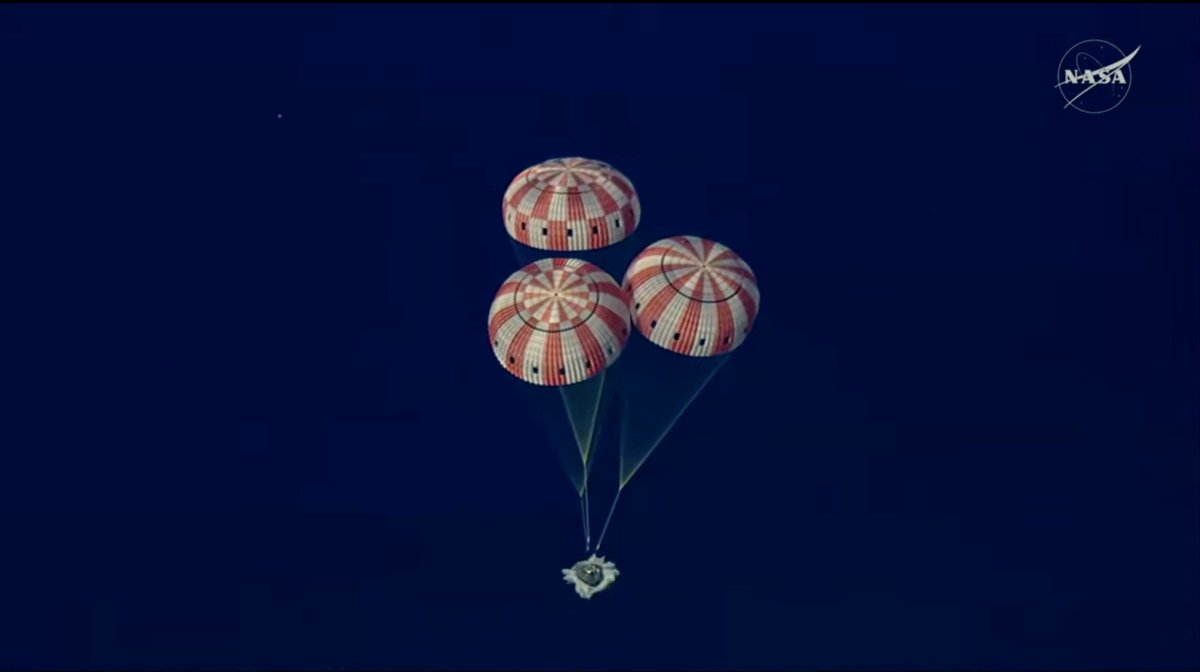
And splashdown!
America is back in the business of sending astronauts to the Moon and bringing them home safely.
Reid, Victor, Christina, and Jeremy did an outstanding job. These talented astronauts inspired the world and represented their space agencies and nations as humanity’s ambassadors to the stars.
This was a test mission, the first crewed flight of SLS and Orion, pushing farther into the unforgiving environment of space than ever before, and it carried real risk. They accepted that risk for all we stood to learn and for the exciting missions that follow, as we return to the lunar surface, build a Moon base, and prepare for what comes next.
And they were not alone. The entire NASA workforce, our commercial and international partners, and the hopes and dreams of people all over the world were with them. The astronauts know it, and you should too. This mission would not have been possible without you.
Congratulations. Artemis II, mission accomplished.
Artemis II: “we wanna know what you guys are eating so we can mirror you today” and they laughed over eating the same mango salad and spicy green beans so they can share a meal together over miles of darkness and space together 😭😭😭😭😭😭😭
Orion is almost 400 000 km away, whereas the International Space Station orbits about 400 km above Earth 🌍
As the two crews speak, there is almost an 8 second delay in their conversation ⏱️.