It’s the 10th anniversary of Brexit. Let’s have a look at how that’s going:
1974-2016: 7 prime ministers
2016-2026: 7 prime ministers
I said it then. I’ll say it again.
It’s a shitshow.
Medical debt is the leading cause of personal bankruptcy in the United States.
Not gambling. Not reckless spending. Not the moral failures that the rhetoric of personal responsibility loves to invoke.
Getting sick.
The leading cause of financial ruin in the wealthiest country in human history is the biological inevitability of the human body breaking down.
This happens nowhere else in the developed world.
In no other wealthy nation does a person survive cancer and then spend a decade paying for the survival.
In no other wealthy nation does a grandmother choose between insulin and rent.
In no other wealthy nation is the question "can I afford to call an ambulance" a question a person has to genuinely ask.
This is not an accident of policy.
This is the policy.
The extraction is the point.
The debt is the product.
The sick person is the raw material.
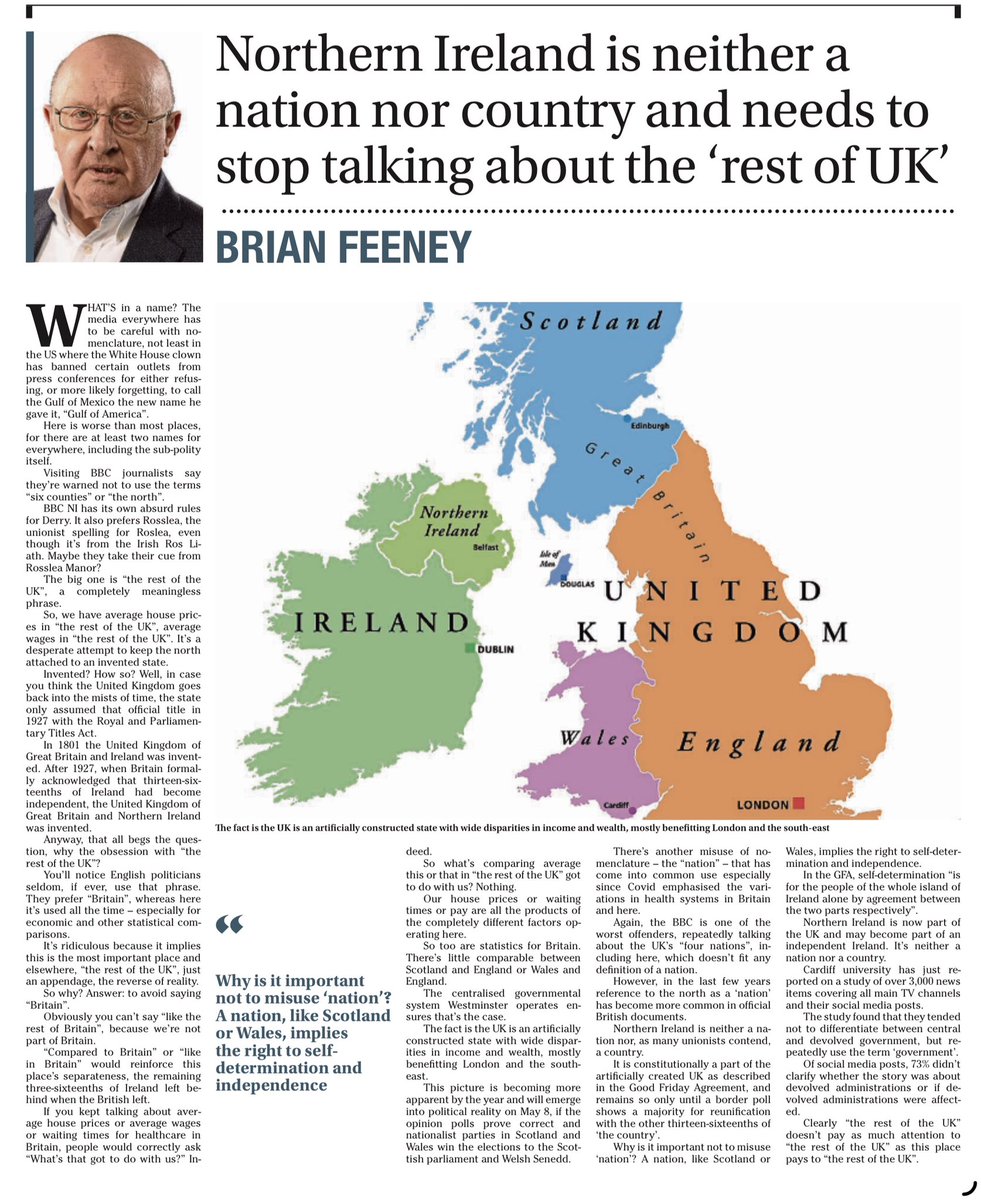
Belfast, the league table nobody’s torching a bus over:
🔥 West Belfast 1 in 3 children growing up in poverty. Not after one knife attack. Every day, for years.
🔥 NHS waiting lists the worst in the entire UK. Half a million people in the queue. A man waited six years for a new knee.
🔥 45,000 kids’ families docked by the two-child cap while the politicians look the other way.
Now what does Nigel Farage talk about? Not that. Never that.
He talks about the bus stop, the small boat, the bloke who doesn’t look like you. Because while a third of west Belfast’s children go without, Farage has trousered over a million quid in “second jobs” since the last election nearly £1.2m a year from GB News alone, £189k to flog gold bars, fifty grand recording birthday videos on his phone. Highest-earning MP in the Commons. Then he routes it through his own company so he pays corporation tax instead of the income tax the rest of us cough up and still managed to file £380k of it late, 17 times over.
That’s the trick, isn’t it. Point at the poorest man on the street so nobody looks at the richest man on the telly. A hungry child in Ardoyne doesn’t pay his GB News salary. Outrage does.
Real patriots feed the kids in their own constituency. Grifters just sell them someone to blame at two grand an hour.
You probably haven't heard of him, but £1 in every £5 banked by Scottish parties came from the fortune of one businessman made in the obscure industry of gas generators for science labs. He’s used it to become the biggest money man ahead of this election https://t.co/tLBXcxiP4l
Hundreds of millions of people throughout the world are immersed in extreme poverty. Yet, disproportionate wealth remains in the hands of a few. It is an unjust scenario, in the face of which we cannot fail to question ourselves and commit to change things. There is no lack of resources at the root of disparities, but the need to address solvable problems related to a more equitable distribution of wealth, to be achieved with moral sense and honesty.
While the world focuses on the destruction in Iran, we must not ignore what Israel is doing in Lebanon.
1,461 have been killed.
4,430 have been injured.
1.2 million have been displaced.
Israel now occupies 14% of Lebanon.
Enough is enough. No more US military aid to Israel.
I wish I didn’t have to share this. But the BBC has decided to censor my first Reith Lecture.
They deleted the line in which I describe Donald Trump as “the most openly corrupt president in American history.” /1
Dad’s books are full of empathy, common sense, and a healthy suspicion of the powerful. But at its heart his work is also about how systems keep people poor while pretending it’s their own fault. So I hope Kemi’s taking notes as well as reading the jokes.
It is unfortunate that the African Association in Cairo has been closed and its historic building, established in 1955, seized. Once a vital hub for anti-colonial activism and a home to much of the Pan-African movement during the 1950s and 1960s, its closure marks the loss of an important chapter in Egypt’s history.
I was deeply saddened by the news of the African Association’s closure, especially with the seizure of its headquarters. But this sadness was not born in the moment; it was linked to the long decline of the Association’s standing and the gradual erosion of its vital influence over decades, particularly since the rise of Sadat’s regime and the subsequent shifts in Egypt’s African orientation, along with the disappearance, marginalization, and departure of many of the Association’s active cadres who once kept its flame alive.
The Association should have become a living museum, given its exceptional legacy. It had served as a prototype for the Organization of African Unity, founded later in 1963. Yet the site never received the attention it deserved over the decades. I often came across the Association’s name and history in research and articles, and a South African friend once told me that during his stay in Cairo, he had hoped to visit it because, as a high school student, he had read about how this place played a pivotal role in supporting the comrades of Mandela and Robert Sobukwe.
What is striking is that people in other countries were often more aware of the Association’s historical and political importance than many in Egypt itself. This was not the fault of ordinary Egyptians, but rather the result of longstanding political and social factors designed to foster hostility and neglect toward anything that tied Egypt back to the rest of Africa.
In the following lines, I will give a brief overview of the Association and its historical role to highlight its significance.
The African Association was founded in 1955, initially as a platform combining political and cultural activity, raising awareness of African issues, and supporting African students in Cairo. It soon evolved into a coordinating hub for anti-colonial activists from Kenya to South Africa, backed by President Gamal Abdel Nasser’s government. One of the first exiled groups to arrive came from Cameroon after the British and French authorities banned the Union of the Peoples of Cameroon, and its leader, Félix Moumié, established a permanent Cameroonian office within the Association in July 1957. Only a few months later, the Ugandan pan-Africanist John Kale, under close watch by British colonial authorities and at high risk of arrest, made his way secretly across the Sudanese border and up the Nile to Cairo, where he set up an external office of the Uganda National Congress inside the Association.
By the 1960s, the African Association had become a revolutionary space that hosted around twenty-four nationalist parties from across East, Central, and Southern Africa. It was also a safe haven for exiled revolutionary leaders such as Am��lcar Cabral, founder of the independence movement in Guinea-Bissau and Cape Verde; Samora Machel, founder of Mozambique’s FRELIMO and later its first president; and Agostinho Neto, founder of Angola’s MPLA and later its first president, all of whom found in Cairo a place of refuge and political work. Other figures included experienced organizers like Joshua Nkomo, founder of the Zimbabwe African People’s Union, and Fosumzi Make, an ANC-aligned activist.
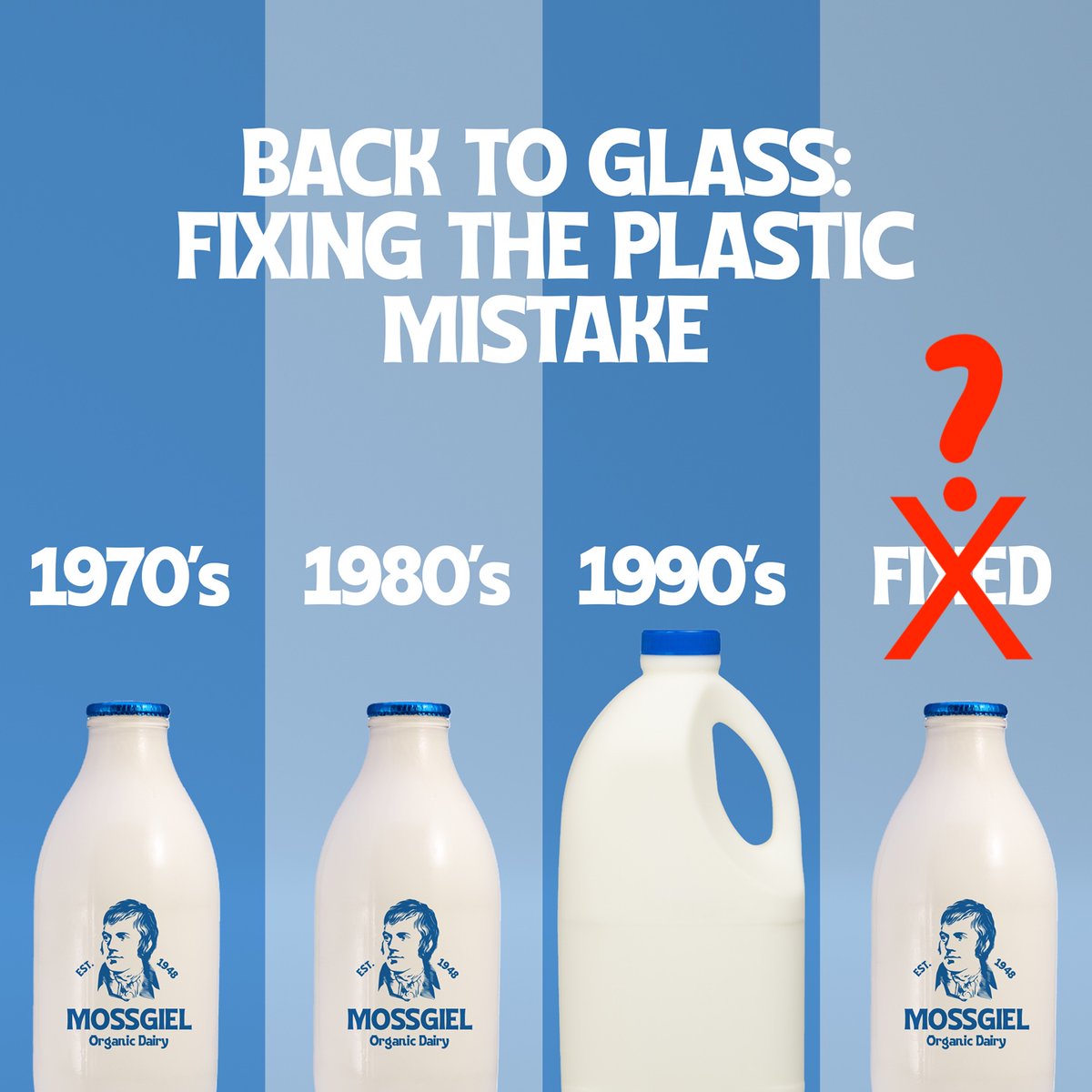
DEATH FOR SMALL SCALE MILK?
For years, they’ve bottled milk in glass the old-fashioned way. Bottles out in the morning, empties back by night, supplying shops all across Scotland’s west coast islands.
But last week, Wee Isle Dairy on Gigha announced they’re stopping milk production to focus on other areas, like Ice Cream from their herd's milk.
The reason? A government tax called the Extended Producer Responsibility (EPR) levy. It punishes glass packaging because it’s heavier than plastic.
Sounds fair enough at first – glass does take energy to produce, so it needs to be reused to make sense environmentally; the government wanted glass companies to pay more towards the recycling of SINGLE USE glass (which tbh, doesn’t make sense in the first place since it’s reusable).
But here’s the thing: in this legislation, there’s no difference between a single-use bottle and one that’s washed and reused over and over. No credit for doing the right thing.
It’s a policy dreamt up in Westminster – designed to make politicians look busy while chasing good-news headlines. And yet, it’s pushing small businesses under.
At Mossgiel, we saw this coming. Back in 2022, we worked with Heriot-Watt University to compare dairy packaging. The results were clear: reused glass is the most sustainable option because UK recycling systems aren’t strong enough yet. A circular system – bottles coming back, washed and refilled just works.
And here’s the kicker: under our return and reuse policy, most cracked bottles already come back to us. We pay to recycle them ourselves. So why should we be taxed again as if those bottles are waste?
This isn’t just bad policy. It’s steering small producers towards plastic and cans – or forcing them to shut their doors like Wee Isle Dairy.
If government wants real sustainability, it needs to stop the box-ticking, fix recycling infrastructure, reward reuse systems, and listen to real people making real food, not BIG FOOD lobbyists protecting their own profits.
Until then, we’ll keep standing our ground. Because glass bottles are worth fighting for.
My piece for The Guardian on how rebranding Lisbon to the world while giving landlords and investors a helping hand has resulted in the worst housing crisis in Portugal's history.
https://t.co/2I9setkR7H