सन् 1965 में पाक सीमा पर स्थित भुट्टोवाला चौकी पर अदम्य साहस और वीरता का परिचय देने वाले, जैसाण धरा के सपूत, मरणोपरांत पुलिस अग्नि सेवा पदक से विभूषित अमर शहीद पूनमसिंह भाटी की जयंती पर उन्हें सादर नमन।
#PoonamSinghBhati#Jaisalmer
हल्दीघाटी विजय दिवस के अवसर पर मातृभूमि की स्वाधीनता की रक्षा के लिए आखिरी समय तक संघर्ष करने वाले मेवाड़ मुकुट महाराणा प्रताप जी एवं हल्दीघाटी युद्ध में अपना सर्वोच्च बलिदान देने वाले समस्त रणबांकुरों को मेरा कोटि-कोटि प्रणाम।
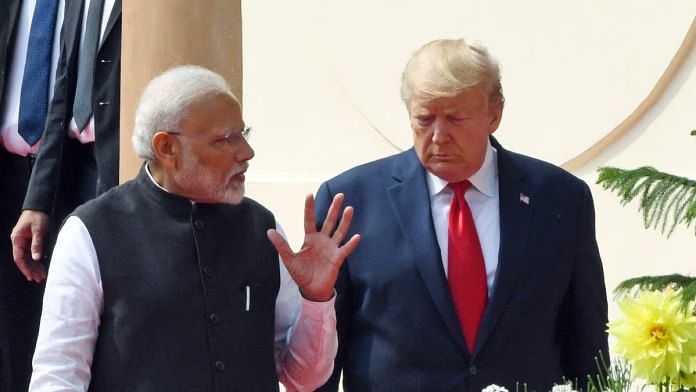
#WATCH | Evian, France | PM Modi tells US President Trump, "We have always said that freedom of navigation should be ensured and we should also stress upon that. Lakhs of Indian seafarers are om duty in different seas of the world in the sector of maritime trade. I believe that their security is equally important...I am confident that in the deal (with Iran) security of seafarers will be ensured and prioritised..."
(Video: Reuters)
राष्ट्र गौरव, स्वाभिमान, अदम्य साहस, त्याग और पराक्रम के अमर प्रतीक, मेवाड़ के गौरव एवं वीर शिरोमणि महाराणा प्रताप की जयंती पर उन्हें कोटि-कोटि नमन !
महाराणा प्रताप का अद्वितीय शौर्य, मातृभूमि की स्वतंत्रता एवं अस्मिता की रक्षा के लिए किया गया उनका संघर्ष, अटूट स्वाभिमान और राष्ट्रनिष्ठा सदैव हम सभी के लिए प्रेरणास्रोत रहेंगे। उनका जीवन हमें विपरीत परिस्थितियों में भी सत्य, सम्मान और राष्ट्रहित के लिए दृढ़ रहने का संदेश देता है..!
जय भवानी 🙏🚩❗️❗️
स्वतंत्रता, स्वाभिमान के वैश्विक प्रतिमान, मातृभूमि की रक्षा के लिए अपना सर्वस्व न्योछावर करने वाले वीर शिरोमणि महाराणा प्रताप जी की जयंती पर कोटिशः वंदन।
#Maharanapratapjayanti#Maharanapratap
It's worth remembering that the Indo-Pacific framework itself emerged when🇨🇳was at the centre of🇺🇸strategic thinking in the IP region.
Instead of linking this with🇮🇳, this should raise concerns about Trump's China policy...
This name change isn't about India, but rather a broader shift in US priorities in the Indo-Pacific. Trump 1.0 pushed the Quad, closer ties with🇮🇳, & a stronger Indo-Pacific framework to balance China. This is driven more by Trump's changing views of🇨🇳 than anything/anyone else.
Department of War Restores U.S. Pacific Command Designation.
CAMP H.M. SMITH, Hawaii — The Department of War announced today that the U.S. Indo-Pacific Command (USINDOPACOM) will officially restore its name to the U.S. Pacific Command (USPACOM).
Originally established on January 1, 1947, by President Harry S. Truman, the command operated under the USPACOM banner for over 70 years, standing as the oldest and largest of the United States' unified combatant commands.
Restoring the legacy USPACOM designation honors the command’s deep historical roots, fostering a sense of pride and collective spirit among all who serve in the Pacific. From its critical role in establishing the post-WWII regional security architecture to its coordination of joint forces during the Korean War, the Vietnam War, and countless humanitarian operations, the USPACOM namesake carries decades of military heritage and enduring regional partnerships.
USPACOM’s vast area of responsibility—spanning from the waters off the West Coast of the United States to the western border of India—remains exactly the same. The command's fundamental mission and its unwavering commitment to maintaining a free and open theater alongside regional allies and partners are unchanged.
https://t.co/5zeycP2lip
Last one on this topic, and I have been holding this in myself for a while.
For centuries, class divides kept the labor of the poor invisible to the rich. Factory workers toiled behind walls, farmers in distant fields, domestic help in backrooms. The wealthy consumed the fruits of that labor without ever seeing the faces or the fatigue behind it. No direct encounter, no personal guilt.
The gig economy shattered that invisibility, at unprecedented scale.
Suddenly, the poor aren't hidden away. They're at your doorstep: the delivery partner handing over your ₹1000+ biryani, late-night groceries, or quick-commerce essentials. You see them in the rain, heat, traffic, often on borrowed bikes, working 8–10 hours for earnings that give them sustenance. You see their exhaustion, their polite smile masking frustration with life in general.
This is the first time in history at this scale that the working class and consuming class interact face-to-face, transaction after transaction. And that discomfort with our own selves is why we are uncomfortable about the gig economy. We want these people to look our part, so that the guilt we feel while taking orders from them feels less.
We aren't just debating economics. We are confronting guilt. That ₹800 order might equal their entire day's earnings after fuel, bike rent, and app cuts. We tip awkwardly, or avoid eye contact, because the inequality is no longer abstract. It's personal.
Pre-gig era, the rich could enjoy luxury without moral discomfort. Labor was out of sight. Now, every doorbell ring is a reminder of systemic inequality. That's why debates explode. It's not just policy. It's emotional reckoning. Some defend the system (“they choose it”), others demand change (“this isn't progress, its exploitation”).
And here’s the uncomfortable twist: the unsaid ask of clumsy ‘solutions’ isn’t dignity. It is about returning to invisibility.
Ban gig work and you don’t solve inequality. You remove livelihoods. These jobs don’t magically reappear as formal, protected employment the next day. They disappear, or they get pushed back into the informal economy where there are even fewer protections and even less accountability. Over-regulate it until the model breaks, and you achieve the same outcome through paperwork instead of slogans: the work evaporates, prices rise, demand collapses, and the people we claim to protect are the first to lose income.
And then what happens?
The rich get their old comfort back. Convenience returns without faces. Guilt dissolves. We go back to clean abstractions and moral posturing from a distance. The poor don’t become safer, they become invisible again: back in cash economies, back in backrooms, back in shadows where regulation rarely reaches and dignity isn’t even debated.
The gig economy just exposed the reality of inequality to the people who previously had the luxury of not seeing it. The doorbell is not the problem. The question is what we do after opening the door.
Visibility is the price of progress. We can either use this discomfort to build something better (which we keep doing continuously as delivery partners are our backbone), or we can ban and over-regulate our way back into ignorance. One of those choices improves lives. The other simply helps the consuming class feel virtuous in the dark.
Very well written @deepigoyal Every word is true. It beggars belief that a Champagne Socialist who married a film star and had a designer wedding in Udaipur and a first wedding anniversary in Maldives has the audacity to then shed crocodile tears around alleged exploitation of gig workers. Aam Aadmi my foot
🚨MASSIVE NEWS 🚨India’s Silent Tariff Strike On USA since November 2025: A 30% Tariff That Shook U.S. Farmers
India has quietly executed a sharp and effective trade countermeasure against the United States, without naming Washington or triggering diplomatic noise.
On 1 November 2025, India enforced a 30% import duty on yellow peas (10% basic duty + 20% agricultural cess) through a routine notification issued on 30 October 2025. The rule applied globally, not to any specific country. Yet, the real impact fell squarely on the U.S.
The issue surfaced publicly only in January 2026, when U.S. Senators Kevin Cramer and Steve Daines wrote to Donald Trump, urging him to engage India and seek tariff relief. Their states, North Dakota and Montana, are America’s top pulse producers, and India is the world’s largest consumer. Once the tariff kicked in, U.S. pulses became uncompetitive overnight.
It is a noteworthy fact that Trump talked to Modi during his first regime for lower taxes on pulses and Modi agreed on that. However, when Trump imposed tariffs, India silently retaliated by increasing the taxes by 30%
American lawmakers called the move “unfair.” The irony is evident: the same U.S. administration that aggressively used tariffs against India is now scrambling as India protects its own farmers, quietly and legally.
The signal is clear: Indian agriculture is non-negotiable. No press conferences. No retaliation rhetoric. Just policy, implemented, effective, and felt where it matters.
BIG NEWS 🚨 India slapped 30% tariff on US pulse crops.
North Dakota and Montana senators request Trump to talk to PM Modi and help US farmers. India is the biggest market of pulses.
🇮🇳🇺🇸 India has imposed a 30% import duty on pulses and lentils originating from the United States.
The decision is widely viewed as a retaliatory measure following higher tariffs imposed earlier by the U.S. on certain Indian products.
अगले उपराष्ट्रपति श्री राजेंद्र जी राठौड़(बाबोसा)।
महाराजा जयचंद्र जी को मंचों से अपमानित करने पर ये पद तो Rss दे ही देगा।
हमारा उपराष्ट्रपति कैसा हो,
राजेंद्र जी बाबोसा जैसा हो।
@Rajendra4BJP