My first blog post: bootstrapping a tiny out-of-tree MLIR experiment.
One pass, a custom mlir-opt driver, a test, and a build script—using an existing LLVM/MLIR installation.
A reusable starting point for compiler experiments.
https://t.co/8B2Has5t59
#MLIR
Mojo 🔥 1.0 is in beta! Beta 1 marks the first step towards finalizing 1.0 later this year, which will bring a new level of language stability. The beta lands safe closures with a new capturing syntax, conditional trait conformance, and major variadic improvements. Plus, Mojo has its own home at https://t.co/j3TzPUkEDr.
@marksaroufim@vitransformer Witnessing what you did with the CUD…, 😮💨 sorry, GPU mode community was great, wishing you all the best on what comes next!
@zaachsiieegeel Awesome 🚀 We are rapidly improving: https://t.co/biadKxzubv and you'll see a lot more here in the next few weeks! Contributions welcome 🤗
What’s the best model you can train in a day if someone hands you a pile of Blackwell GPUs?
You can try out yourself
On April 9 in Paris, @GPU_MODE + @verdacloud + @sestercegroup are hosting a GPU hackathon with a bunch of GPUs to run on and even more of them for the winners.
Mojo 🔥 just added a powerful new reflection capability that can synthesize trait conformances for you. In other languages, this is only available to compiler authors. Maxim Zaks breaks down how Mojo makes metaprogramming explicit and accessible: https://t.co/K5VZzxAGeB
Mojo in Jupyter is here 🙌
@jeremyphoward released a new Jupyter kernel that lets you run Mojo directly in notebooks.
It works great on macOS, supports recent Linux versions, and is easy to install via pip or uv.
Give it a try and let us know what you build!
https://t.co/3AN1UooKCd
#MojoLang #OpenSource #DeveloperTools
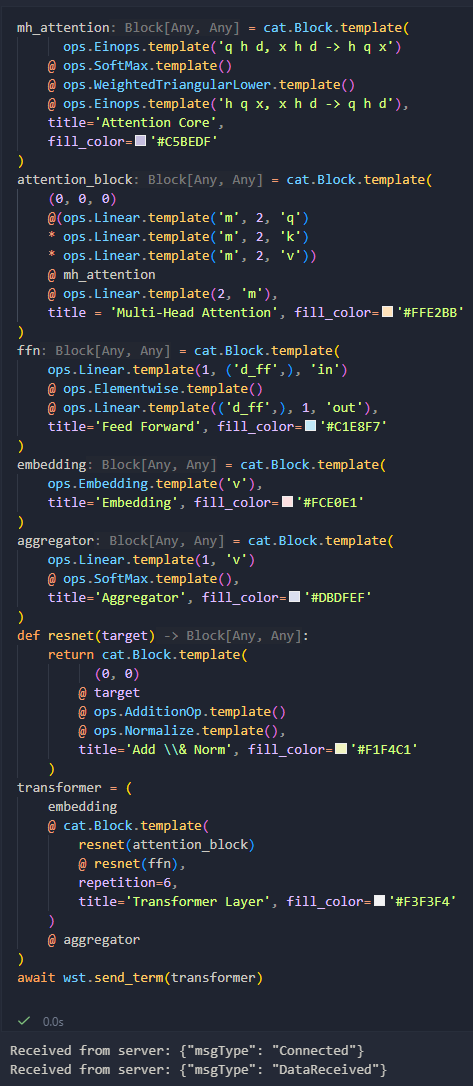
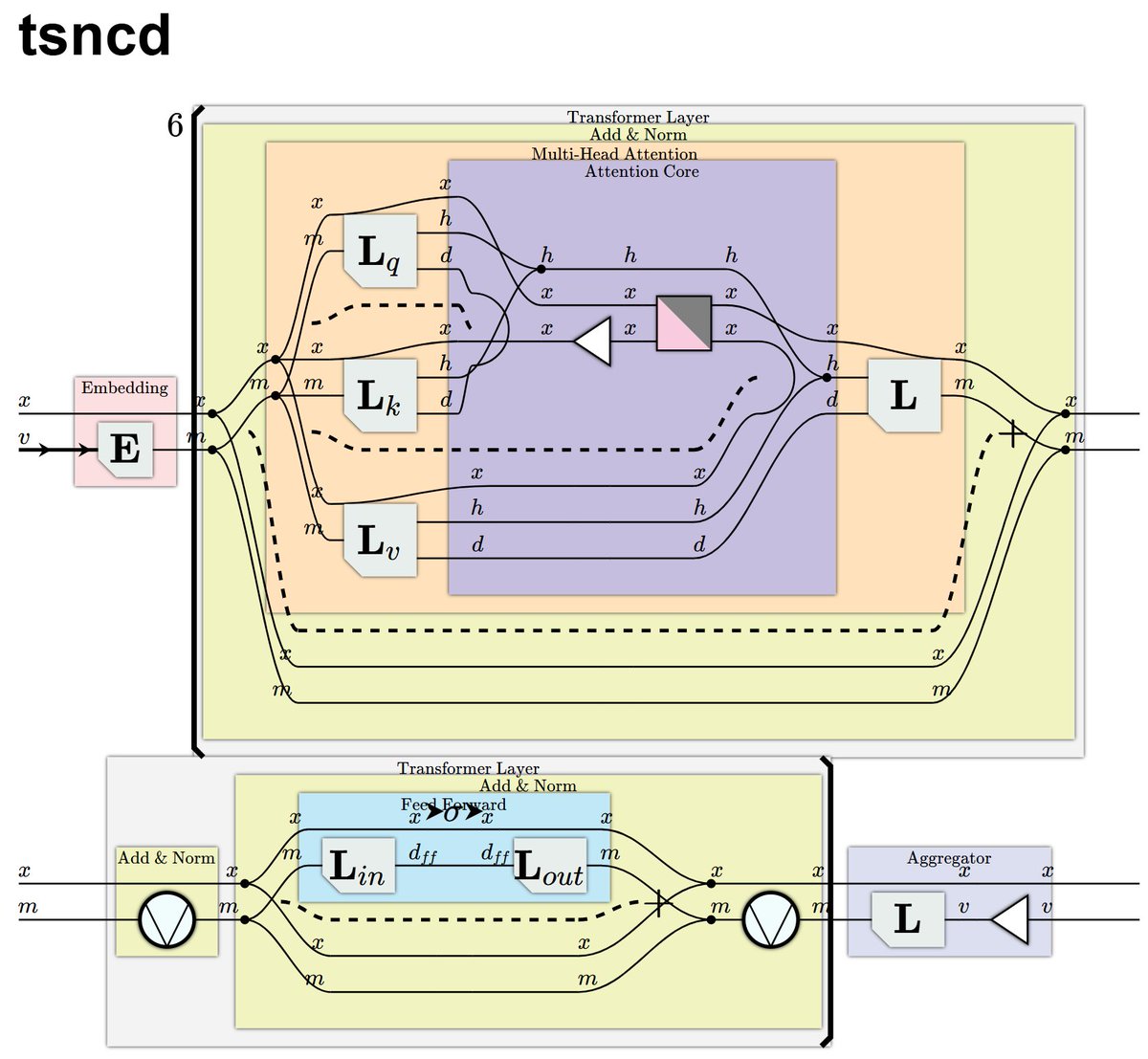
Released pyncd/tsncd today. We now have a way to manage deep learning algorithms algebraically! The code on the left renders into the diagram on the right. Mismatched domain/codomains are automatically managed under the hood.
The journey that started a long time ago as sparse compilation, enriched with new ideas by so many others along the way, continues with the introduction of the Universal Sparse Tensor (UST) type.
https://t.co/sYmg5Vu6IM
If you work with MLIR and like programming with agents, try the Context7 MCP. LLMs have historically been abysmal at MLIR (probably due to lack of training data), but Context7 helps the agent discover APIs and use them correctly. The same goes for any relatively niche library.
Oh, you're writing CUDA kernels? Everyone's on Triton now. Just kidding, we're all on Mojo. We're using cuTile. We're using ROCm. We have an in-house DSL compiler targeting the NVGPU MLIR dialect but wait, Tile IR just dropped so we're going to target that instead. Our PM is on TileLang. The team lead was on CuTe but now she's back to handwriting PTX. If you're not on Pallas, you're ngmi. Our intern is building on TT-Metalium for our Wormholes. Our CFO approved an order for some big chungus wafer-scale chips so now we're porting our kernels to CSL. Our CTO is working on a kernel-less graph compiler so we won't need to write kernels anymore. Our CEO thinks we're talking about the Linux kernel. We're building Claude for dogs.
@krismicinski Not sure how much you've tinkered with MLIR, but if you're 100% new, @jeremyjkun's blog post series is great.
The GitHub repo is here with links to each of the blog posts: https://t.co/D3vyTG4vui
From an idea to powering world-leading AI models and cutting-edge accelerators — Mojo has come a long way. Now, Mojo 1.0 is on the horizon: stability, open-source plans, and new tooling for developers everywhere. Read our latest blog post to explore the road to 1.0 ⬇️
We know that one of the biggest barriers to programming GPUs is access to hardware:
"Code you’ve written for NVIDIA or AMD GPUs should now mostly just work on an Apple🍎 Silicon GPU, assuming no device-specific features were being used." Preview here:👇
https://t.co/WBDRDnLbqP