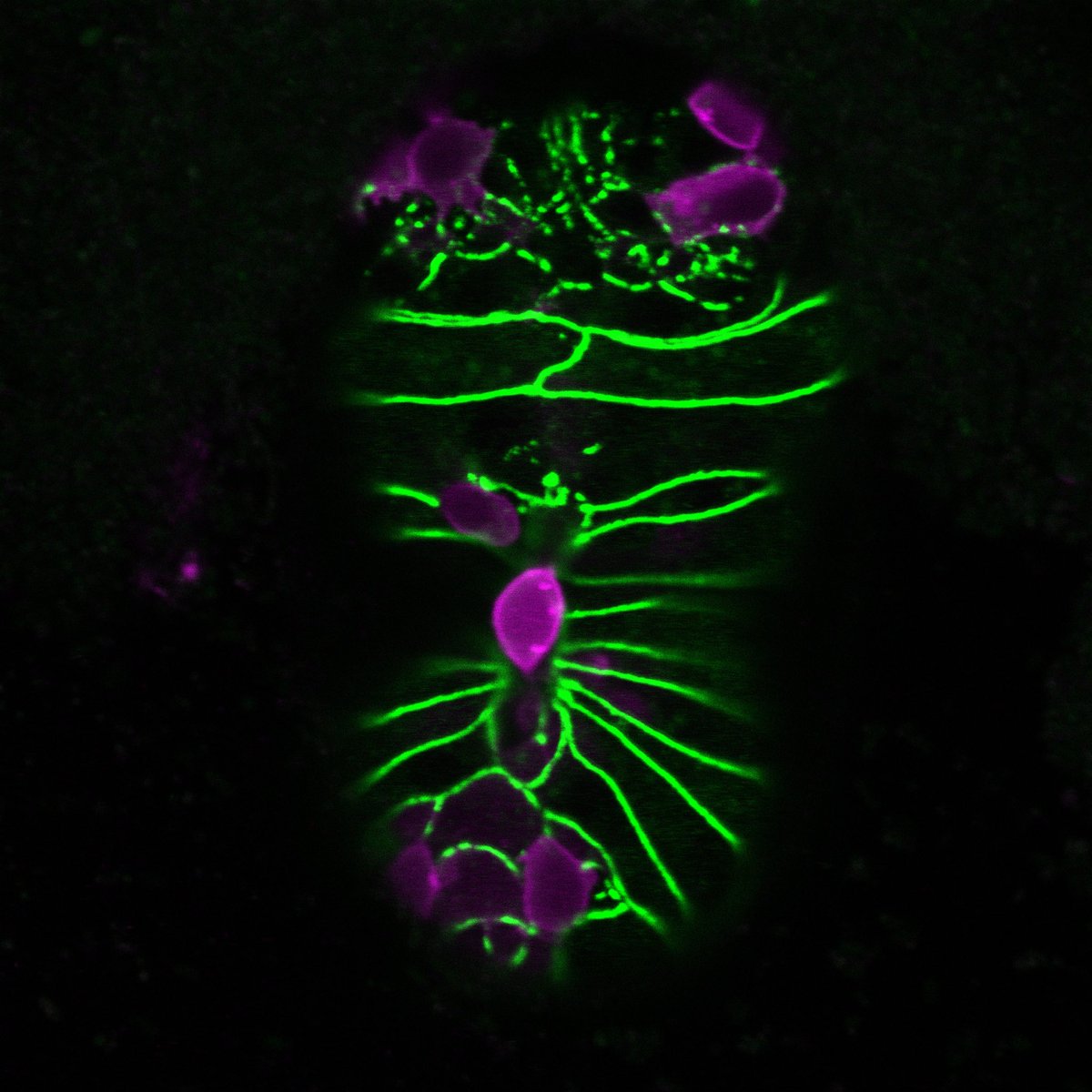
A few cells get kicked out from a C. elegans embryo defective in caspase-mediated apoptosis during the beautifully orchestrated dance of development .
Find out why here: https://t.co/p3Fyj65Joy
My @FacultyOpinions evaluation about the exciting paper by @VKDBiologist "Replication stress promotes cell elimination by extrusion"
A reason for cells to die after unequal cell divisions. https://t.co/rgLPhJo9qx
A few cells get kicked out from a C. elegans embryo defective in caspase-mediated apoptosis during the beautifully orchestrated dance of development .
Find out why here: https://t.co/p3Fyj65Joy
Cells extruding from a C. elegans embryo. Read how cells get extruded because they enter the cell cycle and get stuck copying their DNA: https://t.co/p3Fyj65Joy. (Free here: https://t.co/nflscmWszE) Already read and liked it? RT! @MITBiology#SciArt#CellBiology
@_lecote_ I think it’s a consequence of being small. But regarding forcing cell division, it would likely need to be done before epidermal enclosure, as the extrusions that we see are only of cells otherwise fated to die by CED-3 before enclosure. The “window” to extrude closes after.
@_lecote_ So it seems the determination of the same cells for the death process might be independent of replication stress. I also think that cells killed by CED-3 in WT don't even get a chance to enter the cell cycle.
@_lecote_ Great question, Lauren! We tested RNAi against cell-cycle genes that promote extrusion in ced-3 mutant animals in a wild-type background for the cell death, but did not see an effect. This suggests that replication stress does not contribute to CED-3-mediated cell death in WT.
@_lecote_ Thank you, Lauren! I am glad you remember our conversations. Yes, S-phase regulators were indeed confusing and there were so many possible explanations at the time. But fluorescent cell-cycle reporters combined with RNAi made very clear what was going on.