trying to make #geometrynodes Melt solver that respects the basemesh better. Also gets rid of the banding VDB workflow causes. Still missing some of the physics #simulationnodes#b3d#diy
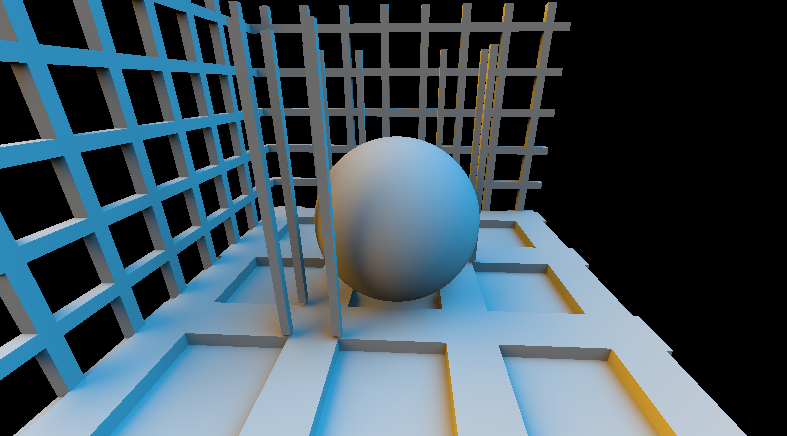
I'm working on a AO and GI for my game. For that reason I'm extending @Mirko_Salm's GT-VBAO (based on @volfaze's work). I've done two things so far:
- Sampling a distant light instead of computing AO
- Added a heuristic for estimating occluder thickness
Details and links below
> https://t.co/6dFPKfIOgo _
a suite of concise explanations and examples covering vectors, rotors, and other things in 3D reality:
- https://t.co/sqsT5nJqqP
- https://t.co/iKPo9vlG9R
- https://t.co/YR1EOEJuSK
- https://t.co/CKk83Uqqq4
rotors in action:
https://t.co/YWibTuvhKr
Another Redhill portfolio piece is out and I'd like to do a massive shout-out to @GhislainGir and his series of Niagara videos.
Those helped me fully understand how the Grid2D Interface works and was the base for this project's wind system.
#UE5#Niagara#Shaders
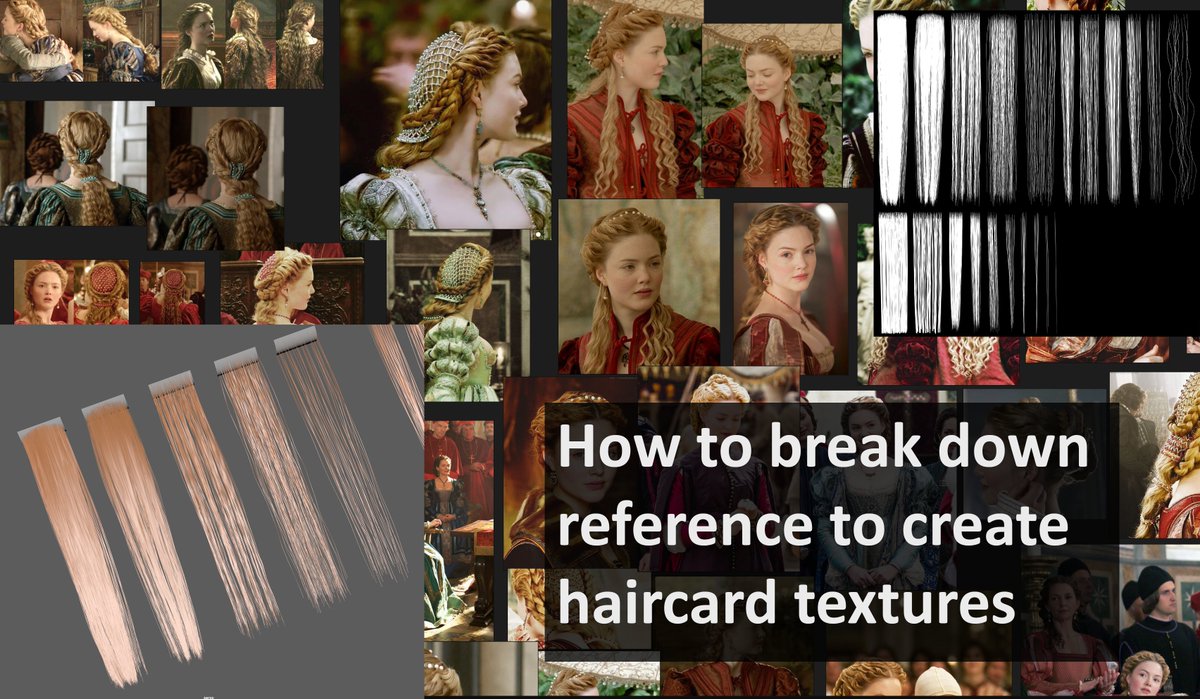
Put together a little visual breakdown of how I examine my references to create my hair textures! (haven't made the hair yet so you're going to have to trust me)
Do you want to learn how the Physarum algorithm works playfully?
It can be very intimidating at first glance, but we can break it down into smaller bits of information:
1/8
If this sounds trivial, it's not 😅 There's no easy way to export data from various Niagara systems for consumption by some other Niagara system without a manager class as an intermediary. This allows you to circumvent that all together. And you can preview it directly in editor.
"Real-Time Physically Guided Hair Interpolation" is another #SIGGRAPH2024 paper from my group, fixing interpolation artifacts in guide-based hair simulations.
Project page: https://t.co/sfGDnom6xI
Video: https://t.co/2l1NlEwK2O
Led by @JerryHsu32 with LightSpeed Studios (@kui_wu)