BaNDyT: Bayesian Network modeling of molecular Dynamics Trajectories
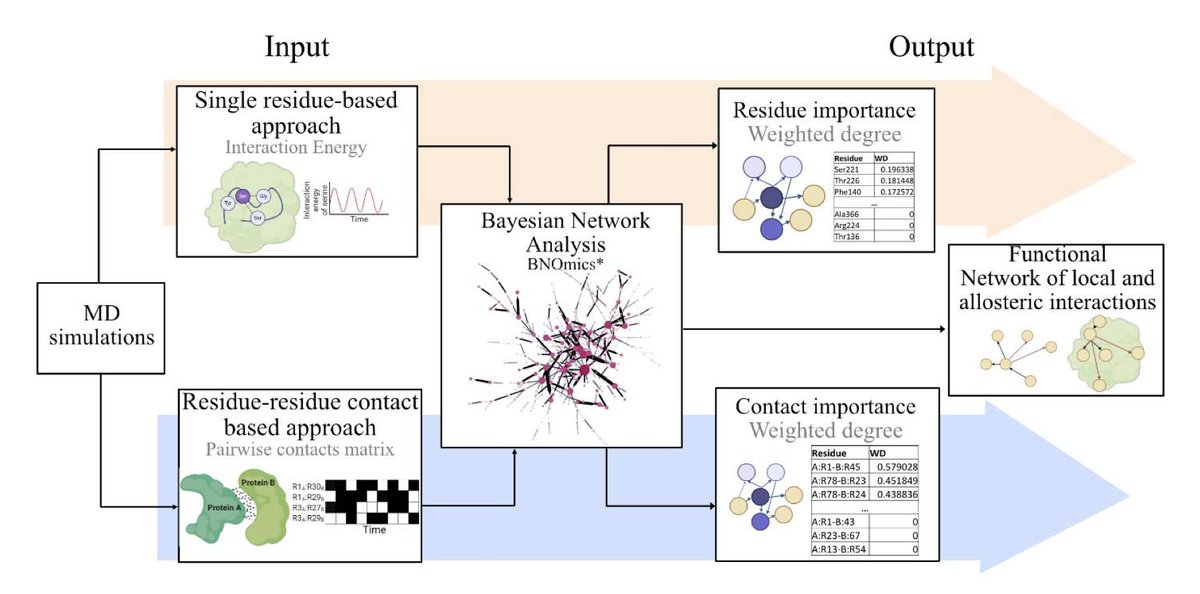
1. BaNDyT introduces a Bayesian Network (BN) approach to molecular dynamics (MD) simulation data, offering a powerful tool to uncover dynamic dependencies between protein residues. Unlike traditional proximity-based models, BaNDyT identifies both local and allosteric interactions, bringing a new perspective on protein function.
2. The software enables fully data-driven insights into molecular dynamics, moving beyond user-based bias. BaNDyT leverages Bayesian networks to interpret MD trajectories, making it a unique resource for researchers analyzing complex protein systems like G protein-coupled receptors (GPCRs).
3. A significant feature of BaNDyT is its dual capability to analyze single residues and inter-residue pairs. This enables in-depth modeling of protein-protein interfaces, key for understanding interaction dynamics in GPCR:G protein complexes.
4. BaNDyT provides scalability for large systems and long timescale simulations, supporting researchers with MD trajectories across varied biomolecular structures, from small proteins to polymeric materials.
5. The software offers an interpretable, unsupervised machine learning model, with a Python interface that allows researchers to fine-tune MD data analysis and visualize networks using Cytoscape, facilitating comprehensive protein interaction studies.
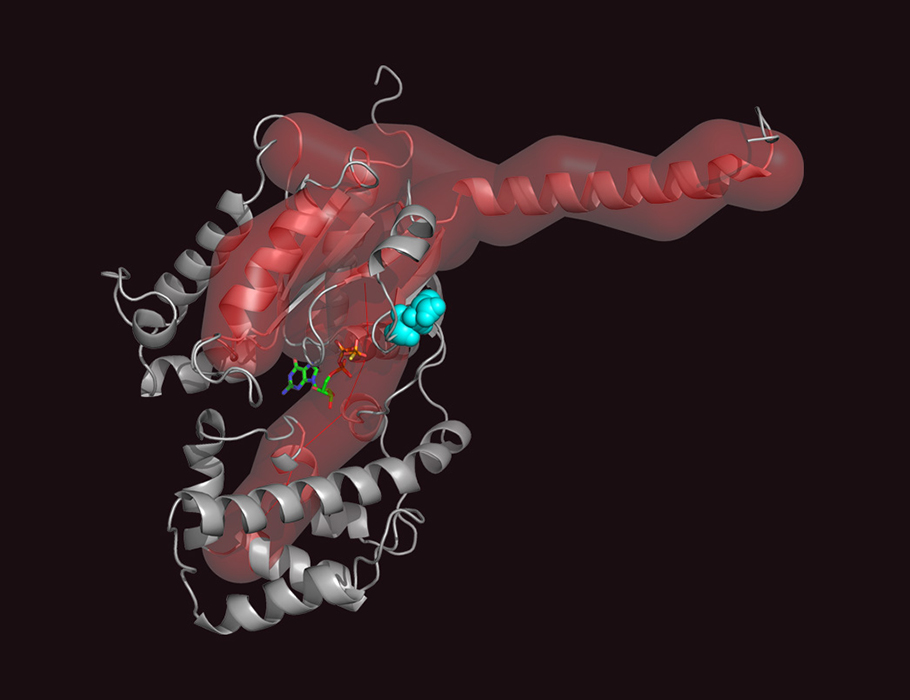
6. Key advantages include the capacity to infer both direct and indirect dependencies within proteins, allowing insights into functional residues that play roles in allosteric regulation and stability, potentially informing targeted therapeutic design.
7. The BN output reveals critical nodes and network properties such as weighted degree, helping researchers identify high-impact residues and interactions that influence protein function and allosteric communication.
8. By modeling GPCR interactions with G proteins, BaNDyT has revealed new insights into selective coupling mechanisms, showing promise for wider applications in protein complex analysis and drug discovery.
@emukhaleva@Vaidehilab
💻Code: https://t.co/H5SzZP1PVK
📜Paper: https://t.co/hXZ4Tg3ZSo
#BayesianNetwork #MolecularDynamics #ProteinInteractions #GPCR #MachineLearning #ComputationalBiology
Advances in Quantitative Sciences in Cancer: From Atomic Scale to Patients — @VaidehiLab, @pkuhn1, and @gliomath presented this symposium at #AACR23. Read a recap in AACR Annual Meeting News: https://t.co/XPm3SzV8yq
@cityofhope This major symposium was well received - audience excited about physics and math models in cancer beyond AI & data analysis. Thanks to @AACR, #AACR23 for inviting to organize this symposium. Thanks @pkuhn1 and @gliomath for their great talks. We truly covered atoms to patients.
Come and join us at #AACR23@AACR in Orlando. Representing @cityofhope, I am organizing a major symposium “Advances in Quantitative Sciences in Cancer: From Atoms to Patients” impact of Comp & Quant Sci on challenges: next-gen drug design, early detection and image analysis.
G proteins, just as their partners GPCRs, exhibit a continuum of conformational states as revealed by mutants of conserved glutamine. Important for functional annotation of disease associated mutations. #biophysics, @UNC_PHCO, @cityofhope. Great teamwork.
Mutations in a conserved glutamine residue can confer multiple activation states in alpha subunits of #Gproteins, according to experiments that suggest these proteins do not function as simple on-off switches. @UNC_PHCO@lifescientwists#StructureFunction https://t.co/WokuGQMhw8
We are #hiring a postdoctoral fellow on a very exciting project using Bayesian network Systems Biology techniques to #MDSims for GPCRs. Please send your cv to Dr. Vaidehi at [email protected]
Here is the link to the posting
https://t.co/my8pNNTDma
Proud of this work @NatureComms showing persistence of GPCR-G protein interface interactions regulate promiscuity and selectivity of coupling. Impactful contribution by @M5andhu. Thanks to @m_madan_babu and @Laporte001 for great collaboration.
https://t.co/5WnuCxpIFn
Symposium couldn't be possible without our organizing committee: Prof. Andrei Rodin @AndreiSRodin1, Prof. Russell Rockne @rrockne, Prof. Xiwei Wu, Prof. Joycelynne Palmer, Prof. James Lacey and Prof. Nagarajan Vaidehi, Department of Computational and Quantitative Medicine of CoH
The 31st Annual Beckman Symposium was successfully held in-person today, in Cooper Auditorium at City of Hope. Thank you everyone for attending and participating in the exciting discussion with our invited speakers!
Their talks have highlighted the importance of quantitative sciences and their contribution to deeper understanding of diseases and development of effective treatment strategies.
If you’re interested in GPCRs, Angiotensin Receptor (AT1R), peptide ligands or the effect of biased agonists on receptor conformational ensembles, check out our newest work here: https://t.co/e9lt51QVA9
Happy to see this work from my postdoc published! @VaidehiLab