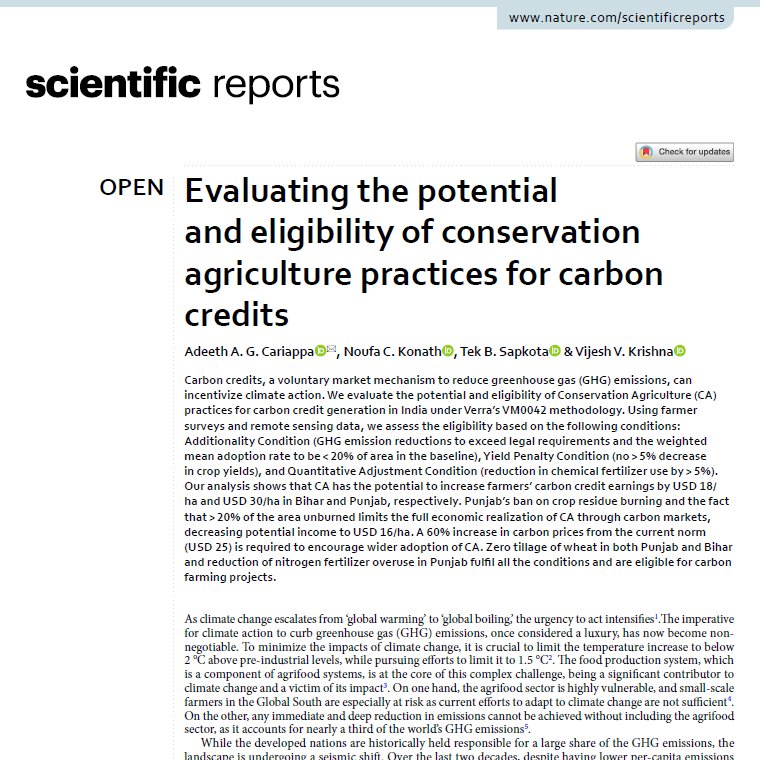
🔥Crop residue burning harms biodiversity, soil health, and future farm resilience.🌱 #CIMMYT’s new review urges policies that support farmers to adopt sustainable practices and protect ecosystem services. 🔗https://t.co/50KuvjlkDE
#Agrobiodiversity#SoilHealth
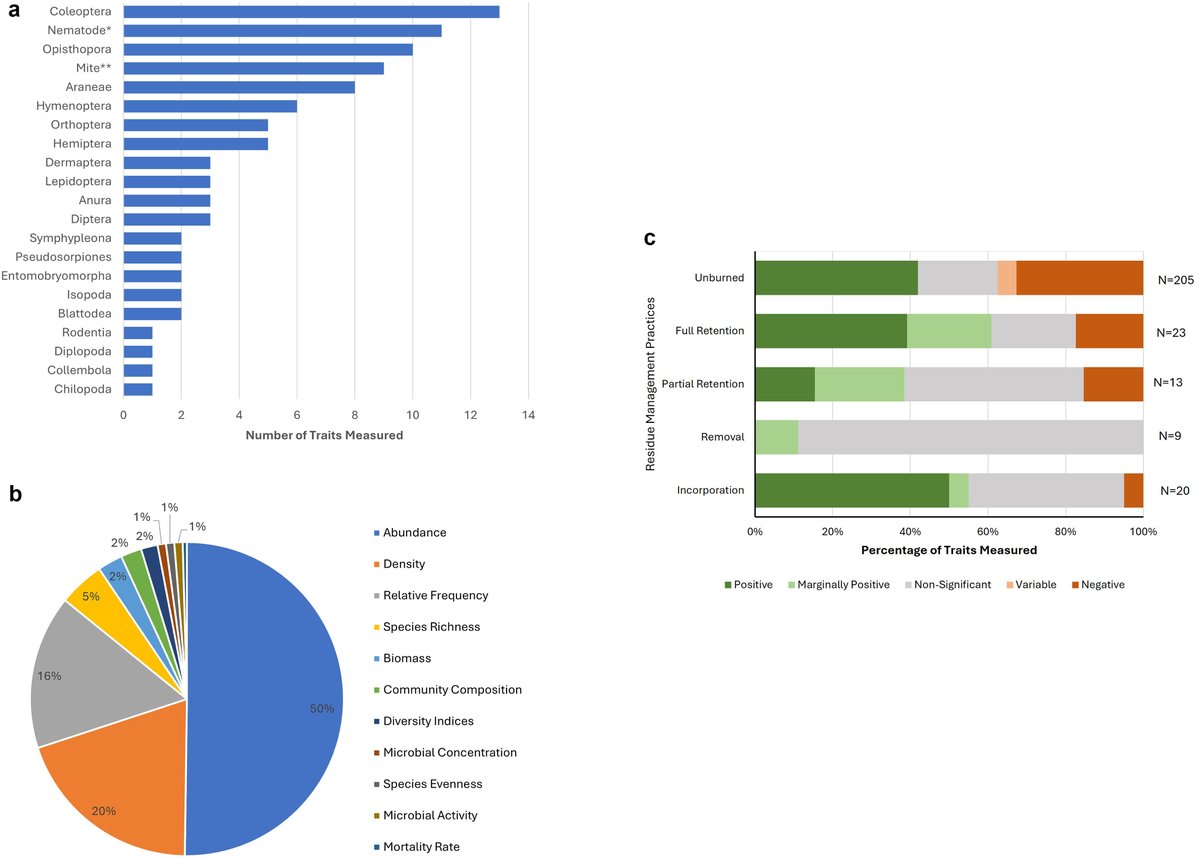
Crop residue burning does more than pollute air-it destroys on-farm biodiversity critical for soil health, pest control&pollination
Our new review in @SciTotEnv calls for policies & carbon markets that reward biodiversity outcomes
https://t.co/lz2IknHAME
@VijeshKrishna10@CIMMYT
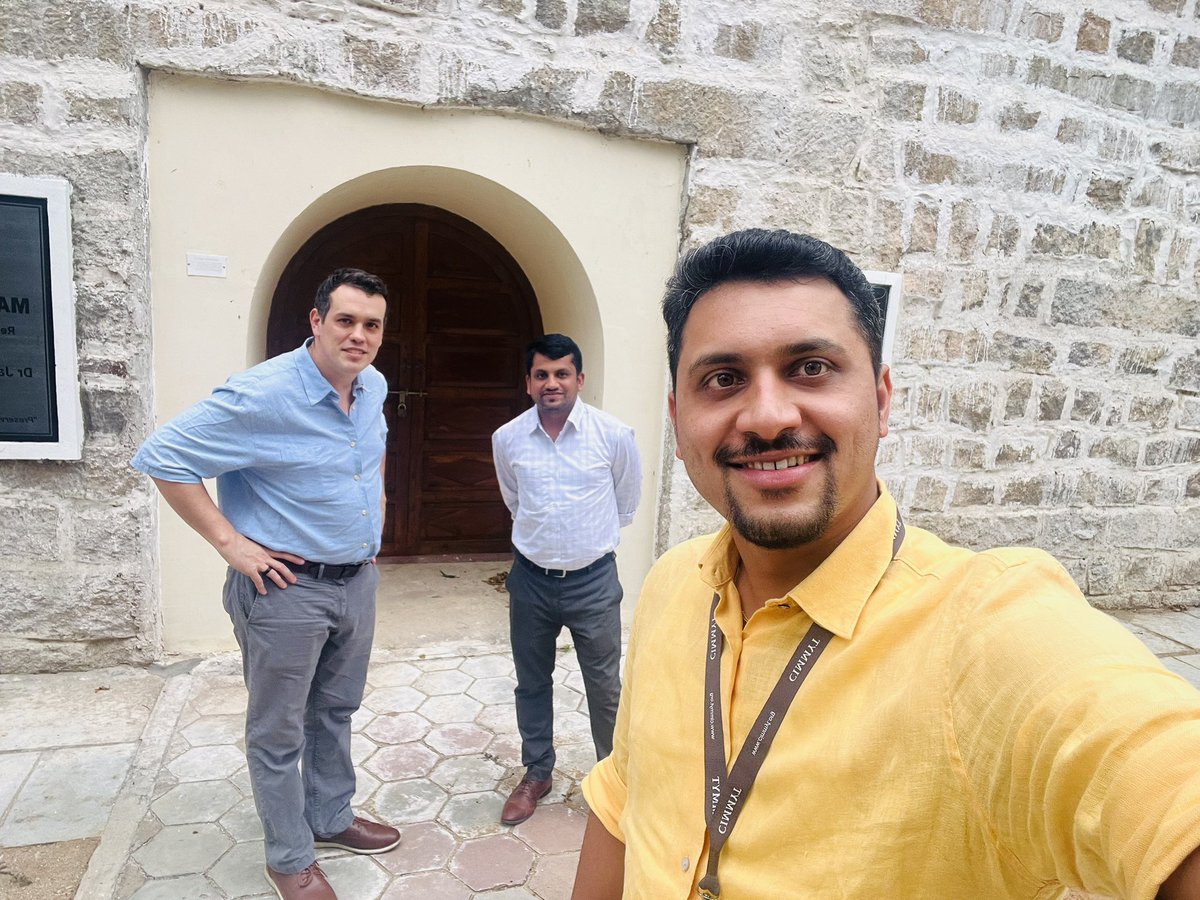
Our @CIMMYT India team in Hyderabad, hosted at CGIAR @ICRISAT, is advancing the Maize program for Asia- including MaizeDH facility #Kunigal in partnership with @UASBangalore, #Karnataka. Team is also strengthening socio-eco research to enhance agri-food systems delivery & impact.
In a new open access paper with detailed data from India, we show how important competitive, private-sector service provision can be for widespread technology adoption in the small farm sector. Great work by Subash and cooperation with @CIMMYT team. https://t.co/VTX6tNyDgT
⏩️ findings buttress need for ⬆️ investment in improved germplasm & coupling with broad-based poverty ⬇️ strategies.
⏩️ We use panel data & a DiD framework
Joint with @VijeshKrishna10, @jvasco323 & @PeterSetimela.
Full paper here https://t.co/Q4x358tJmS
2/2
India's casteist media is silent on this issue? Dalit Shailaja Paik, born in Yerawada, Pune, Maharashtra, has been named a UC professor MacArthur Fellow. She has received a scholarship of Rs 6 crore 71 lakh. Shailaja has received a 'genius grant' to continue her work with Dalits and untouchables. Congratulations are in order. @r_gov11@manoranjanpegu@jaffrelotc@uofcincy
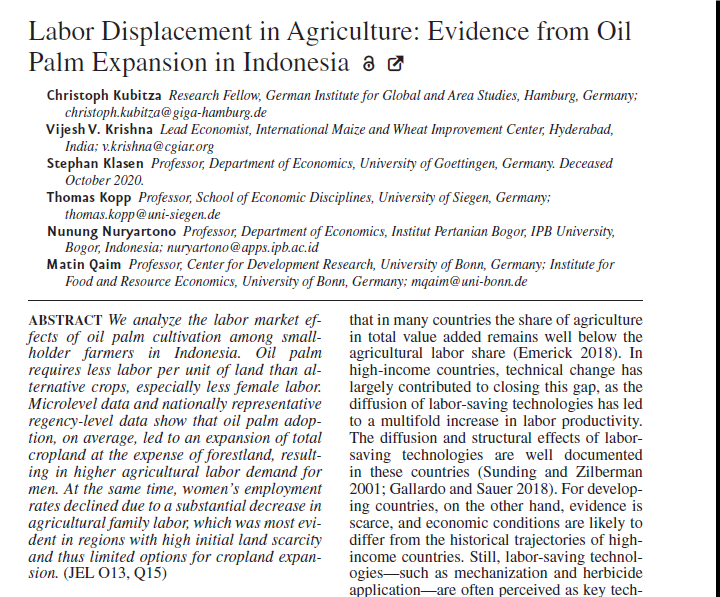
In a recently published OA paper with long-term data from Indonesia, we show that the oil palm boom has increased demand for land & male labor, but reduced demand for female labor. Interesting implications for the economy, the environment, & gender equity. https://t.co/Gx7TI9dZ34
.
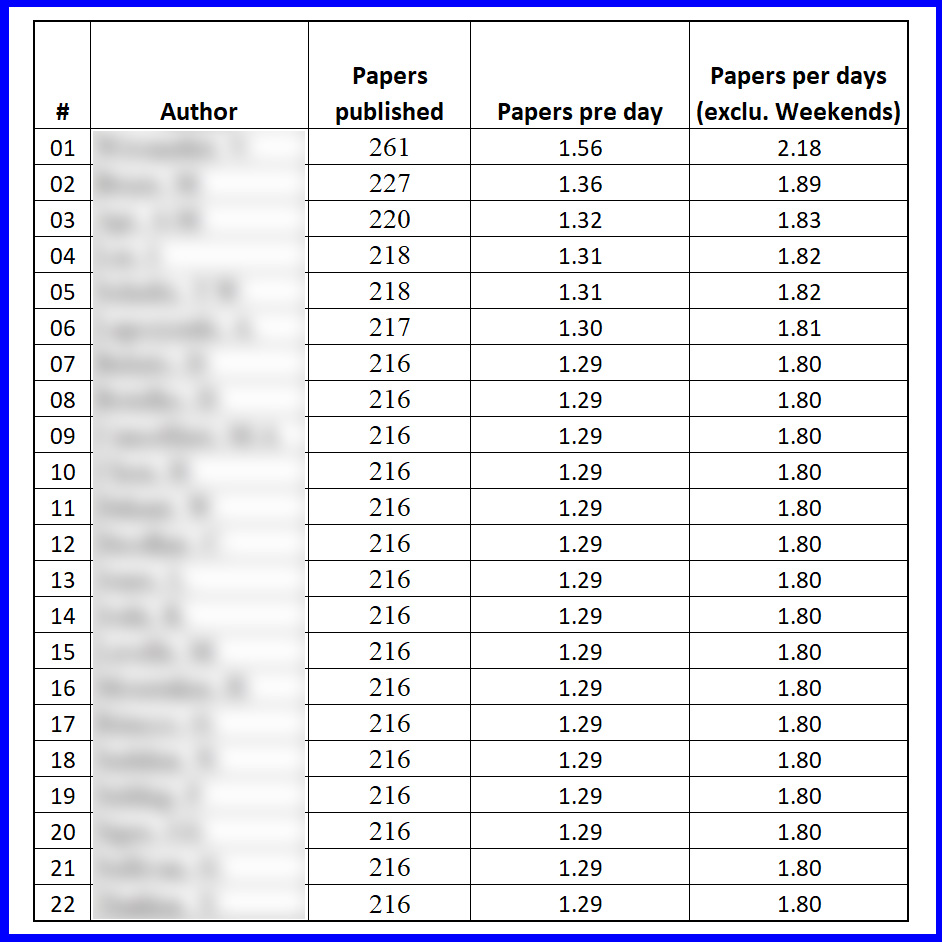
22 people have published more than 200 papers in 2024 (so far, we still have another six months to go)
We have been doing some research on another project and saw something that we found interesting. We'd be interested to know what you think.
In 2024, 22 authors (according to @Scopus) have published over 200 papers. The table below shows the details (we decided not to show author names at this time).
The author who has published the most papers has authored 261 papers (as at 15 Jun 2024) meaning that he/she has published 1.56 papers every day this year (and counting).
If we exclude weekends (everybody has to rest, right?), then they have published 2.18 papers every day.
Serious question: Is it possible for anybody to contribute in a meaningful way (at least to warrant being at author) when they are publishing a paper every day?
Pleased to share our article on zero tillage technology adoption in Indian smallholder farming systems using remote sensing (Sentinel-2 multi-spectral imagery) techniques, published today https://t.co/77RoQERW0j @iiserbhopal@moesgoi@CIMMYT@maxplanckpress@EduMinOfIndia
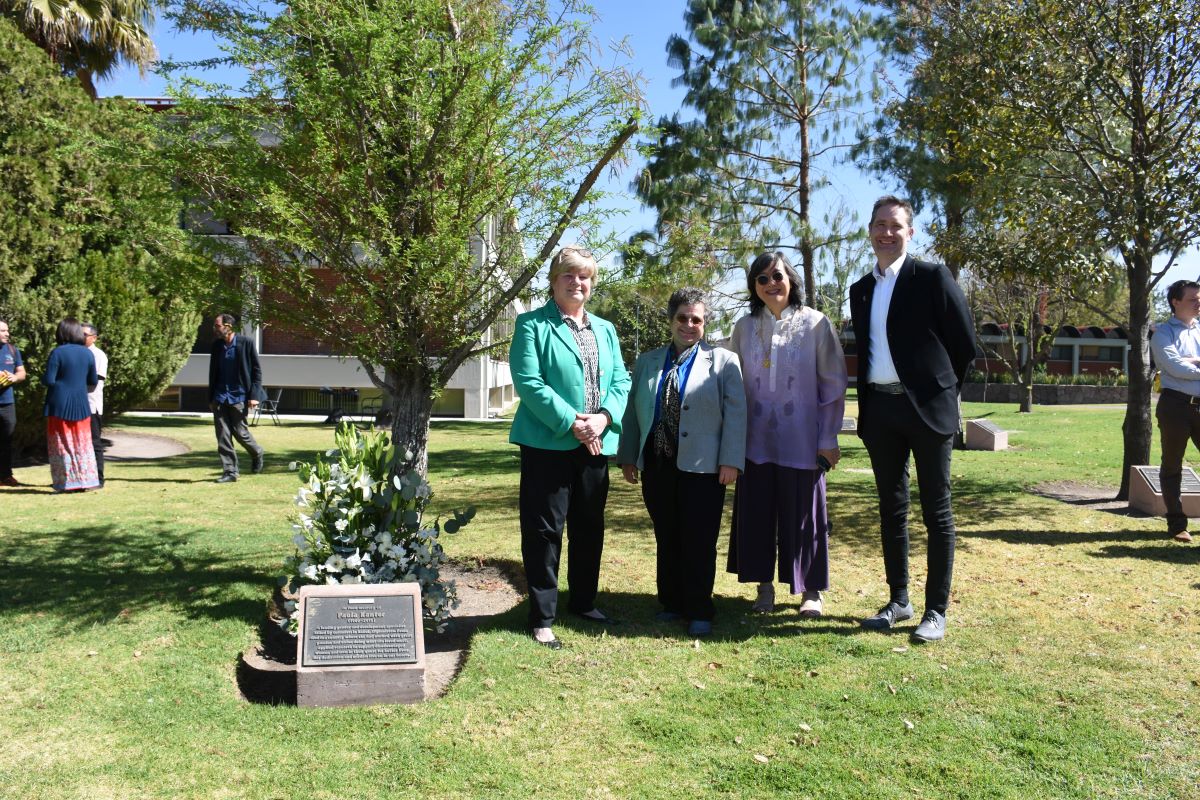
.@CIMMYT we are committed to champion the mainstreaming of gender equity & social inclusion in leadership & scientific research & innovation.
Creating the Paula Kantor-CIMMYT Gender & Development Hub is a step in that direction.
📽️ https://t.co/WBvWGkzIQP
#GenderinAg#IWD2024
Solving tomorrow’s problems today compels us to consider everyone’s input, views, ideas, & much more. Let’s turn the Paula Kantor-CIMMYT Gender & Development Hub into a platform to #InvestInWomen & together transform agrifood systems worldwide. https://t.co/WBvWGkzIQP #GenderinAg
#Nowreading 📄
‘Transformative research provides pathways for including gender and socially marginalized groups.’ Read how @CIMMYT researchers contributed to discussions and policy actions for inclusive and impactful agrifood systems at #GENDER2023: https://t.co/v7SQewlsrD
An article co-authored by Dr. Dhanyalekshmi Pillai has recently been published in Agriculture Today magazine @agri_today on 'Climate Change and Agriculture - POST COP 28', explaining mitigation possibilities.
Many congratulations to her.
@EduMinOfIndia@IndiaDST@PIB_India
The @CIMMYT’s Gender, Equity & Social Inclusion-GESI recently brought together senior gender researchers working in #Africa, #Asia, & #LatAm. #Read the recap of the discussion about pathways toward 2030 for making GESI efforts intentional & impactful. https://t.co/6mx2GJTqCb
We live in a highly patriarchal society. I hv done around 200 kidney transplants. My findings in my series:
1. Around 80-90 % of Kidney Transplant Recipients are men. When a woman develops ESRD( Kidney Failure), it is very hard to find a Kidney donor, among the relatives.
2. In my entire career, not even a single husband came forward to donate his Kidney to his sick wife, & save her life.
3. When a woman is a Kidney recipient, the person who donates is usually a sister or daughter, or mother.
4. Most women r ready to offer their kidneys to their ailing husbands to save his life. The converse never happens.
5. There was once an extreme case, when a 19 yr old legal wife, donated her Kidney to her 45 yr old husband. After the Tx, I was casually talking to her. Her story was bizarre. This was her elder sister's husband. Just for Tx, the entire family had planned it carefully. The husband divorced his wife, & the 19 yr old girl was beaten fr days to marry the 45 yr old man, since her Kidney was a perfect match.
So, a simple survey of Kidney Tx recipients & donors exposes how deeply patriarchal, misogynistic, our rotten society is.
Scratch the veneer of democracy, modernity in India, & u find that underneath, we are still a feudal, casteist, misogynistic, patriarchal community.