20 years working in the politics & policy of streets. 16 years chairing Hackney’s planning comm. Committed to saving London’s bus services & better streets.
The London Assembly has voted by a huge margin, 17 to 3 votes, to call on the @MayorofLondon London to pause all floating bus stops on London’s streets.
He doesn't he have the slightest survival skills? After a decade of being a bike courier, that decision was simply Darwinian.
He reached a point behind the bus, after the bus was flagged down. Bus indicates and he deliberately squeezes himself between several tonnes of metal and a kerb. If the bus didn't check his mirrors again, we would be watching a serious accident and not Jeremy being a bit of an entitled prick.
MOTION AGREED: The Mayor should instruct TfL to pause the installation of floating bus stops on the TfL road network, and to pause funding for new floating bus stops through borough programmes. https://t.co/kYJPp9T8ym
Concern for 'accessibility' is always the last stand for those determined to maintain the status quo of car-filled streets. It is the very definition of elitism in a city where a minority of households have access to a car.
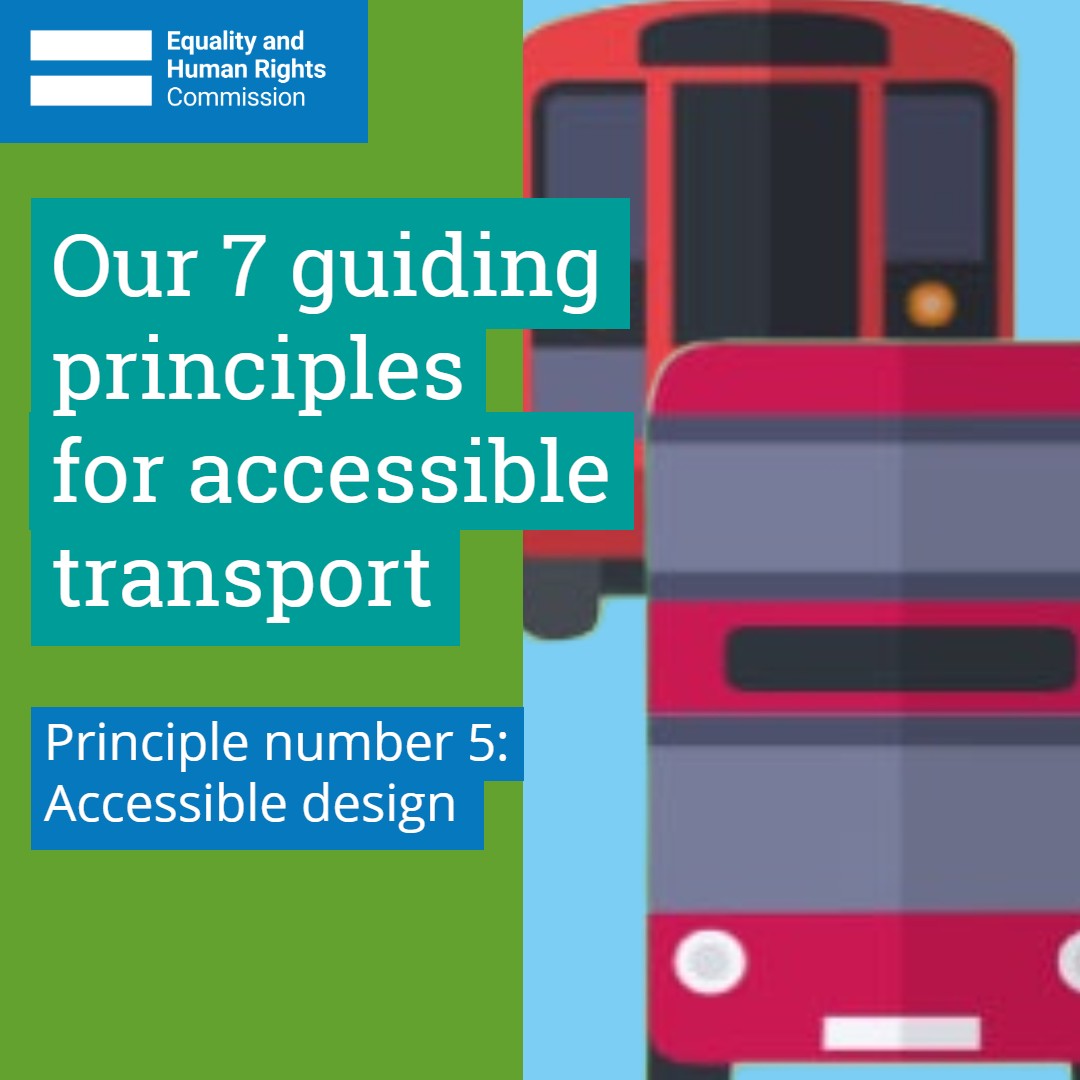
The Equalities and Human Rights Commission,@EHRC, has a ‘Guiding Principle: Accessible Design.
[Bus] Services should be designed and consistently operated to ensure older and disabled people have choice and control over how and when to travel and can do so safely and with dignity.
The @mayorofLondon says floating bus stops do all of this, but its the cyclists that are the problem.
Guiding principle 5: Accessible design
Services should be designed and consistently operated to ensure older and disabled people have choice and control over how and when to travel and can do so safely and with dignity.
Read more: https://t.co/P679qDaZSI
#AccessibleTransport
.@theJeremyVine is a useless cyclist and should have his collar felt for this stunt by the @metpoliceuk . The offence is clearly riding without due care.
74% of cycle fatalities and 79% of serious injuries occur at junctions and are not associated with bus stops. @theJeremyVine is wrong. There is much that can be done to reduce collisions without excluding disabled people from our streets and bus services.
TfL continues to ignore repeated concerns raised by numerous DDPOs about the risks this infrastructure poses to Disabled people, including the potential for serious injury.
How many more concerns need to be raised before TfL takes action? @TfL@InclusionLondon@NFBUK
@Simoncitizen They found six at 164 stops, though there are many more stops and probably many unreported collisions. They undertook this analysis during the Covid years 2020 to 2022 when many elderly isolating. Their report was riddled with errors and withdrawn.
Fact checking the London Cycling Campaign. It is well researched that 74% of cycle fatalities and 79% of serious injuries occur at intersections. Cyclist injuries are not associated with bus stops. This is tosh! https://t.co/6AWHkkP9Mk
More bike track lunacy. 100 yards of bike track costing £1.3m, slap bang in the middle of the pavement of a busy high road making the junction impassable for many including Andrew, who can no longer use his bus and will be excluded from the street altogether. https://t.co/epKKYlzzoy
@EHRC Local highways authorities are continuing to exclude blind, older and disabled people from their only means of public transport, the bus, by continuing to install floating bus stops. Please help.
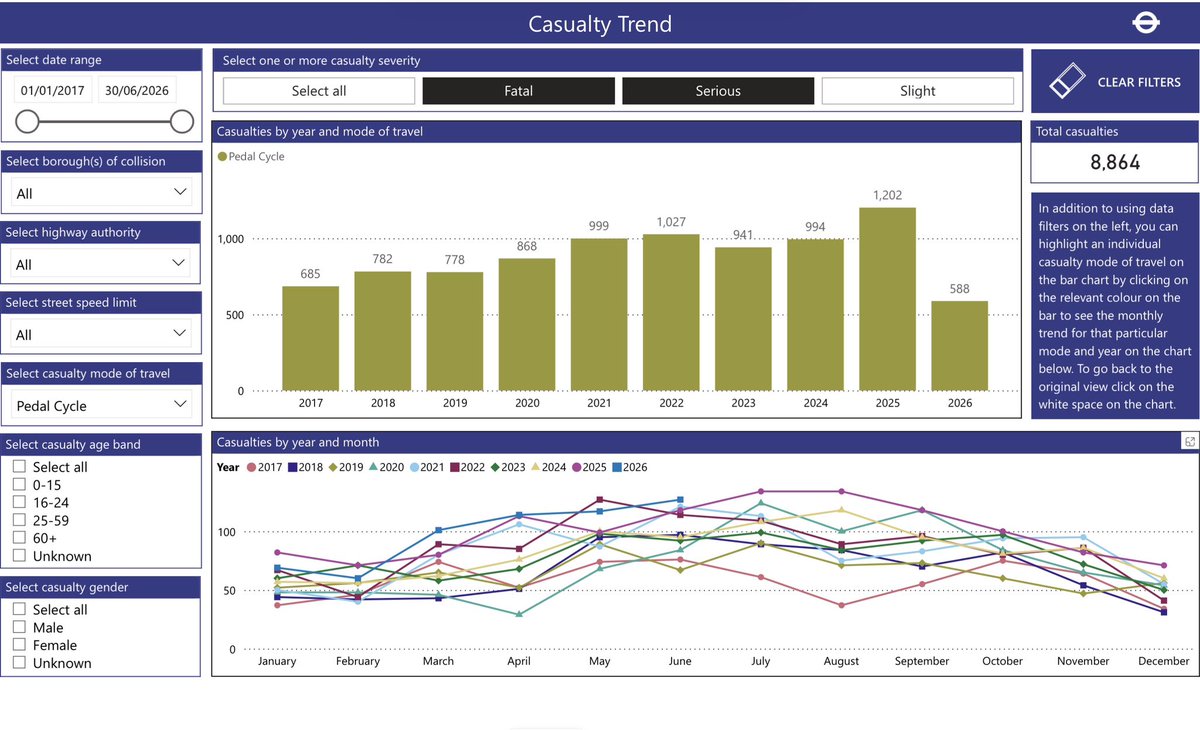
.London’s Cycling Commissioner, @willnorman, is claiming he’s making London’s streets safer for cycling. His own data clearly shows that is untrue. The number of seriously injured cyclists is at record levels and trending up. It is the highest June figure for a decade. 2026 on this chart is 6 months data. AND he knows all this!
@Bringonthejams@willnorman These increases in KSIs should be setting off alarms. There has been loads of slower speed initiatives, HGV initiatives and casualties are still rising. What is going on?
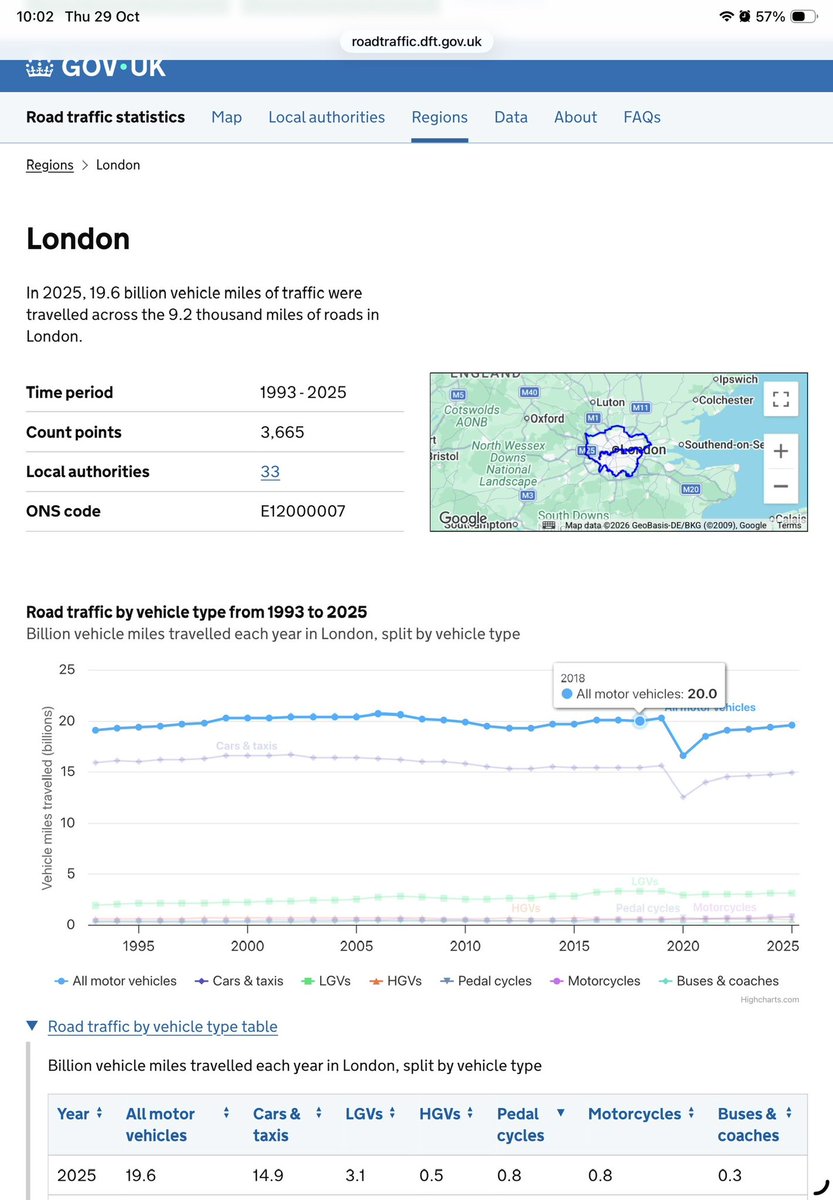
As ever @Chris_Boardman is wrong. In London, cycle is the ‘vehicle involved’ in a good number of serious injuries. In the City of London far more than car and in Westminster a good proportion. What is more these proportions are increasing and the rate of serious injuries caused by cycles is much higher than car per mile travelled There are also many cycle v cycle serious injuries and of course we know many go unreported.
Nearly 30,000 people were killed or seriously injured on Britain’s roads last year.
That should shape where police focus, not the latest outrage.
It’s time to push the facts to the front. By me in @spectator:
https://t.co/ItCRb94sWS