Want to know the technical way to calculate emissions based on chemistry?
Let's answer the following as an example...
Q: How many kg of CO2 are emitted from generating 1 GJ from gasoline?
So from the combustion reaction equation in the quoted tweet, we know 8 moles of carbon dioxide (CO2) are derived from 1 mole of gasoline
From that we can calculate the mass of CO2 using that reaction.
Step 1: Let’s get the mass of those 8 moles of carbon.
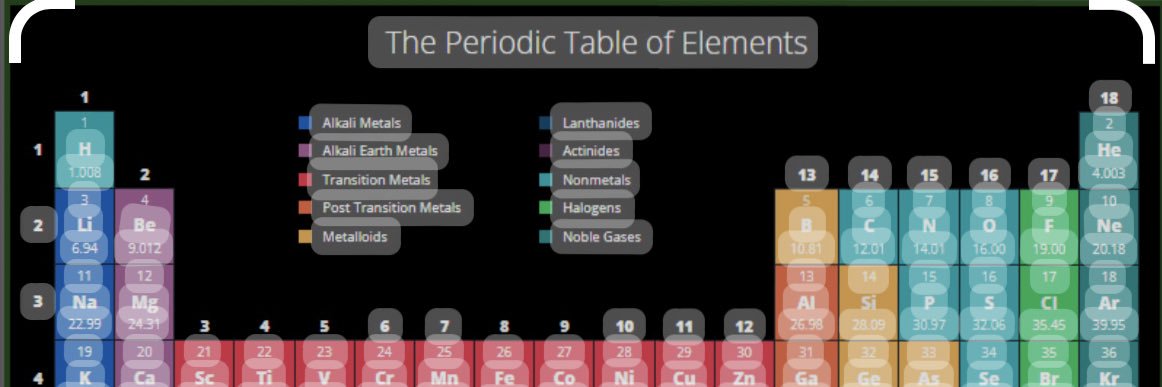
12 g per mol of carbon + 2 x 16 g per mol of oxygen = 44 g per mol of CO2
8 mol of CO2 x 44 g = 352 g of CO2 per mol of octane combusted
Step 2: Let’s figure out the amount of CO2 grossing up the 5.5 MJ equation to 1 GJ.
Because 8 mol of CO2 is produced from 1 mol of octane when combusted to generate 5.5 MJ of energy, you can say that the ratio is 8 mol of CO2 per 5.5 MJ from gasoline combustion.
352 g of CO2 (i.e. 8 mol of CO2) / 5.5 MJ x 10^3 MJ / 1 GJ x 1 kg / 1000 g = 64 kg of CO2 per GJ from gasoline combustion
A: 64 kg of CO2 is emitted when combusting gasoline (octane) to generate 1 GJ of energy.
There you have it. The chemical reaction equations behind emissions from gasoline.
@damnang2 Thanks for sharing. In L7, does InTest do any testing for the optical space, any thoughts on if InTest fits at all in the photonics growth story?
@BrianGitt Does it make sense for some? I would imagine there is a point where even without subsidies it makes sense depending on energy use, location and size of your roof.
@tylerhnorris What are your thoughts on deploying mainspring linear generators and thermal storage options like Rondo’s heat battery? Viable options for near zero emissions. Do you think these technologies should be implemented?
@packyM@PalmerLuckey@ReustleMatt Oxy is giving it a shot with Air to Fuels tech too through its acquisition of Carbon Engineering. Different approach though.
https://t.co/eic2ufj8Yr
@packyM@PalmerLuckey@ReustleMatt Oxy is giving it a shot with Air to Fuels tech too through its acquisition of Carbon Engineering. Different approach though.
https://t.co/eic2ufj8Yr
Past energy transitions were performance based & Wood to Coal switching was no different
Coal has 2x the energy density of wood. 20 MMBtu per ton of coal vs 10 MMBtu for wood
Coal is less carbon intensive than wood & burns at higher temps, better performance for metalmaking
How long a 100 Watt light bulb could run from using 1 kg of various fuels:
Wood = 1.2 days
Coal = 3.8 days
Oil = 4.8 days
Uranium = 25,700 years (using a breeder reactor)
https://t.co/KjCVRREKsF
@RichardMeyerDC What happens if we can make natural gas cost effectively using electricity rather than extracting it geologically, wonder how that factors into these forecasts?
Appreciate the thoughts there. I wonder for a potential territory deal what portion of the Ukraine land now occupied by RU provides EU gas, wheat, etc. that RU will now control and sell to RU friendly nations. Coal & LNG do seem to benefit long term due to the war. Energy is such a pawn when it comes to geopolitics.
See How US Coal Has Benefited From EU Sanctions on Russia.
Will A Ceasefire in Ukraine Result in US Coal Exports Reverting Back to Pre-invasion Levels? 🧵👇
U.S. coal exports increased by 5.7 million short tons (MMst) in the 12 months after EU sanctions on coal from Russia went into full effect in August 2022.
The increase was driven almost exclusively by a 22% jump in U.S. coal exports to Europe, totaling 33.1 MMst between August 2022 and July 2023 compared with 27.1 MMst during the same period prior to the sanctions (August 2021–July 2022).
In 2021, Europe received 84.6 MMst of coal from Russia, about one-third of Russia’s total exports. After Russia’s full-scale invasion of Ukraine in February 2022, the EU responded by imposing sanctions on coal from Russia in April 2022, with a grace period for pre-existing contracts that lasted until August 2022.
Once a ban on European buyers purchasing coal from Russia went into full effect in early August 2022, imports of coal from Russia into Europe fell to almost nothing.
The United States joined other coal-supplying countries, including South Africa and Colombia, to make up the difference.
U.S. coal exports also increased to Asia and South America, but declined in Africa, Australia & Oceania, and North America.
As a swing, or higher-cost, supplier in global steam coal markets, the United States was positioned to shift steam coal exports to Europe. For the 12 months after full implementation of the EU sanctions went into effect, from August 2022 to July 2023, U.S. steam coal exports to Europe totaled 14.4 MMst, 51% more than over the previous 12-month period (August 2021–July 2022).
This increase and a 6% increase to Asia contrasted with declines in U.S. steam coal exports to the other four continents to which the United States exports steam coal. U.S. steam coal is a comparable quality to that produced by Russia, making it a natural substitute; both countries have premium-quality bituminous coal with a high heating value.
U.S. metallurgical coal exports to Europe rose only 6% (compared with the previous 12-month period) to 18.6 MMst during August 2022–July 2023. U.S. metallurgical coal exports to South America increased, but exports to Africa, Asia, Australia and Oceania, and the rest of North America declined. Exports of metallurgical coal have been more stable because this coal is used strictly to produce iron and steel.
Maybe my favorite proponents of $BTU - @GoForGrubes2 & @MuffinmanMagic have some thoughts on if a ceasefire would affect the coal market.
Thoughts?
Source: @EIAgov
@duncancampbell The first could definitely be true in the US and the second more true in developing economies, which is a large market. If synthetic fuels cost becomes comparable to geologic oil and gas, then I could see countries that rely heavily on fuel imports opting to build for synthetic.