Nearly half of men said they did most of the homeschooling during COVID.
Only 3% of women agreed.
This isn’t about gender wars. It’s egocentric bias: we vividly remember everything we do and underestimate what everyone else does.
The same bias makes us blind to how much luck actually drives success.
A thread on one of the most important (and uncomfortable) videos on the internet 🧵
2/
When couples estimate housework, fights started, or messes made… the combined total is almost always over 100%.
Same with multi-author papers — researchers claim they did 140% of the work on average.
We don’t do this to brag. We just experience our own contributions in high definition and everyone else’s in low resolution.
3/
This bias hides luck everywhere.
Pro hockey players: ~40% born in the first 3 months of the year, only ~10% in the last quarter.
Why? January 1st age cutoff. Early kids are bigger, get more ice time, better coaching… advantages compound for 15+ years.
Most pros never thank their birthday.
4/
Even wilder: NASA 2017 astronaut selection.
18,300 applicants → only 11 spots.
Derek ran a simulation: assume selection is 95% skill + 5% luck.
The 11 chosen had an average luck score of 94.7/100.
On average, only 1.6 of them would have made it on skill alone.
In hyper-competitive fields, talent + hard work is necessary but nowhere near sufficient.
5/
The uncomfortable truth:
Successful people (including most leaders) are usually both talented and significantly luckier than average.
Because they don’t see their own luck, they assume the world is fair and others are just “less hardworking.”
This quietly shapes policy, generosity, and how society treats failure.
6/
Here’s the beautiful paradox for actually winning:
Act like you’re 100% in control — this useful delusion makes you work harder and take more shots.
But know it’s not true — luck played a bigger role than you’ll ever fully see.
When you accept that, you become more grateful, generous, and likely to increase other people’s luck too.
7/
What percentage of your biggest win do you think was luck vs pure skill/hard work?
Reply with your number 👇
Full video (14M+ views): https://t.co/V25W1avLI5
@veritasium
#Luck #Success #Psychology #Mindset
Pre-AI:
Ideas are cheap. Execution is hard.
Now:
Execution is cheap. Finding ideas worth executing is the hard part.
AI can write, code, design, edit, and prototype in minutes.
The real advantage is no longer building.
It’s noticing problems everyone else ignores, asking better questions, and finding opportunities before they’re obvious.
In the AI era, originality is becoming the bottleneck.
Claude Code on desktop now has an in-app browser.
Claude can pull up docs, designs, or any other site. It can read, click through, and interact the same way it does with your local build.
It's sandboxed and configurable. Update your desktop app to get access.
I’ve been seeing all these posts saying AI is straight up drinking our water dry. Decided to look up real numbers from reports instead of just headlines. Here’s the deal, no hype.
1/ The one that went viral: Researchers figured out that making a 100 word response with something like ChatGPT uses about one regular bottle of water, around 500ml. That covers cooling the servers plus the water used to make the electricity.
With millions of people asking AI stuff every day it adds up quick.
2/ Scale that to the buildings. A regular data center pulls hundreds of thousands of gallons a day for cooling. Big AI ones? Up to 5 million gallons daily. That’s enough for a whole town of 10,000 to 50,000 people.
3/ In the US data centers used something like 17 billion gallons in 2023 and AI is pushing that number way higher. Some projections say AI focused spots could hit around 68 billion gallons by 2028. Almost four times more.
4/ But here’s the bigger picture people miss. Nationally all these data centers are still only like 0.2 percent of total water use. Farming takes most of it, around 70 percent. Lawns and golf courses drink a ton too.
The actual headache is where they build them. In dry spots like parts of Arizona one big center can grab a huge chunk of local water. Regular folks end up with restrictions while the tech companies expand.
5/ Companies are trying to fix it though. Microsoft has new designs for AI centers that use basically zero water for cooling by recycling everything in a closed loop. Some already switched to treated water instead of fresh stuff. Google and others say they want to give back more water than they take by 2030.
6/ Also a lot of the water impact comes from power plants making the electricity. Switch more to solar and wind and that part drops hard because they barely use any water.
Bottom line, the water use is real and growing fast because of AI. In some towns it’s causing real problems and we should pay attention. But it’s not the end of the world. We can solve it with better tech, smarter locations, and cleaner power. AI might even help us save water in farming and finding leaks.
What do you guys think? Slow things down or push the fixes while it grows? Drop your thoughts.
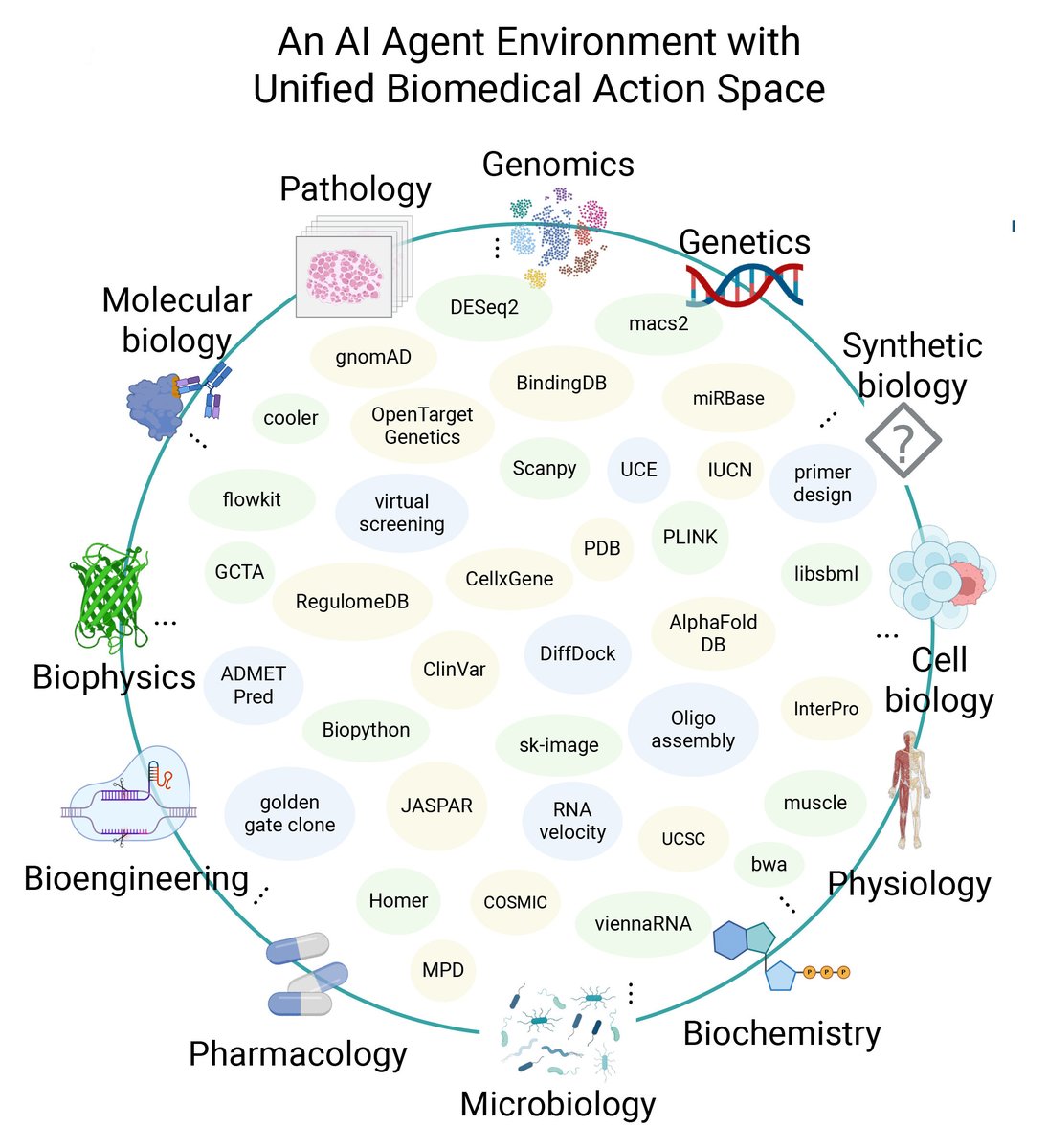
Researchers in Science report the development of a general-purpose biomedical AI agent that can help automate biomedical research workflows.
The authors say their results point “toward a future in which AI agents work alongside human researchers to accelerate biomedical discovery from basic research to translation.”
Learn more: https://t.co/74K6dI5iNt
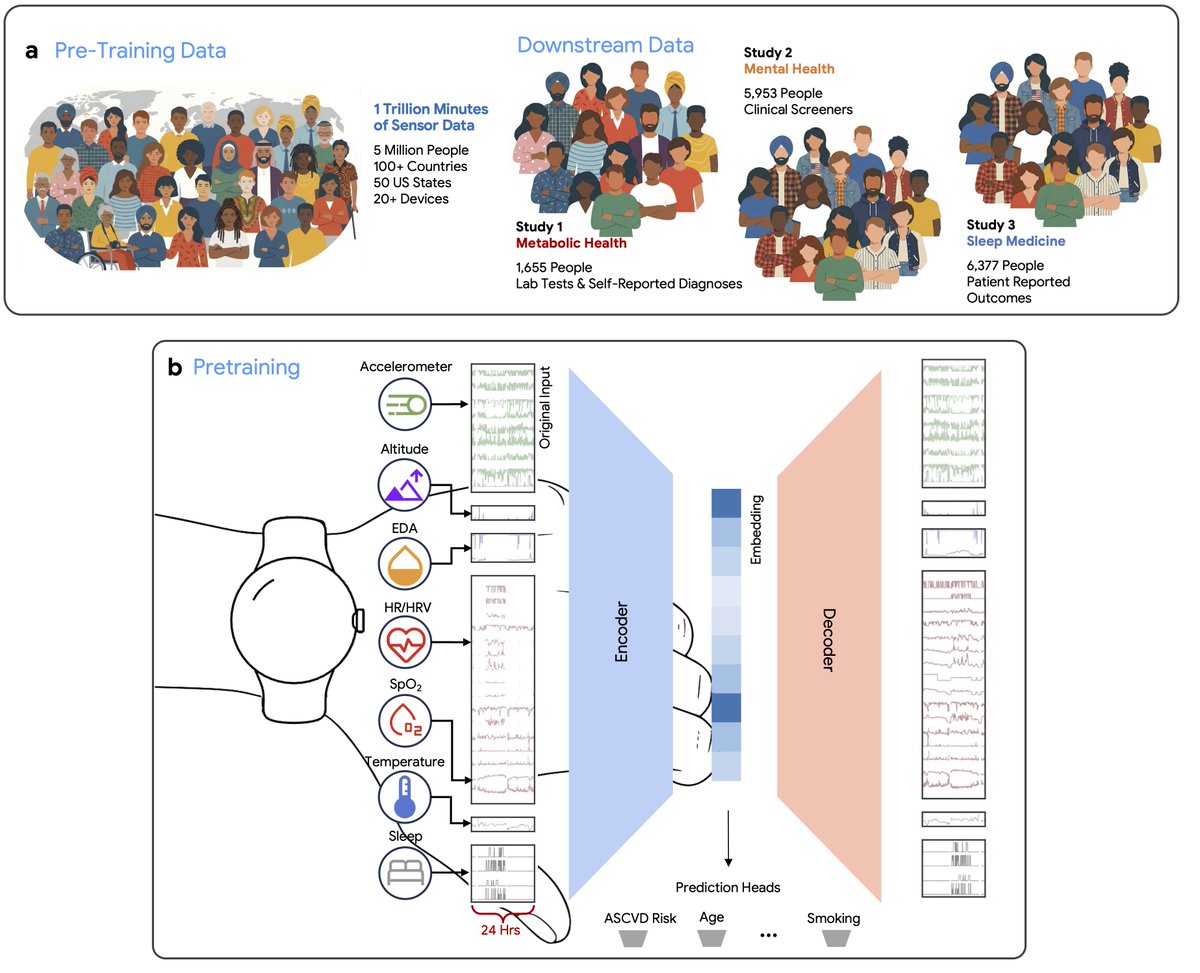
Introducing SensorFM, a large-scale Sensor Foundation Model that learns from 1 trillion-minutes of unlabeled wearable data drawn from five million consented participants.
SensorFM learns a single, reusable representation of sensed human physiology that transfers across cardiovascular, metabolic, sleep, and mental health, as well as lifestyle and demographic factors.
More →https://t.co/lbi1DG0zAW
If you don't know what to learn, start writing.
Writing teaches you how to think, how to learn, and how to attract an audience that supports your work. Those 3 skills are needed more than ever.
U.S. based humanoid robotics company @1x_tech has just unveiled their new tendon-driven robot hands with 25 degrees of freedom (DOF).
• Made in USA
• Tendon Drive Ratio: 5:1–15:1
• Wrist Dexterity: 3 DOF
• Backdrivability: Fully backdrivable
• Tactile Sensing: Pressure + location + slip
• Finger Force: Up to 45 N
• Wrist Torque: 17.75 Nm
• Position Accuracy: ±0.2 mm
• Waterproof Rating: IP68
• Reliability: >2 million cycles
"These hands are designed to do something fundamental: remove the hardware ceiling on what humanoid robots can actually do, and make data the only barrier to capabilities. By matching or surpassing human hands across the dimensions that matter, they ensure our AI models are no longer limited by dexterity. NEO can now perform virtually any task a human can do with their hands– with the precision, adaptability, and gentleness required for real-world environments."