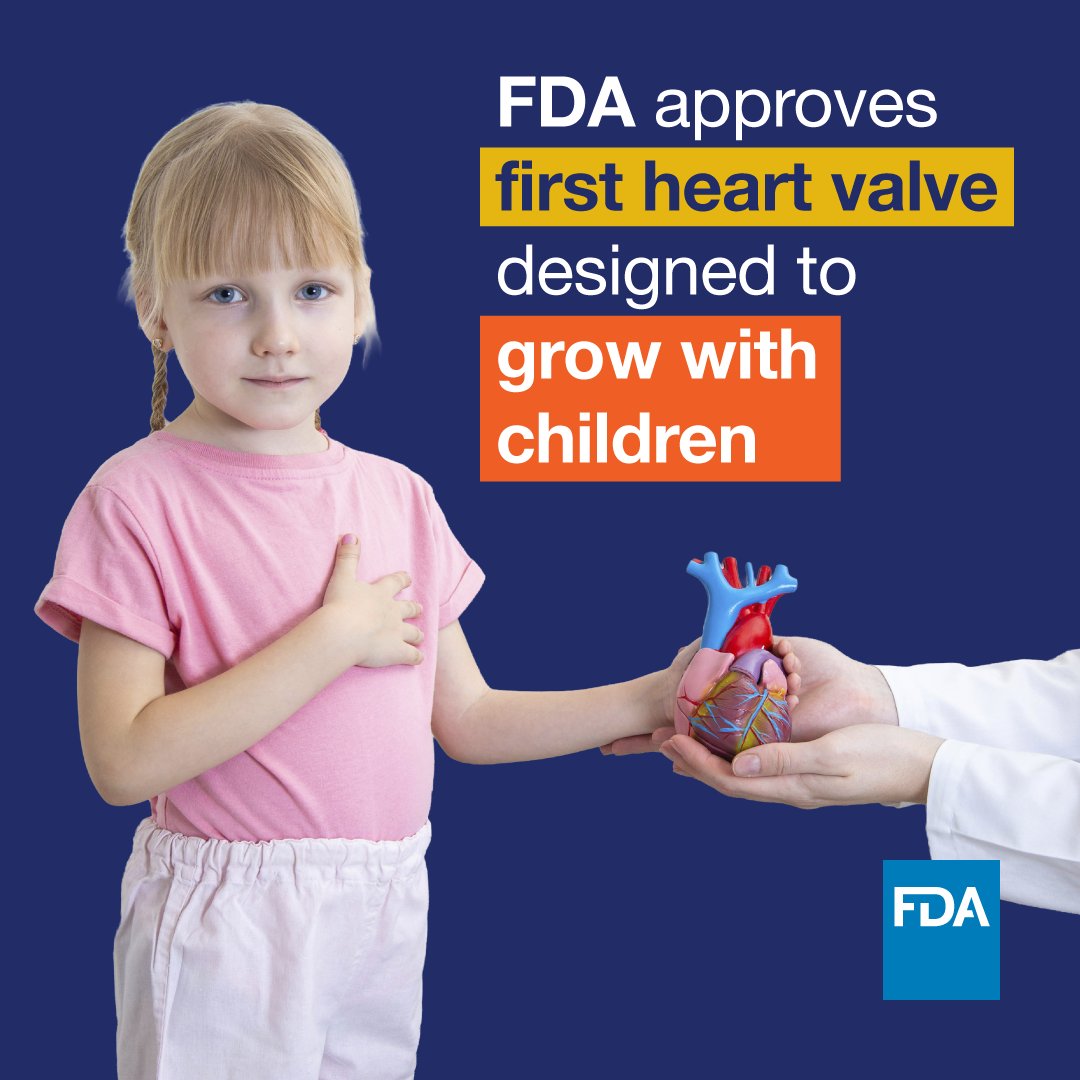
Today, we approved the first heart valve device designed to grow with children. The Autus Size-Adjustable Valve, a surgically implanted pulmonary heart valve for pediatric patients with congenital pulmonary valve disease can be expanded after surgery to keep pace with growth. The adjustable valve may mean fewer repeat surgeries for children as they get older.
https://t.co/EakmrdVaxf
Congenital heart defects are among the most common types of birth defects in the United States, affecting about 1 in every 100 births. The valve was approved through the premarket approval pathway, the FDA's most rigorous review process for medical devices.
Open-source AI is democratizing advanced medical simulation. MONAI Physio lets the global research community build subject-specific digital twins of the heart and lungs from everyday 3D/4D scans, a major step toward truly personalized medicine.
Introducing MONAI Physio at #MICCAI2026.
3D and 4D medical images ➡️ personalized cardiac and respiratory digital twins.
This open-source Project MONAI toolkit lets researchers model how the heart beats and lungs move for simulation, visualization, and reproducible research.
Explore the project 👉 https://t.co/jmFhZW5k4R
A brain gene that can still “jump” has been found inside a human poxvirus. The discovery could reshape how we think about cancer, Alzheimer’s, and gene mobility in medicine.
Scientists found a human genetic element in a poxvirus and discovered it was both an important gene for brain function and a jumping gene capable of moving and inserting itself in genomes.
A study published Sept. 24 in Science reports that the gene, called BC200, combines a mix of characteristics that have never been seen before.
Read more: https://t.co/6WMros5HnL.
Exciting progress toward a single blood test for dozens of cancers. The caveat: sensitivity drops significantly for early-stage tumors, so a negative result doesn’t fully rule out developing cancer.
A US FDA panel recommended approval of a blood test that's designed to detect a variety of cancers but has raised concerns from some scientists
https://t.co/7ARwYTV8nK
Anthropic’s Claude has discovered a novel enzyme system hidden in bacteriophage DNA. The significance? We’re watching AI move from assisting research to driving fundamental biological breakthroughs, with major implications for the next generation of genetic medicines and AI.
Claude has discovered a previously unknown enzyme system hidden in the DNA of bacteriophages. Beside the enzyme’s gene sits a long array of repeating DNA—a structure that looks somewhat similar to CRISPR.
We don’t yet understand what this system does, but only a handful of known systems share its features, and all of them are able to cut, copy, and paste DNA. Historically, the discovery of such programmable systems has helped revolutionize medicine. CRISPR, for instance, is now the foundation of genetic medicines. But it will take much more work to learn what this system does, and whether it can be put to similar use.
Read more: https://t.co/RuEosScSMb
Cancer treatment is already complicated enough. Something that connects all the data and uses AI to support the full journey from diagnosis to recovery will have a meaningful impact.
Today we announced the new season Oracle Health Oncology EHR, purpose-built for the distinct demands of cancer care.
Read how this brings together oncology-specific workflows and AI-fueled clinical intelligence to support patient care from diagnosis through treatment and follow-up. https://t.co/R5IBVCZBZx
Big potential shift in MS research. An experimental drug from Inflammasome Therapeutics (K-9) didn’t just stop further damage in a multiple sclerosis mouse model, it helped animals recover vision and movement they had already lost.
This could mean fewer trips to the hospital, less damage to healthy skin, and a new option for people who thought they were out of radiation choices. Early results, but genuinely encouraging.
Mayo Clinic researchers are the first to use a new radiation technique called minibeam radiotherapy to treat patients with treatment-resistant cancers in or near the skin in a clinical study. Nearly 93% of tumors shrank, disappeared or remained stable, providing a promising approach to treat difficult-to-treat cancers.
Learn more: https://t.co/s5rUZVeSZR
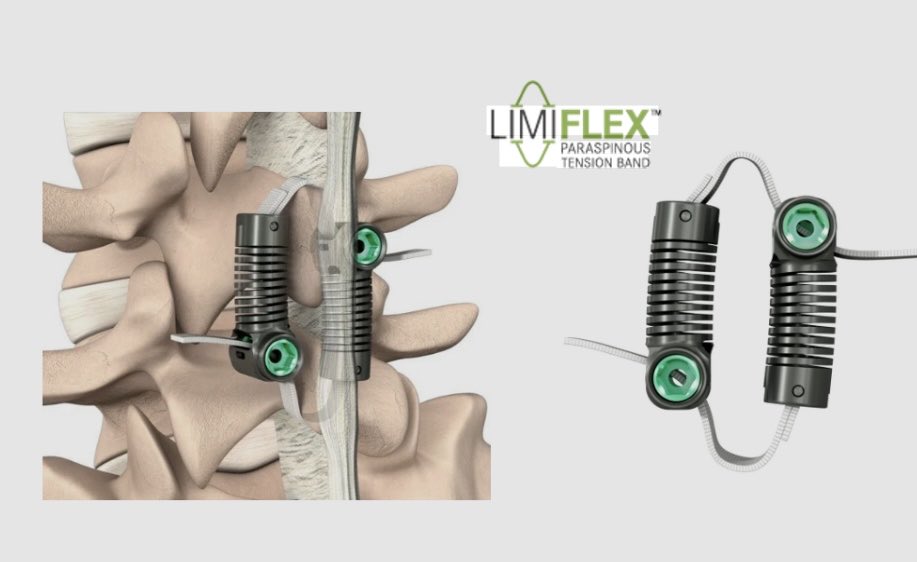
Do we really have to freeze two vertebrae together just to stop one from slipping? Stanford researchers spent two decades answering “no.” Their LimiFlex Dynamic Sagittal Tether is now in patients stabilizing the segment, preserving motion, and getting people back to daily life far faster than traditional fusion.
What this actually means for $TEM: they are trying to own the diagnostic step that makes a personalized cancer vaccine possible. That is a slice of economics, not Moderna/Merck’s drug franchise. This is feasible because Personalis was already in the clinical workflow and Tempus has oncologist distribution.
I wouldn’t bet on the stock surging because sequencing is switchable, the acquisition isn’t closed, and the vaccine still needs FDA approval plus payer coverage beyond melanoma.
Tempus AI could capture a lucrative slice of Moderna and Merck’s personalized cancer therapy business, with Personalis at the center of the bet. https://t.co/pIvwxHarRl
This is a good pipeline print, not a stock-moving print.
$ABBV is too big for one late-line myeloma asset to re-rate the whole company.
What matters: monthly dosing, low CRS, and a path into earlier lines.
Solid news. Keep expectations in check.
New topline results are available from our Phase 3 study in patients with relapsed/refractory #MultipleMyeloma (RRMM), and we look forward to sharing the full data at this year’s @Myeloma_Society Annual Meeting. Read more: https://t.co/Qx1rjb26cS #IMS26
@bioinvestor24 The ORR numbers are close enough that the real differentiator is whether you can keep the patient on drug long enough to see the next scan.