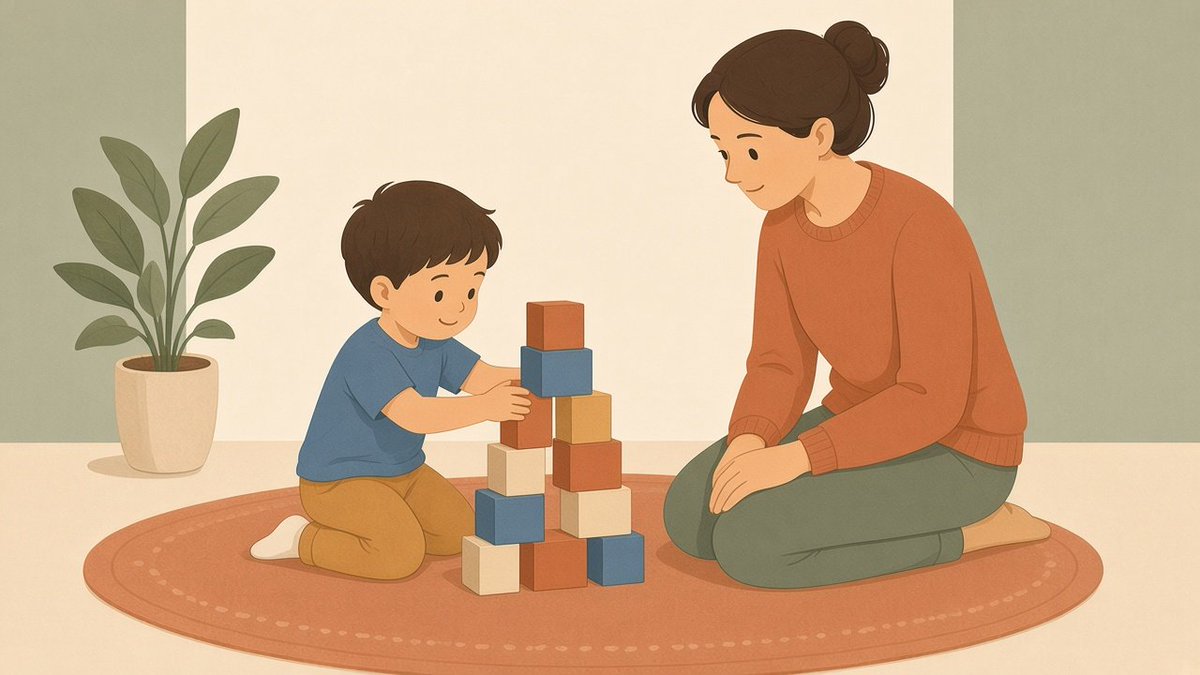
The dishes have sat in the sink for four days. Not because you stopped caring, but because standing up feels like lifting something no one else can see.
Depression is not laziness or weak will. It is a common, treatable illness, and talking therapy is often where help begins.
@TailsChannel The wait might be half the fun: in a 2007 study, Leaf Van Boven and Laurence Ashworth found people tended to feel stronger emotions looking forward to an event than looking back on it. So this trailer countdown may already be giving fans a real mood boost.
The review notes that how ADHD shows up can change with age and with school or social settings. There is no cure, but medicines tend to work and are usually well tolerated, and non-drug approaches are also valuable.
Curious readers can explore further by clicking the source below.
https://t.co/IfcjqIxptC
Myth: ADHD is only a childhood thing. Fact: ADHD can carry on into adult life.
Have you heard that myth too?
Picture an adult who shares that they have ADHD. Someone says it's just for kids, and the doubt stings.
But in a 2015 review, researcher Stephen Faraone and his team described ADHD. They called it a lasting condition of brain development. They estimated it affects about 5% of kids and teens worldwide. For adults, it is about 2.5%. There is no single cause. Instead, many genes and life factors each add a small part. Still, diagnosis with standard criteria is reliable. Treatments with research behind them can greatly ease symptoms.
So understanding may help adults with ADHD more than doubt.
#ADHD
The paper reports six studies. Kids praised for being smart later described intelligence as fixed more often, while kids praised for hard work believed it could grow.
Curious readers can explore further by clicking the source below.
https://t.co/LdUeDnfXaA
Ever told a child "You're so smart!" and felt proud saying it? Picture a kid who finishes a hard puzzle and looks up, beaming. That praise feels kind, but it may carry a hidden cost.
In a 1998 paper, researchers Claudia Mueller and Carol Dweck studied praise. Fifth graders were praised for being smart or for trying hard. Right away, kids praised for being smart more often picked tasks that would make them look smart. Then they all faced a failure. After it, those kids tended to enjoy the task less and give up sooner. They also more often blamed low ability and did worse afterwards.
So praising the effort may help a child keep trying, even after a fall.
#Parenting
Flynn found some of the largest gains on reasoning-style tests. In the Dutch data, unknown factors in people's surroundings accounted for about 15 of the 20 points gained.
Curious readers can explore further by clicking the source below.
https://t.co/NgiBRwmNkn
Are IQ scores fixed across generations? Many assume so.
But in 1987, researcher James Flynn looked at 14 nations. Average scores rose 5 to 25 points in one generation. So Flynn argued our surroundings matter.
That's why a score may be a snapshot, not a label.
#intelligence
@PsychToday One hopeful note: in a review of long-term studies, Ulrich Orth and Richard Robins found that self-esteem tends to rise from the teen years into midlife, peaking around 50 to 60. For many people, it can keep growing with time.
@ScienceNews That area is named after Carl Wernicke, who in 1874 linked damage there to trouble understanding speech. It's striking that more than 150 years later, finer tools are still finding new jobs inside it.
@DiscussingFilm@MemeioYT Easter eggs like this hit hard because nostalgia isn't just sentimental. In studies by Tim Wildschut and Constantine Sedikides, recalling nostalgic memories tended to lift people's mood and their sense of connection to others.
@hubermanlab There's a fun animal hint here too. In a study led by Imke Kirste, mice given two hours of silence a day grew more new cells in the hippocampus, a memory area. It's early, mouse-only work, but it's a nice reason to protect a little quiet.
@SahilBloom In psychology, this is essentially protecting your cognitive bandwidth. When you stop spending mental energy on low-stakes friction and external validation, you finally have the capacity for what actually matters.
@MikePetryOff Spot on. In economic psychology, inflation isn’t just about money supply—it’s a collective mood. When workers and businesses both price in tomorrow's fears today, psychology literally becomes the economy.
The 49ers beat the Vikings in Mexico City, and fans are already talking about the Super Bowl. Some say it's too soon, because that kind of talk could jinx the team.
Do people really fear jinxing a team by saying it out loud?
A: yes, often
B: no, rarely
Researchers call this tempting fate. In a 2008 paper, Jane Risen and Thomas Gilovich found that people tend to feel a bad outcome is more likely after they tempt fate. The reason may be simple. Once we say the bold thing, the loss becomes easier to picture, and what is easy to picture can feel more likely. So the jinx may live in our minds, not in the game.
#49ers
Myth: the marshmallow test predicts a child's future.
Fact: it may say less than we thought.
As a kid, would you have eaten the treat or waited?
In a 2018 paper, researcher Tyler Watts and his team retested the idea. They used a new group of children. Waiting longer at age 4 did go with better school results at 15. But the link was about half the size first reported. It shrank by about two thirds once home life and early skills were counted.
One test at age 4 may say less about a child's future than we think.
#ChildDevelopment
Does finishing second or third feel better?
Max Verstappen recently won the Las Vegas Grand Prix, sharing the podium with two other drivers. While we can't know exactly how they felt, their finish recalls a classic psychological finding.
A 1995 study by researcher Victoria Husted Medvec and her team analyzed Olympic medalists from the 1992 Summer Games. They found that bronze medalists often appeared happier than silver medalists. The researchers attributed this to "what might have been" thinking: silver medalists tend to focus on missing out on gold, while bronze medalists are simply relieved to have won a medal at all.
Ultimately, a better objective outcome doesn't always lead to a better subjective experience.
If you were on that podium, would you rather finish second or third?
#LasVegasGP
Across six studies, Risen and Gilovich found people tended to judge bad outcomes as more likely after an action that tempts fate, and those outcomes came to mind more easily. These are group tendencies, not a rule for everyone.
Curious readers can explore further by clicking the source below.
https://t.co/47m41LGkIq
The 49ers beat the Vikings in Mexico City, and fans are already talking about the Super Bowl. Some say it's too soon, because that kind of talk could jinx the team.
Do people really fear jinxing a team by saying it out loud?
A: yes, often
B: no, rarely
Researchers call this tempting fate. In a 2008 paper, Jane Risen and Thomas Gilovich found that people tend to feel a bad outcome is more likely after they tempt fate. The reason may be simple. Once we say the bold thing, the loss becomes easier to picture, and what is easy to picture can feel more likely. So the jinx may live in our minds, not in the game.
#49ers
@netflix Tip for the recap: try to recall what happened before you press play. In a 2006 study by Roediger and Karpicke, students who practiced recalling a passage remembered more a week later than those who just reread it.
@PopCrave This is the spotlight effect: we tend to think people notice our looks far more than they do. In a 2000 study, students in an embarrassing T-shirt guessed about half the room noticed, but only about a quarter really did.