I am pleased to share the final version of our Human Breast Cell Atlas with @MarioniLab now out @NatureGenet. There are important new additions, which I will leave to @Dr_SaraPensa and @AustinDReed to mention👇 . Couple of points i want to highlight 👇:
https://t.co/tMCyMRJAdh
I am very pleased to share our second and largest contribution to “The Human Breast Cell Atlas” (HBCA) project. Buckle up a longish thread ahead!
https://t.co/hEmnIJKNsr
Delighted to share new work published in @ScienceMagazine entitled 'Tumor-derived antioxidants suppress immunity by depriving T cells of reactive oxygen species,' led by @XanWesolowski in the lab https://t.co/Urzw44VngI
🚨#Preprint alert! @antoranlab in close collaboration with @martincorena lab
How can we study human #epithelial tissues for months in the lab, while preserving their native structures and behaviour but without passaging?
#human#epithelioids
https://t.co/pme4lZKRxq
In 1999, Tom Maniatis discovered something remarkable: neurons achieve self-avoidance via stochastic methylation of the protocadherin gene cluster.
We've just discovered this locus is an evolvable in-vivo barcode across the human tissues: https://t.co/DMyHA5TIS0 🧵
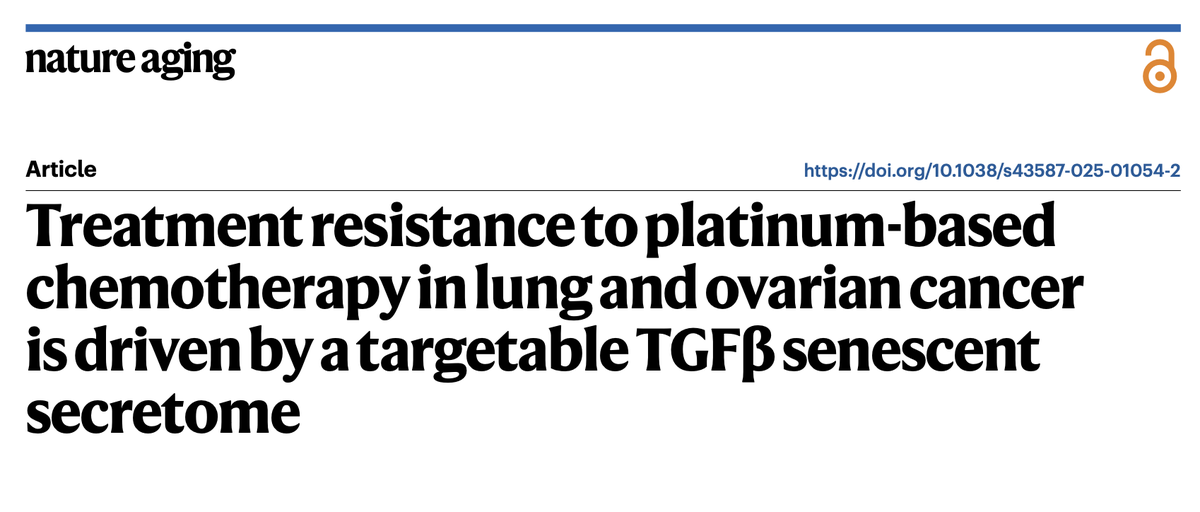
Thrilled to share the latest paper from our lab @MunozEspin_Lab@EarlyCancerCam, done in close collaboration with Prof James Brenton’s and Prof Masashi Narita’s laboratories @Narita_lab@CRUK_CI, and published in @NatureAging
https://t.co/83GOSWosp0
Fantastic opportunity to share our work at @SCICambridge. Thanks @WTKLAB for the invitation to disccuss science and enjoy beautiful Cambridge sunshine and immersive College dinner.
Ladies and gentlemen - Our Atlas of Human Inflammation today out in @NatureMedicine 💫
Welcome on stage: The Cell as a Living Biomarker🩸
We Built an Inflammation Atlas of Circulating Immune Cells. By profiling more than 6.5 million peripheral blood mononuclear cells from 1,047 patients across 19 inflammatory and immune-mediated diseases using single-cell RNA sequencing, we generated a unified, high-resolution reference of immune cell states in human disease.
Despite decades of research, our understanding of Inflammation has largely remained fragmented, studied one disease at a time and often confined to specific tissues. We set out to take a different approach: to ask whether inflammation leaves a shared, measurable fingerprint at the systems level of circulating immune cells and whether this signal could be leveraged for Diagnostics and ultimately Precision Medicine.
Blood, unlike tissue biopsies, is accessible, repeatable, and scalable, making it an ideal substrate for liquid biopsy approaches. The key question was whether it also contains sufficient biological signal to capture disease-driving inflammatory mechanisms❓
Using interpretable machine learning approaches, specifically gradient boosted decision trees (GBDT) combined with SHAP explanations, we asked whether single cells, and ultimately patients, could be classified based solely on their blood immune transcriptomes. !!! Disease-associated gene expression signatures enabled accurate classification within the study cohort, reinforcing the concept that immune cells in circulation function as “Living Biomarkers”🩸
We are now working toward a diagnostic prototype that brings these concepts closer to clinical reality. Together with hospital and industry partners, we aim to develop Foundation Models of immune cell plasticity that can operate across diseases and settings, enabling patient stratification, therapy monitoring, and outcome prediction from blood alone.
Our long-term vision is a future in which a simple blood draw provides a systems-level readout of immune health, guiding diagnosis and treatment across inflammatory diseases.
Immune cells are already doing the sensing. The challenge and opportunity is to learn how to listen. Please find the Nature Medicine Paper here:
https://t.co/dHSQFVbCPk
Thrilled our study on anti-progestin therapy for breast cancer prevention is out! A pleasure to be part of the team led by Bruno Simões, @RobClarkeLab + @DrSachaHowell, @MCRBreastCentre w @rmkhokha@WTKLAB. Team science moving us towards cancer prevention!
https://t.co/gDsSLCunI9
PAPER OUT!! 🥳🥳🥳
Clinical potential of WGS data linked to mortality statistics in patients with breast cancer in England
#shout out to #DaniellaBlack @GenomicsEngland
And all the patients that shared samples across @NHS
1/n https://t.co/nbdSogINJH
Could PARP inhibitors, targeted drugs already used to treat cancer, also help prevent it?
We're part of a coalition of charities that believes the answer could be yes. And we're calling for urgent research to find out.
https://t.co/NcyAYo2mtA
Excited to share our new preprint introducing CenSegNet, a deep learning framework for high-throughput, spatially resolved, single-cell centrosome profiling in heterogeneous tissues. Co-led by brilliant PhD students, Jiaoqi Cheng & Keqiang Fan.
1/3
https://t.co/OVzDIsGFba
Thrilled that our paper is finally in press @ScienceMagazine!! *Platelets sequester cell free DNA, including free fetal and tumour-derived DNA* Tweetorial from @l_cmurphy below. Check out the news feature https://t.co/r1bXqfpPSU and terrific editorial from Dennis Lo
We are recruiting….Any clinician interested in doing a PhD in London on lymphoma and mechanisms of transformation/ TME….please apply (and get in touch with us)
(1/12) Over a year ago, we launched a new project to explore whether the tissue microenvironment could predict cellular behaviour and whether reprogramming might unlock new therapeutic avenues. 🧬 Spatial transcriptomics provides deep insights into tissue organisation.
We wanted to take this further by building a model that predicts how the tissue microenvironment rewires cells, and in silico predict how reprogramming influences the diseased microenvironment. Today, in collaboration with @Muzz_Haniffa at @sangerinstitute we’re excited to share the preprint for Mintflow, including two novel disease datasets.
Link to preprint: https://t.co/4w1FlJaO9Q 🧵
Today saw our final year PhD students and MPhil students give talks on their research, whilst 2nd years presented posters of their progress so far 😀
A great day showing the diversity of research in the Department - congratulations to poster and talk prize winners!
We’re thrilled to share our latest publication in @Cancer_Cell, and very proud of C. Rozalén for this tour de force uncovering how TIM3⁺ breast cancer cells drive immune evasion during micrometastasis. #CancerImmunology#BreastCancer#Metastasis https://t.co/m8pgMCms30