🚨 New working paper 🚨 with Taylor Begley and Peter Haslag:
Q: does sharing a board member stifle worker mobility?
A: Yes! Pretty significantly! Employee flows between the connected firms drop by around 20%:
Foundational expertise may be a prerequisite for extracting durable skill from AI-assisted practice, from @davidautor, Tanya Rodchenko, Josh Martin, Zanna Iscenko, Scott Strand, David Pearl, and Melissa Ferere https://t.co/0d33uIw1Oy
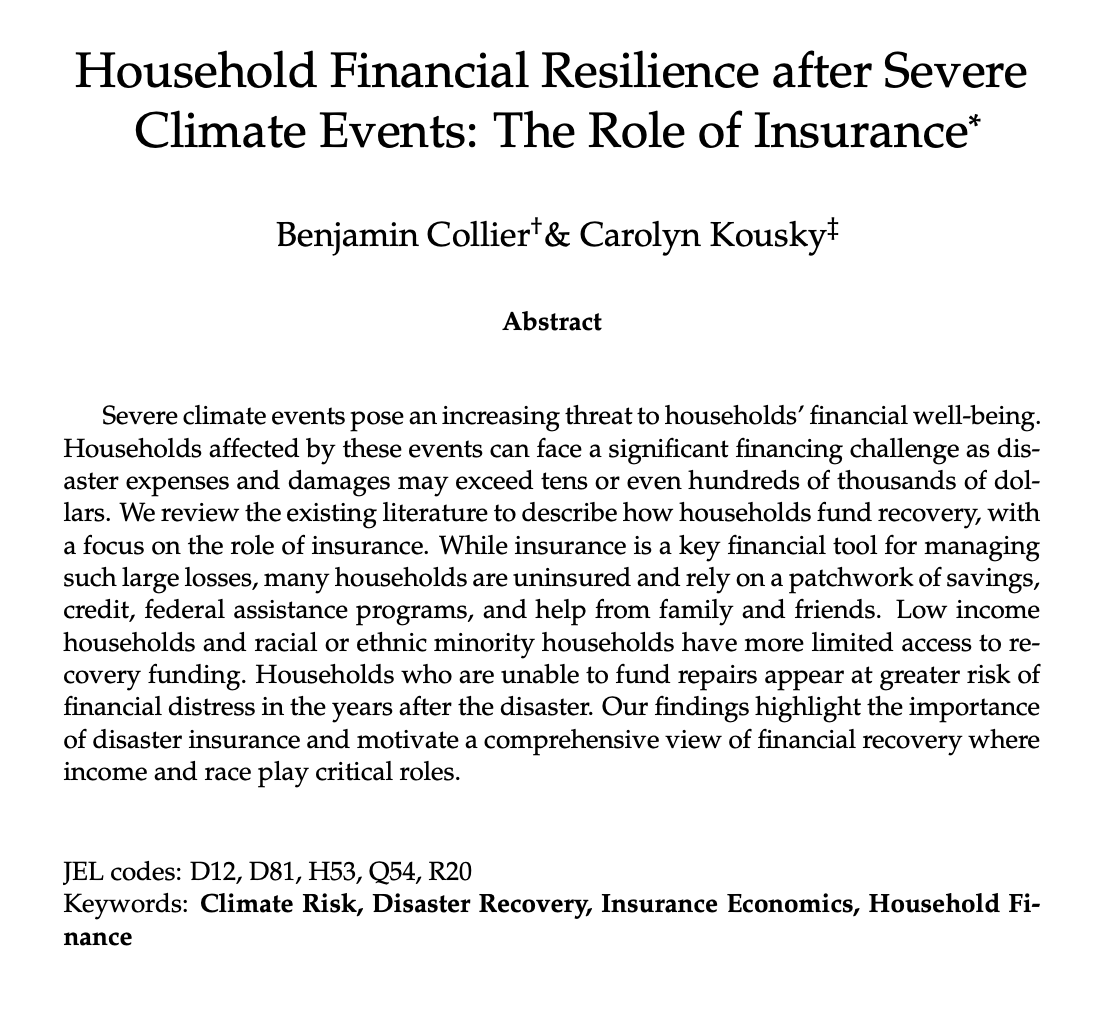
Carolyn Kousky and I have a forthcoming chapter, “Household Financial Resilience after Severe
Climate Events: The Role of Insurance” in the Handbook of Insurance. Here is a working paper version: https://t.co/g74doG144F
a short 🧵, 1/4
Submit your papers to the UGA finance football conference! Deadline is March 22.
A small set of presentations/discussions on Sept. 6, followed by a fun dinner. Then tailgating and a college football game on the 7th!
Link: https://t.co/HaBYF6oRZK
Wouww! Labor market effects of common directorships. “cooperative behavior” is the preferred nomenclature in the finance literature.
Cc @FTC@JusticeATR
📢 Call for Papers! 🏡💰
Exciting opportunity to contribute to the 2024 GT-AtlantaFed Household Finance Conference. We welcome submissions on a wide range of topics in household finance!
📅 Submission Deadline: December 15, 2023
🔗 Website: https://t.co/xzMikrG1NQ
#econtwitter
Linn and Weagley use machine learning methods to construct informative financial constraint measures. They show more constrained firms tend to issue equity and invest relatively more when market sentiment is high. Constraint data @ https://t.co/ZA6LvTATYk https://t.co/zk6w2zugSF
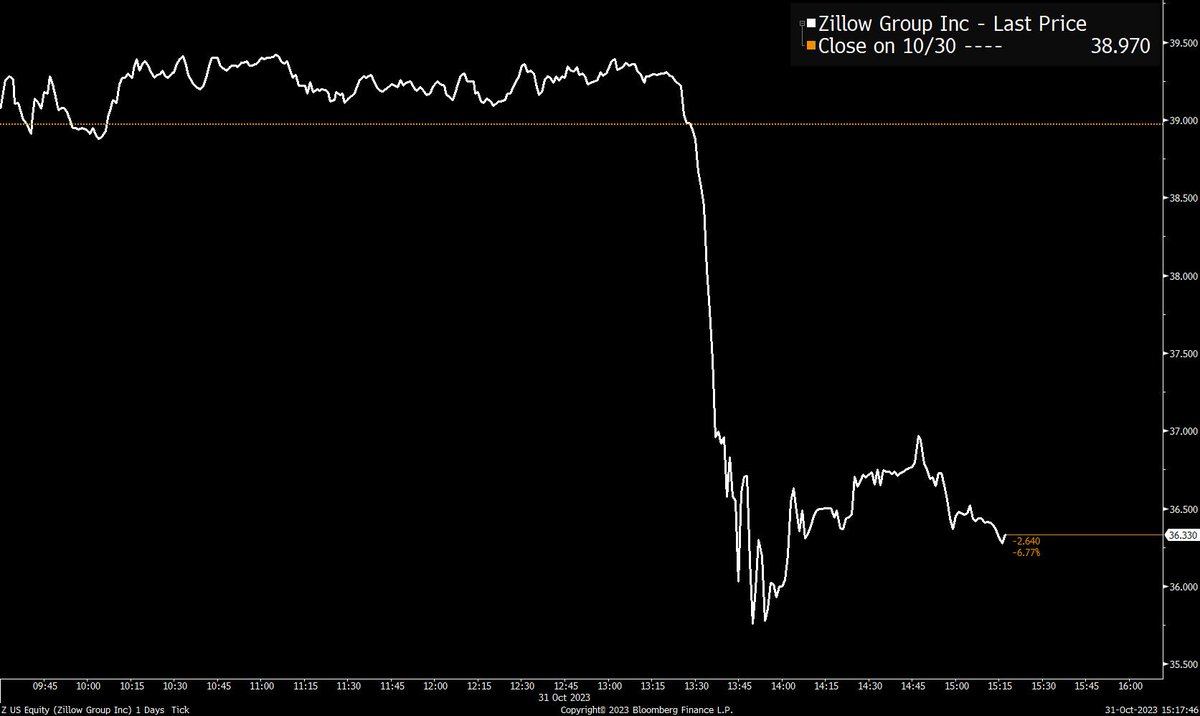
"Zillow Group Inc. and other real estate stocks plunged after a Missouri jury found the National Association of Realtors and other industry players guilty of colluding to maintain high brokerage commissions." https://t.co/9D7WPKnHhf
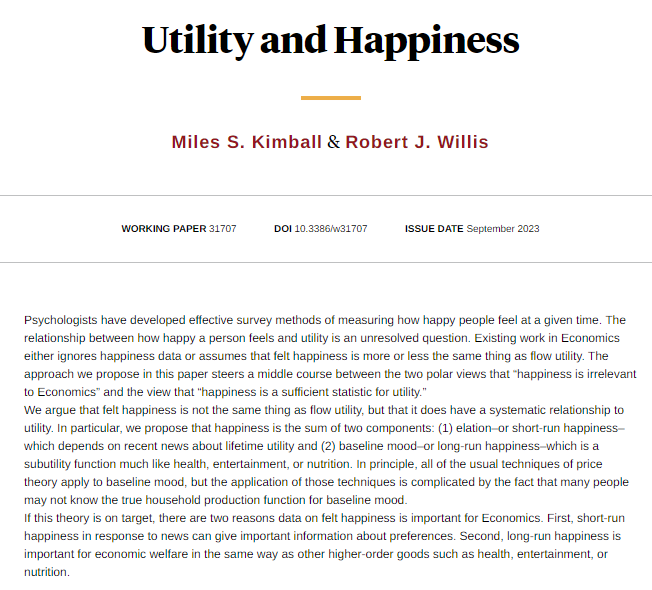
Happiness is not utility — it is the sum of baseline mood (an output of household production) and an impulse response to news, from @mileskimball and Robert J. Willis https://t.co/eipJAVourU
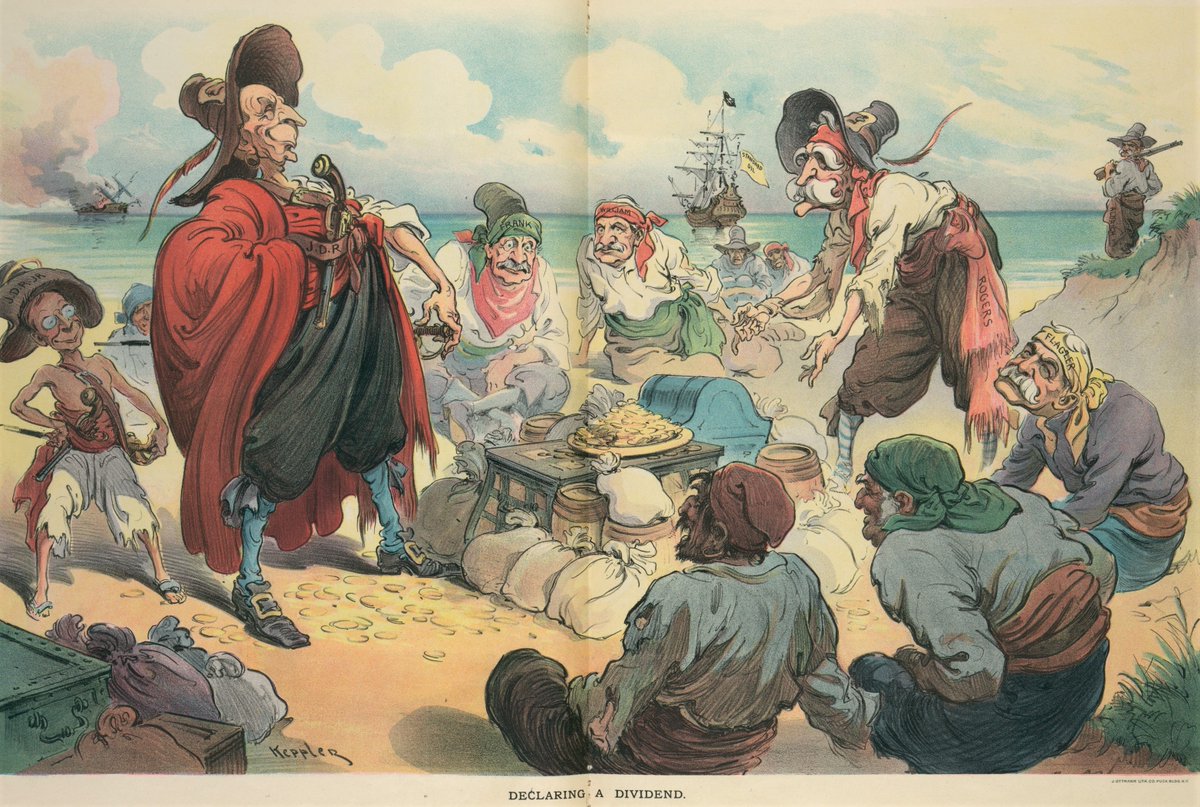
Did you know the first dividend was paid out in spices?
The history of dividends stretches back four centuries to the first issuance by Dutch East India Company (VOC) management.
THE DUTCH EAST INDIA COMPANY
The modern stock market began in 1602 on the Amsterdam Stock Exchange, when shares of the Dutch East India Company first traded.
Despite the company’s incredible monopoly on trade and demands from shareholders, the VOC did not pay a dividend until 1610.
Even still, this first dividend was paid in spices. Shareholders received “mace at a value of 75% of the nominal capital”.
It was not until 1612 that the company finally paid investors a cash dividend.
ACTIVIST SHORT-SELLING
The VOC issued these first dividends in response to criticism from shareholders over management’s poor allocation of capital and dividend policy.
This shareholder movement stemmed from the campaign of Isaac Le Maire, the world’s first short seller.
Beginning in 1609, Le Maire, published a pamphlet levying three primary criticisms against VOC management: Rising debt levels preventing dividend payouts, the board’s unwillingness to hear investor complaints, and board directors “enriching themselves to the detriment of shareholders”.
While Le Maire had a controversial relationship with the VOC, the company’s decision to issue dividends yielded a definitive victory for the short seller.
Return-Based Anomalies in Corporate Bonds: Are They There?
The answer is … not really.
You can find my new working paper with Cesare Robotti (Warwick) and Giulio Rossetti (Warwick) at SSRN available here: https://t.co/WNcacSd4fm