Pat Tillman was murdered by his own men after making it clear he no longer supported what the American military was doing in the Middle East. He planned to come back and expose everything and the military had him killed for it. His family has repeatedly asked that the Army not use his name or photo for recruitment posters or propaganda yet they have continued to do so.
He did not support the crimes of our military and would be appalled to see his name has continued to be linked to it.
Pat Tillman was shot 3 times in the back of the head from 10m by a fellow soldier after he started speaking publicly against the wars in Iraq and Afghanistan. And we dilute his memory on purpose each year. Makes me sick.
They shot him, dragged his lifeless body onto the pavement, and handcuffed his corpse while his 3-year old daughter wearing Bluey pajamas watched in horror. If you say you voted for this you are an empty soulless vessel.
@Schwarzwald77 Are you offended?
Let me clarify: I’m elated that he’s dead. Overjoyed….
Just like he was elated at seeing countless dead children throughout Middle East.
Switzerland will eliminate Argentina
Switzerland will eliminate Argentina
Switzerland will eliminate Argentina
Switzerland will eliminate Argentina
Switzerland will eliminate Argentina
Switzerland will eliminate Argentina
Switzerland will eliminate Argentina
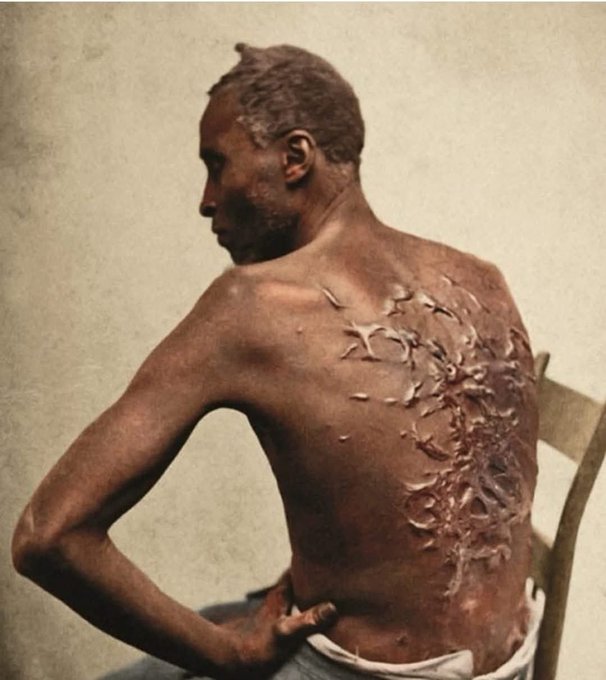
Escaped enslaved man, Gordon, also known as 'Whipped Peter,' shows the scars on his back in Louisiana, 1863. The Trump administration ordered the removal of this photo, along with other signs and exhibits related to slavery, from several national parks.
This image, taken in 1863, shows Gordon, also known as “Whipped Peter,” a man who escaped slavery from a Louisiana plantation after enduring years of brutal abuse. The scars across his back tell a story that words alone never could.
After making a dangerous journey to Union Army lines during the American Civil War, Gordon underwent a medical examination where photographers captured the wounds left by repeated whippings. When the image was published, it spread rapidly across newspapers in the United States and Europe, becoming one of the most powerful pieces of visual evidence exposing the cruelty of slavery.
For many who had never witnessed the realities of slavery, this photograph shattered any illusion that it was a humane institution. It helped strengthen support for the abolitionist movement and encouraged many Black men to join the Union Army in the fight for freedom.
More than 160 years later, the photograph remains one of the most important historical records of slavery ever created. It is uncomfortable to look at, but history is not meant to be comfortable. Images like this remind us why preserving historical evidence matters. They allow future generations to understand not only the suffering people endured but also the resilience and courage of those who survived and fought for freedom.
In recent years, reports that this photograph and other slavery related exhibits were ordered removed from displays at some U.S. National Park sites sparked widespread debate among historians, educators, and preservation groups about how difficult chapters of history should be presented to the public. Whatever one’s political views, the discussion has highlighted the importance many place on protecting historical records so they can continue to educate future generations. (Reuters)
Vimos mexicanos abraçando coreanos e ingleses, alemães aplaudindo paraguaios, japoneses desejando sorte a brasileiros, franceses brincando com noruegueses.... Sempre que tem violência, racismo e confusão é com argentino. 🇦🇷