Know where the real bubble is? Trading the markets. When I started trading in the early 90's people would ask me what I did for a job. When I told them they would say "is that a real job?" now everyone is a trader. I think the next couple years will be about culling that herd.
The longer I do this, the more I realize trading is mostly about fighting your demons.
Anybody can put on a good trade. It's the emotional impulses that actually derail you.
Recent one comes to mind. $APPS. My execution was perfect according to my system. The evaluation, the entry, the stop, all of it. I was quickly in a decent profit.
Later on I came back to check it and saw the stock was set to close fairly weak on the day. I was in the middle of a drawdown at the time, nothing bad, but apparently enough, because I acted emotionally. Convinced myself it was best not to risk an overnight gap down past my stop. Took off the trade.
Next day it opened and completely ripped. Took out the previous day's highs and went on to make roughly a 110% move. A move I should have been in according to my own system. One of the best trades of the year up to that point, and my emotional override kept me out of it.
Good trading is rarely about intuition. It's almost always just the byproduct of following your system, especially in the moments it feels most reasonable not to.
Whenever the market slows down and doesn’t suit my style I always go back and listen to Amrit Sall’s chapter in Unknown Market Wizards to keep myself in check and remind myself of the importance of waiting for better times.
The ‘Unicorn Sniper’ known for his incredible patience to sit and wait for the next fat pitch.
His results are absolutely mindblowing, an average annual compounded return of 337% over 13 years.
Some of my favourite quotes from his interview below:
‘The big trades are pretty simple, you don’t have to go looking for them, but you do have to wait for them.
Trading opportunities in the market ebb and flow, there will be periods in the market where the opportunities dry up and there will be nothing to do. In those nothing periods if you’re looking for something to do, that is when you can create real damage to your account.’
‘I now know that 90% of the time the market is not going to provide any opportunities, and 10% of the time I am going to make 90% of my profits.’
‘It’s what you don’t do that counts. Patience is the key word, successful trading is the art of doing nothing, it’s what you don’t do between the real trade opportunities that will determine your success in the long run. You can do so much damage to your mental capital between trades that when the big trades turn up , you’re not ready for it.’
Do this after you get stopped. You will feel better. BUT SELL AND TAKE YOUR LOSS FIRST!
Then you can scream, cry, or throw a tantrum. https://t.co/8tPNJbCcy8
The ability to do nothing when your edge isn’t present is probably the biggest lever you can pull to improve your trading.
Most of that comes down to having proper buy rules or rules of engagement in place. When there’s nothing there you just sit and wait. When something actually lines up your rules trigger and that’s when you step in.
That’s how you keep it edge-driven instead of just trading to trade.
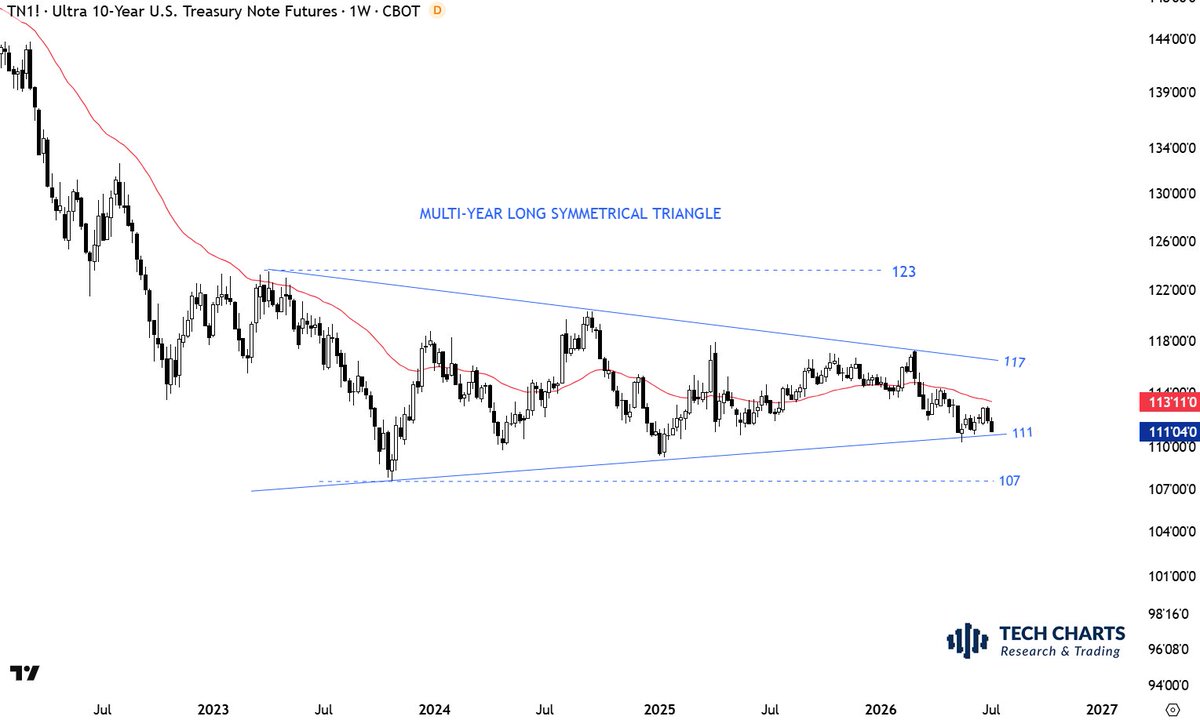
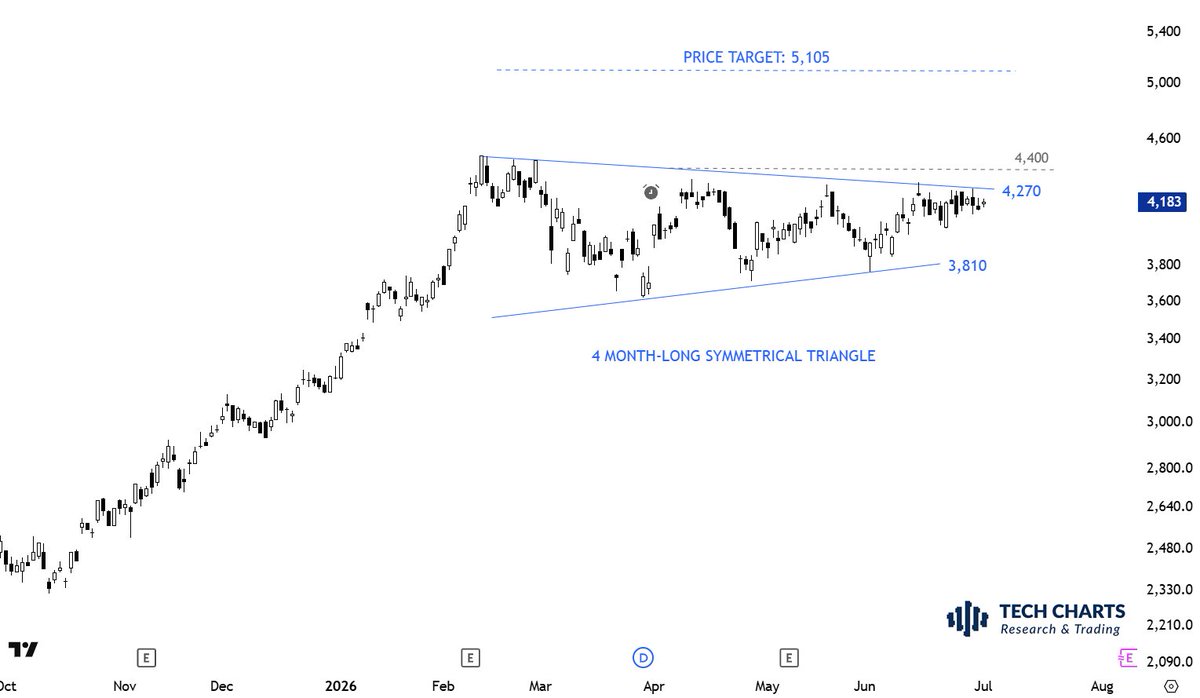
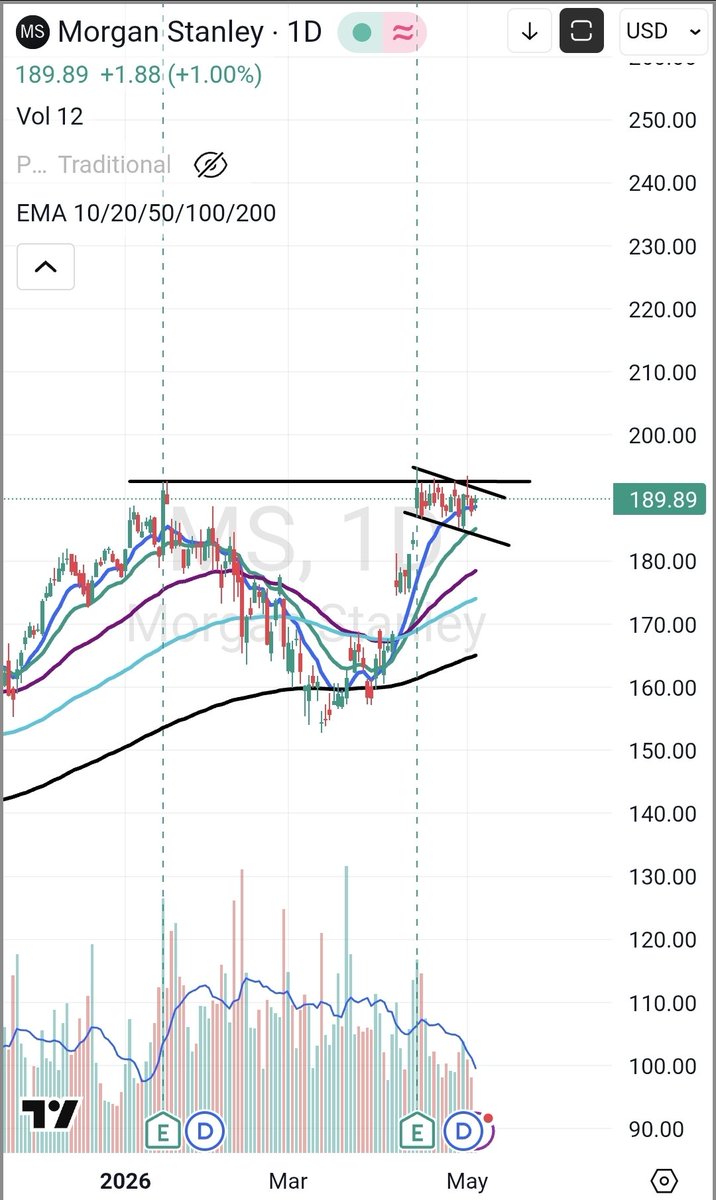
I'm interested in #symmetricaltriangles that do not have steep boundaries. That way a breakout is more likely to take out minor highs with the initial momentum.
#TECHCHARTSMEMBERS
Access >> https://t.co/pFVpMs1Xat
Been short $BTC since the bear flag break at 63k. As expected, there is support at the previous swing low around 59k. Wonder if the bears get through the support this time around.
#TradingSetup#crypto#BTCUSD
Something I cannot quite understand
Why people take losing trades personally
The markets don't know you. They have no idea who you are. They could care less what your hopes, fears and aspirations are. The markets are totally cold. Unfeeling
So why take a losing trade personally
Probably because you have misplaced assumptions and expectations. You assume the market cares about you enough to offer a profit. Your expectations are falsely placed
When I enter a trade I expect it to be a loser. I assume it will be a loser. This way I take risk management seriously
I know my trading stats. Over 200 trades I can come within a 10% on my estimate of ROR, win rate, PF, etc
But on any given trade or series of trades I do not have a clue. I may think I know where a market is going, but in reality I have no idea
So why would I take a loss personally. A trade is nothing more than a datum point in a series of data points subject to random probability theory. A loss is not a personal indictment
A harsh reality
Are you out to turn a little into a lot in a hurry?
Look folks, there has been tons of research done on the success rate of retail traders. By exchanges, regulatory agencies, brokerage houses, trading platforms, academic researchers and the like.
The numbers are in and you are a fool to begin with if you think your are an outlier -- although all retail traders think they are outliers (and they usually are on the left side of the bell curve distribution).
Expectations and eagerness to trade for the sake of money are inversely correlated with success. Sorry, but true (of course except for in your dream world).
You want to turn $50k into $5 million in five years? Well, go for it if you that is your dream. But know that professional career traders in zero-sum markets (like futures, day trading anything and crypto) plead with you to trade their asset class. Please, I beg you to trade futures (my asset class).
Fresh meat is always welcomed.
Maybe you are among the 2 in 1,000 that can with a few years of experience achieve back-to-back-to back-100% years. I do not want to do anything to prevent your effort. I wish you well. In 50 years I've witnessed many try.
Or, do you have realistic profit expectations and want to become excellent in some niche of market speculation?
Then you have a chance.
But your chance depends on your ability to protect your capital and avoid big losses.
Here is the reality folks -- the real world where 99% of us live.
Pick your asset class. Now have adequate capital (the amt is disputable but I use the figure of $50k). Next know that no matter what you do it will take three to five years to even pick up the scent of where your excellence might be hiding.
Your challenge will be to develop some scheme or system or approach that is repeatable. Every successful trader has a different method. No exceptions. You cannot copy anyone. There are reasons why I won't go into.
You might have to try a few different approaches to find what methods are suitable to you.
But here is the HUGE challenge you face.
You will have to keep your capital intact (relatively speaking) or have deep pockets to get through the three to five years of the steep learning curve.
You will also need to avoid the fast talkers who want you to believe they have your answers.
Following are appeals I received via email in just the past week from "reputable" trading services (these are verbatim):
-$10,000 into $30,417. 14 out of 20 trades doubled
-that's a 1,004% return in 6 days, turning a $605 bet into $6,684
-1004% on UMAC
- +100% on BBAI in a day
-See how stock flips could have made $92,000 in one year!
-Soured 1,025% in just six months
-convinced this could be this year's next 1,000%
You fall for these lines, you are done for. Another reality is that not everyone is made for crazy success in trading. Most people would be better off living frugally and putting as much money as they can into a 50% SPY, 30% fixed income, 10% energy and 10% precious metals portfolio and let it work over time. Then pursue a day job that excites you.
So, don't be conned by the circus acts that promise you the moon. Trading is hard work. Tedious. Boring often. Stressful.
My standard recommendation to most young people is to get an education in a field that you like and where jobs are available. Like welding. Or supply chain management. Or engineering.
98% of you young folks will thank me for this advice someday.