@bchesky "mafia recruiting" works for hiring the best people. It's the same method I use for investing in the best founders.
By the time you open a role, you're already too late.
The best people are always tracked. It's just a matter of who's been tracking them.
Most founders run reactive searches. Role opens. Hire a search firm. 50 profiles, 10 calls, 3 finalists. Pick the least bad. A year later you realize they're mediocre.
Brian does the opposite. He tracks talent mafias.
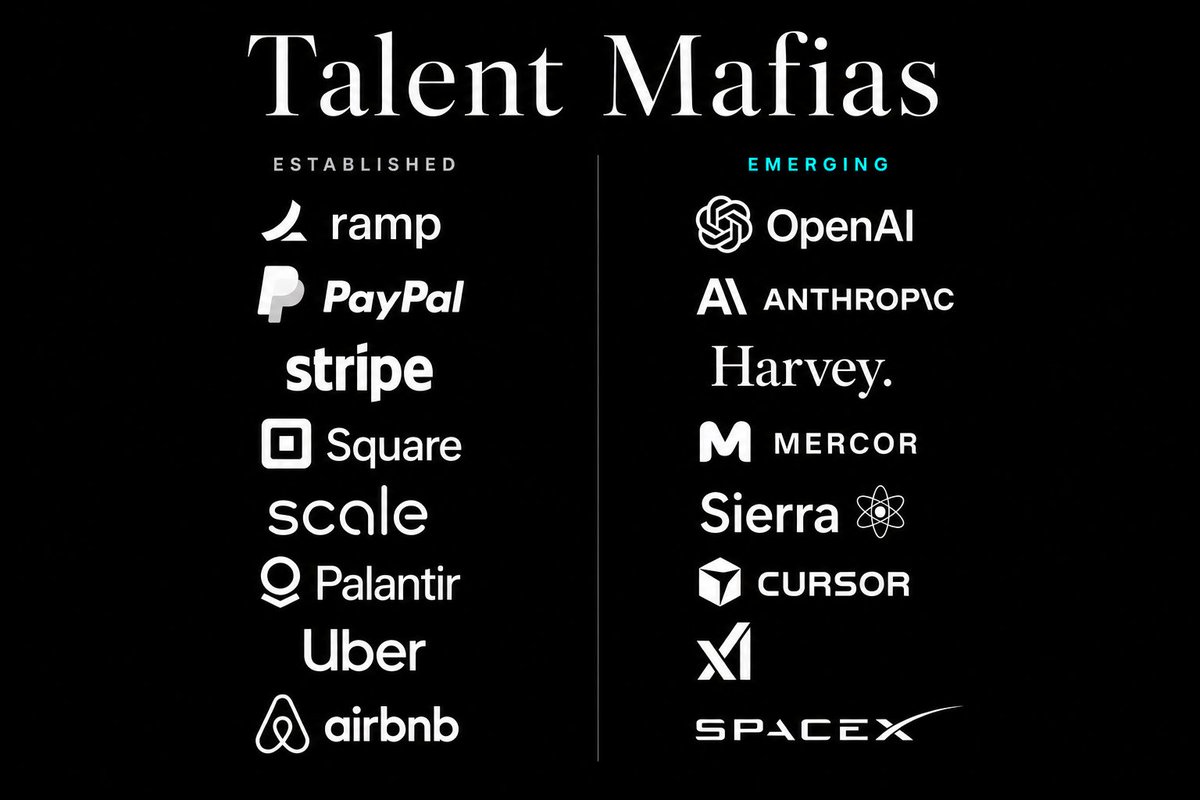
In the past, many have been proven to be high talent density, and each of them have something their known for e.g. technical, ops, design, FDE from @Square@Uber@Dropbox@stripe@tryramp@scale_AI@PalantirTech@Airbnb
Two ways to build a shadow list of the best people you're tracking (similar to @cursor_ai's hiring method)
1) Start with results, work backward to people. Don't say "Nike has good marketing, let me poach from Nike." Find a specific ad you love. Track down who actually made it.
2) Pipeline before you need it. "Who are the 2-3 best people you know?"
The best VC's do the same thing. We don't wait until a founder is raising, because by that time the round is effectively done.
Here are some of the AI mafias I'm tracking, and DM me if you want to know the rest of the list and how I prioritize based on specific teams, vintages, and function. @OpenAI@AnthropicAI@harvey@mercor_ai@cursor_ai@xai@SpaceX@SierraPlatform
If you're a founder and you can't name the next 5 hires you'd make, or the next 5 founders you'd invest, someone else is already hunting them down.
h/t recent AI founder mode episode on @InvestLikeBest@patrick_oshag
say hello to reve 2.0!
we built the best 4k image model in the world. with precise layouts, experience images you can touch
could not be prouder of this incredible team 💥
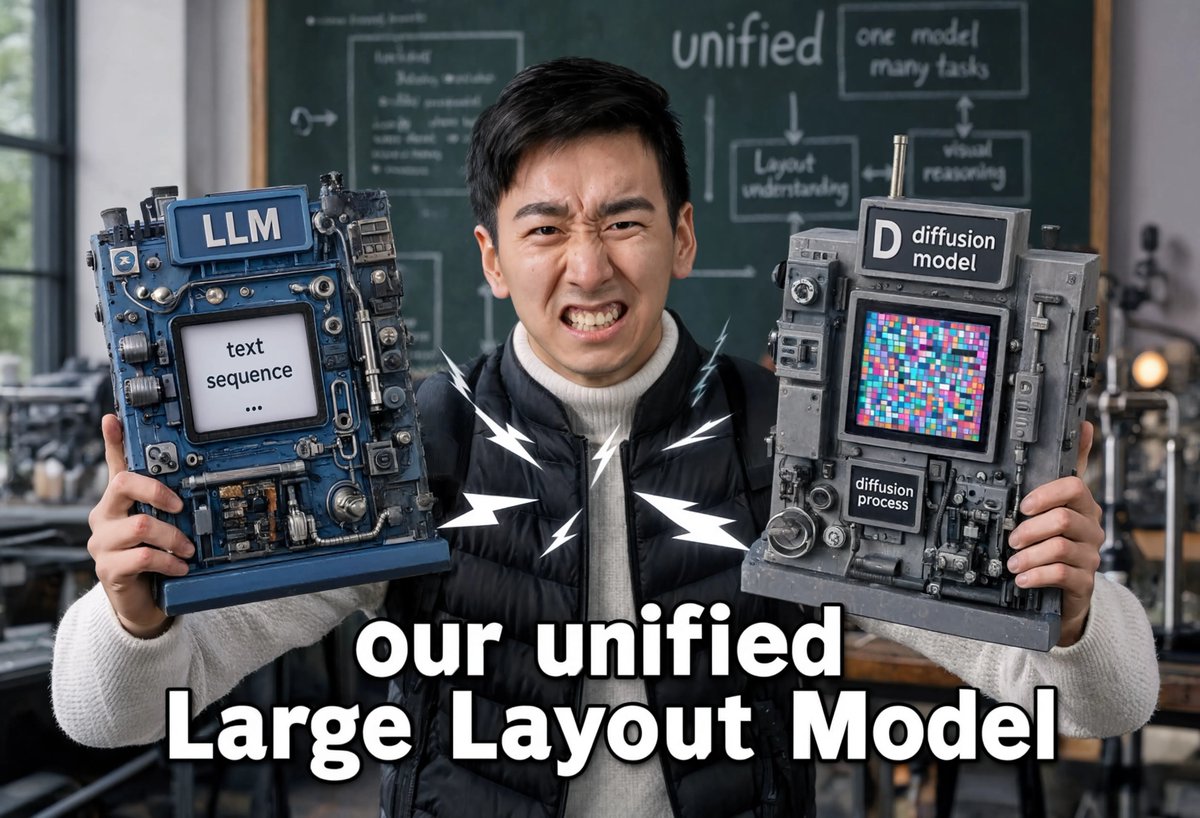
Competing with model giants with 10x more resources, how did we do it? Introducing Unified Layout Models.
We designed a new structured data format for images, based on hierarchical region conditioning. We call this "layouts". Think of it as SVG for pixels.
Today, we’re launching Reve 2.0, the best 4K image model in the world.
We invented a new way to generate and edit any image using precise layouts. For the first time, it’s possible to create images you can touch.
For over a decade, we’ve accepted that end-to-end backprop is the only way to train deep networks. But holding the entire network in memory all at once is why AI training is hitting a resource wall.
We found a new way to break the network into blocks and train them independently. The trick? Treating the network’s forward pass like a diffusion model denoising a signal.
This reinterpretation slashes the memory needed to train deep models. In our #ICLR2026 paper (https://t.co/PK5h0mqQSo), we matched end-to-end performance across ViTs, DiTs, and LLMs. We did this while training just one isolated block at a time.
Join Basis Set Fellowship, if you're graduating with projects nobody asked you to build.
12 weeks in SF, embedded with the fastest growing AI companies.
Apply today and build the future together.
Paperwork is better when you can just talk through it.
With Images in ChatGPT and voice mode, you can upload a form, say what to fill in, and get back a completed version.
In honor of the Cerebras IPO and inspired by The Ringer, I vibe-coded a site to celebrate my favorite venture investments in the last 15 years - link below