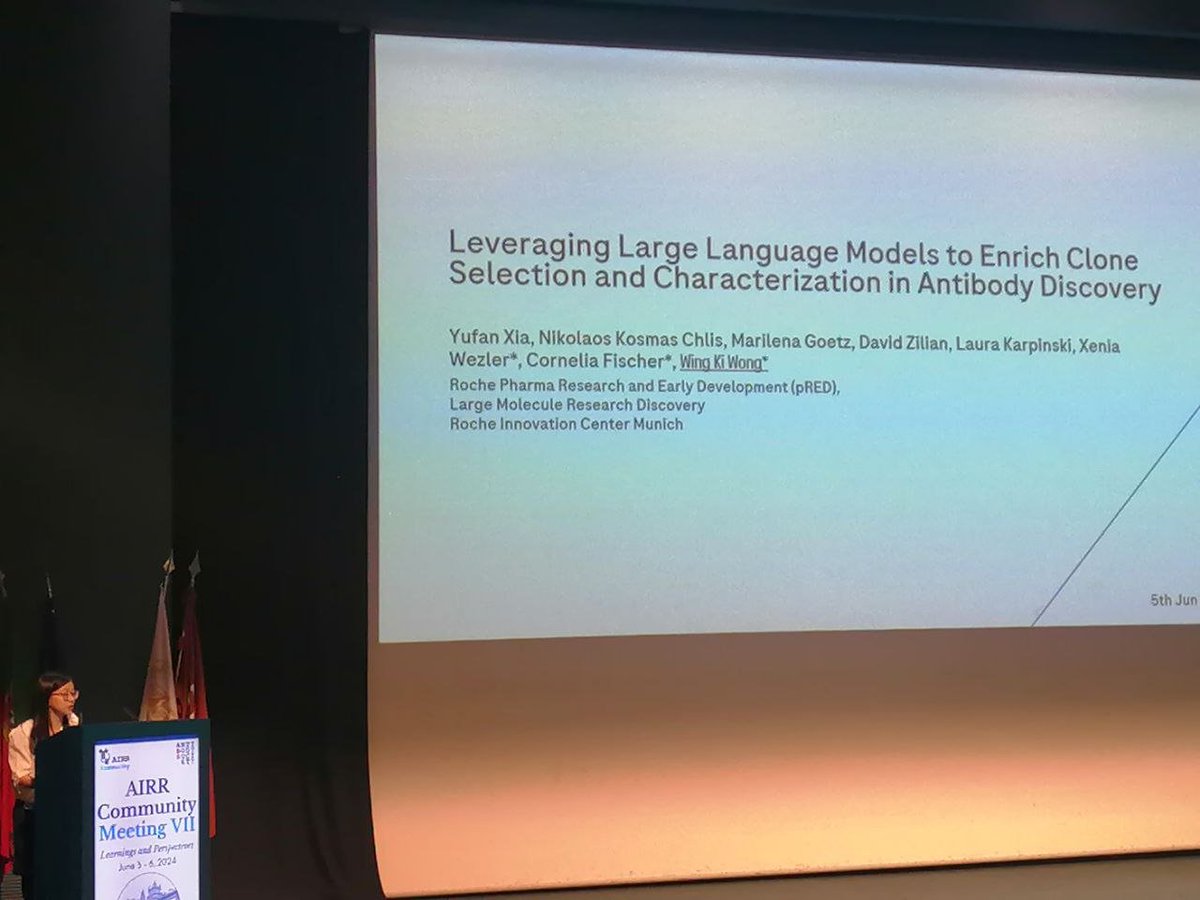
Wing Ki Wong (Roche Diagnostics GmbH) discusses how integrating advanced language models, bioinformatics tools and antigen-mapped repertoires could accelerate the discovery and optimization of therapeutic antibodies. #AIRRC7 Full agenda: https://t.co/PhZ7b68Pmf
Our most recent piece of work "The Patent and Literature Antibody Database (PLAbDab): an evolving reference set of functionally diverse, literature-annotated antibody sequences and structures" has just been released on bioRxiv (https://t.co/JUHJV3PTfb)!!
Exciting opportunities in machine learning for protein design. Bonus: you’ll join a vibrant team at the birthplace of therapeutic proteins @Roche_de : https://t.co/cdOObnQTnf
Very excited to announce our new preprint, with my PhD work on deep learning to predict change in antibody-antigen binding affinity!
Investigating the Volume and Diversity of Data Needed for Generalizable Antibody-Antigen ΔΔG Prediction
https://t.co/7Cf2x4fBPK
🧵⬇️
Excited to share our most recent piece of work at @OPIGlets : ImmuneBuilder, a set of deep learning based tools to predict the structure of antibodies, nanobodies and TCRs. (https://t.co/WMDRNBqysB)
Our new tool, KA-Search, allows exhaustive yet efficient antibody mining through billions of natural sequences (from OAS and/or your private data), enabling new avenues in function & immunogenicity prediction. Work led by @HegelundOlsen and @brennanaba.
https://t.co/xSt8si8lpW
TCR-mimetic antibodies (TCRms) are a transformative new therapeutic modality. We've computationally profiled structures of TCRms/TCRs bound to pMHC to highlight trends in their antigen recognition. TCR-likeness offers a derisking strategy for TCRm design. https://t.co/ezyenRzCez
Very happy that our work on generative machine learning for antibody design is now out in mAbs https://t.co/mCpEInbBZa. All details are in the preprint thread below. The peer-reviewed version contains more controls and also more comparisons of synthetic and experimental data.
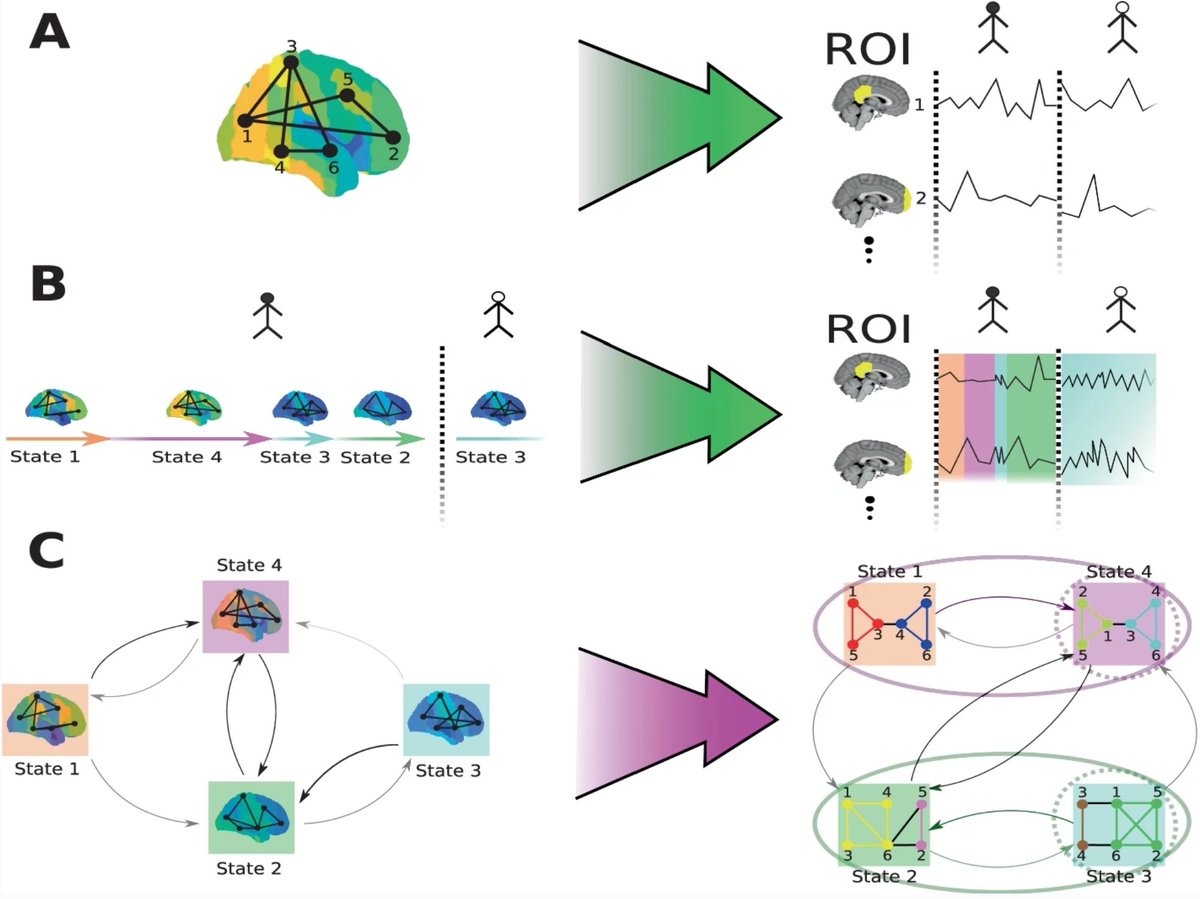
Finding important communities in spatiotemporal networks is difficult w/out orthogonal data. DPhil student @JamesWilsenach uses Hidden Markov Graph Models for unsupervised detection/ranking of communities w/ applications to brain state networks https://t.co/0NDYbLQpeo #openaccess
Some database milestones this week: Thera-SAbDab passed 700 WHO-recognised antibody-based therapeutics (742) while CoV-AbDab passed 5,000 expressed antibodies/nanobodies able to bind to coronaviruses (5033)!
Thera-SAbDab: https://t.co/2fGJne51XP
CoV-AbDab: https://t.co/nPmMsEYZR6
https://t.co/d40ZS2td4V
Introducing AbLang, an antibody-specific language model to generate info-rich antibody representions. AbLang's potential is shown by restoring missing Ab residues with higher accuracy than 'germline filling'. Test it out yourself: https://t.co/KaWdiMV8vS!
ABlooper, our open-source EGNN-based approach for antibody Fv modelling, is now published in Bioinformatics. Work led by OPIG DPhil student @brennanaba
https://t.co/X6cEBxKO0t
"The AlphaFold parameters are made available under the terms of the Creative Commons Attribution 4.0 International (CC BY 4.0) license" 🙂
https://t.co/dBenjo9JCd
(thanks to @BrianWeitzner for alerting me)
Are you in informatics, machine learning or antibody analytics? Want to do an internship at Roche? Check out our latest position: https://t.co/oBxiE4VcWG