Introducing Helios: measuring 1,000+ protein biomarkers from a drop of blood to help you live younger, longer.
Here’s how it works:
• Self-collect blood at home with a painless, needle-free device
• We measure the proteins carrying signals from cells and organs throughout your body
• Your Helios AI agent explains your results, highlights risks, and offers personalized guidance
Proudly backed by Y Combinator and Formation VC.
Join the waitlist at https://t.co/ZFcLlzMFK2
🎬 Resources
Gods Don’t Give Gifts | Official trailer
https://t.co/QYX7i1R9CL
Official film website | Screenings and live Q&As with director Zack London
https://t.co/gAHB3L9QKM
Gossip Goblin on YouTube | Zack London’s short films, including Pomegranate and The Patchwright
https://t.co/wCp3SIDNtu
Behind the scenes of Pomegranate | London discusses working with voice actors and why directing with AI reminds him of jazz
https://t.co/LHyKapqymi
Zack London’s portfolio | His illustrations and the ideas behind Gossip Goblin
https://t.co/xKuVO0it92
Gods Don’t Give Gifts on Rotten Tomatoes | Synopsis, cast and writing credits
https://t.co/PGFdeuUPDz
X profile
Zack London posts as Gossip Goblin (@Gossip_Goblin)
https://t.co/QqtNIydQNo
Imagine you’re at the movies. A scene makes you cry, and then the credits roll and you find out it was made with AI. Would you like it any less on the way home? And if you’d known on the way in, would you have cried in the first place?
Back in the early days of Midjourney, I went through a phase where I “painted” with AI. Some of those pieces were exhibited in galleries in Rome, Paris, London and Beijing. So I had to make up my own mind about whether what I was making counted as art. For me, if someone stopped in front of one of those pictures and it made them feel something, that was enough. I still put quotation marks around “painted,” though. That feels honest too.
What got me thinking about this again was Gods Don’t Give Gifts, an upcoming sci-fi film directed and co-written by Zack London, who goes by Gossip Goblin online. It follows four connected stories in a world where you can buy someone else’s memories and, if you fall into debt, your creditors can transfer your consciousness into an animal’s body. As a sci-fi fan, that premise alone got my attention. Actors voice the characters, and the filmmakers used AI for the animation.
I get why that distinction matters. Say someone you love writes you a song. Part of what makes it special is picturing them sitting there, trying to find the right words for you. If you later learn they asked AI for a song and sent you the first thing it came up with, I can understand feeling cheated. The song sounds exactly as it did yesterday. What’s changed is your understanding of what that person put into it.
So yes, I think a film, a painting or a piece of music made with AI can be art. How much credit the person signing their name to it deserves is a separate question. As for this particular film, there’s one thing I’d quite like to find out. How exactly do you collect a debt from someone you’ve already turned into an animal? 🙂
Would you watch it?
Resources
Vivian Cai’s original post inviting patients to get in touch about personalized cancer vaccine research
https://t.co/VgH3EUs6aC
Onward’s research and the team’s approach
https://t.co/B1PMNKgHVC
Nikolay Dobrev’s LinkedIn profile, where he describes his efforts to develop a personalized cancer vaccine for his wife
https://t.co/xEECtvbRTJ
Kevin Wimer on working with Jan Domanski to explore how his cancer might develop resistance to treatment
https://t.co/HHBDu5o9Tp
UNSW on how Paul Conyngham used AI and genetic analysis to look for a treatment for his dog, Rosie
https://t.co/HGk9bfo9Wv
Therapeutic Innovation Australia on the science behind Rosie’s experimental treatment
https://t.co/eN3EjnKPy7
Gamgee on Rosie’s story and how it led to the company’s founding
https://t.co/M8UBlGkrMw
Gamgee’s work on personalized cancer treatments for dogs
https://t.co/2gFwnC25Hp
UNSW Science’s update following Rosie’s death
https://t.co/51QW78aQjE
National Cancer Institute on how personalized cancer vaccines work and what early trials in pancreatic and kidney cancer have found
https://t.co/5pfRi9SXNu
Nature study on the long-lasting immune response observed in some patients with pancreatic cancer after a personalized RNA vaccine
https://t.co/eILTxHW7wO
X profiles
Vivian Cai (@yrv_23)
https://t.co/d1ncJAc0Ml
Onward (@onwardbio)
https://t.co/SqYa3Mskgu
Kevin Wimer (@kevinace)
https://t.co/E5523uuT8J
Jan Domanski (@jandom_random)
https://t.co/hdgFh8OJQS
Paul Conyngham (@paul_conyngham)
https://t.co/22wVZfHuJj
if you are a cancer patient, we want to make a personalized vaccine for you.
jointly with a leading pharma in the vaccine space, an oncology research hospital and ai lab.
starting by understanding which targets your T cells recognize, how long that response lasts, and how the tumor changes if the cancer comes back. that means following treatment after treatment and connecting those outcomes to the choices we make in the antigen design.
dm me or reach us through https://t.co/mTkCQWHM9o
I’ve been noticing an interesting trend on Twitter. People share their own diagnosis or a loved one’s illness, and scientists start coming together around them, using AI to explore options for that specific person.
I find this especially interesting in cancer care. Even with the same diagnosis, tumors can have different mutations and respond differently to treatment. Being able to focus a research team on an individual case could make a real difference.
A few examples caught my attention.
Vivian Cai from Onward invited cancer patients to contact her team about personalized vaccines. She mentioned collaboration with a pharmaceutical company, an oncology research hospital and an AI lab, without naming them yet.
Nikolay Dobrev describes working with a team on a personalized mRNA vaccine for his wife, who has a rare cancer. He’s looking for specialists to review the proposed targets and find weaknesses in their approach. He has specific genetic data and a plan he wants experts to challenge.
I’ve mentioned Kevin Wimer before. Scientist Jan Domanski contacted him through X and offered to use AI to investigate how his cancer might become resistant to the drug he takes. The aim is to explore another treatment option before the current one stops working.
Then there’s Paul Conyngham, who worked with university researchers on an experimental vaccine for his dog, Rosie. They reached the point of administering the treatment. Sadly, Rosie later died, but the work led to a company pursuing personalized cancer therapies for dogs.
These cases are at different stages. An invitation to participate, a computational model and an administered treatment are different things. What interests me is what they have in common: small teams bringing data, expertise and tools together around one patient.
I expect this to grow as AI improves. If scientists can review research, analyze mutations and test ideas faster, more individual cases could receive this kind of attention. Manufacturing, clinical testing and medical care remain essential, but more teams may be able to take on the research.
For me, this is one of the most meaningful directions for the technology. I’d love to see personalized treatment become accessible to people who don’t have the connections, money or expertise to organize an effort like this themselves.
Resources and profiles in the comments.
Report URI: technical analysis and affected organizations
https://t.co/NWn3q5C8sZ
Optimizely: official incident notice
https://t.co/tBbVXXNhUY
Anthropic: Detecting and countering misuse of AI, September 2026
https://t.co/KHFpdJBNnt
BBC, IKEA, Zoom, HSBC. Visitors to their websites were served malicious code through a third-party service those sites use.
On November 16, Report URI identified infected scripts associated with 178 organizations. Attackers had compromised customer projects on Optimizely, a platform for testing different versions of web pages. The code could steal payment card details and replace cryptocurrency addresses with the attackers’ own. Optimizely confirmed the incident and said it had fixed the vulnerability and removed the injected code.
You don’t have to break into every company individually. A shared supplier can give you access to their visitors.
There’s no confirmed AI involvement in this particular attack. But the connection is relevant: Anthropic has documented other operations where AI helped attackers find vulnerabilities and extract data. In one case, attackers used AI to modify their malware when security tools detected it.
This is why I expect AI defenders to become commonplace, as I wrote in my predictions. If attackers can continuously test and adapt their approach, defenses will need to keep up.
Resources in the comments.
Announcing Generalised Superintelligence! (GSI) 🎉
GSI has achieved 250+ novel discoveries and breakthroughs across eight domains, including Quantum, Superconductivity, Chip Design and Mathematics through its Meta Solver Platform. GSI is extremely compute efficient compared to other frontier labs and excels at finding the hard structure in a problem first, before attempting it.
Everyone can contribute to scientific breakthroughs using the kind of superintelligence GSI is building.
Research preview out now at https://t.co/LSwU67gczE
Mike Taylor, Every: The Next Two Levels of AI Adoption
https://t.co/xABOBirbVs
Dan Shipper’s post sharing the article
https://t.co/zl4f6fwsdi
X profiles
Mike Taylor, article author: @hammer_mt
https://t.co/kgWn3TxURf
Dan Shipper, CEO of Every: @danshipper
https://t.co/UYriXkhw29
Every: @every
https://t.co/XyecPIUdhf
if you're not running simulations in the multiverse with organizations of competitive agents...ngmi
banger of an article from @hammer_mt
https://t.co/EynrXmG3K3
Imagine you want to open a café. You have three ideas, a limited budget, and no desire to discover six months later that you chose the wrong one.
What if you could test them with virtual customers first?
An interesting article by Mike Taylor at Every explores this direction for AI. Beyond chatbots and agents that complete tasks, he proposes another step: teams of agents developing competing strategies, testing them in simulations, and refining their proposals.
At Every, they’re already experimenting with AI versions of their colleagues, built from past conversations and editing decisions. They use them to anticipate objections and spot weaknesses in an idea before the actual meeting.
The part I find most interesting is that one successful simulation isn’t enough. You might simply have been lucky. Taylor proposes running the experiment repeatedly. Does the idea still work if the first reactions are negative? If people hear about it in a different order?
The catch is that if your virtual customers don’t resemble your real ones, you can get a very convincing but useless result.
These simulations still require considerable preparation, data, and computing resources. A conversation with ChatGPT doesn’t replace them.
But you can borrow something useful from the approach today: ask AI for three different solutions to a specific problem, rather than one. Then ask it to identify the conditions under which each would fail and suggest an inexpensive way to test the most important assumption.
If you’re considering a new service, that test might be five conversations with potential customers or a small trial offer.
That’s a simple way to start putting your ideas to the test. The article explores how much further this could go when AI takes on more of the experiments themselves.
What appeals to me is the possibility of a small team exploring options it currently has neither the time nor the budget to investigate. Discovering an idea’s weaknesses before spending half a year on it can sometimes be more valuable than coming up with ten more good ideas.
You’ll find the article in the first comment if you’d like to explore further.
I’m the PM for Claude Meetings. Working on this product has been crazy - when you use it, you feel like you’re working and living in the future. Loved building this with @triketora@Flomerboy@omarmihilmy and many other awesome people
AI glasses are one of the technologies I’m most excited about right now. And I really like the look of Google’s new collection. 😎
Today, Google opened pre-orders for Intelligent Eyewear, developed with Samsung, Warby Parker, and Gentle Monster.
I won’t turn this into an ad. You can explore them through the links below. But here are a few things I like:
You’re looking at a bookshelf and ask Gemini which book you might enjoy. You’re exploring an unfamiliar city and hear directions in your ear. You’re talking to someone in another language and getting real-time translation. Google says more than 70 languages are supported.
What interests me most is being able to simply look at something and ask about it. Without pulling out your phone, taking a photo, and explaining what you mean.
For traveling and exploring, that sounds fantastic. I’d really like to try them.
Intelligent eyewear pre-orders are officially open! ✨
I’m immensely proud and humbled working with teams at @Google, @SamsungMobile, @_GentleMonster_ and @WarbyParker to bring these beautiful eyewear collections to life.
These lightweight glasses bring you hands-free help from @GeminiApp throughout your day. And these glasses are eyewear first, so @WarbyParker and @_GentleMonster_ have brought their iconic styles with a collection of designs, colorways, and sizes so there’s a style that’s perfect for you!
Pre-order your pair today: https://t.co/NURZ98RWZY and experience them in select Warby Parker, Gentle Monster and Google stores starting today. Shipping Dec 10th!
Read more about the full design collection that and how we are bringing helpful experiences to your everyday life: https://t.co/nYyERM3U9X
Along with our privacy protections for you and those around you: https://t.co/zsK739MLOS
#Gemini #IntelligentEyewear #AndroidXR
My Experience With the Leaders of the Jensen Coup
At the start of 2025, numerous Washington, D.C. based NGOs began spreading the false rumor that DeepSeek smuggled 50,000 H100 GPUs. Speaking from firsthand experience, organized think tanks, PR firms, and lobbyists aggressively personally attacked anyone merely asking them to provide evidence. Call them the Export Controls Deep State, or if that’s too right-coded for you, use the Obama-administration term “Foreign Policy Blob”.
The same charlatans are attempting a coup on Jensen Huang, the most indispensable CEO to America’s AI success. If we lost Sam, we have Dario. If we lost Dario, we have Demis. Nvidia is singular. The gap between Nvidia and AMD would be wider than the gap between OpenAI and Mistral, Europe’s top AI company whose models don’t rank in the top 40. This is an attempt to derail the most important company for the American AI industry.
The entire coup against Jensen Huang can be halted by asking a single question. What evidence is there that Alice Huang is actually a Chinese spy? The answer, unsurprisingly, is absolutely zero. There is not even the pretense of a factual basis for the claim. “We made it the fuck up, and if you have a problem with that, what are you, pro-China?”
Taking away this obvious falsehood, the coup against Jensen boils down to a celebrity tabloid headline. Moreover, without the entirely fabricated ‘national security relevance’, these tabloid headlines would be at best a weekend story in the New York Post. Another basic question: if there is evidence of ‘national security relevance’, why not charge Jensen? The basic answer: they lack even the evidence to justify a warrant.
During my time in DC, I was advised repeatedly to stay on the good side of the Export Controls Deep State. I was added to many groups for boosting content spreading the 50,000 H100s conspiracy theory. In several groups, I asked whether there was any evidence behind this claim. One group administrator, who was and still is affiliated with Georgetown, explicitly told me to “focus on bolstering the narrative”. I later posted Patel’s pseudo-correction and was subsequently removed from all of these groups.
What you need to understand about the Export Controls Deep State is that they have no incentive to be remotely honest, because they are entirely unaccountable. To this day, they provided zero evidence for their claim. Internet historians later traced the origin of this claim to a tweet by Dylan Patel of Semianalysis. Patel later said they lied about his tweet and that his claim counted legally obtained hardware.
Affiliates of universities and think tanks promote these baseless claims and are taken seriously by the national press. In reality, their theories about Nvidia are as kooky as the guy who shot up Comet Pizza. The reason they succeed is not only because they are unaccountable, but because they constantly use their unaccountability to attack others. There are broader foreign policy implications to these observations about political power, but I will stick to what I witnessed firsthand.
After Trump’s election, his administration began lifting the export control cap. Surprising no one informed about this policy, America widened our lead. Deepseek was closest to catching up to American models in January 2025, literally the moment of peak export controls.
Based on communication with members of the administration, the evidence that a) the export controls were net negative and b) the export controls deep state was acting in bad faith, that as soon as the situation was described accurately, the administration began rolling them back.
Part of this is because many of these NGOs are funded by foundations like Open Philanthropy / Coefficient Giving, who explicitly intend to harm American AI companies because they believe American AI will “cause human extinction”. As a result, the BIS under the Biden administration was used as an informal cudgel against AI companies, both to censor in favor of their worldview, as seen in the Gemini scandal, as well as to backdoor regulation to slow down American AI broadly.
While they love to accuse everyone else of being traitors, the Export Controls Deep State makes Americans poorer and the American military, to the extent they use AI, weaker.
Most of the time, the best you can do is ignore them. They really are unaccountable and the personal retribution isn’t worth the cost. But now, they are leading a coup against the AI industry’s most indispensable man based on lies and tabloid gossip. Everyone should understand that the Export Controls Deep State has never provided any evidence for their claims nor any reason for their word to be trusted.
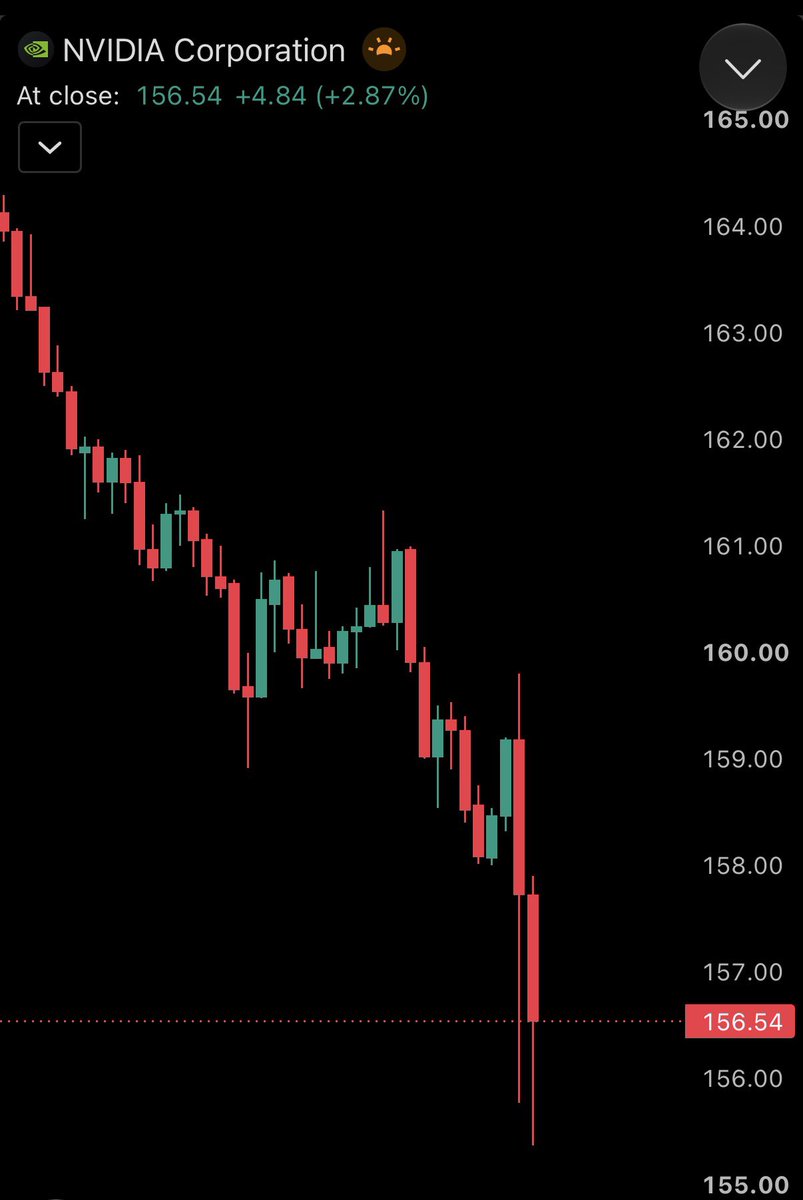
BREAKING: Nvidia stock, $NVDA, plunges over -10% after Jensen Huang officially resigns as CEO.
The stock has now erased -$750 billion in market cap since the scandal began.
MTS: the post featuring Ege Erdil’s argument.
https://t.co/lo0QY1YN22
Epoch AI, Anson Ho: The Least Understood Driver of AI Progress. An explanation of software progress and the potential constraints imposed by computing resources.
https://t.co/ye2swbrqGc
Dwarkesh Patel: an earlier conversation with Ege Erdil and Tamay Besiroglu from April 2025, exploring their arguments in greater depth.
https://t.co/MugoqWnWrj
Google DeepMind researcher @EgeErdil2 doubts that clever AI researchers can make existing compute 1,000-10,000x more efficient:
His research found that software progress closely tracks compute scaling across chess, SAT solvers, and AI.
"In a lot of diverse domains, you have a tight correlation between by how much compute in that domain was being scaled and by how fast you're making software progress in that domain."
"We looked at it for chess, we looked at it for SAT solvers, we looked at it for various different domains in AI, including natural language processing and computer vision. This was when we were still at Epoch."
"The fastest software progress in any domain we have seen has been happening in AI. But the fastest compute scaling also in basically any domain we know is happening in AI."
"And these numbers always appear to be around the same order of magnitude, which is kind of like a strange coincidence if you think they should be independent."
"They think you can just have really clever researchers who devise really good experiments at small scales, and you can use the existing compute 1,000, 10,000 times more efficiently than we're using it now. And that's the thing that doesn't seem plausible to me."
@GoogleDeepMind
A slightly different perspective on the future of AI.
After the predictions of an “intelligence explosion” in 2027 that I wrote about, I came across an argument worth discussing.
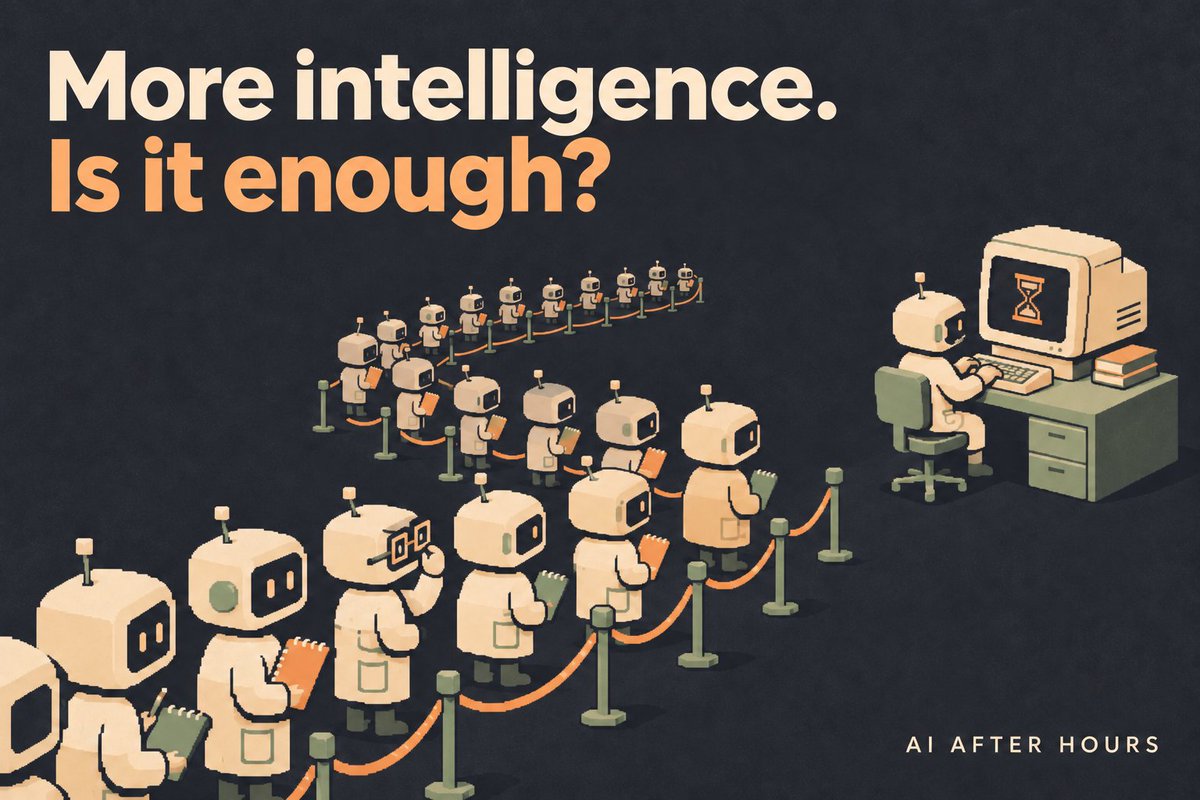
What if even a million AI researchers have to wait their turn to run experiments?
Ege Erdil, introduced in the MTS post as a Google DeepMind researcher who previously worked at Epoch AI, questions an assumption behind some of the shortest timelines: that sufficiently intelligent systems could improve their own software so dramatically that existing computers become thousands of times more useful.
The logic is easy to understand. AI improves AI. The improved AI makes the next improvement even faster. The cycle accelerates.
But Erdil asks how much of that acceleration is possible without more computing power.
He explains that their research across chess programs, systems for solving logical problems, and different areas of AI revealed a similar pattern: software progress closely tracked increases in computational resources. That’s why he’s skeptical of achieving a 1,000-fold or 10,000-fold efficiency gain through smarter researchers and small experiments alone.
Imagine a laboratory with a thousand brilliant scientists but just one piece of equipment. Ideas can multiply. Testing them still takes time. A better scientist might choose more useful experiments, but how much of the waiting can they eliminate?
The question for AI is similar: can better thinking replace a huge share of expensive training runs and tests?
This is where the real disagreement lies. If it can, rapid acceleration looks much more plausible. If it can’t, the pace will depend far more on manufacturing chips, building data centers, and supplying electricity.
The historical relationship doesn’t prove that future AI can’t break it. But it raises a concrete question for predictions of rapid self-improvement: how much progress can we achieve with the same hardware?
I still expect very rapid change. But these are exactly the perspectives I enjoy reading, especially when they challenge my own expectations.
Over the coming months, I’ll be watching not just what new models can do, but what it took to get them there. A huge leap with similar resources would tell me something very different from a huge leap that required ten times as much.