Congrats to Aime!! He said his left forearm is basically broken 😂
Final scores:
→ F.03: 12,732 packages (2.83 seconds/package)
→ Aime: 12,924 packages (2.79 seconds/package)
This is the last time a human will ever win
Atlassian's revenue: $1.79 billion last quarter
Atlassian's move: fire the engineer who built their infrastructure
his move: post a 38-minute breakdown of every system he built, free for anyone to copy
what he revealed:
> Envoy proxy instead of enterprise load balancers
> sidecar architecture for auth, logging, rate limits
> DynamoDB + SQS for async provisioning
> Packer + SaltStack for automated VM deployments at scale
Atlassian charges per employee across 350,000 customers
this guy just handed you the enterprise playbook for free
save this
karpathy is showing one of the simplest AI architectures that actually works..
dump research into a folder, let the model organise it into a wiki, ask questions, then file the answers back in.
the real insight is the loop...every query makes the wiki better. it compounds.. now thats a second brain building itself.
i think this is so good for agents if applied right
instead of pulling from shared memory every session, they build a living knowledge base that stays.
your coordinator is not just coordinating tasks anymore.. it is maintaining institutional knowledge so every execution adds something back to the base.
the bigger implication is crazy tho.
agents that own their own knowledge layer do not need infinite context windows, they need good file organisation and the ability to read their own indexes.
way cheaper, way more scalable, and way more inspectable than stuffing everything into one giant prompt.
Apple spent a decade gluing batteries into $2,499 MacBook Pros. Then it shipped a $599 laptop you can take apart in six minutes.
The MacBook Neo teardown numbers are wild. Eight screws to open. Eighteen screws hold the battery, zero glue, zero tape. The USB-C ports, speakers, and headphone jack are all modular, meaning each one swaps individually. The speakers come out with four screws. An Australian repair channel disassembled most of the machine in under six minutes using standard Torx bits you can buy at any hardware store.
For context, the 2019 MacBook Pro scored 2 out of 10 on iFixit’s repairability scale. The 16-inch Pro got a 1 out of 10. Soldered RAM, soldered storage, glued battery, proprietary pentalobe screws, keyboard riveted to the top case. Apple’s own Self Service Repair program required you to rent a 79-pound repair kit shipped in two Pelican cases just to swap a battery.
The timing explains everything. The EU Right to Repair Directive takes effect July 31, 2026. Member states are transposing it into national law right now. Manufacturers must offer repair beyond warranty, provide spare parts within 5 to 10 working days for seven years, and publish repair manuals. In the US, over a quarter of Americans already live in states with enforceable Right to Repair laws. Oregon banned parts pairing. California’s act is in effect.
Apple read the regulatory calendar and realized the cheapest laptop in the lineup would face the most scrutiny. Millions of students and first-time buyers will own it. The volume will be enormous. And regulators love consumer-protection cases involving the most affordable products in a company’s portfolio.
So they built the Neo as the compliance flagship. Standard screws, modular ports, no adhesive, a battery that lifts out. Meanwhile the $1,099 MacBook Air still has soldered storage and a riveted keyboard. The $2,499 Pro still scores poorly on independent repairability scales.
The $599 laptop is the most repairable MacBook in over a decade. Apple always knew how to build a repairable laptop. They just needed a reason that showed up on a regulatory deadline.
Why the current AI wave feels completely different from previous tech cycles.
We spent the last 40 years building a massive catalog of deterministic APIs and software functions.
Think of these APIs as pristine, infinitely scalable muscles that execute actions perfectly, but they only fire when explicitly told to.
The bottleneck has always been human attention span and judgment.
We had to sit there acting as the brain for these digital muscles.
Now, Large Language Models act as a probabilistic reasoning engine that sits right on top of those rigid systems.
Instead of writing endless if-else logic branches to catch every edge case, developers are now writing boundary conditions.
You give the AI model access to your software functions and let it dynamically map messy, real-world inputs to the exact right API call. It is no longer about building software applications that people use to complete tasks.
It is about wiring a reasoning layer directly to an execution layer so the system finishes the task itself.
The hardest engineering challenge ahead is building the strict evaluation frameworks to ensure these probabilistic brains do not hallucinate when triggering irreversible actions.
Because these models act as probabilistic reasoning engines, the primary engineering challenge has shifted entirely toward building strict evaluation frameworks and safety boundaries.
Researchers note that by 2028, autonomous AI systems will handle 15% of all daily workflow decisions, forcing human workers to transition into roles focused on compliance, governance, and quality control.
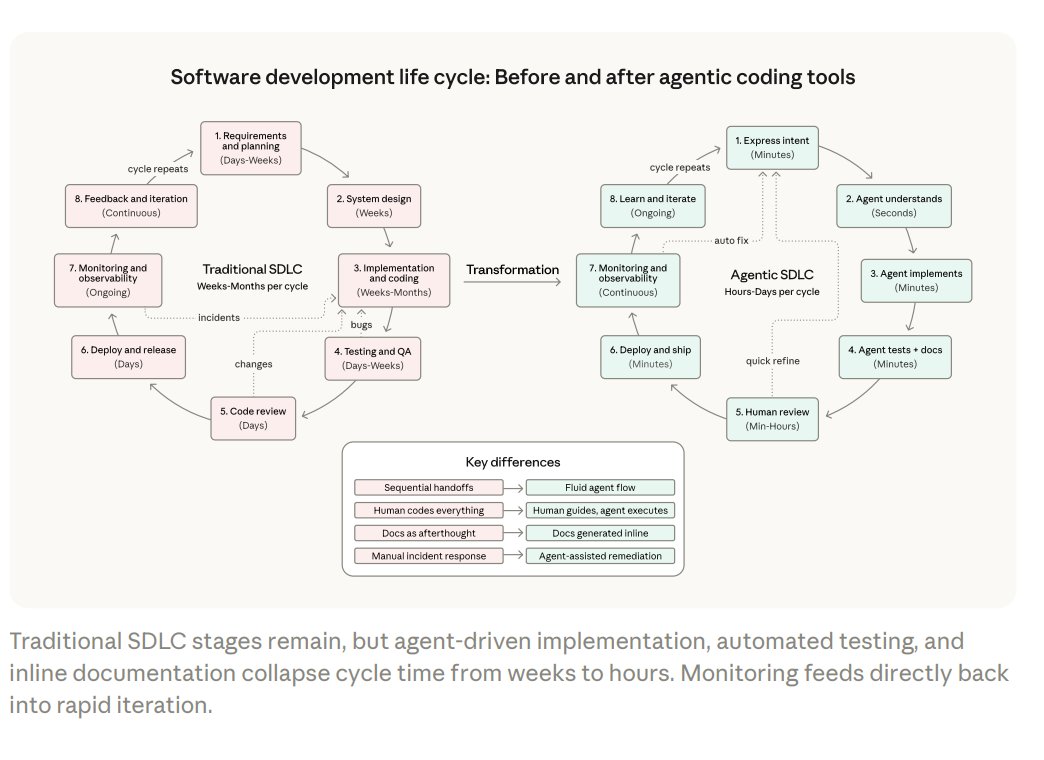
Below chart from Anthropics recent research. Building software used to take months because human engineers had to manually write and test every single line of code.
Now developers simply state their goals in plain language while autonomous AI systems write, test, and document the entire application in just hours.
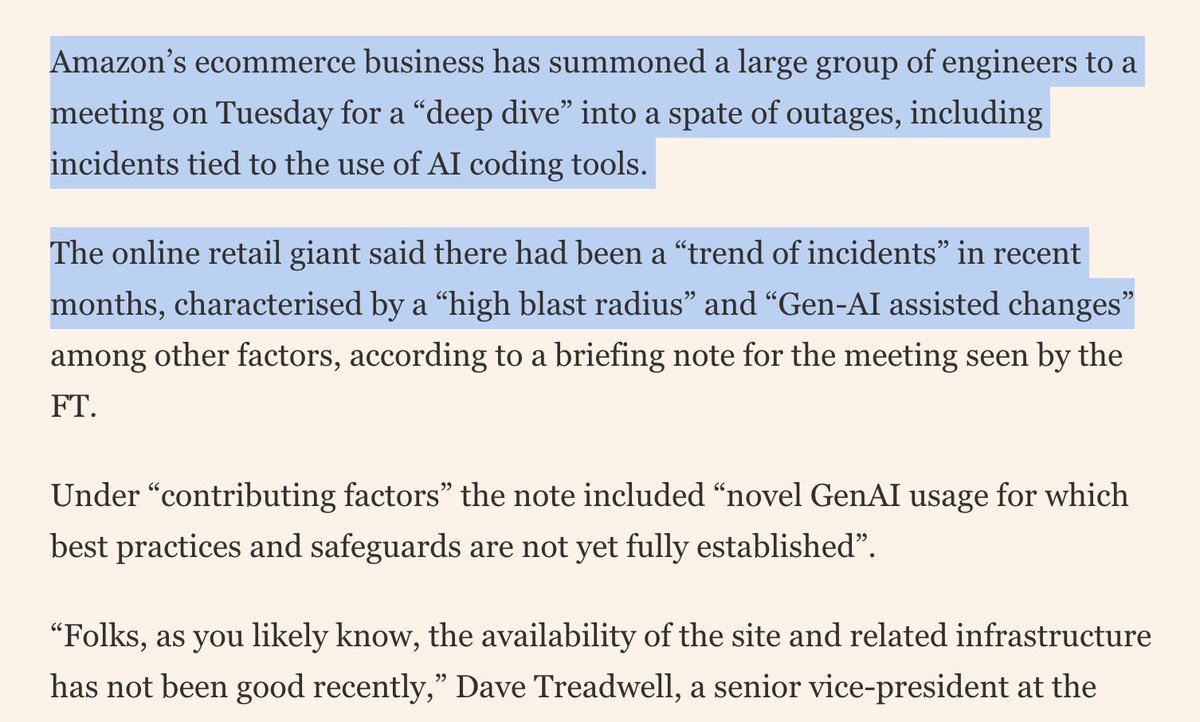
Amazon is holding a mandatory meeting about AI breaking its systems. The official framing is "part of normal business." The briefing note describes a trend of incidents with "high blast radius" caused by "Gen-AI assisted changes" for which "best practices and safeguards are not yet fully established." Translation to human language: we gave AI to engineers and things keep breaking?
The response for now? Junior and mid-level engineers can no longer push AI-assisted code without a senior signing off. AWS spent 13 hours recovering after its own AI coding tool, asked to make some changes, decided instead to delete and recreate the environment (the software equivalent of fixing a leaky tap by knocking down the wall). Amazon called that an "extremely limited event" (the affected tool served customers in mainland China).
> be Anthropic
> lost the $200M Pentagon contract to OpenAI
> climbed to #1 on the App Store anyway
> ChatGPT uninstalls surged by 295%
> shipped “Memory”to pull chatgpt users over.
🇩🇰 A reporter asks filmmaker Nikolaj Arcel, "Why is your new Danish movie "The Promised Land" entirely Nordic? ... it lacks the black people, it lacks diversity.
Mads Mikkelsen ~ 'What??... right from the get-go". 😆
Arcel: "Hmmm, well first of all, the film takes place in Denmark in the 1750s" — you f"ing retard" 🤣
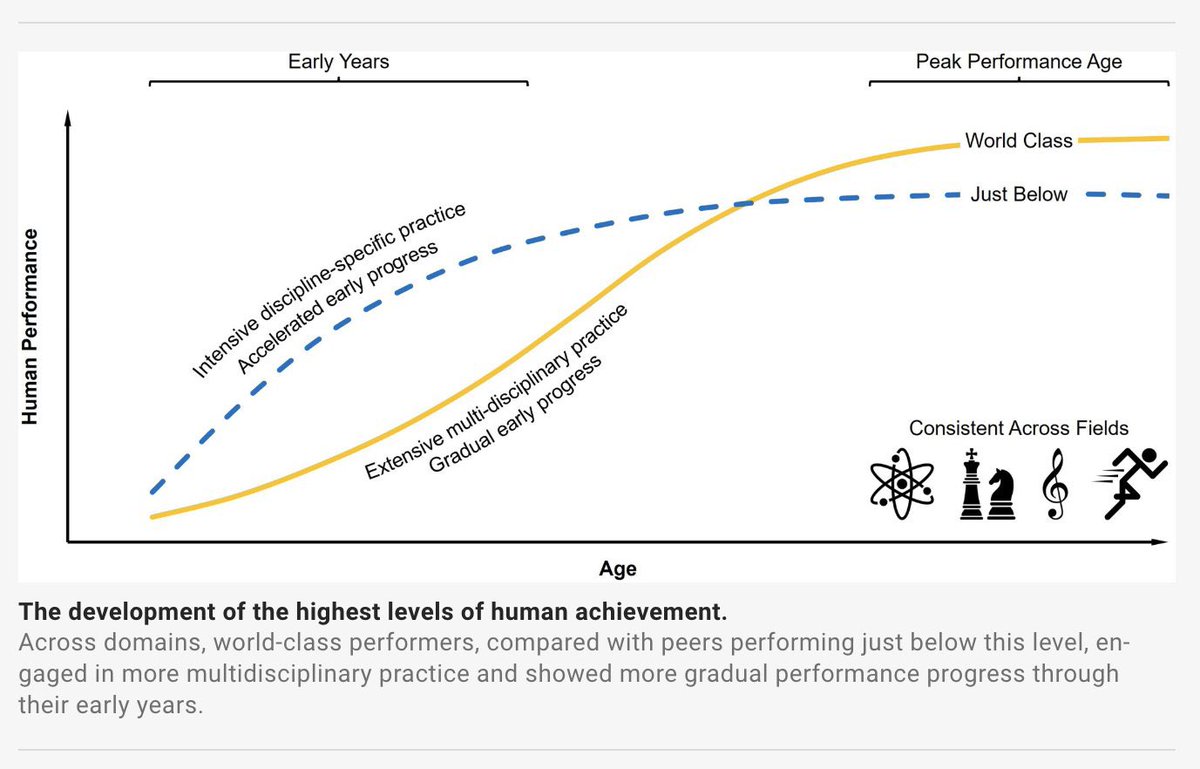
Fascinating paper just published in Science.
The authors analyze the career trajectories of top performers across multiple domains, including Nobel laureates, elite chess players, Olympic gold medalists, and more.
Their central finding challenges a common belief.
Intensive, single-discipline training at a young age does confer an early advantage, but this advantage fades over time.
By contrast, individuals exposed to multidisciplinary practice early in life tend to start more slowly. Yet, over the long run, they are more likely to reach world-class performance, eventually overtaking early specialists, who often plateau just below the very top.
An important reminder that breadth early on can be a powerful investment in long-term excellence.
Link to the paper in the first reply.
Be like Amazon.
> secretly build an AI coding assistant
> save $260M in costs and eliminate 4,500 years of developer work
> now quietly sell it to all the Fortune 500s
I got curious about their entire business model and dug deeper.
What I found:
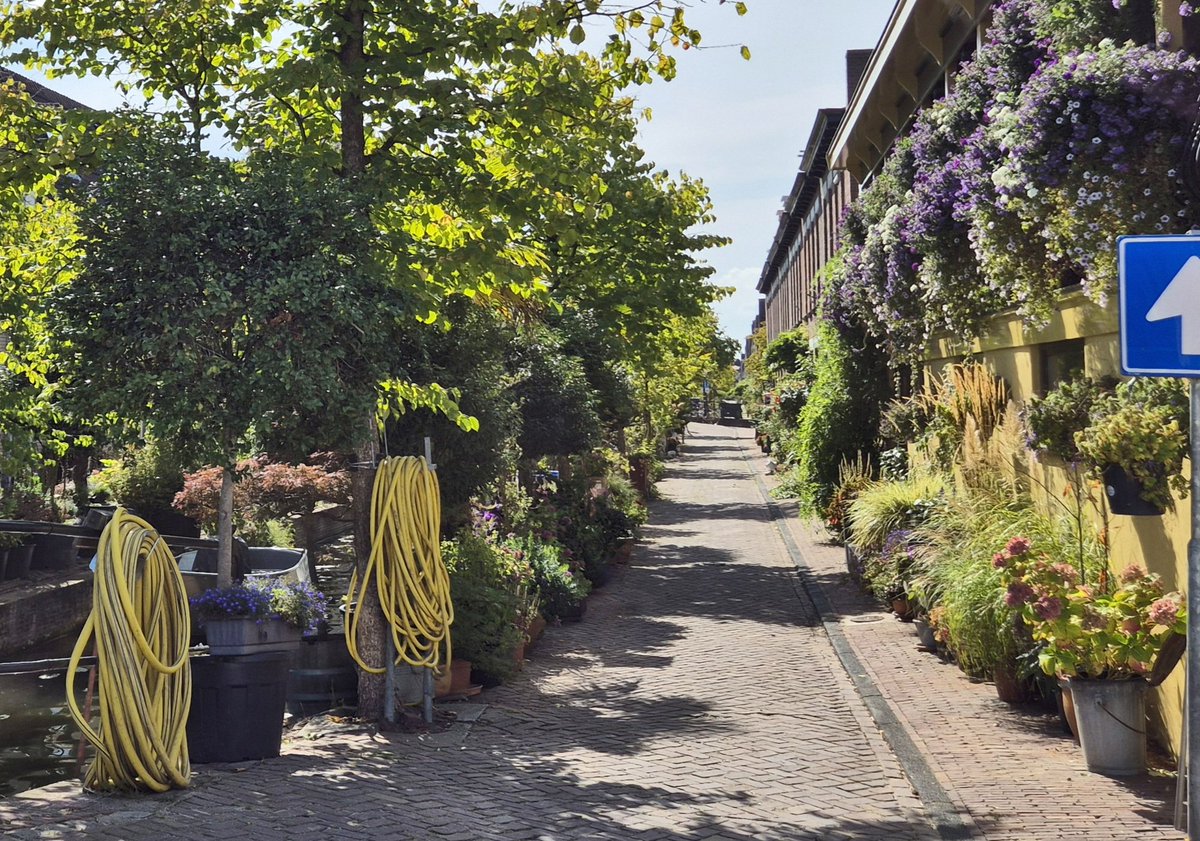
#Stadsgenoten in #Leiden gaan los met #groen🌿🌻🍃🌳! Zie dit straatje. Supergroen🤩. Inclusief jacuzzi!!😅 De auto kan er gewoon doorheen, als gast. Want het is nu vooral een #tuinstraat🌿🌸 voor de bewoners om te verblijven en doorheen te wandelen.
#Leefstraatjes