To call it or not to call it? That is the question!
Do you feel a bit wacky & wobbly when it comes to calling normal pressure hydrocephalus on imaging?
You don’t want to overcall it, but you don’t want to miss it either!
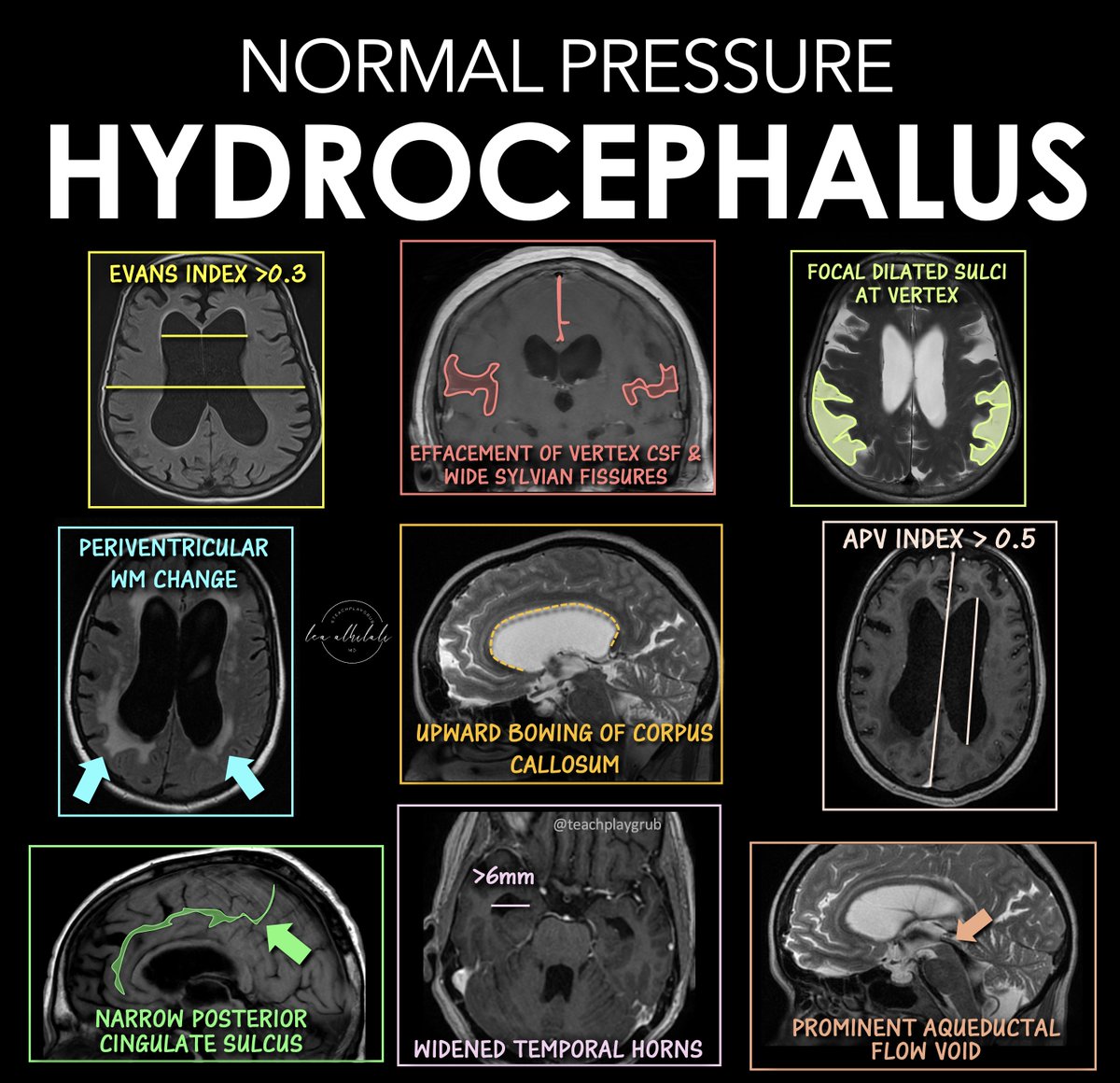
Here are the signs of NPH
🔹 Evans Index > 0.3
--Enlarged frontal horns relative to skull width → ventriculomegaly.
Remember it: “One out of three is too big for me!”
🔹 Periventricular White Matter Change
--T2/FLAIR hyperintensity from transependymal CSF flow.
Remember it: “Leaking pressure leaves a glow.”
🔹 Narrowing of the Posterior Cingulate Sulcus
--Tight high-convexity sulci from crowding at the vertex.
Remember it: “The top gets squeezed shut.”
🔹 Effaced Vertex CSF + Wide Sylvian Fissures
--Tight sulci up top but enlarged fissures laterally (DESH pattern).
Remember it: “Dry on top, wet on the sides.”
🔹 Upward Bowing of the Corpus Callosum
--Ventricular expansion pushes the corpus callosum upward.
Remember it: “If the corpus callosum is arched, the patient can’t march (wobbly)”
🔹 Temporal Horns > 6 mm
--Early temporal horn dilation from hydrocephalus.
Remember it: “Big horns before big vents.”
🔹 Focally Dilated Sulci at the Vertex
--Patchy enlarged sulci despite surrounding crowding.
Remember it: “Holes in a leaky roof = too much water on the brain!”
🔹 APV Index > 0.5
--Increased ventricular-to-parenchymal proportion suggesting hydrocephalus.
Remember it: “Glass half full is too much!”
🔹 Prominent Aqueductal Flow Void
--Increased CSF flow through the aqueduct on MRI.
Remember it: “If the aqueductal flow is super black, the ventricles are out of whack.”
Classic NPH imaging theme: enlarged ventricles + tight high convexities + disproportionate CSF redistribution.
Hopefully now you won't wobble on the diagnosis of NPH!!
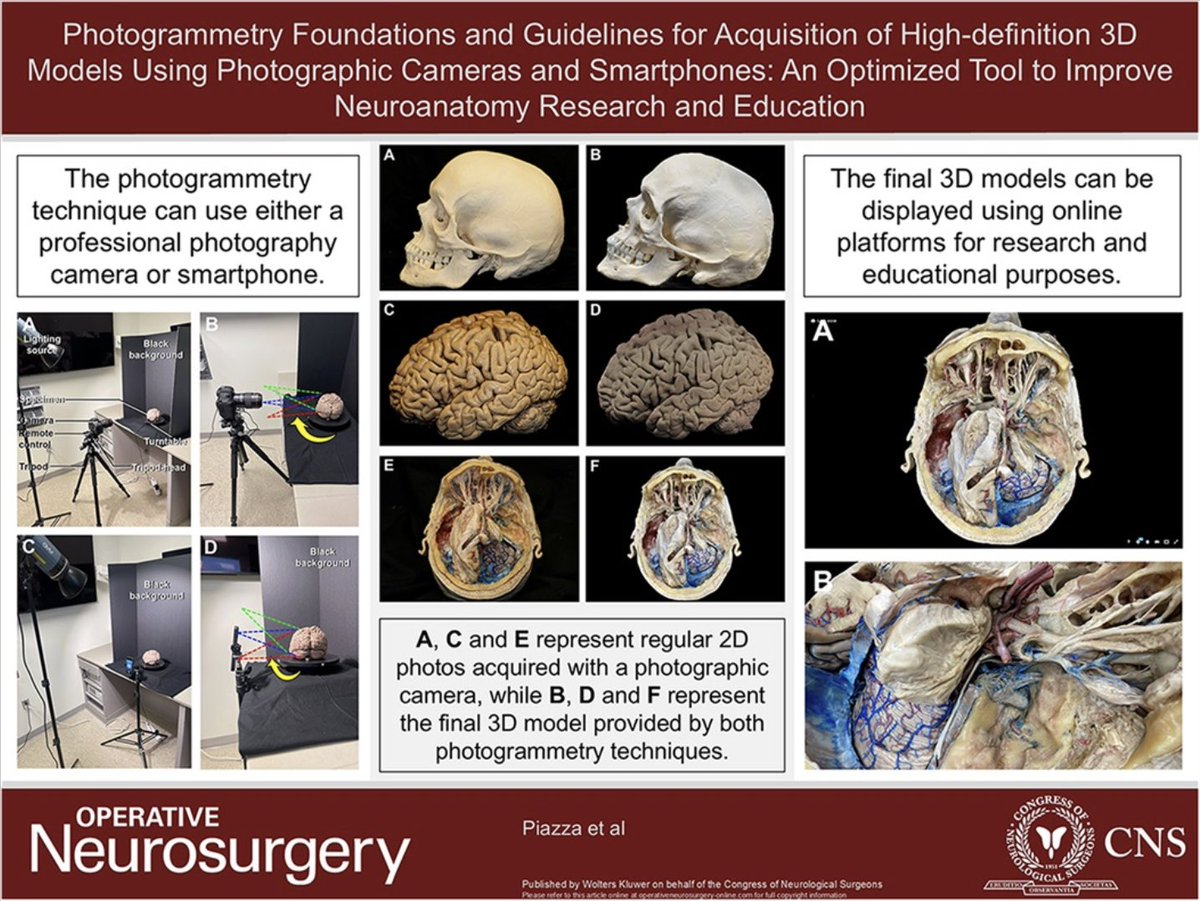
#ONSVisualAbstract Photogrammetry Foundations and Guidelines for Acquisition of High-Definition 3-Dimensional Models Using Photographic Cameras and Smartphones: An Optimized Tool to Improve Neuroanatomy Research and Education https://t.co/IWqDIMw9Pi by Piazza et al @MayoClinic
Especial médicos🩺⚕️🏥👨🏻⚕️👩🏻⚕️.
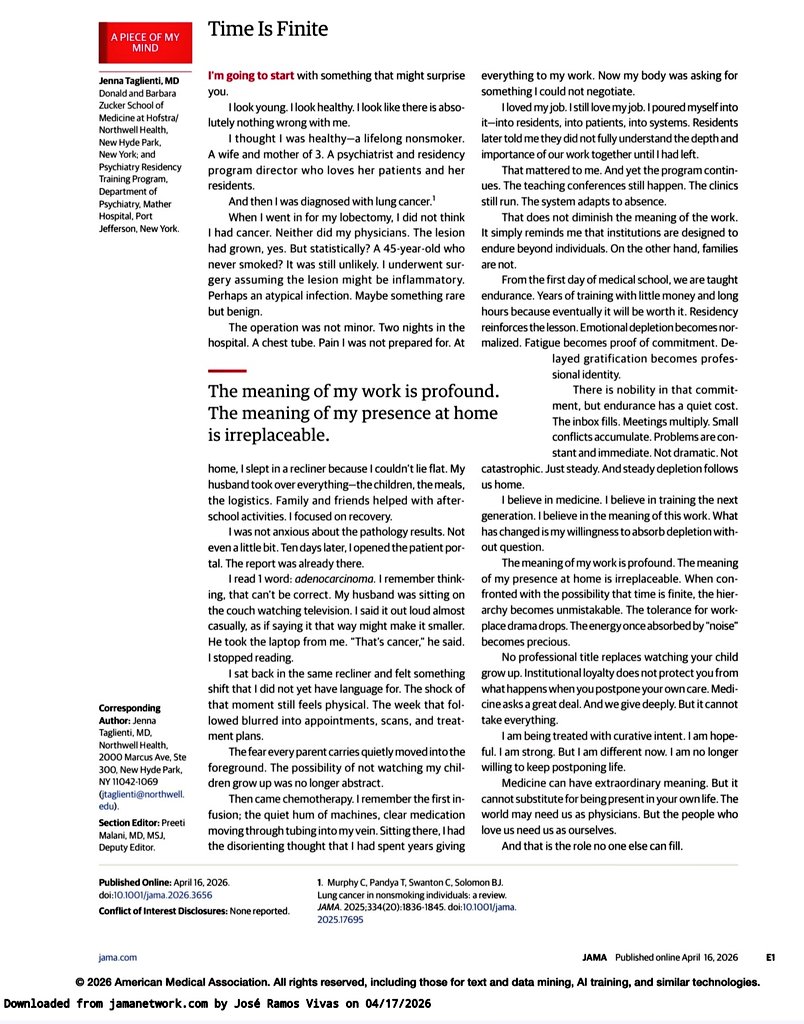
Os dejo esta carta en JAMA. Se la pondré a mis alumnos en la próxima clase:
He elegido estas frases :
👇🏻⏰
«La medicina puede tener un significado extraordinario. Pero no puede sustituir el estar presente en tu propia vida. El mundo puede necesitarnos como médicos. Pero las personas que nos aman nos necesitan como nosotros mismos. Y ese es el rol que nadie más puede llenar.»
«La residencia refuerza la lección de que las instituciones están diseñadas para perdurar más allá de los individuos. En cambio, las familias no.»
«Creo en formar a la próxima generación. Creo en el significado de este trabajo. Lo que ha cambiado es mi disposición a absorber el desgaste sin cuestionarlo.»
«Ya no estoy dispuesta a seguir posponiendo la vida. La medicina exige mucho. Y nosotros damos profundamente. Pero no puede tomarlo todo.»
«El significado de mi trabajo es profundo. El significado de mi presencia en casa es irremplazable.»
LIVE: Watch with us as the Artemis II astronauts make their closest approach to the Moon, traveling farther from Earth than ever before. https://t.co/Zpy7GdTqA8
CREST-2 trials: For patients with asymptomatic, high-grade carotid-artery stenosis, improvements in carotid endarterectomy, stenting, and medical therapy have challenged our understanding of appropriate treatments. Research findings are summarized in a new Quick Take video. https://t.co/n7mdHTtMen
2026 Guideline for the Early Management of Patients With Acute Ischemic Stroke: A Guideline From the American Heart Association/American Stroke Association
CCR Journal Watch
https://t.co/Sp06oA6IDG
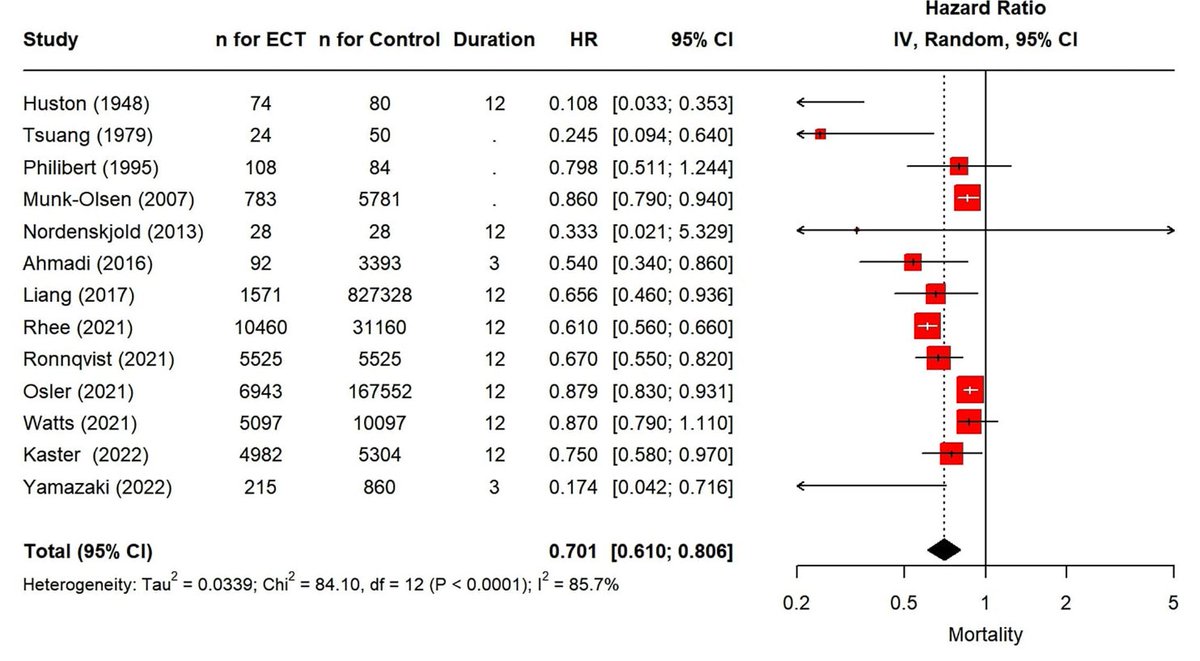
🚨 Electroconvulsive therapy (ECT) - the most controversial treatment in Psychiatry
A study of >1 million patients with a depressive disorder re-examined the benefits of ECT.
Here's what you need to know about this landmark paper published this week in @BMJMentalHealth
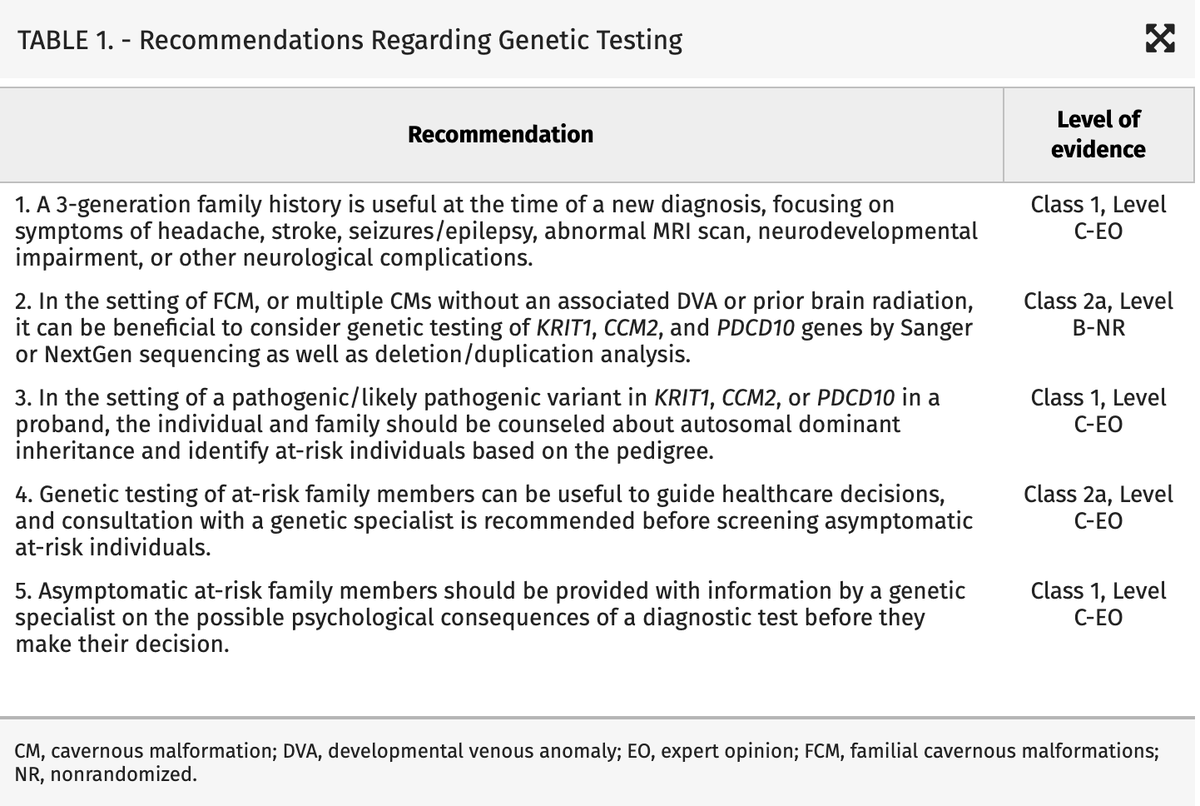
#CNSGuidelines Guidelines for the Diagnosis and Clinical Management of Cavernous Malformations of the Brain and Spinal Cord: Consensus Recommendations Based on a Systematic Literature Review by the Alliance to Cure CM Clinical Advisory Board Experts Panel https://t.co/7QGBozYi8M
Anterior vs. posterior approaches in the management of multilevel degenerative cervical myelopathy: a systematic review and meta-analysis https://t.co/Fi2PaaGCVG
🧠 The FTOZ-transcavernous approach is an advanced #skullbase approach for lesions involving sellar/parasellar & petroclival regions.
Check out this step-by-step #cadaveric demonstration with beautiful illustrations:
https://t.co/RDZy1LEEBP
#JNLSB#otolaryngology#neurosurgery