📢 Call for Papers: Submit your research on financial stability risks, system resilience, and related policy for our 2026 Financial Stability Conference with @YPFSatYale.
📅 Nov 19–20, 2026 in Cleveland, OH
⏰ Deadline for papers: July 7, 2026
Details: https://t.co/LijHYvc0By
Join the JVI, @oenb, @suerf_org, and the @YPFSatYale for a high-level conference on financial stability and crisis management in the age of digital finance and #AI.
Keynote speakers: Pablo Hernandez de Cos (@BIS_org) and Tobias Adrian (IMF).
🔗 https://t.co/Wi2Srw7YZu
@IMFNews
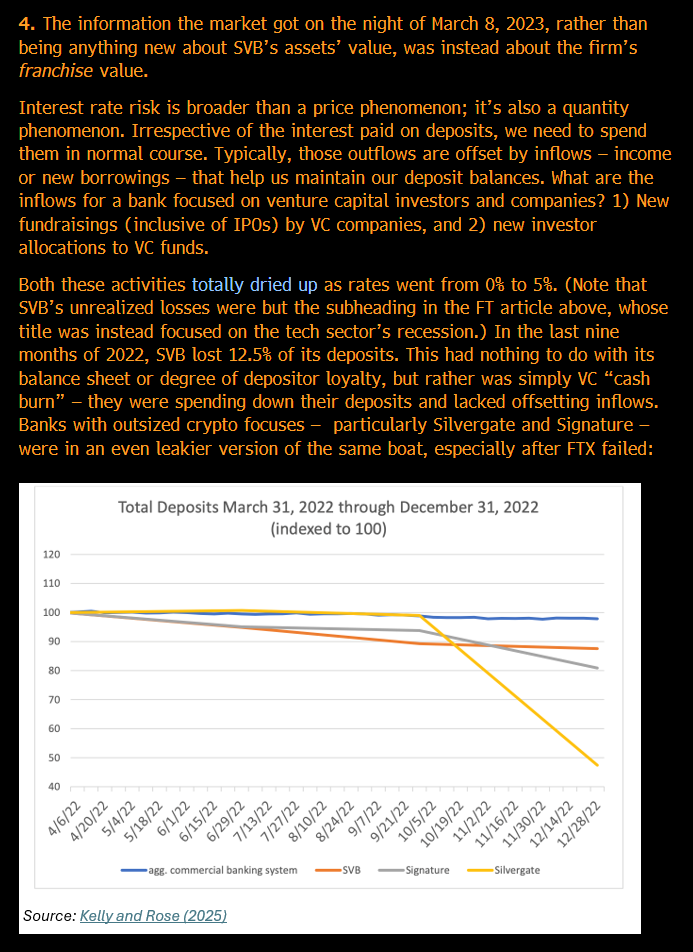
FDIC staff have painstakingly reconstructed the daily deposit outflow data for the runs on SVB, Signature, and First Republic.
Great insights from my colleagues here: https://t.co/sbQAvSIEm5
For researchers interested in U.S. banking and finance, we are sharing a new data resource!
It contains information on bank balance sheets, bank runs, and bank failures from the 19th century to the present:
“Eventually you will get a crisis where the world says safe assets are no longer considered safe, that is US dollar-denominated sovereign debt. If that happens we don’t really have the tools to deal with it,” says YPFS Director Andrew Metrick.
https://t.co/czxljVxEwt
NEW blog post from former Fed General Counsel Scott Alvarez:
“Who is Chair of the Federal Reserve Board when the position is vacant? The law provides for a Chair pro tempore selected by the Board itself”
https://t.co/OcMFoNaywQ
📢 Call for Papers: Submit your research on financial stability risks, system resilience, and related policy for our 2026 Financial Stability Conference with @YPFSatYale.
📅 Nov 19–20, 2026 in Cleveland, OH
⏰ Deadline for papers: July 7, 2026
Details: https://t.co/LijHYvc0By
@YPFSatYale hosted @federalreserve Governor Lisa Cook for an insightful conversation on financial stability, resilient systems, and the economic implications of AI. Explore the lessons learned from her tenure: https://t.co/sOj2tMAdGo
Can emergency liquidity programs resolve runs on financial institutions?
A nice piece from @StevenKelly49, Arnold, Feldberg, and Metrick published last year studies 22 emergency liquidity programs targeted at specific firms (e.g., Bear Stearns, Northern Rock, Citi, Credit Suisse, First Republic...).
Key findings: In none of the cases they surveyed did liquidity provision provide the "cure." Almost all cases required some fundamental balance sheet restructuring. While policy makers sometimes invoke the concern that they want to avoid "illiquid but solvent" firms from becoming insolvent, this rarely seems to be the fundamental issue in most episodes of funding pressure/runs.
The piece is also a nice example of the value of careful case studies.
https://t.co/GpxDhWK2eC
Thanks to Nick Timiraos (@NickTimiraos) for citing my interview with Kevin Warsh from my forthcoming book, Fed Reckoning: Conversations on America's Central Bank (@yalepress, @YPFSatYale):
https://t.co/qyHxSQfsWS
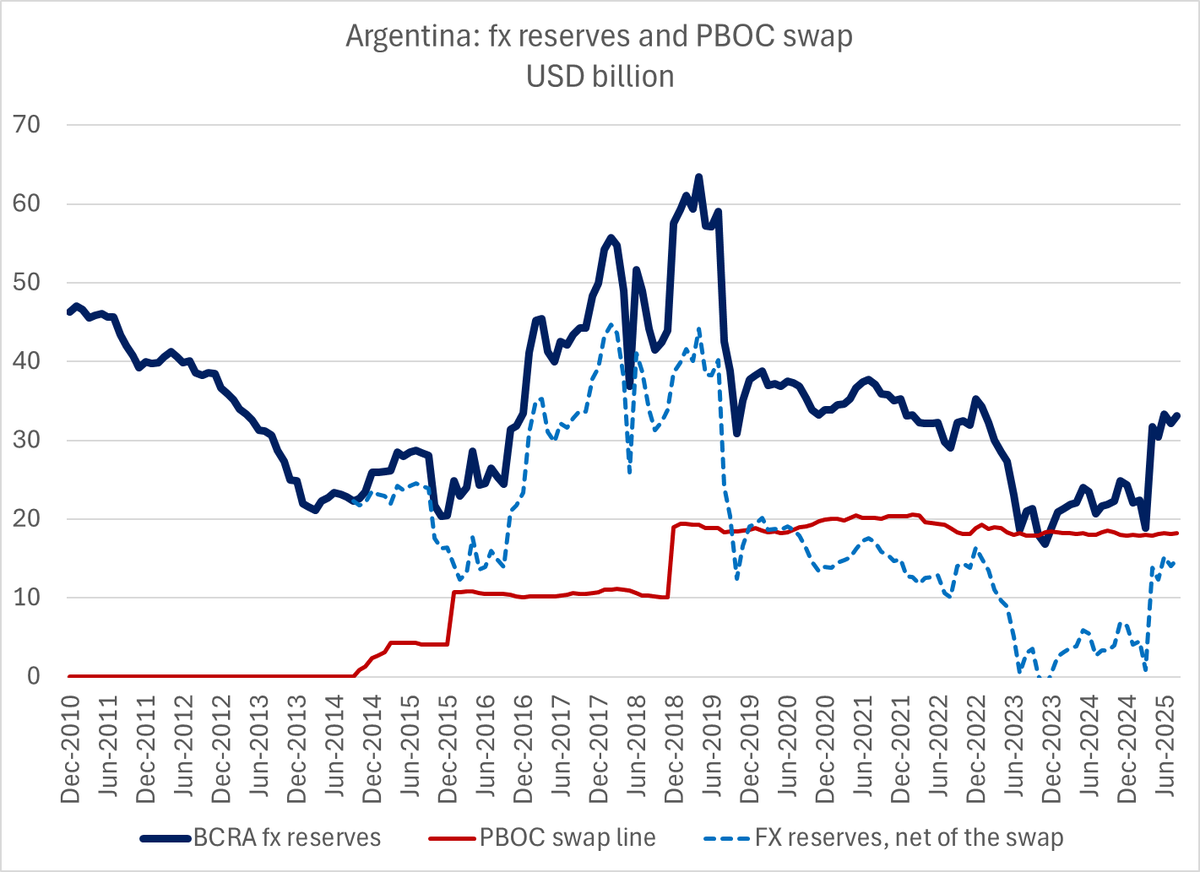
Technical achievement -- with help from @AidData and the Yale Financial Stability Project, I think I was able to construct a time series of the drawn portion of Argentina's swap line
1/2
This 1-year, in-residence program gives early/mid-career employees of central banks, treasuries, regulators, bank risk teams (& more!) exposure to leading ideas in financial crisis management, financial regulation, macroprudential policy, crisis communications, & central banking.
🚨🚨 Calling all financial stability professionals! The application for next year's Master's in Systemic Risk program is now LIVE: https://t.co/ESdrzIPf3c
Please share with your networks! You can reach out with questions to [email protected]
The next must-have accessory for crypto and tech bros is far less sexy than a Lamborghini — it’s a banking license. But Circle, Erebor, Ripple and others will be too tied to hyper-volatile sectors, just like Silicon Valley Bank in 2023. Via @opinion https://t.co/WAQINMrd6b
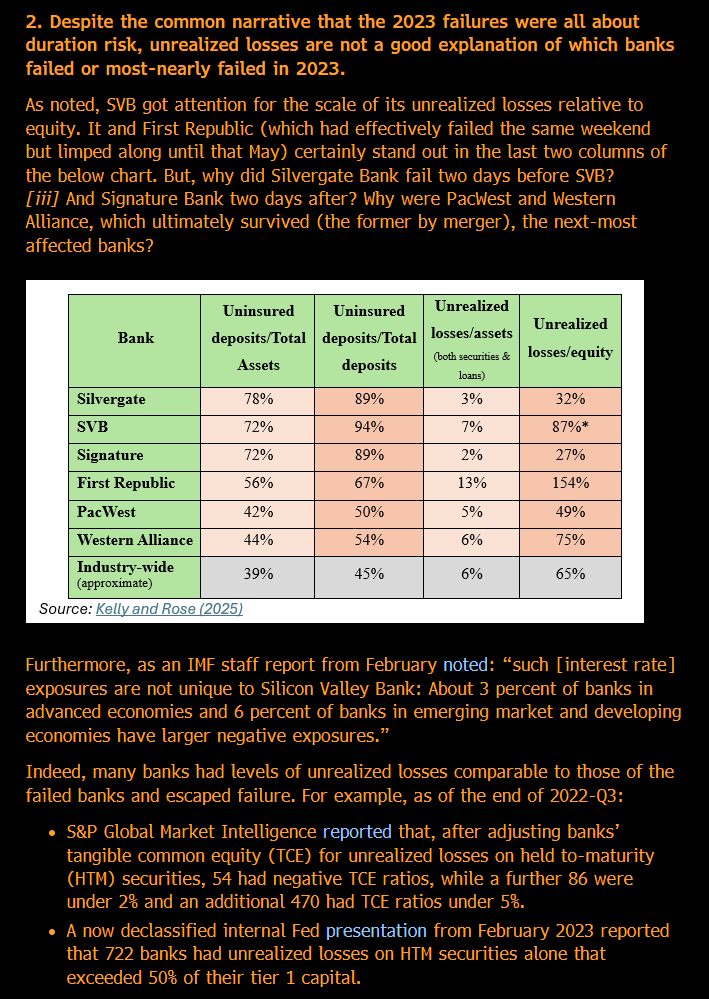
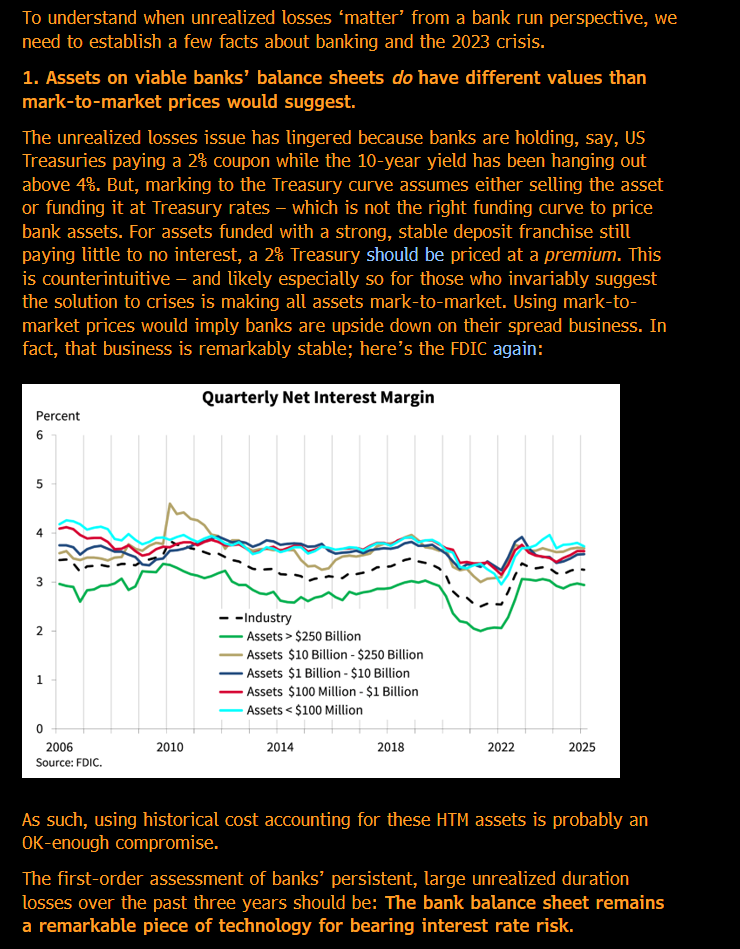
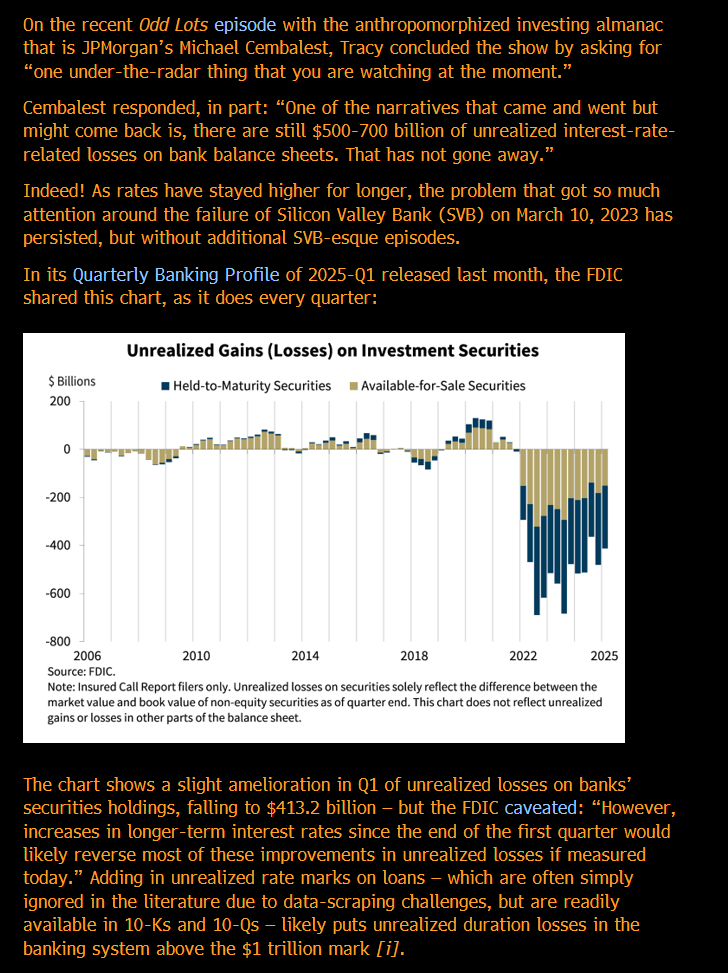
WHEN SHOULD WE CARE ABOUT UNREALIZED BANK LOSSES?
The great @StevenKelly49 has written a great (long) guest contribution to the Odd Lots newsletter, looking back at lessons learned from the SVB disaster, and what risks are (or aren't lurking today on bank balance sheets
This year, the program will conclude the New Bagehot Project, an unprecedented, decade-long effort to chronicle and analyze responses to financial crises throughout history and around the world, and shift its focus to dissemination of its findings.