@DanteSalva60372@Maciej93052345@1gnasiak Well, the jury didn't give him the award for the concerto in the final, did they?
Li won the awards for both the Final and Semifinal stage given later.
OK, he might be the best in early stages (which I don't agree. No matter, why bother having Final and Semifinal)
@1gnasiak Jinzhu Li won the Final stage and Semifinal stage based on the awards given later.
So why is she second?
I know one can argue the guy won early stages. Then what's the point of even having the Final and Semifinal?
Name another competition in music or sports like this
Going to bed late is associated with a higher IQ.
Researchers at the London School of Economics analyzed thousands of individuals to map the relationship between circadian rhythms and cognitive ability.
People with higher IQs are significantly more likely to be night owls.
The data breaks it down by sleep schedules:
• Very Dull (IQ < 75): Sleep by 11:41 PM
• Normal (IQ 90–110): Sleep by 12:10 AM
• Very Bright (IQ > 125): Sleep by 1:44 AM (and sleep in past 11:00 AM on weekends)
Why? Evolutionary psychology.
For 99% of human history, night was for sleeping. Artificial light didn't exist. Staying up late chasing complex thoughts, building projects, or solving problems is an "evolutionarily novel preference."
People with higher general intelligence are more equipped to override ancestral instincts, break away from the traditional sun-up-sun-down routine, and adapt to a modern, 24/7 world.
The early bird might get the worm.
But the night owl gets the higher IQ score.
The fastest way to learn a language was invented 2,000 years ago.
I will now share the ancient technique so you can learn any language easily.
The richest families in Rome handed their newborns to a Greek slave on day one for learning language.
The child heard Greek every waking hour and repeated it back in real time, half a second behind, like an echo chasing a voice. They had no textbook or translation.
By the time these kids could walk, they were fluent. Cicero said senators debated in Greek on the Senate floor with no interpreter.
The method had no name then. It does now.
A polyglot named Alexander Arguelles rebuilt it from scratch and called it SHADOWING.
You play native audio and speak along at the exact same moment. Not after the speaker. On top of them. Your mouth chasing their sounds until the rhythm lives in your body instead of your notes.
Conference interpreters train on it. People who speak 30 languages swear by it.
Your mouth learned your first language the same way. By copying long before it ever understood.
The Romans figured this out before grammar books existed.
We invented the grammar book and forgot the better way.
A 22-year-old graduate student in Kazakhstan got so angry at journal paywalls in 2011 that she built a pirate website holding 88 million scientific papers, and last month she turned the whole thing into an AI that lets you ask one question and get the actual research as the answer.
Her name is Alexandra Elbakyan, and the website is called Sci-Hub.
The AI she just launched is called Sci-Bot. It lives at https://t.co/6w0IBtOEYB and almost nobody outside academia knows it exists yet.
Here is the story, because it is one of the strangest things to happen in science publishing in the last 50 years.
Elbakyan was born in Almaty in 1988, the year the Soviet Union started to collapse. She taught herself programming at 12. She read Soviet science books that explained things her family used to call miracles. She got into computer security at university and graduated in 2009 with a degree she barely needed because by then she was already a serious hacker.
Alexandra moved to Moscow that fall. Then Germany. Then a research internship in the United States. She was working on brain-computer interfaces, the kind of research that requires you to read hundreds of papers a year just to keep up with the field.
And every single one of those papers was locked behind a journal paywall that cost between 30 and 50 dollars to read once.
She did the math. A graduate student in Kazakhstan could not afford to read science.
The first thing she did was learn how to get around the paywalls one paper at a time. She passed the trick around to other students. They asked her for papers constantly. She got tired of doing it manually.
So in September 2011, in three days, she wrote a script that automated the whole thing. A user pastes a DOI. The script logs in through a donated institutional credential. The paper comes back free. The website caches it.
The next person who asks for that paper gets it instantly because the previous request already saved a copy.
That was Sci-Hub. Three days of code. One graduate student. Done.
15 years later, the cache holds 88 million scientific papers. Almost every piece of scholarly literature published before 2020 is sitting on her servers. Researchers in 190 countries use it. Studies in Nature have shown that roughly half of all academic paper downloads worldwide now go through Sci-Hub, not the publishers who actually own the copyrights.
Elsevier sued her in 2015 and won a 15 million dollar judgment. She did not pay. The American Chemical Society sued her and won an injunction. She did not comply. Courts in India, France, Russia, and the UK have tried to block the domain. She just moves it. https://t.co/3sAWJzNe8I. https://t.co/tGIETesZ8i. https://t.co/H5WQ1f9lqR. The site has had over 20 domains and is still up.
Nature put her on its list of the 10 people who mattered most to science in 2016. The New York Times compared her to Edward Snowden. The Verge called her the pirate queen of science.
She has not been to the United States in over a decade because she would be arrested at the airport.
The Sci-Bot launch in April 2026 is the part that nobody is talking about.
She took the 88 million paper database and put a small language model on top of it. You ask a question in plain English. The model searches the entire shadow library, pulls the relevant papers, synthesizes an answer grounded in real citations, and links you to the full text of every source. Free. No login. No institutional credential. No paywall.
Three real scientists tested it for a Chemical and Engineering News article last month. They asked it medical and chemistry questions. The radiologist said the answer he got was usable. The chemist said the gaps in recent literature were obvious but the older science was solid. The publisher community is furious.
What she built is what the paid academic AI tools are trying to build. Except the paid ones are limited to what their parent publisher legally owns. Hers is limited to almost nothing.
Alexandra still lives somewhere in Russia. She does not give her address. She does not do video interviews. She gives talks over Skype with the camera off. She runs the largest illegal library in human history from a laptop and a donation page.
A graduate student who could not afford to read science built the system the entire scientific community now quietly depends on.
The publishers have spent a decade trying to shut her down.
She just shipped an AI that makes their entire business model outdated.
Your body has 3 primary hormones. Without them, you die. And most people are destroying all three daily without knowing it.
Your body runs on a trinity — adrenaline, cortisol, and insulin. Every other hormone determines the quality of your life. These three determine whether you are alive at all.
And they work in a cascade.
Adrenaline fires first. It is the match. The awakening signal. Cortisol always comes second, because adrenaline is the precursor to cortisol. You cannot have chronically high cortisol without chronically high adrenaline already running underneath it.
When cortisol spikes, it raises your blood sugar. Your brain thinks you are in a fight-or-flight situation, so it floods your blood with sugar to give you fuel to fight or run.
But most people are not fighting or running. They are sitting in traffic. Staring at screens. Living in chronic fear.
So that blood sugar just poisons the nervous system. Then insulin crashes it back down. Then you reach for sugar to bring it back up. Then, insulin crashes again.
That cycle, repeated daily, keeps your entire system locked in a sympathetic state, depleting resources faster than you can ever rebuild them.
The fix is not complicated. The simplest things are the most powerful.
Eat real food. Go to bed before 10:30 PM. Move your body. Stop mistaking busyness for productivity and exhaustion for dedication.
Love and chi,
- Paul
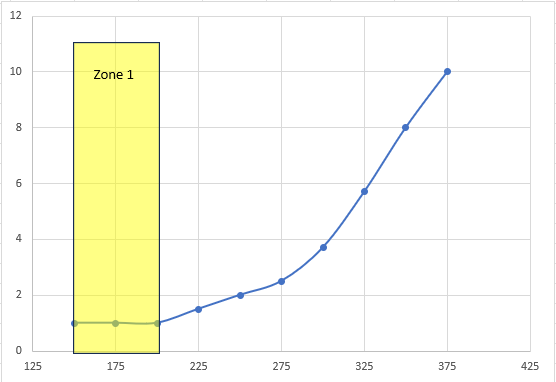
A question arising from my last tweet...
"What do you mean by #Zone1 ?"👇
Where is it?
Zone 1 is the zone just before the first rise in the lactate curve. It encompasses the lowest lactate numbers that the individual athlete can get to.
How wide is it?
Wide enough to be a practical zone, i.e. 10-15 bpm below that point of the first rise in lactate to just before the first rise in lactate.
What is it good for?
1/ A lot of training in Zone 1 will push the entire curve to the right. Zone 1 is the only zone that has this effect on the whole curve. With time (& with a lot of zone 1 contractions, the entire curve will gradually shift to higher power numbers.
2/ It typically coincides with maximal End Diastolic Volume, i.e, for most athletes the heart is maximally 'full' & 'stretched' at this point. Over time this leads to morphological changes that increase the size of the heart and enable higher cardiac output & higher #VO2max
3/ It favors #FatOxidation. By spending time in Zone 1, the #FatMax of the athlete will increase. Also, because a significant share of the energy comes from Fat, tolerance to Zone 1 training is much higher than the zones above.
#####
Zone 1 is, IME, the most generally beneficial zone for most athletes & it should make up the bulk of the total training time.
The 7 step process to superior fitness.
Step 1: Find as much time as you can within your week to train - reserve it in the calendar. Guard it.
Step 2: Find more. (Very important step!)
Step 3: Progressively build up to that time with exercise of any mode, any intensity. If you take it easy enough - i.e. walk, this shouldn't take long.
Step 4: Progressively add in more zone 1 (i.e. jogging) so you cover more ground, do more work in this time period. Don't sacrifice the weekly time/frequency though. Protecting that comes first.
Step 5: After you've done that for a while & you're at 50+% consistent z1 & you're fit & want to prepare for a race, include some *short* intervals at race pace *while preserving volume*. Always preserve volume.
Step 6: After you've done that for a while, break the golden rule - temporarily - drop the volume, sharpen up for a really important race, then rest a bit. Keep step 6 short & infrequent.
Step 7: Rinse & repeat for a very long time.
13 seconds of brilliance.
Xavi, regarded as one of the best midfielders ever, playing in the best club team ever, scanning at every opportunity whilst moving to receive the ball.
Visible is the #KingKnightEd Concept of Scanning and it’s sub-components:
Head Up.
Body Orientation.
Fake Scanning.
Perceiving & Conceiving.
All done to achieve the objective of observing the four reference points of football:
Ball.
Teammate.
Space.
Opposition.