We (= Institute of Economics and Econometrics of the GSEM at the U of Geneva) hire at the Assistant or Associate Prof. level: through https://t.co/8vSiG7pcKr Very competitive conditions! Apply by 17 November 2024 through EJM. And please spread the word.
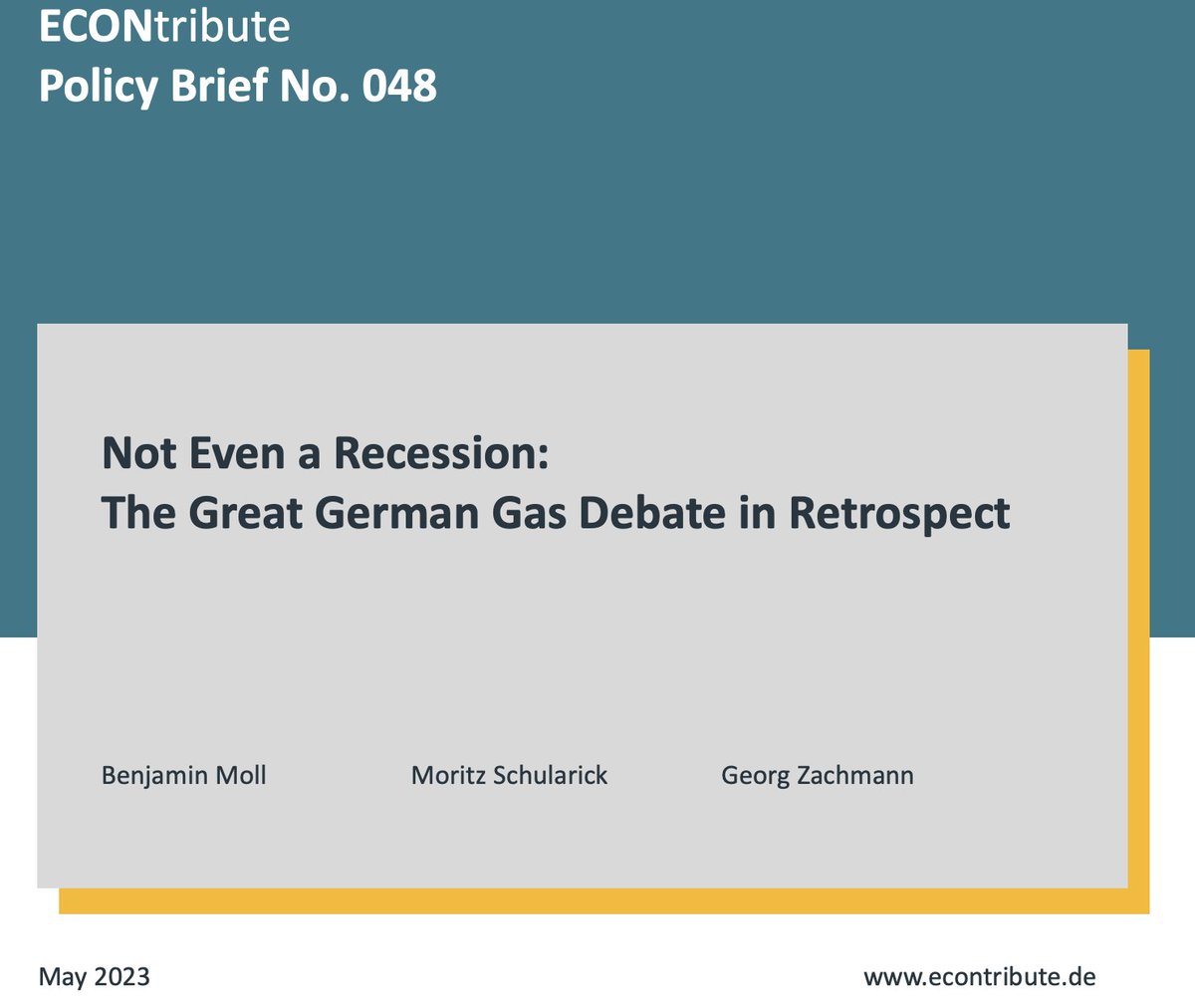
Just released: new study showing
1. The German economy coped well with end of Russian gas supplies even avoiding recession
2. Germany would have also withstood an earlier 1 April 2022 import stop
Joint with @MSchularick@GeorgZachmann@ECON_tribute
https://t.co/mzTvQEkl4J
Given some of the reactions to this thread, let me remind you of some of the doomsday predictions around the time we wrote our original paper.
Our key message below is not: "everything is great in Germany". Instead it is: "those doomsday predictions were far off the mark."
Call for applicants: The NBER will host the 2nd annual Workshop on Heterogeneous-Agent Macroeconomics on June 12-14, '23, in Cambridge, MA. For economics PhD students in heterogeneous-agent macroeconomics and related fields. Details: https://t.co/t5YSFhssSV
The UK has just given a brilliant demonstration of monetary dominance
"teaching video:" On Monetary, Fiscal, and Financial Dominance
https://t.co/pSo2caEQpH via @YouTube
If investors know anything about bank stocks, it may be that they benefit from higher interest rates.
But for the first time since 2008, that's no longer working. @telisdemos with the details: https://t.co/4SCUJIU7bh
Reminder: The deadline for applications for the 2022 MFR Summer Session for Young Scholars is this Friday! Don’t forget to submit your application in time. We are willing to give a one week extension on the two recommendation letters only. @MFRProgram@BeckerFriedman#EconTwitter
When people run out of arguments, they start saying things that aren't quite true.
Here is the Head of the Scholz Chancellery @W_Schmidt_ talking about our work on an import stop of Russian energy and this is exactly what happens
https://t.co/1D4r9hIKbT around min 26:00
1/
Never again, I hope Germany will lecture « club Med » European countries about seriousness, fortitude and courage. Greece suffered much more during the financial crisis than Germany would suffer if it stopped importing Russian gaz.
A quiet revolution in the monetary system started in November 2020, when Brazil launched its Pix instant payment system
In little over a year, it signed up two-thirds of Brazil's adult population
The latest #BIS_Bulletin tells the amazing story
A thread
https://t.co/iivHTQjLhv
Follow the @MFRProgram on Twitter and don’t miss the deadline to submit your applications for our 2022 Macro Finance Research Program Summer Session for Young Scholars to be held at @UChicago on August 1-4, 2022. #econtwitter#macrofinance
The What if?… study on the effects of RU energy ban (below) was published on 7 March, 2 weeks after the start of this atrocious war.
A long-ish thread on (a) how incredible that is, and (b) how it’s been under-utilised by the policymakers. 1/20
Glad to see the “The Reversal Rate” discussed in German @bundesbank monthly report. See the estimate for the German economy. With @YannKoby#negativeinterest
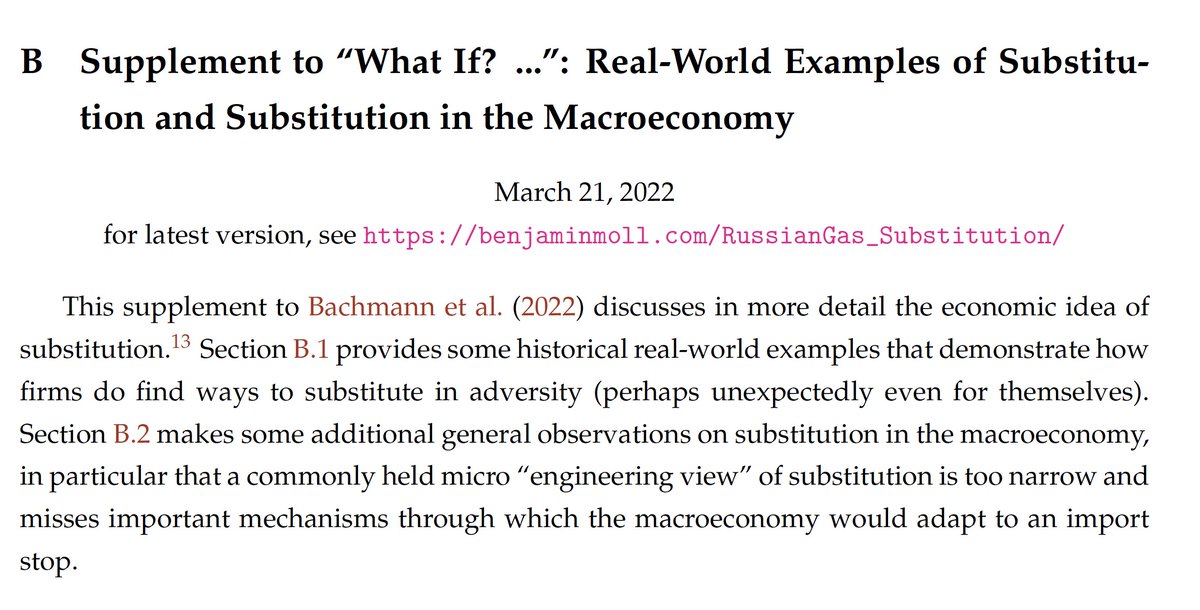
In our import stop paper we emphasize that it makes a big difference how much people and firms can substitute for Russian energy inputs.
How might such substitution work in concrete terms?
A new supplement to our paper has some more thoughts
https://t.co/qdLfdAWQkb
Thread:
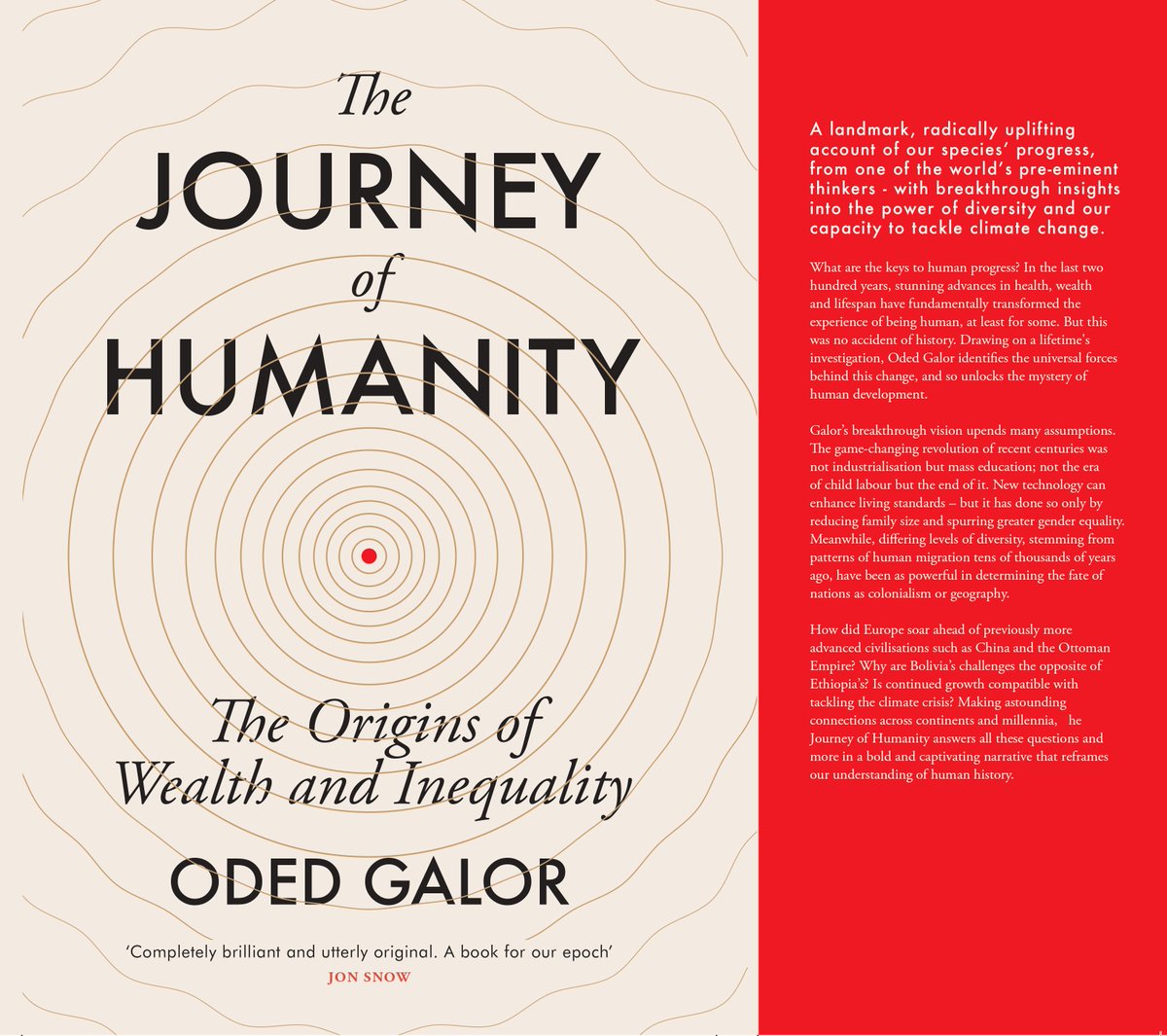
Based on lifetime research on the origins of human progress, the book provides insights into the power of diversity and education & the challenge of climate change
In 30 languages
https://t.co/sokxxKHzoN
@jonsnowC4@lewis_dartnell@rodrikdani@Nouriel@GlennLoury#EconTwitter
It's Econ job market season and it is time for some not-so-shameless self-promotion! I am on the market this year, and my JMP studies the “Distributive Effects of Banking Sector Losses”. 1/n #Econtwitter#Econjobmarket
https://t.co/9yt8EUqqCB
In his JMP, Marcel Peruffo (@mcperuffo) studies the distributive effects of losses in the banking sector. Using panel data as well as a quantitative heterogeneous-agent model, he finds that the burden of such losses falls predominantly on low-income households. #EconTwitter