Traditional district school supporters are attempting to score short-term political points by conjuring up a disingenuous fiscal narrative. We set the record straight (again) and explain why their efforts are harmful to the ongoing school funding conversation in Ohio.
https://t.co/0VPimTSmqg
The Supreme Court did not rule Property Taxes unconstitutional for schools. What they did rule was that without funding to balance out the poor and rich areas, Ohioans were getting unequal educational opportunities. Thus, our current funding models even out funding across Ohio to comply. The issue isn't the revenue side but expenditures.
And those 300+ public schools are using your tax dollars to challenge the state law that gives you a choice in your child’s education.
They will ultimately lose.
When they come begging for more taxes, ask them why they spent the money you already gave them on losing lawsuits.
I begin a new chapter June 8 as VP of Strategic Research and Innovation at the Alliance Defending Freedom, a nonprofit law firm that’s won 18 cases at SCOTUS in the last 15 years.
I’ve been honored to serve Ohio, and will continue to fight for freedom! https://t.co/zTsTLdycAC
Horrified to see the attack on a synagogue in West Bloomfield, Michigan.
Everyone deserves the right to worship and learn in peace. There is no place for violence and antisemitism in our country.
Tina and I pray for the first responders and anyone affected on the scene as we await more details.
So great to hear our old friend @YitzFrank on @feeonline's LiberateED podcast with @Kerry_edu. Plus good info on Ohio Scholarship Granting Orgs and the coming Federal Education Freedom Tax Credit.
https://t.co/XltyAifh5d
@troymc94@VouchersHurtUs Specifically, EdChoice:
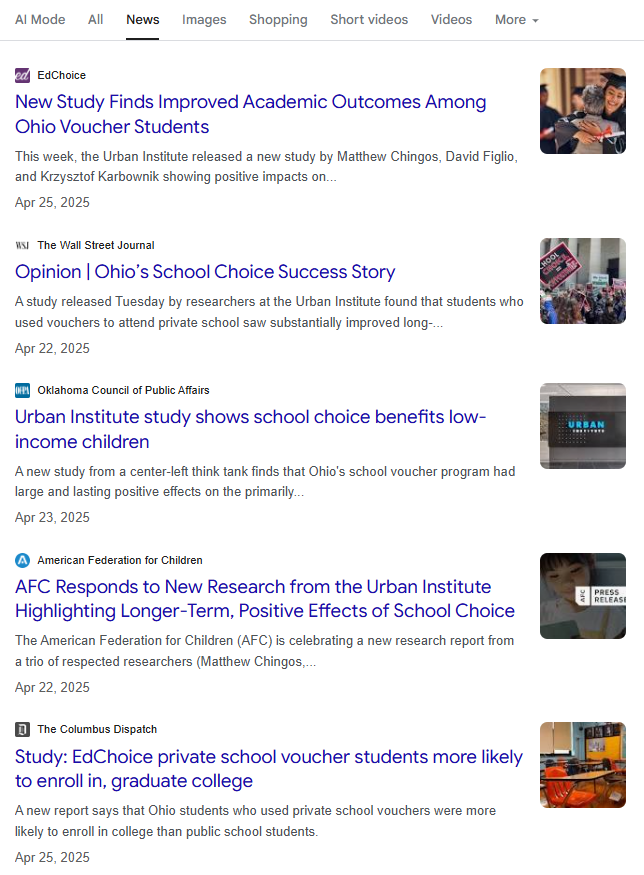
Improved district achievement
Reduced district segregation
No impact on district expenditures per pupil
Examine your life choices (and litigation "strategy"), my friend.
Agree, largely.
But... that requires reviewing whether a charter gets seperate funding for facilities (like in Ohio and many other states), does it correctly account for poverty/learning differences etc vs private choice programs (and public school districts). I think it is completely fair to account for differences in regulation and funding when setting scholarship amounts compared to charters, but the baseline should be that funding needs to be largely equal and than subtract the value of the different requirements, "accountability" components, and associated funding amounts. Arbitrarily saying they should NOT be the same without digging into the details in each state and district will likely miss important considerations. (Not suggesting Mike is saying that, just pointing it out.)
Deeply disturbing. We can’t let the evil of antisemitism continue to fester.
America must always be a place where people can live and worship without fear.
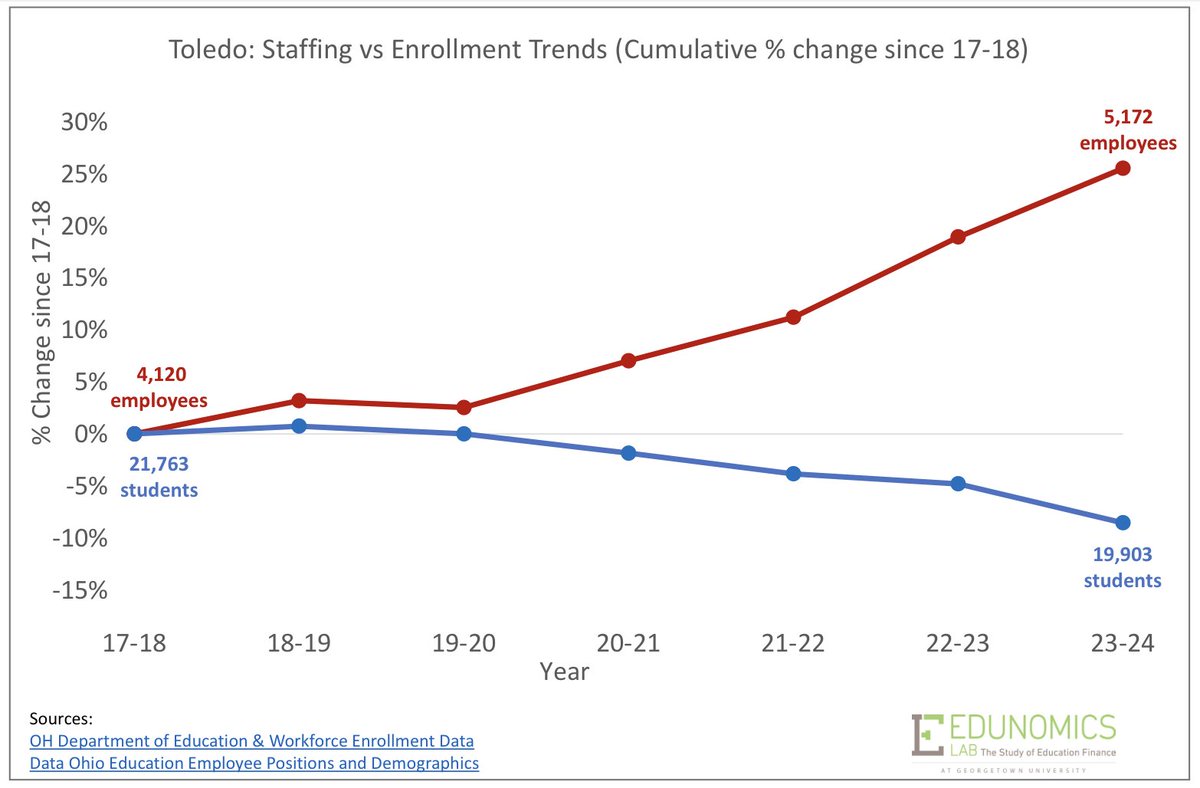
Toledo Schools added 1000 new employees as enrollment dropped by 1800. There are other financial pressures too (e.g. benefits), but this mismatch is certainly a big part of it.
Many districts' graphs at https://t.co/aJCjvDKVem
THIS WEEK'S SUNDAY BRIEFING: Democrat Amy Acton's plan to win red-state Ohio; school vouchers amid public school budget woes; farmers hurt by tariffs as countries shop elsewhere.
WATCH THE FULL SHOW: https://t.co/HNMqeQWd9R
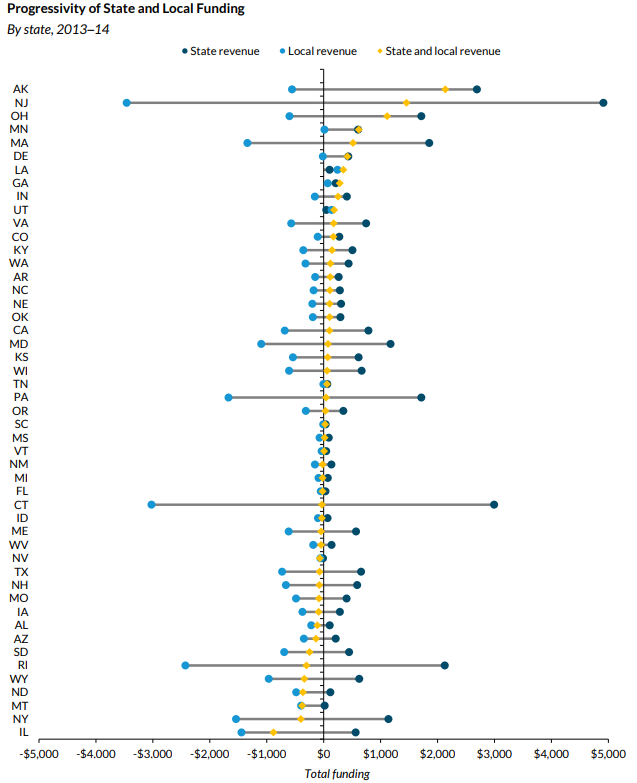
Research by Urban Institute shows that the "Savage Inequalities" in K-12 finance have largely been eliminated.
In most states, low-income students attend districts that are funded on par or greater than districts that high-income students attend.
Importantly, this *doesn't* include federal dollars, which disproportionately go to high-poverty districts.
And because the data are 10+ years old, it's likely that funding systems have become even more progressive since that time. Updated research is needed.
Wow, a new low in duplicity at tonight's @ColsCitySchools board meeting. District (falsely) claiming that shift from "pass through" to "direct" funding of charters/vouchers -- an accounting change that district demanded, and something that *benefited* it -- was a cut in state $$.