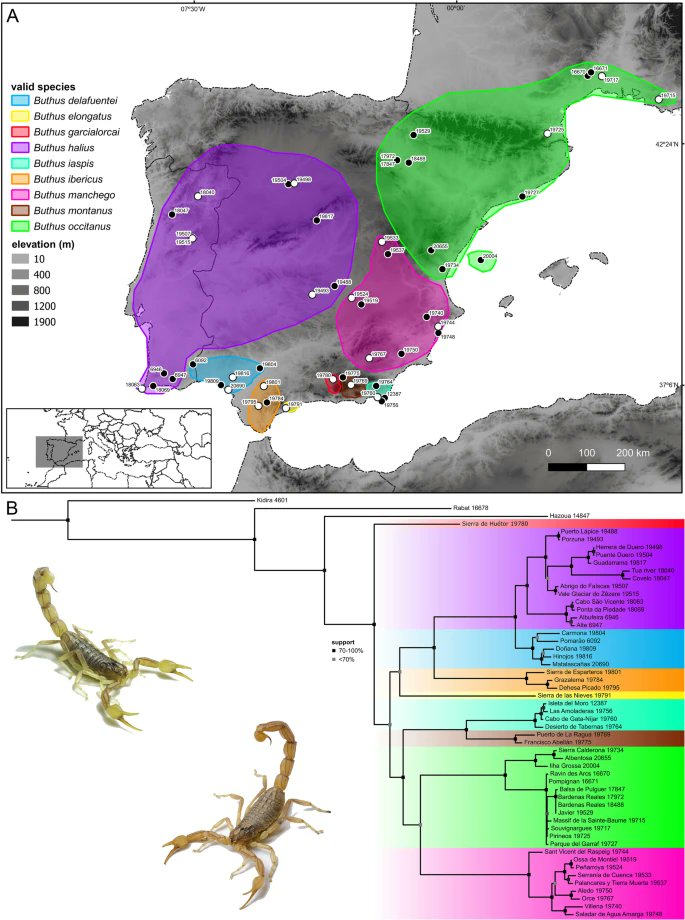
Fe Months ago, together with @jblascoarosteg we published a monography about European Buthus and we reduced the number of existing soecies from 20 to 9. In this new paper, all reasons for this choice are explained.
https://t.co/jbR1p7EDT2
Finally, taking mito-nuclear discordance, hybridization patterns, morphology and species diatribution modelling we concluded that the most conservative hypothesis is that in Europe, only 9 species are sure to be valid.
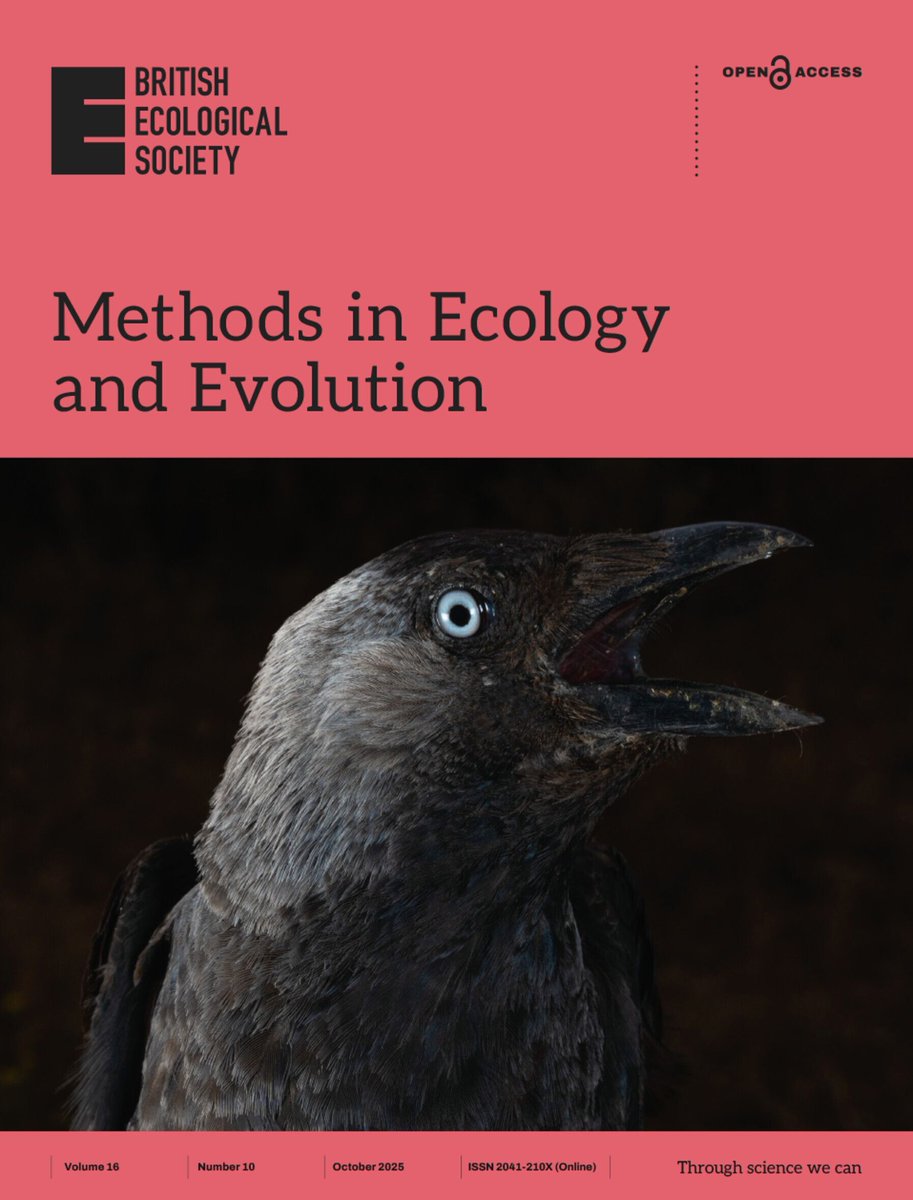
🚨 Our October Issue is now out!🚨
This months cover shows a close-up of an adult male jackdaw, part of a long-term monitoring population in Lleida, Catalunya, Spain 🐦⬛
Find out more about the cover image and read the whole issue here 👇
https://t.co/GkbRbH1yrn
With morphology, genetics & SDMs, we show that only 9 of the 20 described European Buthus species are valid! Descriptions based solely on morphology are prone to mistakes for these scorpions. Fantastic work led by @jblascoarosteg. Honored to be part of it
https://t.co/AYRjJWkbSp
This may suggest a trade off between grasping and holding with profound consequences of predatory strategies, diet and even venom evolution
Thanks @ZooCampfire and Anthony Herrel for the help and supervision!
Hot off the press!
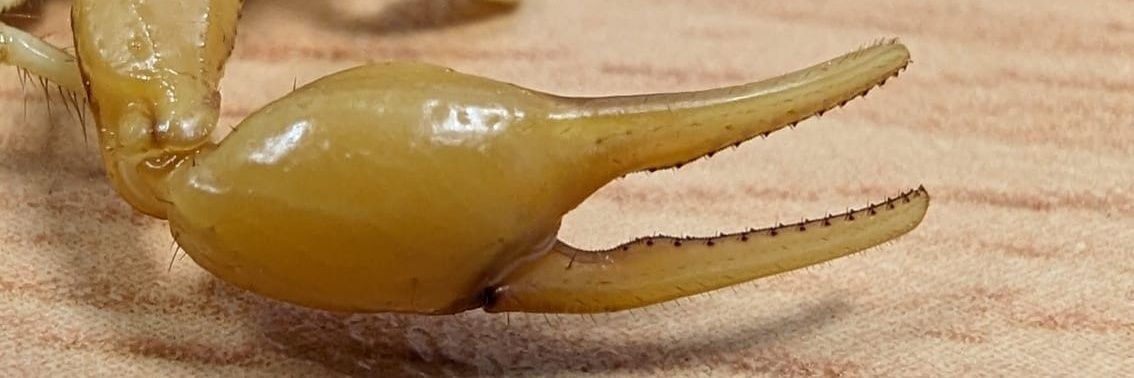
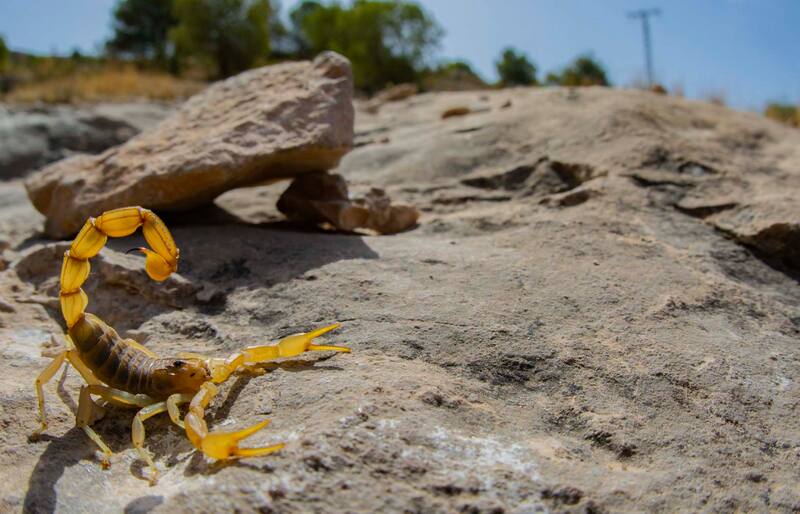
My last chapter of PhD has been finally publsihed! Here we compare the internal anatomy of the chela closing muscles in two species of scorpione at the extremes of the chela morphological gradient.
https://t.co/tU0Nscyy8F
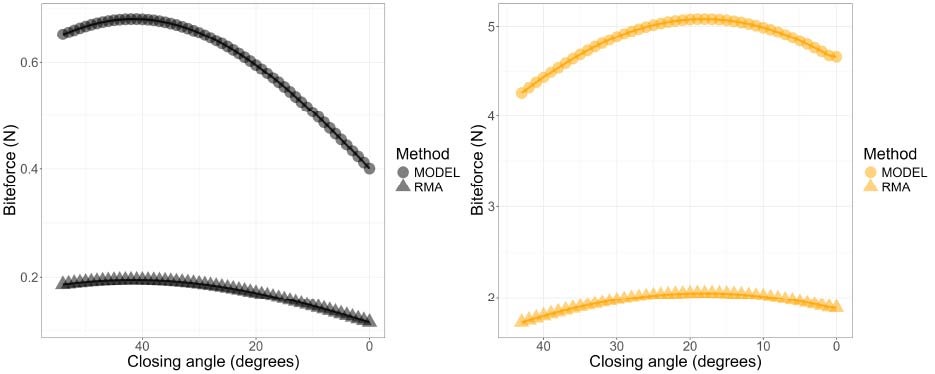
We modelled the closing force per degree of rotation. Long-fingered species have a peak in closing force at the beginning of the closing event followed by a drop in force towards the end. The short-fingered species have their peak force toward the end of the closing
Did you notice the size of the patellar muscle? In the long-fingered species it covers almost 50% of the volume of all closing muscles while in the short-fingered species the volume of this same muscle is only 1.4% of the whole chela closing muscles, almost vestigial!!
The long-fingered chelae are designed to produce crazy high closing velocities thanks to lever lower mechanical advantage, shorter sarcomeres and strong muscles (large Physiological Cross Sectional Area [PCSA]) inserted with short moment arms
The short-fingered chelae are designed to produce crazy high closing force thanks to lever larger mechanical advantage, longer sarcomeres and strong muscles (large Physiological Cross Sectional Area [PCSA]) inserted with long moment arms.
A very nice achievement!
One of the pictures from Jules has been selected as cover of the latest issue of the Journal of Arachnology
You can find the full note describing the first record of arm-span competition in buthids here:
https://t.co/afSRdUD7QG





![YuriSimone1's tweet photo. The long-fingered chelae are designed to produce crazy high closing velocities thanks to lever lower mechanical advantage, shorter sarcomeres and strong muscles (large Physiological Cross Sectional Area [PCSA]) inserted with short moment arms https://t.co/8Jno21Cs03](https://pbs.twimg.com/media/GrZyiVdWgAAvZmQ.jpg)






![YuriSimone1's tweet photo. The long-fingered chelae are designed to produce crazy high closing velocities thanks to lever lower mechanical advantage, shorter sarcomeres and strong muscles (large Physiological Cross Sectional Area [PCSA]) inserted with short moment arms https://t.co/8Jno21Cs03](https://pbs.twimg.com/media/GrZyiV1XUAAgDvo.jpg)





