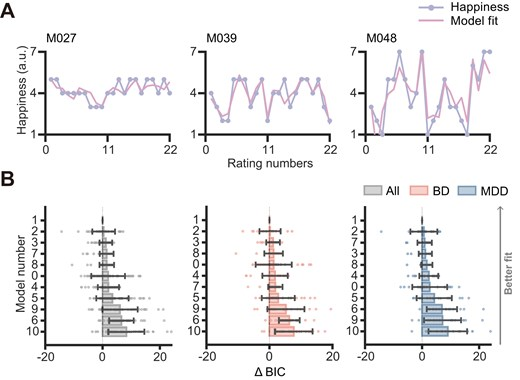
🔍New research on reward processing differences between adolescent BD and MDD found:
1⃣BD adolescents showed significantly lower decision rationality and higher uncertain choice rates than MDD.
2⃣Ventral striatum activation related to RPE correlated with the RPE–mood association.
Bodily awareness during advanced meditation: what happens and how should we study it?
Announcing our new preprint: "Bodily Awareness in Advanced Meditation: A Three-Level Model of Interoceptive, Schematic, and Pacificatory Changes," now available on PsyArXiv.
During advanced concentrative absorption meditation jhāna (ACAM-J), practitioners report experiences ranging from intense somatic rapture to the complete absence of bodily awareness. These are among the most radical alterations in embodied experience documented in science and are rare outside of experimental, pathological, and drug-induced experiences. Yet existing frameworks typically study these changes as a component of "self-dissolution" or embodied selfhood rather than investigating bodily awareness on its own terms.
In this new paper, we argue that changes in bodily awareness during advanced meditation should be studied in their own right, rather than primarily through the lens of the self. We propose a three-level model distinguishing interoceptive changes, body-schematic changes, and pacification—the progressive to complete phenomenological absence of bodily awareness. Drawing on phenomenological reports from jhāna practice manuals and emerging neuroimaging evidence from studies of ACAM-J, we argue that these are dimensions of variation that may have similar markers yet remain conceptually distinct. Such a conceptualization allows us to highlight fine-grained phenomenological changes as they manifest across eight stages of concentrative absorption and varying depths of practice. By studying bodily awareness outside of self-centric models, we can highlight, conceptualize, and measure changes in bodily awareness without resolving complex questions about the nature of selfhood.
One key insight from this work is that these dimensions are conceptually distinct and likely partially dissociable. In the emerging science of advanced meditation, studying dimensions of bodily awareness independently from the self thus promises to inform more precise phenomenological description. Further, it opens new empirical questions about the structure and plasticity of body representation across altered states of consciousness.
Gratitude to first author Jes Golden @jesology for leading this project, and to our collaborator Terje Sparby @terjesparby, as well as to the contemplative practitioners whose sustained practice continues to inspire and inform this research.
Please share if you find this meaningful—this work depends on the insights, wisdom, and exchange of our global community.
Full preprint in comments. ⤵️
May this work benefit many 🙏
Glad to share our new work: The brain activity flow in language and cognitive control networks underlying second language proficiency | Bilingualism: Language and Cognition | Cambridge Core - @Yuwen_He https://t.co/S0RYsr83kx
What if the root of suffering isn't what actually happens to us, but a fundamental mismatch between how the world is and how we expect it to be?
Mainstream science has focused on the stress-reduction benefits of basic mindfulness meditation. Yet many traditions describe a profound trajectory of meditative development that involves deconstructing our sense of self, perceiving the transient nature of reality, and ultimately reaching extraordinary meditative endpoints (MEND).
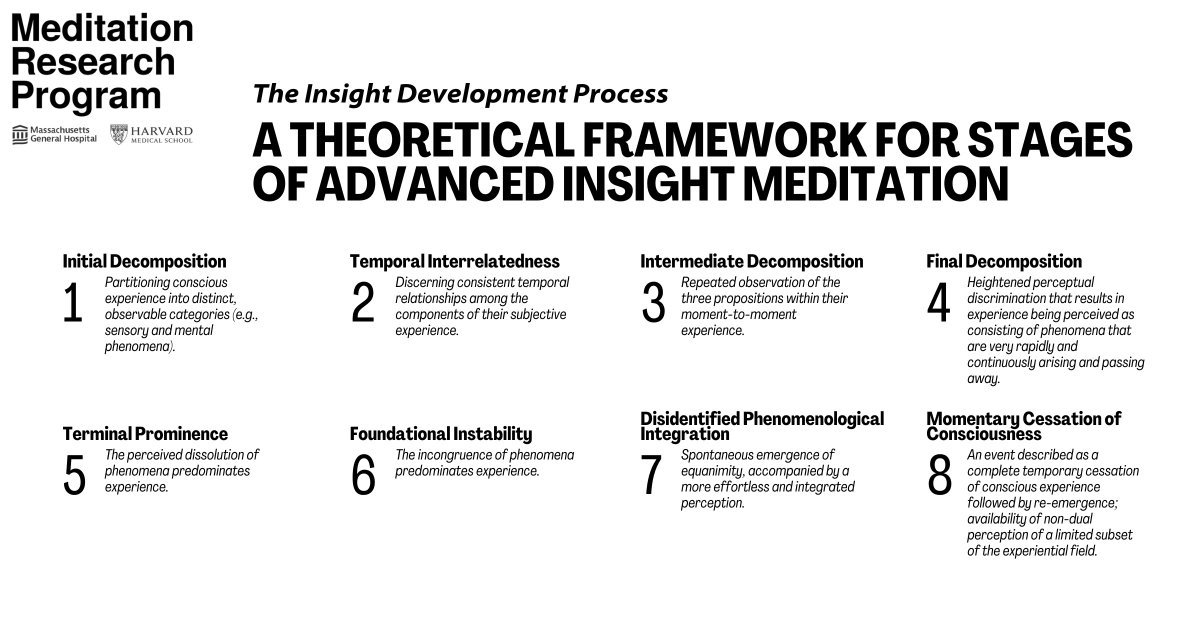
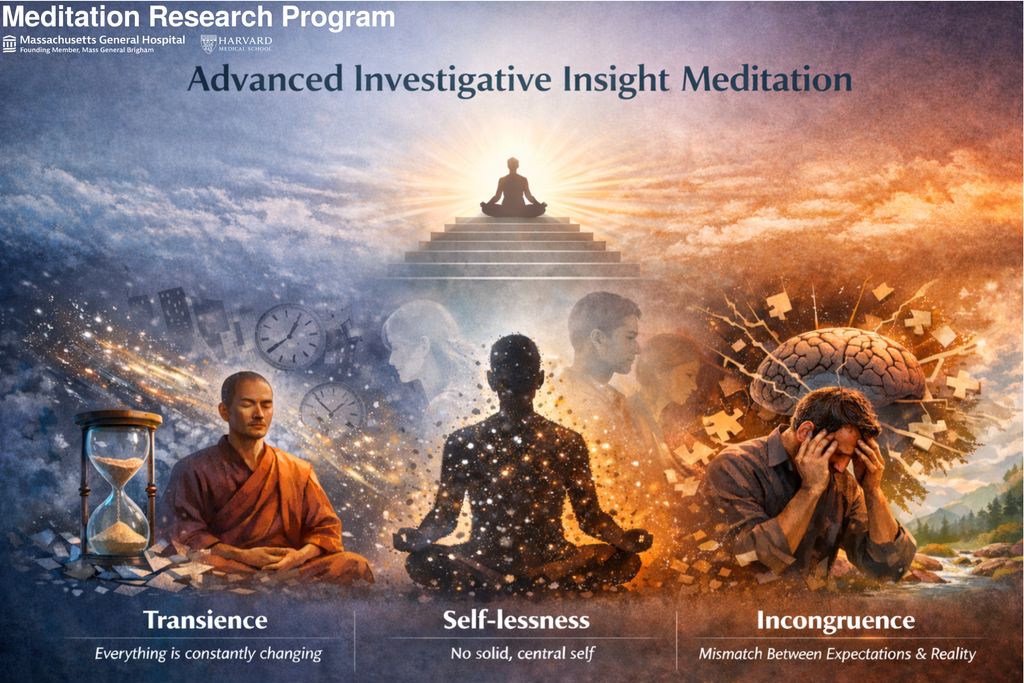
Advanced Investigative Insight Meditation (AIIM) is a class of practices designed to facilitate this process of insight development. Until now, we have lacked a secular, empirically testable framework to rigorously study this trajectory of insight development. Here I announce our new preprint: "A Theoretical Framework for Stages of Advanced Insight Meditation.”
In this paper, we introduce the Insight Development Process (IDP). Drawing on classical Buddhist theory alongside clinical and contemplative practice expertise, we reconceptualize the process of insight development as three testable, psychologically neutral perceptual modes any human can grow:
-- Transience: Shifting perception to see seemingly solid, continuous experiences as a rapid, moment-to-moment succession of fleeting phenomena
-- Self-lessness: Experiencing thoughts, emotions, and actions as arising autonomously, loosening the burden of maintaining a solid, central sense of self
-- Incongruence: Recognizing the painful mismatch between our brain's rigid expectations for stability and control, and the fluid, unpredictable nature of reality
What emerged from this project is a framework that, for the first time, maps the arc of advanced insight practice in an empirically testable format. This work makes several key contributions we believe will be of broad interest to researchers, clinicians, and practitioners:
-- We outline 8 distinct stages mapping phenomenology from the "Initial Decomposition" of sensory experience to profound equanimity, and ultimately the “Momentary Cessation of Consciousness”
-- We differentiate fleeting "momentary insights," brief shifts in how reality is perceived, from "integrated insights," which are more durable, baseline shifts in cognition, perception, affect, and behavior
-- By formalizing potentially challenging stages like "Foundational Instability," we provide a clinical lens for understanding destabilizing altered states of consciousness, framing them not as pathology, but as developmentally appropriate steps toward deep psychological growth
My deep gratitude to first author Andrea Grabovac (@meditationmama3), and co-authors Nickolas Grabovac, @winsonfzyang, Molly Haggerty, Malcolm Wright, and the contemplative traditions that help inform our research.
Have you ever noticed a moment where your suffering came not from what was happening, but from your expectations and resistance? What shifted when you saw that?
The full preprint is included in the comments below ⤵️
May this work benefit many 🙏
Glad to join the Department of Psychiatry & Behavioral Science at the University of Miami to work as a postdoc! Looking forward to conducting some interesting studies in this great institution! @univmiami@umiamimedicine
Our another paper concerning how to make use of fNIRS hyperscanning paradigm to detect social deficits in depressed adolescents is out on Biological Psychiatry: Global Open Science
#biologicalPsychiatry#MDD#adolescent#depression#fnirs#Neuroscience
https://t.co/twJH7SoGGx
What if it takes losing our minds to save our minds?
For centuries, enlightenment, known by many names, has been considered largely in myth, metaphor, or mystical verses. In most secularized contexts, it has been treated as a beautiful but largely superstitious story. Rarely has it been seen as something modern scientists should take seriously, let alone as something we might study, verify, and learn from.
And now, strangely enough, modern science is starting to catch up.
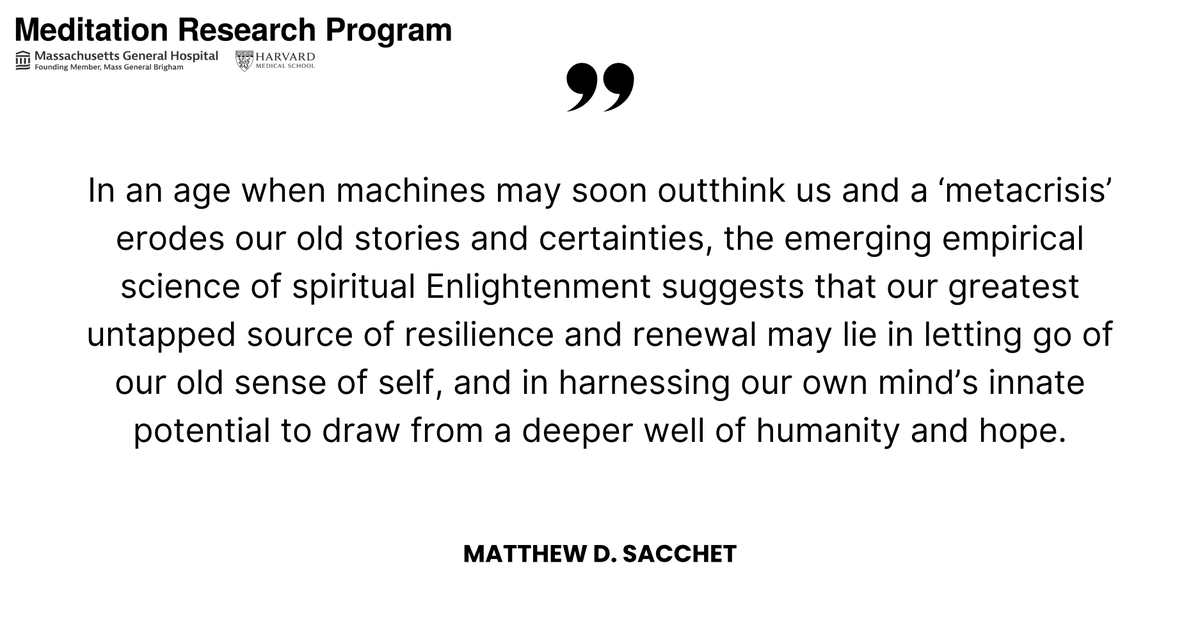
Right now, we are living through ecological, social, psychological, and technological ruptures—what some describe collectively as the ‘metacrisis’ or ‘polycrisis’. The stakes are so high that for many, it is unraveling the very stories we’ve told ourselves about who we are and what life is. Modern culture has long conditioned us to see ourselves as isolated, rational individuals chasing private, often materialistic happiness in a competitive world.
But there are real challenges to this narrative, and something else may be opening up.
This is why the emerging science of Extended Cessation (EC)—really, the beginning of an empirical science of what we call meditative endpoints, including enlightenment, awakening, nirvana, and other phenomena—feels so timely. EC is a rare, radical state in which advanced meditators suspend their consciousness. This is followed by a striking psychological renewal with a clarity, peace, and joy that is challenging to capture using ordinary language. Until now, this might have sounded implausible. But state-of-the-art brain wave measurements and scanners tell a very different story.
Why does this matter now? Because this emerging science suggests our deepest human capacities may not just be thinking, producing, or competing, but rather radical new possibilities out of nothingness.
As AI improves at the tasks we once thought made humans special, the question becomes: what remains human? Our research at the Meditation Research Program points us away from mere information processing and toward new depths—our ability to relate without transaction, to release old attachments, to recognize our shared humanity, and to glimpse incredible mysteries that may remake our experience.
What if our ultimate humanity lies in our now-measurable ability to turn emptiness itself into a new lease on life—like advanced meditators in EC do?
Seen this way, the science of EC is a reminder, perhaps just in time, that the future of humanity may lie less in building ever smarter machines, and more in cultivating ever deeper modes of being fully human.
Even if not everyone reaches the deepest levels of meditation, knowing enlightenment is possible—and having science guide us part of the way—could give us a new source of meaning, resilience, strength, and purpose in challenging times.
What if this is the beginning of new possibilities for our consciousness, a powerful leap? Not a leap of faith this time, but informed by science, a leap of our own consciousness.
Our review regarding the convergent neural signatures of language deficits in patients with schizophrenia is finally out online.
https://t.co/UDGagoS1zz
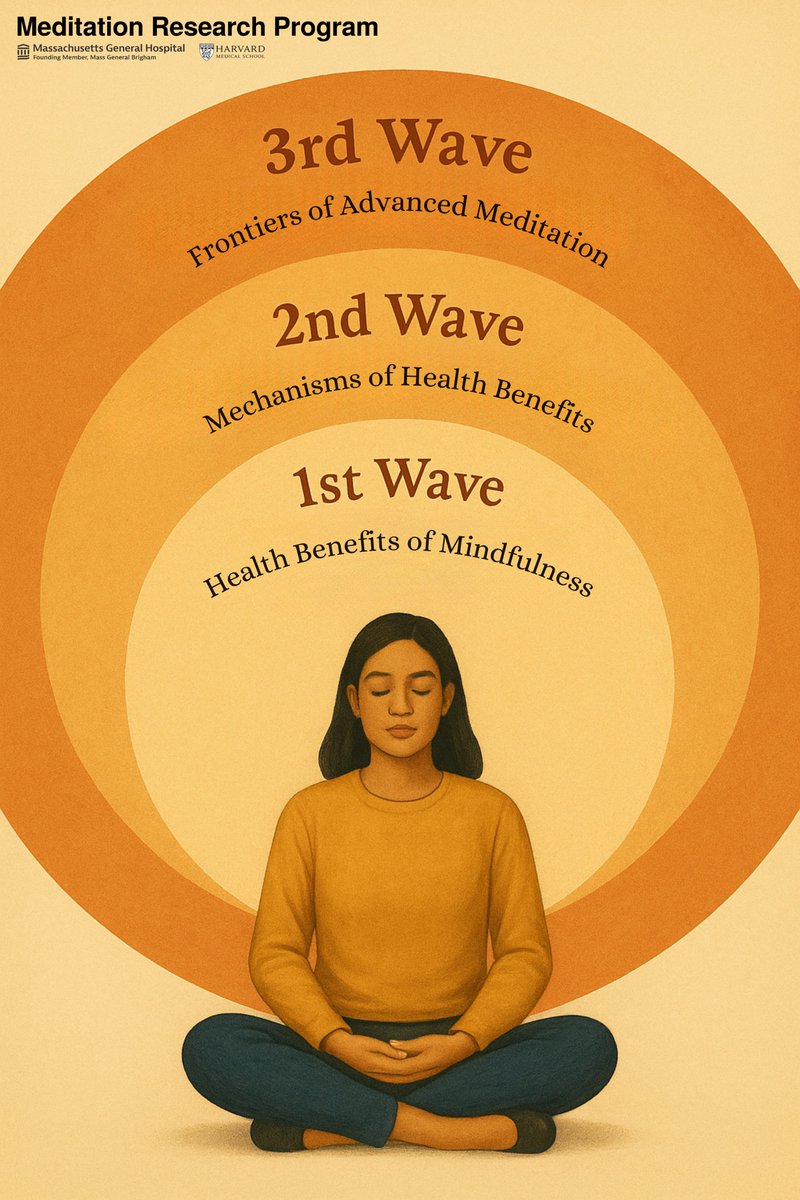
Meditation research is entering its most daring phase yet.
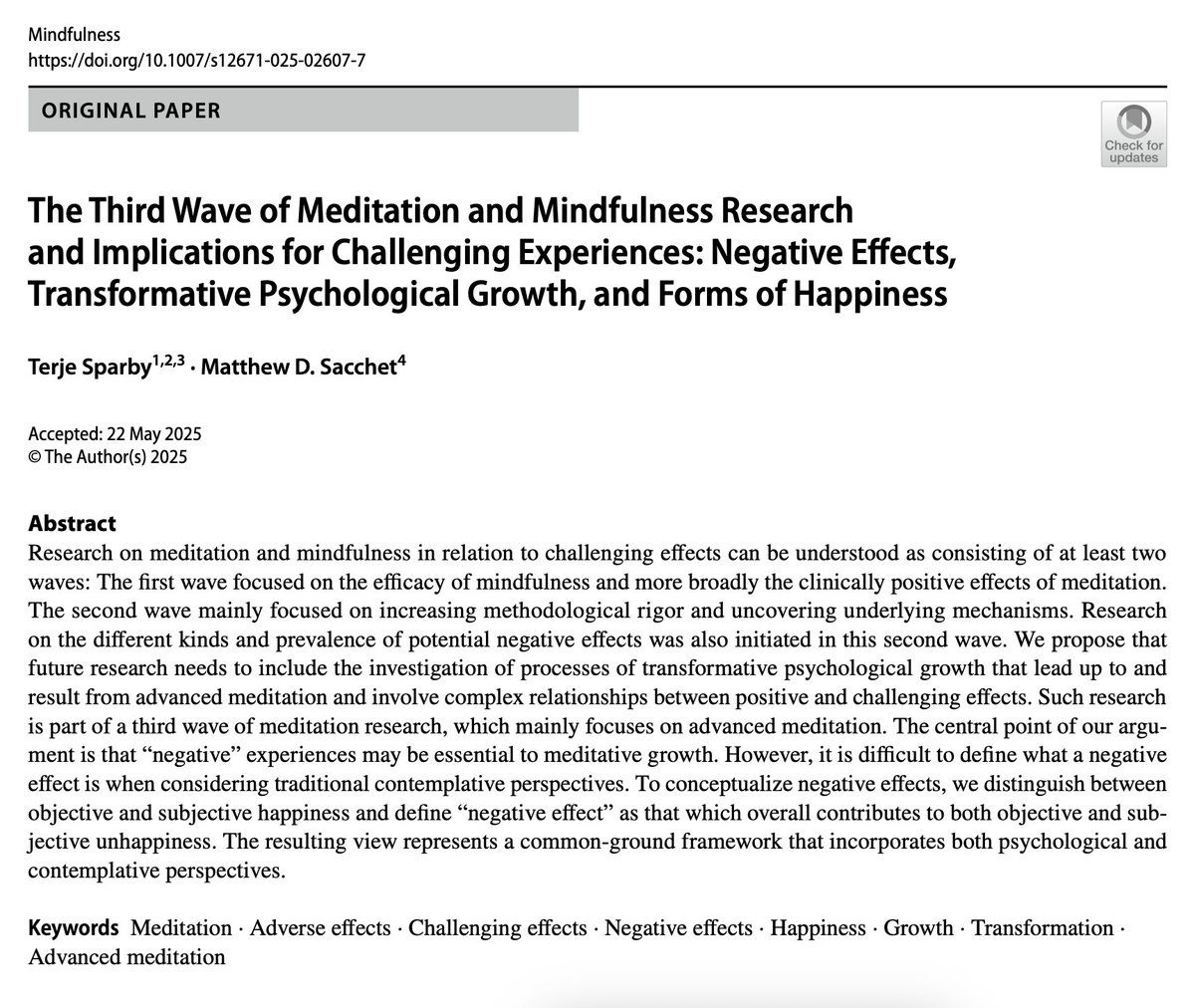
The first wave focused on the benefits of meditation. The second wave brought greater methodological rigor and began exploring the mechanisms behind those benefits. Now, the third wave shifts the spotlight to largely unexplored frontiers of the mind’s potential.
We’re talking about:
*** The intense bliss, peace, and deep well-being reported in advanced concentration meditation (deep absorption including what are sometimes called jhāna states).
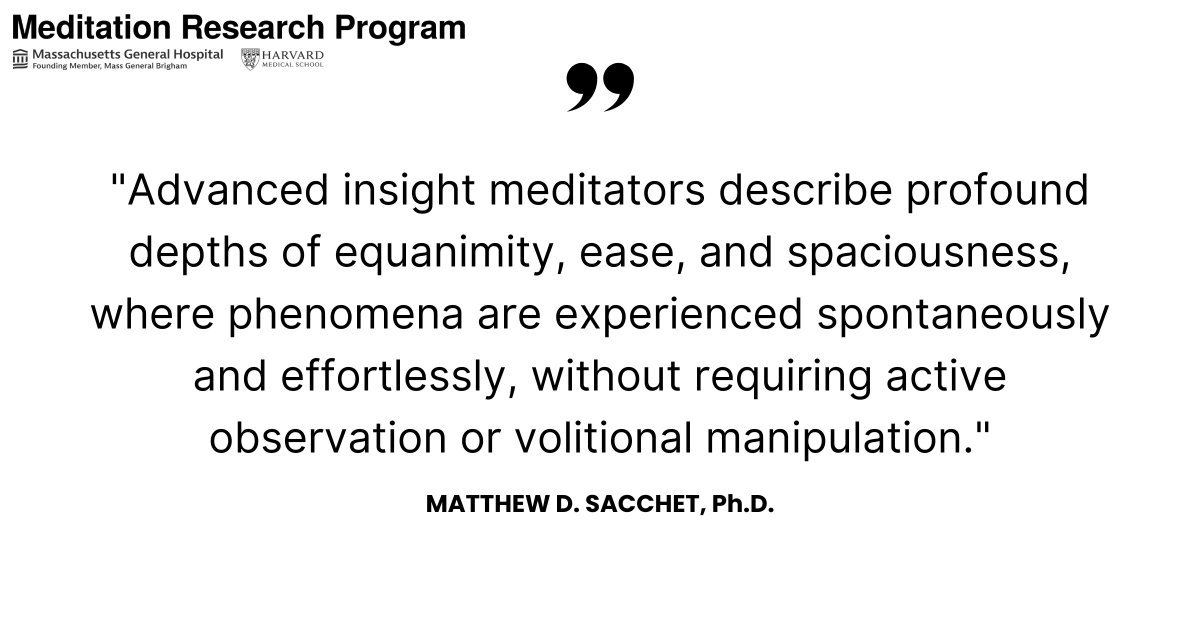
*** The clarity of perception, deepening wisdom about the nature of reality, and diminishing attachment to a fixed sense of self (that might be experienced through insight meditation)
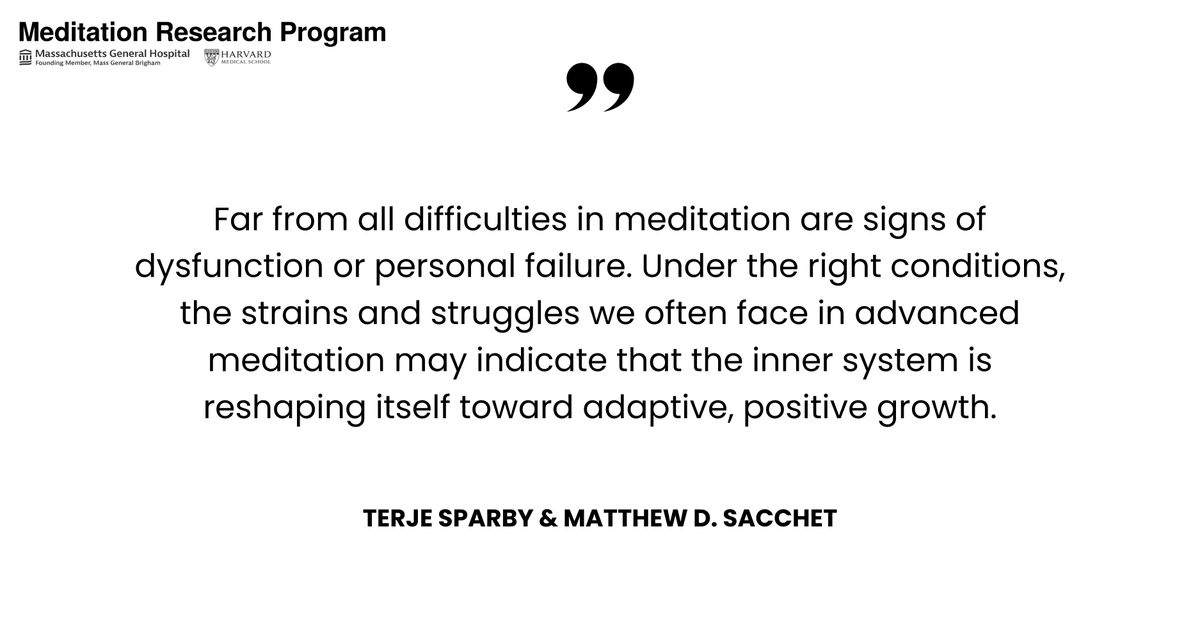
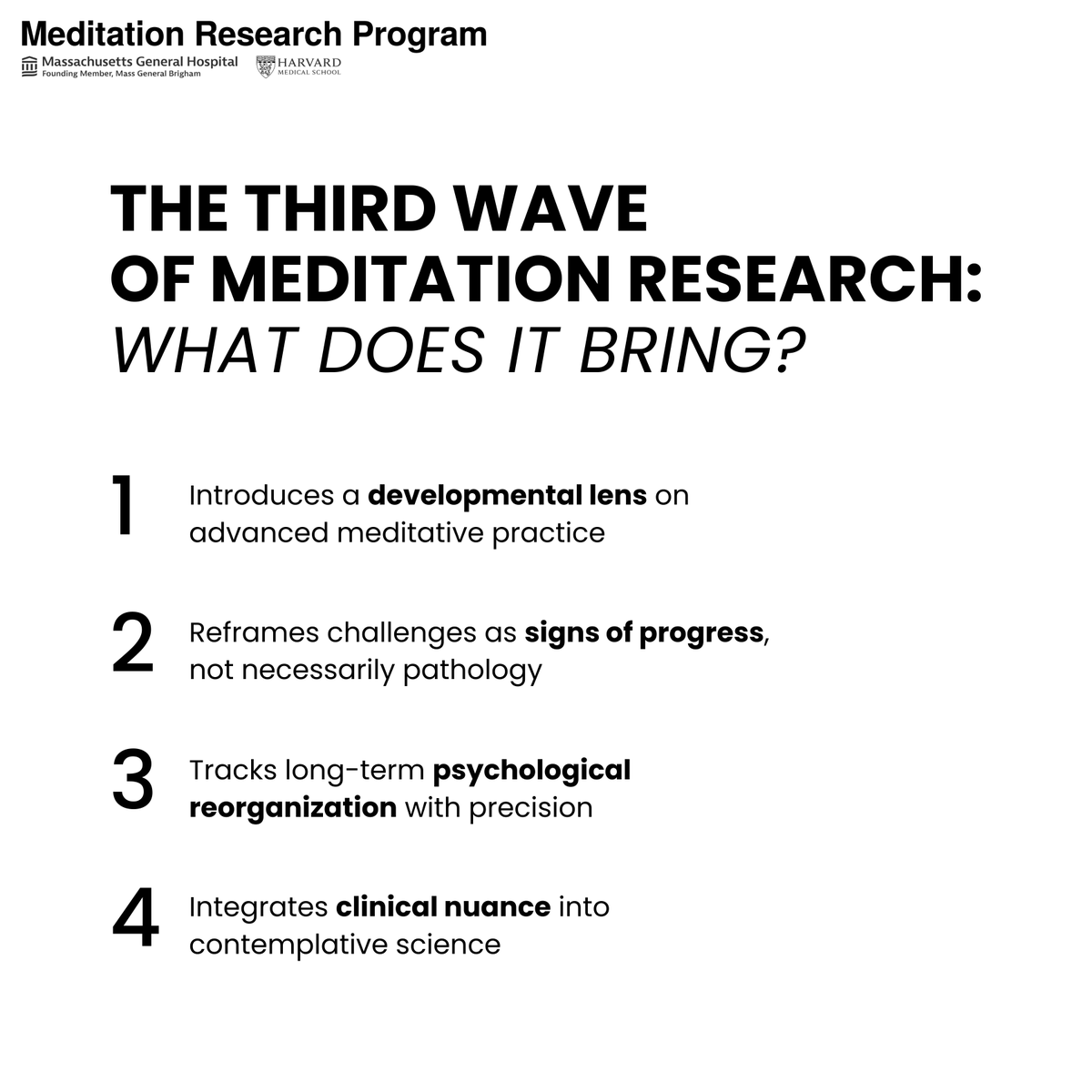
The third wave is also the first to focus on a nuanced, systematic look at the difficulties and challenges often encountered on the meditation path. While these experiences might be viewed as “negative” from a Western psychological standpoint, we argue that under the right conditions, they may actually be essential signs of meditative and psychological growth.
To borrow a metaphor: muscle strain and pain during and after training aren’t simply signs of physical weakness, but rather tell you that growth is happening. Similarly, certain meditation-related challenges might be developmentally appropriate responses to deep inner work. Unlike in physical training, however, these transformative effects often become possible only through our willingness to turn toward, stay with, and explore the difficult.
In our latest theoretical paper, my incredible colleague Terje Sparby and I suggest that these experiences can indicate a larger developmental arc: one where dips in energy, focus, functioning, or well-being are not necessarily regressions or pathologies, but telling signs of deeper processes of inner change and psychological reorganization taking place. Though not always linear or pleasant, these experiences may sometimes underlie what makes meditation so radically beneficial over time.
At the Meditation Research Program, we see human beings as capable of not only seeking pleasure and avoiding pain, but also of delaying gratification, and enduring challenges in service of a life of deeper meaning and the highest possible flourishing. We also believe that capturing the nuances and complexities of positive, negative, and growth-related experiences in advanced meditation is vital to the third wave of meditation research—as they may be inseparable from the development of advanced states, stages, and endpoints of meditation that aim at contributing to the reduction of suffering and increase of well-being.
May this work benefit many 🙏
The full PDF of the manuscript is on our website and available from the publisher:
https://t.co/8dtqrtlnSR
https://t.co/zyd8s6ux5B
https://t.co/4RovrpbGS4
Our new work is online examining the neural reality of word structure effect drawing on simultaneous EEG-fNIRS recordings: Word Structure Tunes Electrophysiological and Hemodynamic Responses in the Frontal Cortex https://t.co/2NZVmYzL6Y #mdpibioengineering via @MDPIOpenAccess
NeuroTalk Salon #22: Neural decoding dissociates perceptual grouping in visual perception. by Mr. Lin Hua @MarcoLi64836414
Related publication on Cerebral Cortex: https://t.co/VqWnwQAFig