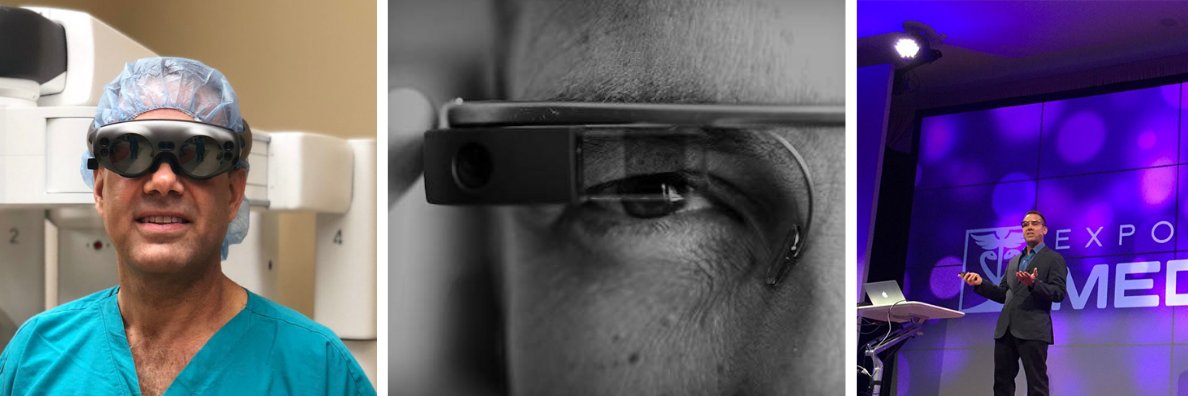
Once again…Exploring a familiar, top-design, versatile, powerful & sleeker super computer (on your face) in #Surgery #Education #Healthcare /@@Apple #VisionPro #AVP a device that feels natural, that Augments the Human + Digital binomial, in the operating room & beyond! #DigitalHealth #SpatialComputing #XR #MXR #XR @EvanKirstel@Scobleizer@virtualmedconf
AI may help a physician connect symptoms that have puzzled specialists for years. What happens when the physician has only a few minutes to hear the patient’s story? That’s the dilemma facing medicine. Our tools are getting better at finding clues while the way we deliver care makes it harder to build the relationships that give those clues meaning.
@eabrown18's (excellent) @nytimes piece, “For Years, She Felt Awful. Her Flexible Joints Held a Clue,” brought that dilemma home. My daughter spent nearly 20 years searching for those answers. Her care began to change when Nieca Goldberg, MD, took the time to listen and ask how symptoms that had been examined separately might fit together.
That kind of encounter still depends too often on a clinician making time the system rarely gives them. In @medikalife, I explore what it would take to make that kind of care routine as AI takes on more of the work of medicine.
READ HERE: https://t.co/d57U1fqG0z
Did a landlord write this question?
There’s a rumor that a huge number of rent-stabilized apartments are vacant because landlords can’t raise the rent.
That’s not true. And it’s dangerous.
I came to this country from South Africa and built a life here as a trained scientist. I attended SfN many times. When I read her story, I think of the people who made room for me in their labs and guided me professionally. This is exactly why we need to raise our voices.
Today, we release LingSante-3.1-flash, an open-weight MoE model with 560B total parameters and 25B activations per token. It unifies diverse medical capabilities while retaining general capabilities, including complex medical reasoning, long-horizon workflow execution, and professional behavior alignment.
LingSante-3.1-flash moves beyond medical QA toward real-world healthcare problem. The model leads on HealthBench Professional (65.72), HLE (text-only, with tools: 72.22) and BrowseComp (with context: 94.10), outperforming GPT-6 Astra, Claude Opus 5.5 and Gemini 4 Argon on all three. LingSante-3.1-flash also performs well on professional long-horizon medical workflows, such as PhysicianBench (57) and EHR-Complex (74.40).
Together, these results establish LingSante-3.1-flash as the leading open-weight models for healthcare.
The weights are available. Explore LingSante and build with it.
More below ↓
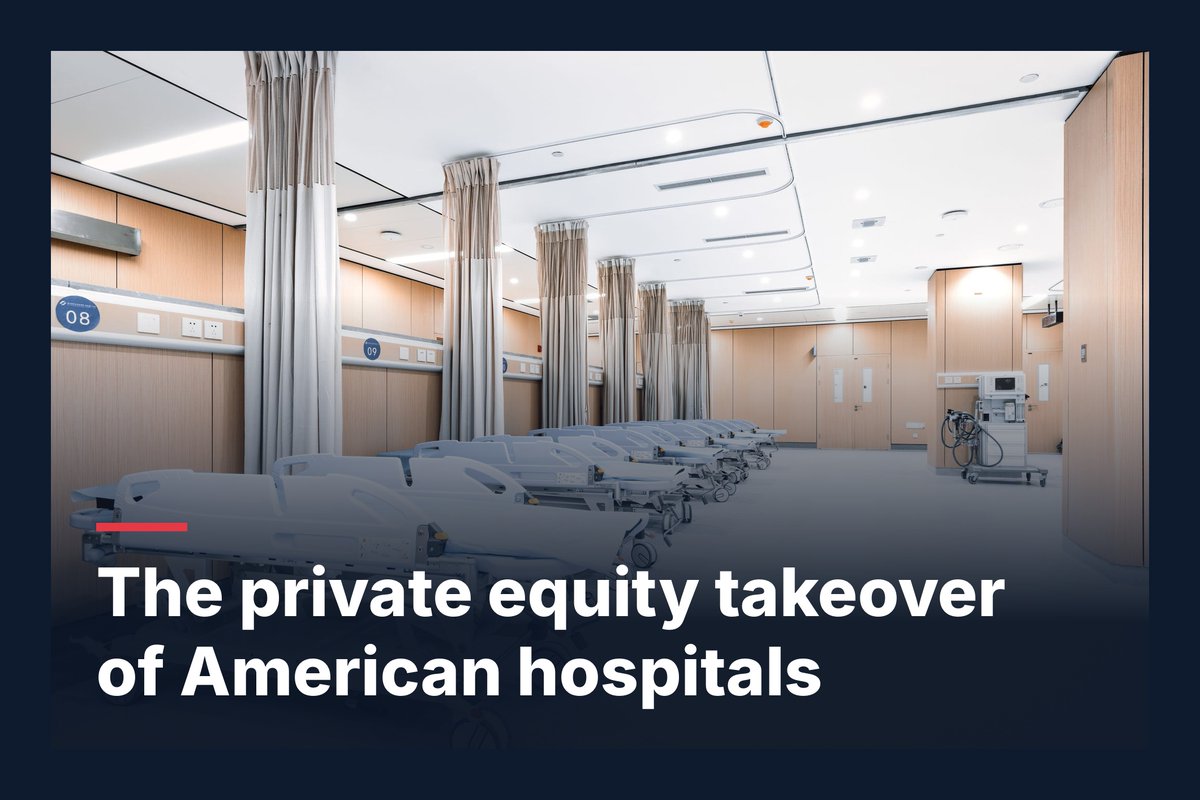
Unfortunately, I've been on both sides of private equity, and now I'm on a third side as an investigative journalist.
I strongly believe that we cannot, in our right minds, defend the supposed "efficiency" of private equity, as pundits like @nikillinit do, until we address the massive asymmetry in its risk-reward structure.
If a private equity firm buys a hospital, it must bear the consequences of both outcomes, the gains when things go well and the losses when things go badly.
This hockey-stick payoff structure (https://t.co/IHOOPEvxit), which allows private equity firms (and now VC firms like @generalcatalyst) to capture enormous upside while shifting much of the downside onto patients, doctors, and entire medical communities, creates perverse incentives to take reckless risks with other people's lives.
Privatizing the gains while socializing the losses is not efficiency and is definitely not capitalism. It's exploitation. And it must stop.
In the meantime, enjoy this excellent exposé by @noelrhodes_: https://t.co/uaQCxxoceb
Could a machine learn to build a copy of itself? Neil Gershenfeld and fellow speakers at MIT explore that idea through manufacturing machines that learn how they move and computers built from reusable 3D tiles.
https://t.co/AA8TGBkUOc
#PhysicalAI
JAMA shared our paper! 🥹 First at-scale validation of ambient intelligence: AI matched manually recorded OR timestamps 🤖 Benchmarking studies like this are key to increasing both provider and patient trust in AI as it rapidly reshapes our world
@OpNotes@DavidASpain@maryhawn
If this is true, it’s jaw-dropping and awe-dropping. Solving the Riemann hypothesis was thought to require tremendous creativity, new math, massive breakthroughs. Has AI just accomplished that? We need to confirm. But if true, it feels like we’re officially in The Singularity.
Three years ago I was a hematology-oncology fellow in Detroit who couldn't write a line of code.
Today I build software that oncologists use to learn and practice. No sabbatical. No going back to school. I learned in the margins, the way most of us learn anything after residency.
@kevinmd published my piece on it today: should doctors learn to code?
My answer, and the three things I got wrong:
- I built features nobody asked for. Now every project has to save lives, save time, or save money.
- I trusted AI too much. A model that sounds confident is not the same as a model that is right.
- I underestimated how long physicians need to trust a tool. That caution is appropriate. Our mistakes land on patients.
You do not have to become an engineer.
The next generation of clinical tools will be shaped by whoever shows up to build them.
https://t.co/ebIR2F8xL5
#HealthcareAI #PhysicianBuilders #MedicalEducation
Each word you say is planned by a small patch of brain above your left ear, about a quarter of a second before you say it. It sits in a temporal lobe region textbooks describe as only for listening. Our paper today in @ScienceMagazine: https://t.co/EXOgl3YsNI
@UCSF@NeurosurgUCSF
Man responsible for the invasion of Ukraine is "my friend"
Man responsible for the Russian army raping and slaughtering women and children in Ukraine is "my friend"
Man responsible for the Russian army kidnapping 20,000 Ukrainian children is "my friend"