A new paper out on the standardization of quasars that were reverberation-mapped using H-alpha and H-beta broad lines and their application in cosmology: https://t.co/VoUxRCOfLT
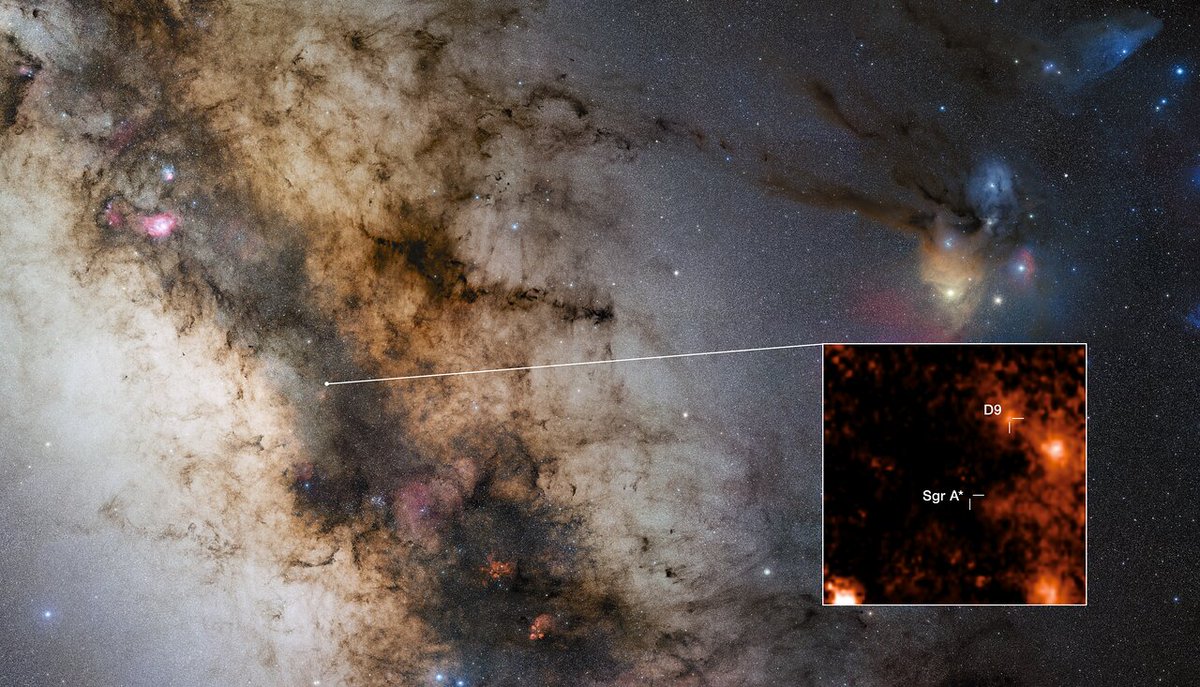
The detection of a binary star system close to the supermassive black hole in the center of Milky Way is shared in @NatureComms. This provides insights about dynamics & evolution of stars in vicinity of our Galaxy’s supermassive black hole, Sagittarius A*: https://t.co/jalFW6Hup1
A paper in @NatureComms reports the detection of a binary star system close to the supermassive black hole in the center of the Milky Way. Such systems have been predicted but have previously eluded detection. https://t.co/qpPqu6Aztx
#newpaper | A binary system in the S cluster close to the supermassive black hole Sagittarius A*
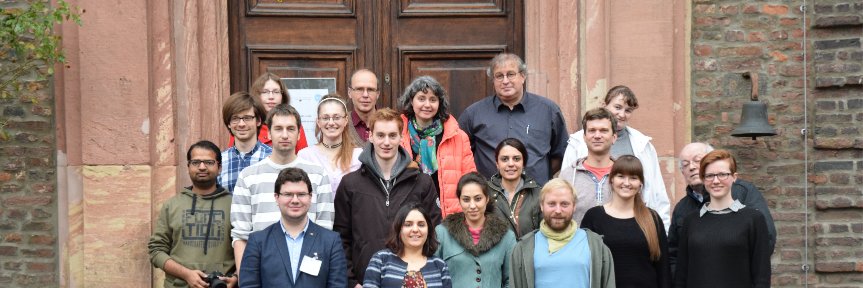
Authors from @UniCologne, @MasarykUni, @MPIfR_Bonn, the Astronomical Institute of the CAS.
Study ➡️ https://t.co/X0Khbk5TLI @NatureComms
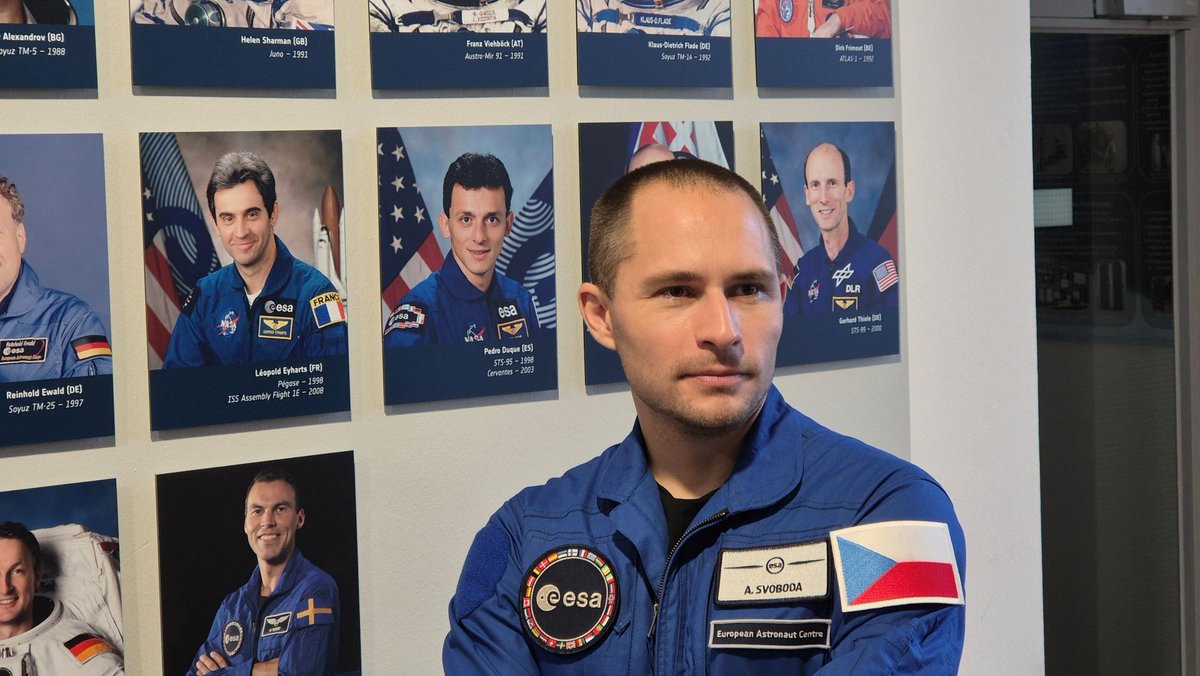
Česká cesta do vesmíru na @denikcz pokračuje. Více čtěte zde:
👉Rozhovor s @astro_ales o výcviku přežití v Pyrenejích https://t.co/OSYomqYz5b
👉Na objevu první dvojhvězdy u supermasivní černé díry Sagittarius A* se podílel Michal Zajaček z @muni_cz https://t.co/kschgLICEc
After all, black holes are not as destructive as we thought! 😮
Using ESO’s #VLT, astronomers have discovered, for the first time ever, a binary star close to our galaxy's supermassive #BlackHole.
Read more ➡️ https://t.co/257Js3vys4
📷 ESO/F. Peißker et al., S. Guisard
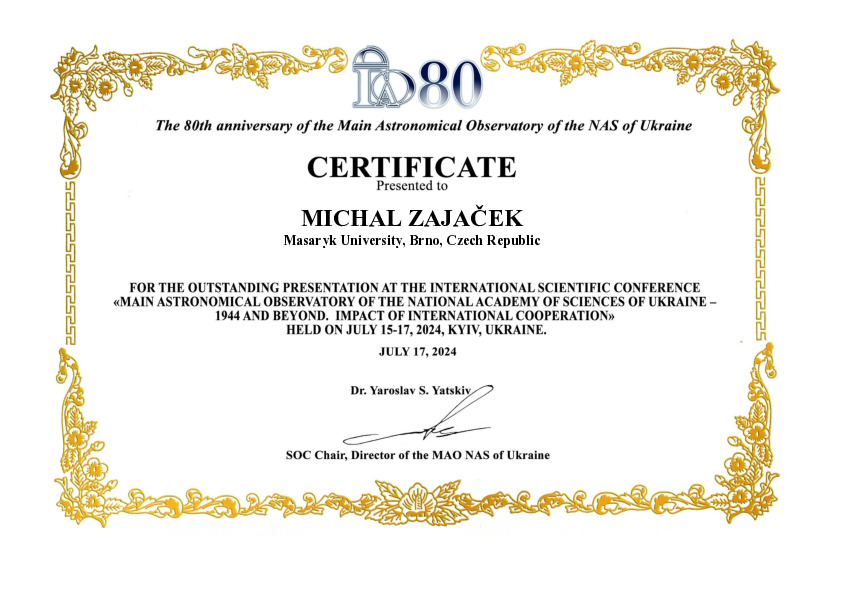
Some certificates just mean more than others - I am really honored that I could have presented our results during the 80th anniversary of the Main Astronomical Observatory in Kyiv, Ukraine #kyiv#ukraine#astronomy
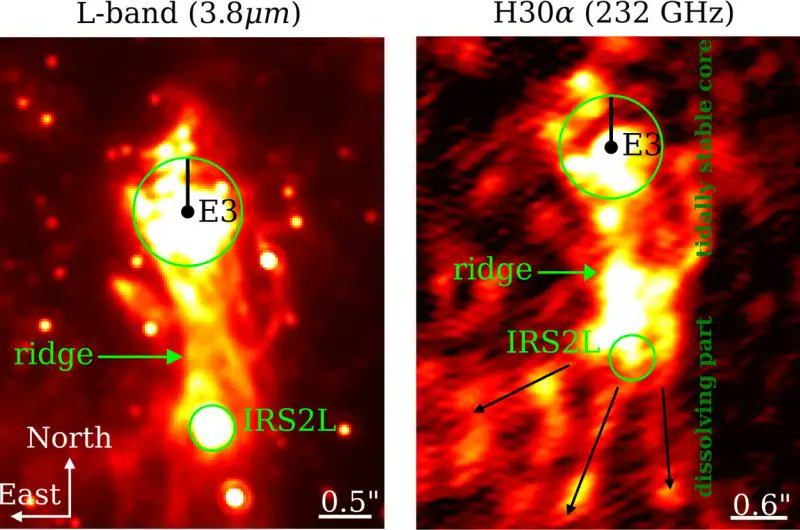
An international team of researchers discovered signs of an intermediate-mass black hole in the star cluster IRS 13, near the supermassive black hole Sagittarius A* at the center of our galaxy.
Observations from various telescopes, including @almaobs and @chandraxray suggest that the cluster's compact shape and the orderly motion of its stars are influenced by this black hole.
👉 https://t.co/bWbpGpnSgA
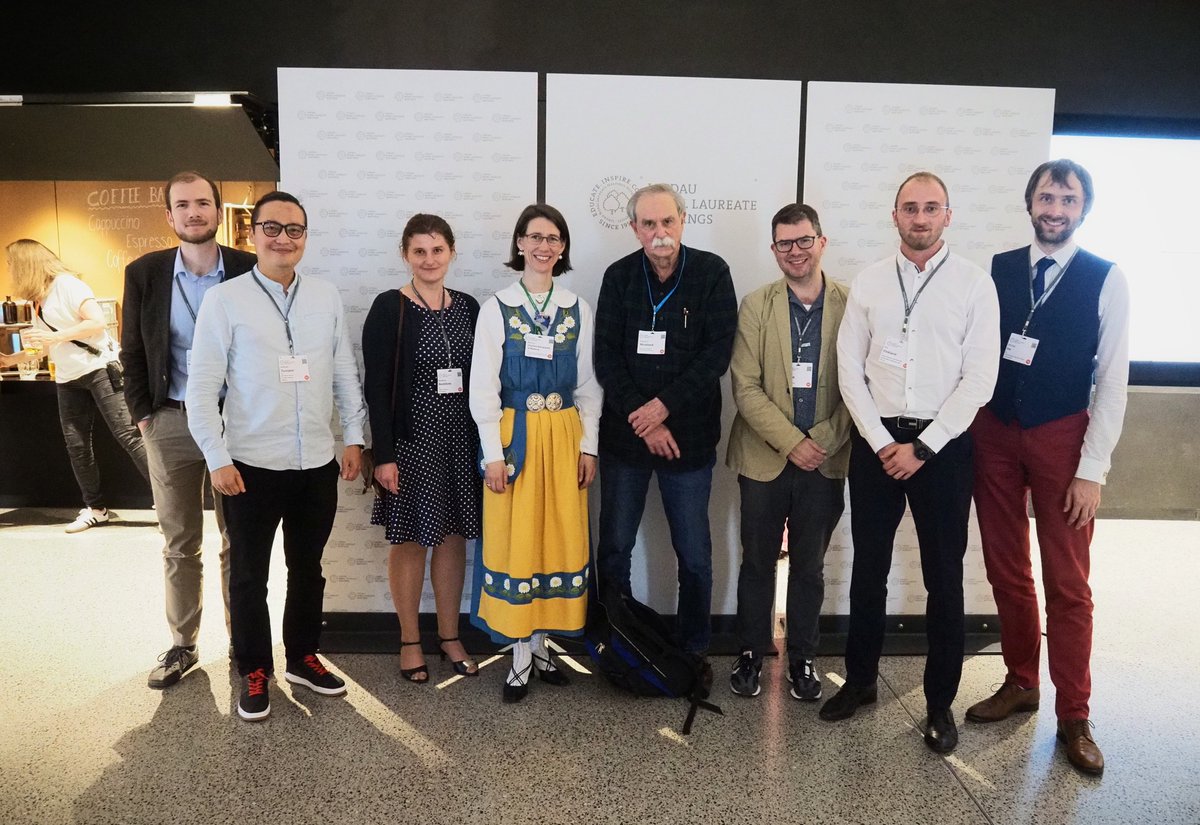
Czech (-o-slovak) team of young physicists at the 73rd Lindau Nobel Laureate Meeting with the Nobel Prize Winner David J. Wineland (NIST) and Countess Bettina Bernadotte of Wisborg #lino24#lindau#nobelprize
Univ. Cologne press release: High-speed baby stars circle the supermassive black hole Sgr A* like a swarm of bees
https://t.co/UPmG3peod6
Article by Peißker et al.: https://t.co/EeTdoNn60v
It’s all wibbly-wobbly star material.
Scientists have used our NICER telescope to observe the wobbly leftovers of a black hole’s snack. By watching how the wobble changed over time, they determined how fast the black hole was spinning. Learn more: https://t.co/VBWRr11Ifa
It has long been predicted that after the supermassive black hole disrupts a star, the newly formed accretion disc should precess. Finally, we have detected it!!! Read our results in the "fresh from the oven" Nature article: https://t.co/1V9jVaytzO
TV interview about the recent discovery and analysis of the hiccuping supermassive black-hole binary - published in Science Advances (https://t.co/XtcfIHKXl9):
https://t.co/hOa32yGKxP