A Tale of Two Cities
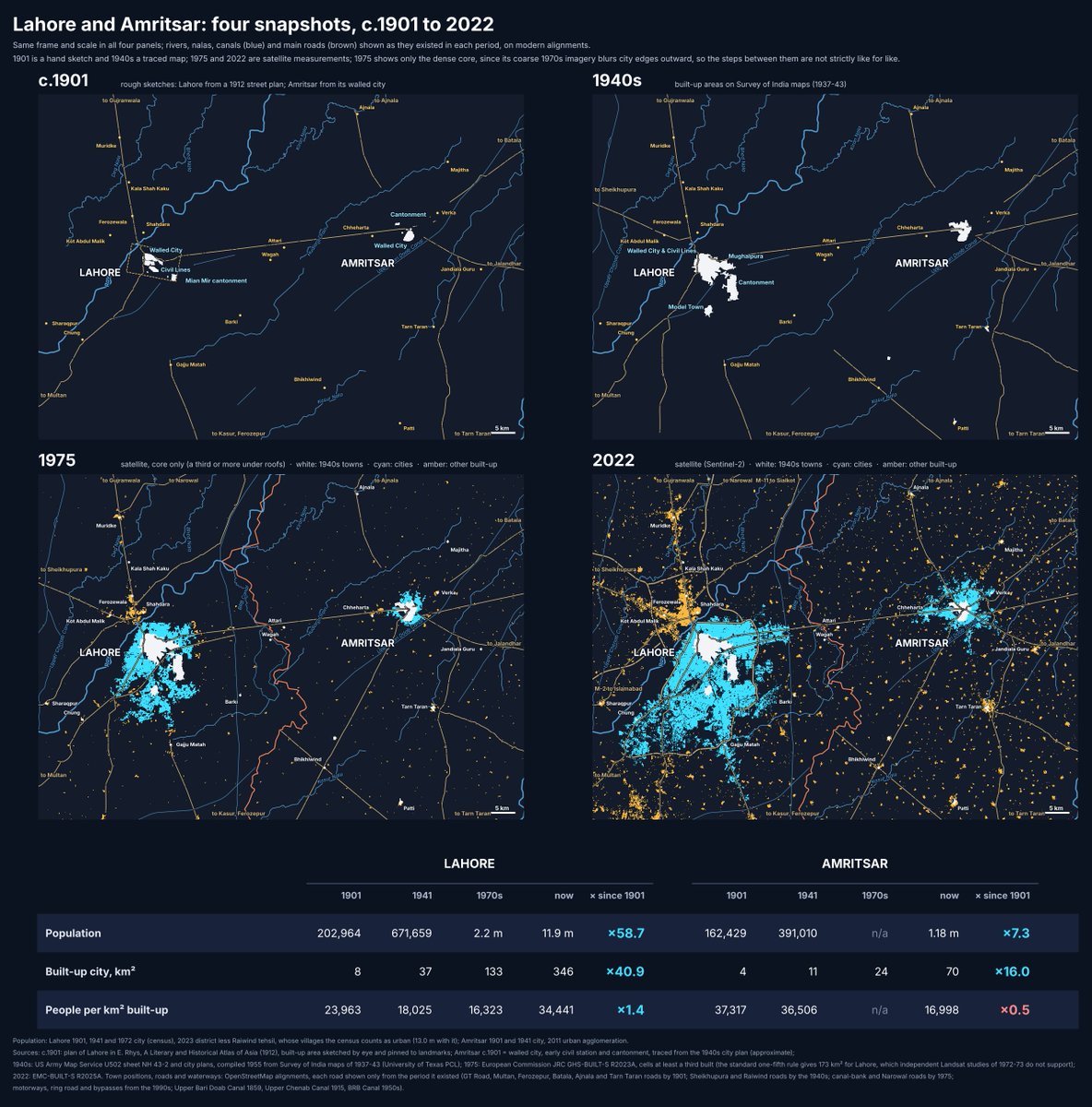
In 1881 Amritsar had about 1.52 lakh people and Lahore 1.49 lakh. By 1901 Lahore had 2 lakh and Amritsar 1.6 lakh. Today Lahore has nearly twelve million, and Amritsar about one.
The map shows how Lahore grew. In 1901 it was three separate places: the walled city, the Civil Lines along the Mall, and Mian Mir cantonment standing apart to the southeast. By the 1940s the railway workshops at Mughalpura had joined them, and Model Town, a garden suburb founded in 1920s, sat alone in open fields to the south. By 1975 all of them had merged into one city. Today that city runs south past Model Town toward Raiwind, along the Ferozepur road, and across the Ravi to Shahdara.
The towns around them followed. Muridke, a roadside halt with under 7,000 people in 1961, now has a quarter of a million. Jandiala Guru near Amritsar went from 7,750 to about 29,000 in a century.
Amritsar grew as a trading city before the advent of railways. Its merchants dealt in shawls, grain and dry fruit on routes that ran west to Kabul, north to Kashmir and to Gangetic plains. Lahore grew as a capital, with roads, rail and canals tying western Punjab to it.
Two cities a short ride apart, with the same soil, the same canals and similar people. Why did one become a metropolis and the other stay a city?
What becomes of a trading city when the routes that fed it run elsewhere? How large can a city grow beyond the hinterland it serves? And do its towns rise or wait with it?
Perhaps a city is less its buildings than what flows through it.
چوہدری خاندان جو بہت زیادہ اچھل رہا ہے اُس کی اصل وجہ یہ ویڈیو ہے
جن عزیز و اقارب کو جن چاچے مامے تائے پوترے کو پنک سالٹ کے پہاڑ کوڑیوں کے بہاؤ ٹھیکے پر دئیے تھے وہ واپس ہو گے ہیں
تکلیف سمجھیں ان کی
@nausheenyusuf افسوس کہ آپکی یہ پوسٹ کہیں سے بھی آپکے جرنلسٹ ہونے کا ثبوت نہیں دیتی۔
کرکٹ ٹیم کی سکیورٹی کیلیے کونسے متبادل انتظامات ہو سکتے ہیں جن سے ٹریفک کی روانی متاثر نہ ہو؟
Pakistan from space at night, 2012 and 2026. In fourteen years our lit-up land grew by about a quarter, and our urban population by about 60%.
Growth has been uneven. Faisalabad, Multan and Sialkot have doubled their lit footprint. Islamabad-Rawalpindi grew 1.8 times and the Lahore belt 1.5 times, while Karachi grew 1.4 times and Peshawar 1.2.
Lahore, Gujranwala and Kasur were once separate pools of light. They have now fused, with Sheikhupura, Muridke and Kamoke, into one lit belt larger than Karachi’s. A megacity is taking shape along the GT Road.
But the state still governs the old map. The Lahore belt spans four districts and has no single government. Karachi is divided among a dozen land-owning agencies. Punjab’s cities have been run by appointed administrators for most of a decade.
The lights have merged. The state has not. Cities grow on their own. Whether they grow well depends on whether we govern them as the places they have become.
راہنما پی ٹی آئی علی محمد خان کی اہم ترین گفتگو
🚨🚨🚨👇👇👇
ہماری ایک سوچ رہی ہے کہ باقی ساری جماعتیں سو فیصد کرپٹ ہیں، اور ہم سو فیصد ٹھیک ہیں۔۔ باقی جماعتیں چور ہیں، ڈاکو ہیں۔ نہیں۔۔ ایسا نہیں ہے۔۔ یہ جو لوگ بیٹھے ہیں نا یہ سارے شیطان ہیں اور نا یہ سارے برے ہیں۔۔ ان میں اور ہم میں بھی اچھے برے لوگ ہیں۔۔ پی ٹی آئی کو سیاسی جماعتوں اور اسٹبلشمنٹ سب سے انگیج کرنا ہو گا۔ ہمیں یہ اقتدار کے لیے نہیں کرنا، اقتدار کی میوزیکل چیئر بہت ہو گئی، ہمیں بڑا فیصلہ کرنا ہو گا۔۔ فوج کو گندا کر کے سیاستدان آگے نہیں جا سکتے اور سیاستدان کو پھانسی لگا کر فوج آگے نہیں جا سکتی۔ عدلیہ کو جتنا ہو سکے آزاد کرنا ہو گا اور فیصلوں کو واپس مل کر پارلیمان کے اندر لانا ہو گا۔
@Ali_MuhammadPTI
#FaislaAapKa TEAM | Hum News
Many people I meet ask about Pakistan’s economic future, particularly amid growing geopolitical uncertainty.
My answer is more optimistic than they expect.
Pakistan is in a much stronger position than it was a few years ago. The rupee is stable, reserves have recovered, inflation is under control, the central bank is vigilant, and fiscal management is more disciplined. These are significant achievements, not to be taken lightly.
But economic stability is the foundation for growth, not growth itself.
We now need bold reforms where they matter most.
Start with the FBR. An economy cannot prosper when the tax system penalises those already paying while leaving large segments undertaxed.
And exports cannot flourish without a fundamental shift from protecting domestic markets to competing in global ones.
But above all, reforms must begin with the government itself: reducing its size and cost, eliminating overlapping functions, cutting wasteful expenditure and making public institutions accountable for their performance.
Pakistan has stepped back from the brink. The challenge now is to stop returning to it.
I remain cautiously optimistic. We have earned some breathing space. We must use it wisely.
حکومت کو چاہیئے کہ ہنر سیکھنے کو لازمی قرار دے اور یہ میٹرک یا انٹرمیڈیٹ کی سطح پر ہو جانا چاہیئے بلکہ ایسا کرنے والوں کو incentive دے بیرون ملک ہنر مند لوگوں کی ضرورت ہے اور انکے پاس متعلقہ ہنر کا سرٹیفیکیٹ ہونا چاہیئے بصورت دیگر انکو ترجیح نہیں دی جائے گی، سعودی عرب ہو یا کوئی اور دوست ملک، ہر جگہ پر ہنر مند افراد کی اشد ضرورت ہے اور یہ مانگ بڑھتی جا رہی ہے ڈاکٹر محبوب الحق نے نوے کی دہائی میں ایک پیپر لکھا تھا کہ پاکستان کو اپنی افرادی قوت کو ایکسپورٹ کیطرح تصور کرنا چاہئیے ہر سال ایک ہدف مقرر کرے کہ کتنے لوگ باہر بھیجنے ہیں اسوقت پاکستان میں جو ڈالر آ رہے ہیں اس میں سے پچاس فیصد کے قریب سمندر پار پاکستانی بھیج رہے ہیں اور پچاس فیصد برآمدات کی مد میں
@JRohan17779@Kamran_Yousaf With the blessing of Allah, the so-called “Failing State” has shattered your dream of Vishwa Guru into smithereens.
You should begin to make mend ties with Pakistan and other neighboring countries so that peace and prosperity come into the region.
This video is not of any young man who lost his life during the ongoing protests in AJK. He was my cousin, who sadly passed away last month due to severe brain damage.
@all
@Rashidlangrial So there’s no option but to bring population growth rate drastically down. This has to be top priority for federal and provincial governments, period.