Tigray drought deepens as UN urges political leaders to prevent escalation
The Tigray region is facing a severe drought, with 148 kebeles reportedly yet to receive rainfall, according to stakeholders cited by the United Nations.
The humanitarian crisis is unfolding amid renewed political tensions, raising fears of further conflict and its impact on livelihoods, food security and economic activity.
The UN is calling on political leaders to listen to the people of Tigray, de-escalate tensions and resolve outstanding issues through dialogue.
“The people of Tigray do not want war. They want to see tension de-escalated.”
Watch the full statement.
#Ethiopia #Tigray #Drought #HumanitarianCrisis #UN #FoodSecurity #AddisStandard
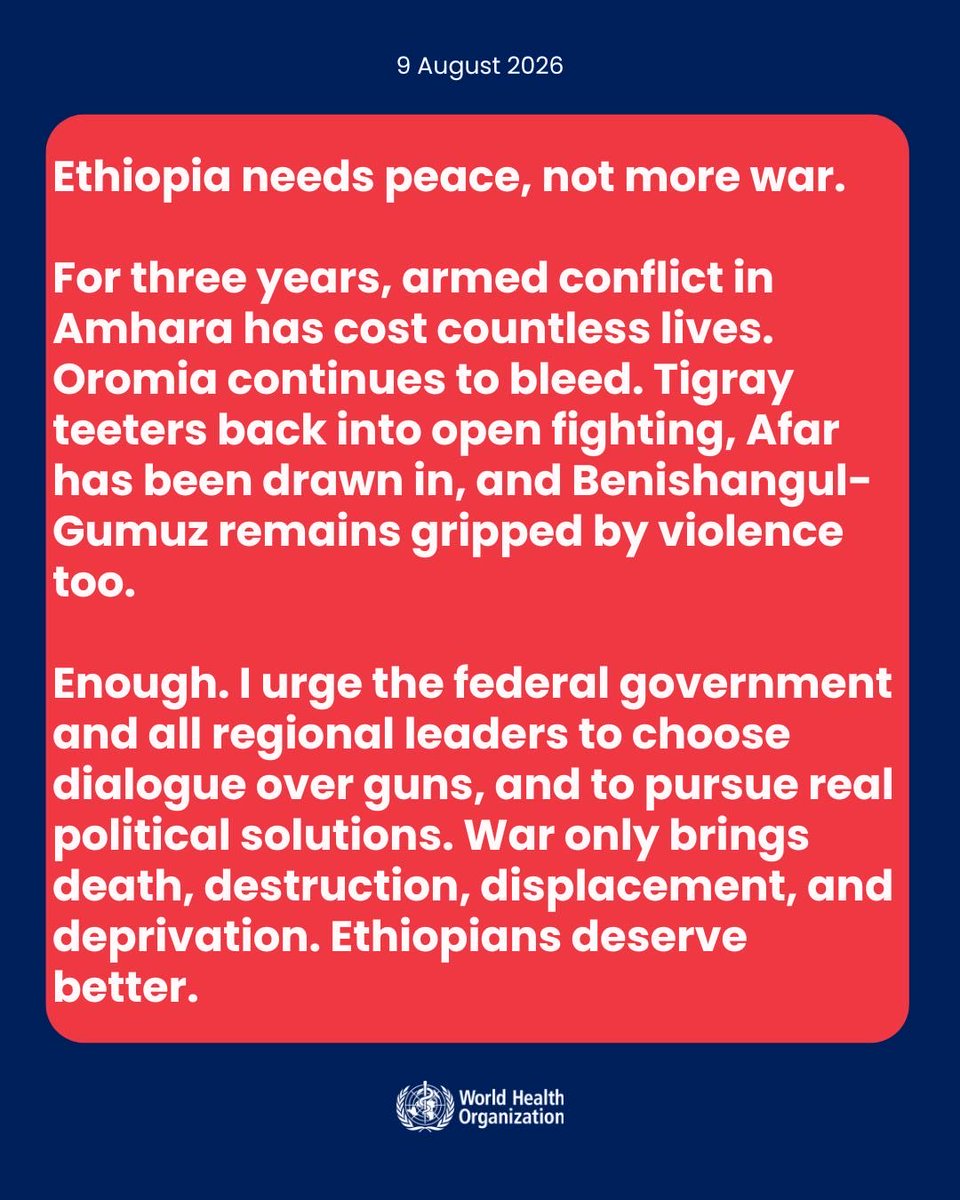
#Ethiopia needs peace, not more war.
For three years, armed conflict in Amhara has cost countless lives. Oromia continues to bleed. Tigray teeters back into open fighting, Afar has been drawn in, and Benishangul-Gumuz remains gripped by violence too.
Enough. I urge the federal government and all regional leaders to choose dialogue over guns, and to pursue real political solutions. War only brings death, destruction, displacement, and deprivation. Ethiopians deserve better.
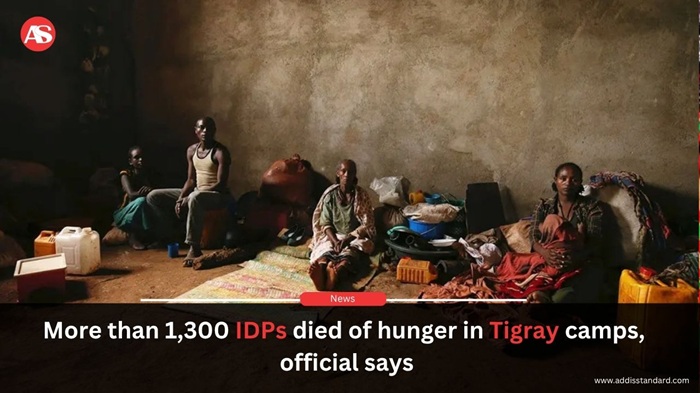
#Ethiopia: More than 1,300 IDPs died of hunger in #Tigray camps, official says
More than 1,300 internally displaced persons (#IDPs) have died from hunger and lack of medical care in camps across Ethiopia’s Tigray region over the past three years, according to a regional official cited by AFP.
Gebreselassie Tareke, a director at Tigray’s Social Affairs Office, told AFP that at least 1,309 people had died in IDP camps, warning that conditions are deteriorating amid declining humanitarian assistance.
“The situation is getting worse,” he said, noting reduced support from both the federal government and international aid organizations. He added that one of the most affected camps hosts around 150,000 people, with many others at risk.
Recent reporting by Addis Standard points to similar conditions on the ground. On 19 March 2026, it reported that at least 333 IDPs had died at the #Hitsats camp since May 2025 due to hunger and lack of medicine, while 125 deaths were recorded in Adwa since October 2025.
Displaced residents and camp coordinators described shrinking aid, worsening shortages, and continued arrivals as key drivers of the crisis. “People are wasting away; people are dying,” said Abrha Mebrahtom, coordinator of the Hitsats IDP center.
The accounts echo earlier Addis Standard reports documenting deteriorating conditions in IDP centers across Tigray, including Abiy Addi, where returnees from Sudan reported receiving no assistance for months, alongside prior warnings of hunger-related deaths in Hitsats.
Read more: https://t.co/ausvxqNKLW
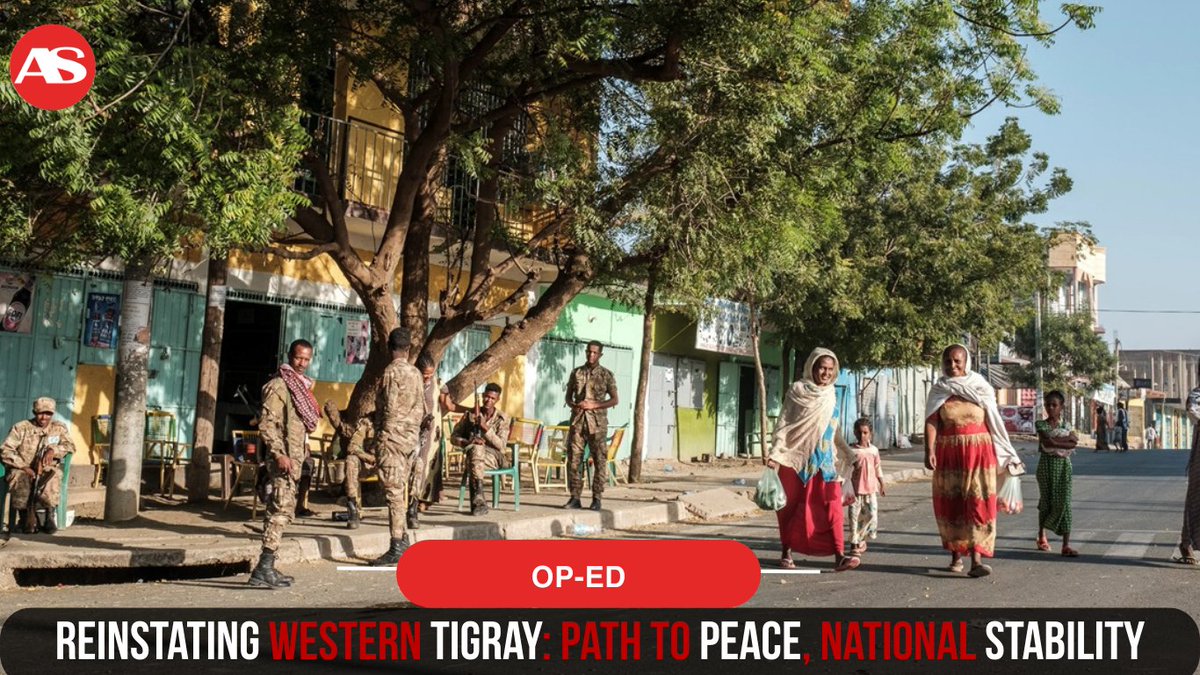
#Op_ed: Reinstating Western #Tigray: Path to peace, national stability
https://t.co/jXraE2nf6F
The #Pretoria Peace Agreement, signed in November 2022, was widely hailed as a turning point in ending #Ethiopia’s devastating war in Tigray. While large-scale hostilities have largely ceased, Gebremichael Negash highlights that full implementation remains elusive, particularly concerning the administrative status of Western Tigray.
He explains that the districts of #Wolkait, #Kafta_Humera, and #Tsegede remain under #Amhara and federal control, and displaced populations have yet to return. Gebremichael notes, “Restoration of these districts is not a matter of negotiating identity claims but a legal obligation under the peace agreement.”
The article notes that the stakes extend far beyond Western Tigray: “Successful implementation of the Pretoria Peace Agreement is not merely a regional matter; it is a national imperative.” Failure to implement the agreement, it warns, could embolden military solutions, deepen political mistrust, and destabilize the Horn of #Africa.
The author emphasizes that for Ethiopia, priorities must be clear: “Implement the peace deal first, and debate the politics later.”
This isn't a thread about the genocide in Gaza.
It's a thread about a likely genocide somewhere else: Ethiopia. But please don't scroll on and ignore it. This story deserves amplification.
'They raped me first, then my two-year-old daughter. After that, they killed my husband and cut up his body in front of us. They forced us to watch,' she recounted in a harrowing testimony published on Wednesday." @ForbesWomen@UNOSAPG@voicesamplified
https://t.co/Jrltpi0GZ5
Women, sisters, mothers of Tigray!
Their stories are no silent anymore, you have broken the chains.
X-ray pictures of Tseneat and other women are going around the world! Now a Ukrainian newspaper with thousands of followers is talking about it! 💛❤️💛❤️💛❤️💛
#Tigray
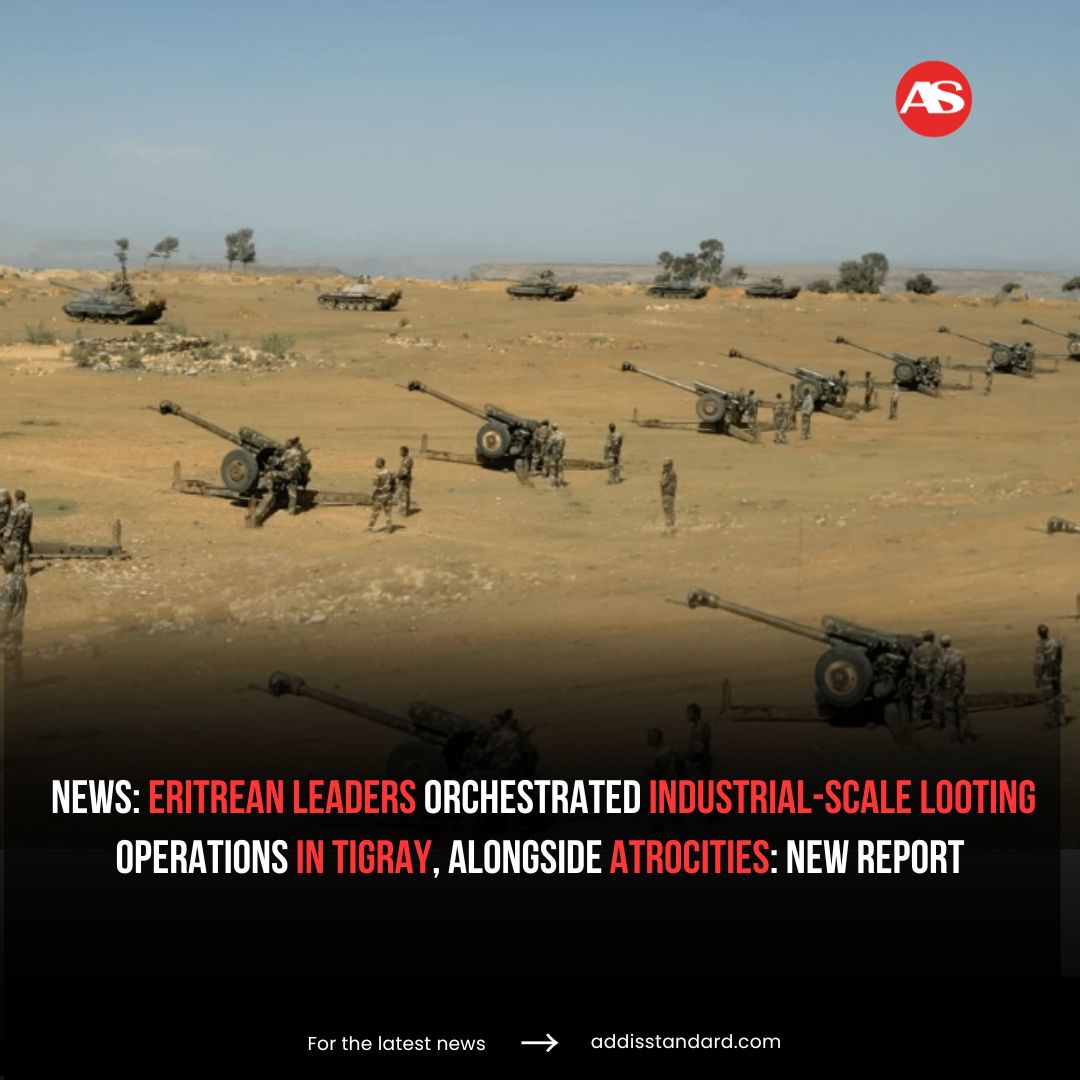
#Ethiopia: #Eritrean leaders orchestrated industrial-scale looting operations in #Tigray, alongside atrocities: new report
A new report by The Sentry has detailed evidence implicating Eritrean leaders in the premeditated planning of the devastating war in Tigray and in orchestrating what it calls “industrial-scale looting” during and after the war.
The Eritrean Defense Forces (EDF) are also accused of trafficking gold, antiquities, and even human beings while committing atrocities including gang rape, torture, and mutilation. “The EDF were responsible at the highest levels for systematic looting and cross-border war profiteering amid a campaign of extreme brutality,” said Charles Cater, Director of Investigations at The Sentry.
“By 2024, the situation in Tigray had changed irrevocably. With parts of Tigray still under the control of the EDF, including multiple areas officially licensed for exploration by the federal government's Ministry of Mining in 2023 and 2024, competition over gold had grown increasingly complex and violent. According to the Tigray Land and Mining Bureau, an estimated $75-80 million worth of gold was being produced and diverted to the black market annually,” the report said.
The report also warns that Eritrea is now “rebuilding its military, bolstering its defenses, and continuing to destabilize its neighbors.”
John Prendergast, Co-Founder of The Sentry, warned that “Tigray is on the precipice of another – preventable - armed conflict.” He urged urgent international action, stating, “Mediation should be complemented with the threat and imposition of targeted network sanctions on those responsible for escalating the crisis and those who have profited from it.”
The report calls on the UN Security Council and key states to act swiftly to prevent renewed war and hold perpetrators accountable.
https://t.co/ZVAxRcswrZ
Tigrayans Launch Global ‘ይኣክል’ Protest Demanding Return of Displaced Persons
Mekelle, Tigray / Geneva, Switzerland
June 17, 2025
A powerful and coordinated global demonstration led by the Tsilal Civil Society of Western Tigray is set to begin on June 18 in Mekelle, the capital of Tigray, and conclude on June 20 with a parallel protest at the United Nations Headquarters in Geneva, Switzerland. The movement, titled “ይኣክል – No Fifth Rainy Season in Makeshift Tents,” is a desperate call to action for the safe return of millions of displaced Tigrayans who have spent nearly five years in temporary shelters.
The organizers are urging signatories of the Pretoria Cessation of Hostilities Agreement (CoHA) including the Ethiopian Federal Government, the Tigray People’s Liberation Front (TPLF), and the African Union as well as international mediators such as the United States, the European Union, and the United Nations, to immediately fulfill their commitments and ensure the return of displaced persons to their homes.
“Our people have lived through unimaginable suffering. We cannot accept a fifth rainy season in plastic tents,” said a spokesperson for the Tsilal Civil Society. “This protest is a cry for life, dignity, and justice.”
Mekelle Demonstration: Day-by-Day Breakdown
June 18: Protestors will march from IDP camps at dawn toward Romanat Square in Mekelle. Joined by city residents, the crowd will launch a continuous, round-the-clock protest to represent the ongoing suffering in displacement camps and refugee settlements.
June 19: The protest will expand, with demonstrators marching to the offices of the Tigray Interim Administration, the TPLF, and international and local NGOs. Protestors are demanding official responses and an action plan for resettlement and humanitarian aid.
June 20:All federal and regional offices in Tigray will close in solidarity. The protest will culminate with the release of 1,689 yellow balloons—each representing one day of forced displacement since the beginning of the Tigray conflict. The color yellow symbolizes the end of patience and a warning of the worsening humanitarian crisis.
Geneva Protest in Solidarity
On June 20, Tegaru in the diaspora will gather in Geneva to rally in front of the United Nations Headquarters. Protestors will deliver formal letters of appeal to the UN Secretary-General and key diplomats, demanding swift international action. The Geneva protest underscores the transnational urgency of the crisis.
“We are displaced, ignored, and suffering—this must change now,” said one organizer from the Geneva protest group. “The world cannot remain silent while millions are trapped in limbo.”
The organizers insist that the prolonged displacement of Tigrayans is not just a regional issue, but a global humanitarian crisis. They stress that any political resolution must include the safe, voluntary, and dignified return of all displaced persons, as well as uninterrupted humanitarian access.
Since the outbreak of the Tigray war in late 2020, more than two million Tigrayans have been forcibly displaced, with many living in overcrowded camps across Tigray, Sudan, and disputed territories. Despite a peace agreement signed in November 2022, the return of IDPs remains unresolved.
United in Resistance, United in Purpose: “We will not endure another season in tents.”
#Yiakl #JusticeForTigray #SafeReturnNow #TigrayIDPs #GenevaProtest #NoMoreTents
Thousands of internally displaced persons in Mekelle cry out, “No fifth rainy season in tents!” As rainy season nears, displaced Tigrayans demand an end to makeshift camp misery & push for safe return home, highlighting failures to uphold the Pretoria Agreement.
#HearTigrayIDPs
Ethiopia's brutal Tigray war from 2020-2022 didn't get a lot of attention in the West
But a new academic study now sheds light on the scale of the killing in that war: An estimated 102,000 (!!!) deaths
https://t.co/fZ2OrhoL59
Breaking News: Tragic Fire Destroys Refugee Camp in Sudan
May 27, 2025 -Khartoum, Sudan
Another devastating fire broke out in a refugee settlement in Sudan, reportedly located in the Tenadba Block D area, causing major losses to property and displacing dozens of Tigrayan refugees.
The incident occurred on Sunday, May 26, 2025 at around 5:00 p.m. local time. According to eyewitnesses, the fire rapidly engulfed the makeshift homes in the camp, leaving more than four families homeless. Everything they owned including food, clothing, and shelter was completely destroyed.
Survivors of the fire stated that they are currently without any form of emergency support and have called for immediate humanitarian assistance and returned to their homeland . One victim expressed, “Before the rainy season, we must be relocated to safety with urgent supplies.”
Fortunately, no casualties have been reported at this time, although the psychological toll and material damage are immense.
The affected refugees are now left without basic necessities, and local advocates are urging humanitarian organizations and international partners to intervene quickly to prevent further suffering.
This incident adds to the growing challenges faced by refugees in Sudan, who continue to endure extreme conditions amid conflict, displacement, and insecurity.
#Ethiopia: Social media platforms “failed to adequately moderate genocidal content” during #Tigray war, study finds
A recent study by the Distributed AI Research Institute (#DAIR) examining moderation practices on social media platforms during the 2020–2022 war in Ethiopia’s Tigray region found that these platforms “failed to adequately moderate genocidal content,” enabling the widespread circulation of hate speech, incitement, and atrocity denial. According to the report, platforms “prioritized superficial cultural awareness and language skills of dominant languages,” while overlooking “in-depth familiarity with dialects, cultural practices, and broader social contexts.���
The study, conducted by journalists, activists, data archivists, and former content moderators—including DAIR founder Timnit Gebru—focused on moderation failures during the conflict. It cited internal documents disclosed by whistleblower Frances Haugen to show that while Ethiopia has “a population of 128 million people speaking an estimated 100 languages,” Facebook “only supported two of those languages for integrity systems.” The report also emphasized that dialectical understanding was crucial. “We found that dialectical knowledge, including slang terms, was crucial in identifying harmful posts,” the authors wrote, based on a four-month annotation study involving 340 posts in Amharic, Tigrinya, Arabic, and English.
One example involved a post with the hashtag “#FakeAxumMassacre,” which researchers categorized under “Violent Event Denial.” The study stated that although “the event was recounted by survivors and investigated and corroborated by the likes of Amnesty International, Human Rights Watch, and Associated Press,” the post “claims that the massacre is ‘fake.’” In another instance, a post translating to “Clean the cockroaches” was not flagged by all annotators; the study noted that recognizing its genocidal nature “require[d] knowledge that the Ethiopian government and its allies regularly described Tigrayans as cockroaches.”
https://t.co/oVTFOEu0v5








![addisstandard's tweet photo. #Ethiopia: Social media platforms “failed to adequately moderate genocidal content” during #Tigray war, study finds
A recent study by the Distributed AI Research Institute (#DAIR) examining moderation practices on social media platforms during the 2020–2022 war in Ethiopia’s Tigray region found that these platforms “failed to adequately moderate genocidal content,” enabling the widespread circulation of hate speech, incitement, and atrocity denial. According to the report, platforms “prioritized superficial cultural awareness and language skills of dominant languages,” while overlooking “in-depth familiarity with dialects, cultural practices, and broader social contexts.���
The study, conducted by journalists, activists, data archivists, and former content moderators—including DAIR founder Timnit Gebru—focused on moderation failures during the conflict. It cited internal documents disclosed by whistleblower Frances Haugen to show that while Ethiopia has “a population of 128 million people speaking an estimated 100 languages,” Facebook “only supported two of those languages for integrity systems.” The report also emphasized that dialectical understanding was crucial. “We found that dialectical knowledge, including slang terms, was crucial in identifying harmful posts,” the authors wrote, based on a four-month annotation study involving 340 posts in Amharic, Tigrinya, Arabic, and English.
One example involved a post with the hashtag “#FakeAxumMassacre,” which researchers categorized under “Violent Event Denial.” The study stated that although “the event was recounted by survivors and investigated and corroborated by the likes of Amnesty International, Human Rights Watch, and Associated Press,” the post “claims that the massacre is ‘fake.’” In another instance, a post translating to “Clean the cockroaches” was not flagged by all annotators; the study noted that recognizing its genocidal nature “require[d] knowledge that the Ethiopian government and its allies regularly described Tigrayans as cockroaches.”
https://t.co/oVTFOEu0v5](https://pbs.twimg.com/media/Gr8tVc3XkAAZsut.jpg)


