And the committee also worked hard for two years to retrospectively date all cycles since 1910. This led to a book with a history of the Portuguese economy from the perspective of fluctuations. It is freely available here to download: https://t.co/1HSmdRlghE
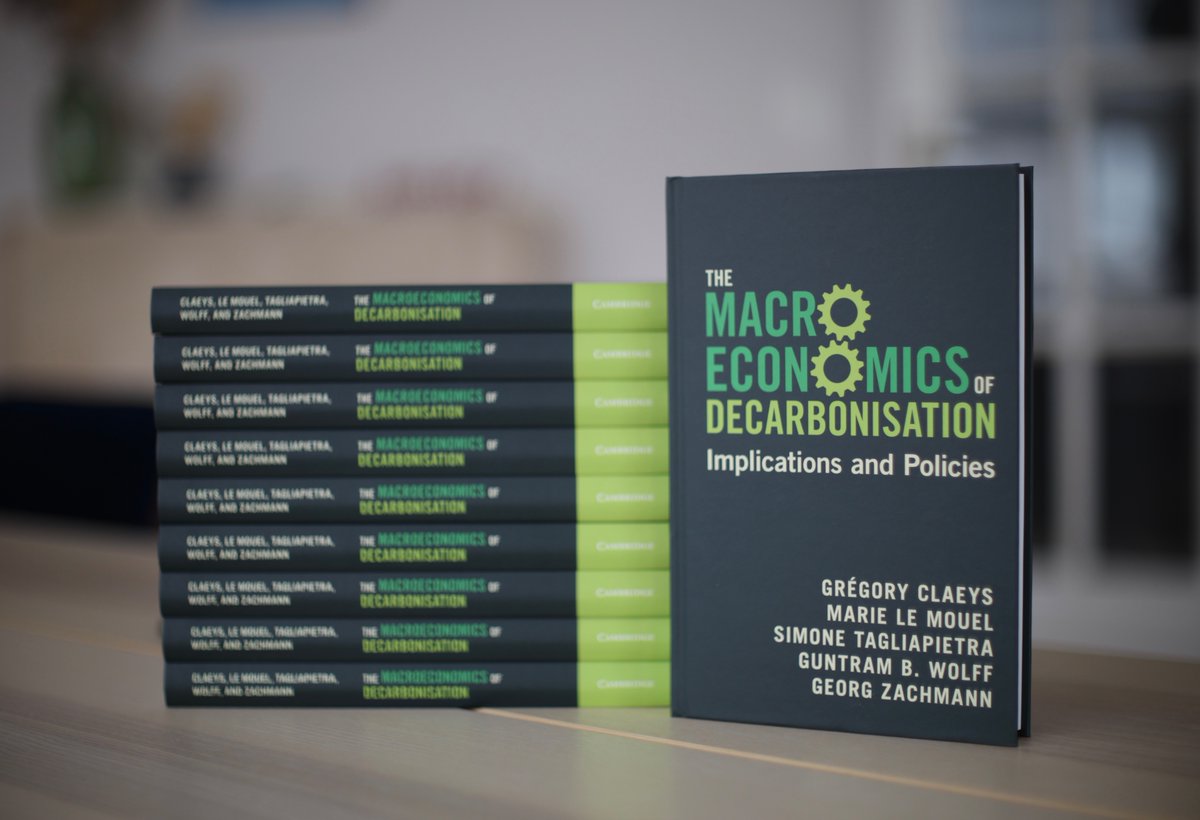
NEW BOOK🚨In last few years, some of us at @Bruegel_org tried to develop the first comprehensive mapping of the macroeconomic implications of decarbonisation, and to shed light on the possible policy responses. The result is this @CambridgeUP book, now available🌍. Reviews in🧵
Amidst the historical peak in Bitcoin's price, this recent FT article reminds us that some issues that have been raised by many about crypto (including by @mariademertzis and I, with a focus on decentralised finance) are still around. Recommend the read 👇
https://t.co/N5u7cUPvQK
📢Attention all in #HealthEconomics, #publichealth , & #Epidemiology! Join us for the 1st Workshop on the Economics of Pandemic Preparedness in Stockholm, 19-20 June 2024. Expect great research, lively discussions, and a stunning setting. Don't miss the early bird by April 1st!
How have Russian fossil fuel export revenues evolved in the last two years?
The impact seems limited, but a seismic shift occurred in the exports' final destination, with China, India and Turkey dramatically increasing their imports.
A price effect also likely played a role.
Being abroad for some years now, I sometimes hear with some skepticism comments from friends about how hard life is nowadays in Portugal. The more data I see though, the harder it gets not to acknowledge the sad truth...
The share living on less $40 per day.
— Lowest in Norway, where 14% live on less.
— In the huge majority of countries in the world it is almost everyone.
From our just updated Poverty Explorer https://t.co/AoMzQ5iZeS
I'm not an expert on the Israeli-Palestine conflict but seems to me this is the best long-term solution I've read in recent times.
https://t.co/NnEJTMShCZ
“Heck, I’m the FT’s Spain and Portugal correspondent. But caution on the commonalities is advised.”
The strange estrangement of Spain and Portugal via @FT
https://t.co/Cz3XXE3qDm
#12DaysOfEconomicPolicy
June's most read paper was 'The value added of central bank digital currencies: a view from the euro area' by @mariademertzis and @_Cat_Martins who argued that CBDCs have added value, but this is not the same for every country
https://t.co/WUoHZEEIwf
We are so privileged to welcome this year’s Nobel Laureate in Economics, Claudia Goldin, to SSE for the annual Nobel Discussion. Goldin’s contributions to our knowledge about women in the work force and the gender gap are immense.
#12DaysOfEconomicPolicy
Over the next 12 days, we want to show you the most popular Bruegel topics from each month of 2023!
January's most read publication was ‘The impact of the Ukraine crisis on international trade’ by @ZsoltDarvas and @_Cat_Martins
https://t.co/mNtObDCOu1
Glad to have had the opportunity to hear Claudia Goldin this morning at @handels_sse. I appreciated her seriousness and realism talking about the evolution of women's participation in the labour market. An approach that contrasts with the way it's often covered in the media
Yesterday, I had the pleasure of attending the Women in Central Banking workshop organised by @NorgesBank . It was a great day, with incredibly talented women presenting the work they have been conducting as part of their PhD
I learned a lot working on the chapter covering the mobilisation of the financial system for decarbonization with @mlemouel
In the chapter you find more about what is hindering allocation of capital to the green transition and policy options to minimise these barriers 🌱🌍
In a recent special issue by @Intereconomics on CBDCs I talk, in two separate papers, about their geopolitical relevance (with @joshualipsky) and progress with the digital euro (with @_Cat_Martins).
https://t.co/YKFawGd7Nc
On the day the ECB and EC talk about creating a digital euro, read where we think digital money can add value for the consumer. @Bruegel_org@_Cat_Martins
https://t.co/Qf4ioCrGmf