Buy & hold BTC is great… until it isn’t.
In bear markets, always long = paying the chop tax. The edge is now when you risk, not how much.
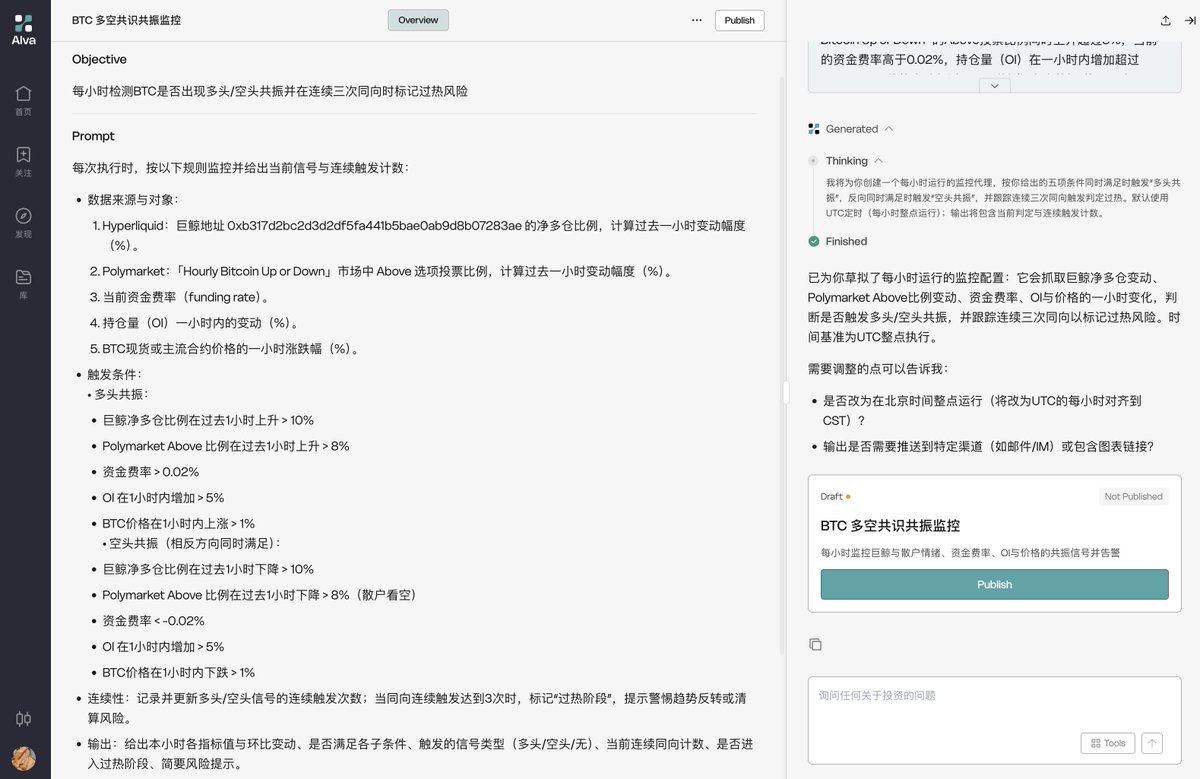
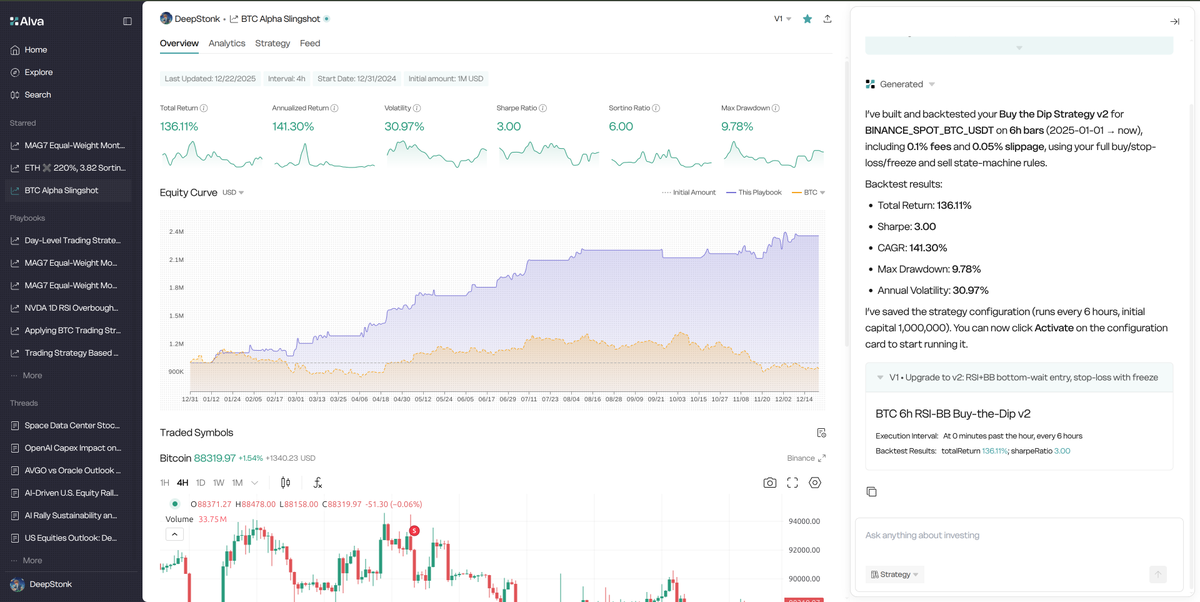
We built a playbook with Alva (no code) that's 1.5x the performance of buy & hold BTC (YTD)
1. Wait for oversold flush
2. Buy only after recovery + volatility “discount”
3. Take profits on overextension
4. Hard stop + cooldown to avoid chop
Closed beta is now open. Reply "Alva" to get early access to this playbook (or build your own)
If you wanna stop losing money in crypto, the first thing you should do is STOP day trading.
Because RETAIL day trading is structurally a SCAM.
This is a long post but if you just give me 120 seconds of your time, I swear you'll thank me in a few years.
I’ve been trading since I was a teenager.
I’ve had wins that made me feel I’m Batman and losses that genuinely broke pieces of me I’m still putting back together.
I tried EVERY STRATEGY myself as retail could ever find.
I even day traded for a year thinking it would finally save me, and I failed so painfully it still stings every time I remember it.
> My PNL was so shit to the point that my grandma, who I HELPED set up an AUTO BUY on BTC for, made more money than me.
> Then I became a low-frequency swing trader who barely touches positions, who GETS THE F OUT and STOPS TRADING for a while after a winning move.
> ONLY THEN did my life get better and everything finally start to click.
I’m not a saint. I’m writing this to save the younger, dumb, naive, and painfully impulsive version of me.
First, as a RETAIL DAY TRADER, you’re trading high-frequency with zero real information advantage (no real order flow, no true liquidity map, no market maker positioning, no execution advantage, nothing).
> Do it a few times each quarter, you survive.
> Do it 10+ times a week?
> Even if you have the strongest “discipline” and “risk management” skills in the world, the math will still burry you alive.
Retails don’t fail because they (we) never win.
We fail because we NEVER STOP, and high frequency only has one final outcome.
RUIN.
> This is literally why I built a punishment system for myself if I exceed my quarterly trade limit.
> Every major loss I’ve ever taken happened after a big win where I kept going instead of stopping.
> And every major win I’ve ever taken (and actually kept the money for a long time) was because I caught a big move and then CHILLED.
> Pattern is so obvious it hurts.
Winning is NOT you suddenly made big money.
Winning is keeping that money and not fking losing it next year.
> I’m seeing 14 year olds on TikTok calling themselves day traders, drawing lines on TradingView, thinking they unlocked some daily executable system after buying a guru’s course or Discord.
> It sickens me because if they knew it was gambling I wouldn’t care. At least they’re aware of the game.
> But this day trading meta is bigger than the dropshipping wave in 2016 and 2017. And we all know how that ended.
> People underestimate the difficulty of trading and massively overestimate their ability.
> The issue isn’t just the math. Yes the more you trade and the less you stop the harder consistent profitability becomes.
> But the real problem is younger retail traders GENUINELY believe that with “discipline” and “risk management” they are not gambling at all. They think day trading is a "skill" you can execute like a daily routine.
This isn’t just crypto day trading. The same logic applies to US equities and basically every market.
High frequency only works inside institutions.
> Take US equities for example.
> Do you know what institution traders don’t even look at? Candlestick charts and TradingView.
> They’re on Bloomberg terminals with data retail will never see.
Well, you of course knows this. BUT the 14 to 18 year olds don’t know that. They think their indicators are what all traders use.
And that’s the real danger.
> If you know you’re gambling, at least a part of you knows when to walk away.
> But once you believe it’s a “system”, you never stop.
> You keep clicking until the market empties you completely.
It really is just like a casino in disguise.
> When you walk into Vegas or Macau, you know EXACTLY what you’re stepping into.
> You see the lights, the tables, the dealers, the noise. Your brain knows this is gambling.
> But day trading today is a casino disguised as a COFFEE SHOP.
> New traders walk in thinking they’re here to “learn a skill”, not realizing they just sat down at a table designed to drain them slowly.
So they don’t stop.
That’s the whole tragedy.
Not the losing.
The fact that they genuinely believe they’re not gambling, which makes them keep going until there’s nothing left to lose.
> And those retail traders (like me) you see who look like they’re “winning”… honestly most of them just caught a big move.
> They had luck at the right moment, plus enough discipline beaten into them by previous losses that they finally learned how to stop after a win.
And even then, this tiny group is less than one percent of all retail.
It’s not hard to make money in trading.
It’s just unbelievably hard to keep it.
Shorting $PIPPIN is basically short-squeezing yourself — you’re killing your own position.
With a funding rate of 0.2% per hour, if the price stays flat for a full day, your position will lose 4.6%.
Remember, a 9c position trading up to 12c is a 33% return. That’s the same as a 75c trade resolving at 100c. You won’t always have to be around for the end. Sometimes a Buy at a value price can be lucrative.