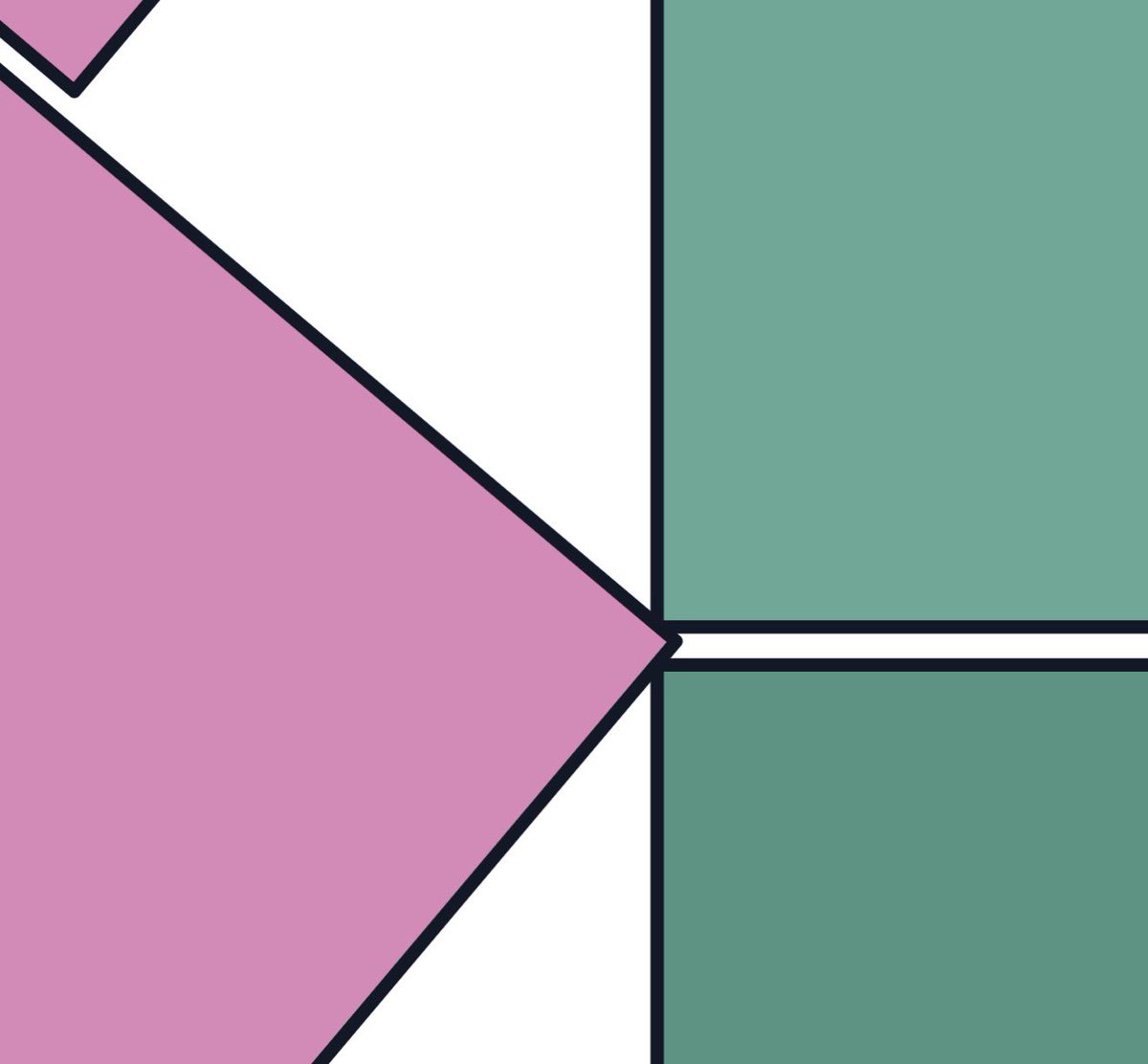
built SQUISH to tackle square-packing problems; 23 are now verified as upper bounds by The Squares Project (ids T-113 to T-116)
posting before it immediately becomes out of date :)
ty to @ojoshe and crew for verification and running the site - https://t.co/YFS04uWFUd
The optimality of the packing for 11 squares has been formalized in lean thanks to Astra and Claude! Huge thanks to @ojoshe, @kleddamag, @wand_125, @guzhou0806, and @ctjlewis for aiding in the process.
Image credit: https://t.co/2oUaPKe2Hz
1/n
@GillibertLuc@ManassehA06@ojoshe@kleddamag@wand_125@guzhou0806@ctjlewis 83 squares is my new favorite ugly packing. Not simply because the packing itself is ugly (it's an extension of 17, with minor adjustments), but because of the side length:
It's a root of an irreducible polynomial of degree 672, with coefficients up to 724 digits.
@ojoshe@kleddamag@wand_125@guzhou0806@ctjlewis Now, what remains is the most important part of the process: human digestion. We’ve started working on a human readable and human written paper providing high quality exposition on this crazy proof. 4/n
@ojoshe@kleddamag@wand_125@guzhou0806@ctjlewis Additionally, with each run, small errors in the code would pop up which we’d need to remedy. In the end our repo is approximately 400k lines of lean and took roughly 20 hours to compile. 3/n
We extend @cognition’s SWE-2 reward function to steer the Pareto frontier, not just improve it.
SWE-2 uses S − λₑC, where λₑ is cleverly the frontier’s derivative at that effort.
We show that adapting λₑ can target a desired score/cost improvement balance. See below!