📲 Saviez-vous que dans iOS 27, Apple a prévu une liste de pays où le chiffrement des messages RCS (SMS) est interdit ?
Chine 🇨🇳. Corée du Sud 🇰🇷. France 🇫🇷.
Le reste du monde déploie l'E2EE, le chiffrement de bout en bout entre iPhone et Android. Une avancée majeure pour la confidentialité de vos SMS.
En France, c'est bloqué.
Les opérateurs sont prêts techniquement. Ce n'est pas un problème d'infrastructure. C'est un choix politique.
Les raisons sont multiples, la France ayant toujours une longueur d'avance pour affaiblir votre sécurité et s'assurer de pouvoir garder un oeil sur vous. Mais l'une des pistes probables : La PNIJ - la Plateforme Nationale des Interceptions Judiciaires. Un outil qui permet à l'État d'accéder à vos communications. Le chiffrement de bout en bout sur ces millions d'échanges quotidiens lui couperait l'accès. Définitivement.
Alors notre gouvernement fait tout pour que vous restiez exposés.
Ich bin alles andere als ein Apple-Fan. Aber in der Frage Apple vs. EU stehe ich ganz auf Apples Seite - oder genauer: auf der Seite vieler Apple-Nutzer.
Apples Erfolgsgeheimnis besteht gerade darin, ein Erlebnis aus einem Guss zu liefern: kontrolliert, integriert, reibungsarm und mit dem Versprechen größtmöglicher Sicherheit. Genau das kaufen die Menschen, wenn sie ein iPhone erwerben.
Dazu passt es schlecht, wenn Drittanbieter weitreichende Rechte im Betriebssystem erhalten sollen, nur damit regulatorisch mehr Wettbewerb bei KIs hergestellt wird. Der CrowdStrike-Ausfall bei Windows hat zumindest gezeigt, welches Risiko entsteht, wenn Drittsoftware sehr tief in ein System eingreifen kann, weil es regulatorisch gefordert wird. Trotz des Fehlers von CrowdStrike lag der Imageschaden für die hunderttausenden BSOD in der öffentlichen Wahrnehmung am Ende bei Microsoft.
Deshalb kann ich Apples Position mehr als nur gut nachvollziehen.
Wer unbedingt andere KI-Systeme tief ins Betriebssystem integrieren will oder grundsätzlich aus Apples Walled Garden heraus möchte, sollte sich eben kein iPhone kaufen. Es gibt genügend Alternativen.
Und das ist für mich genau ein Bereich, in dem der Markt entscheiden sollte - nicht die EU.
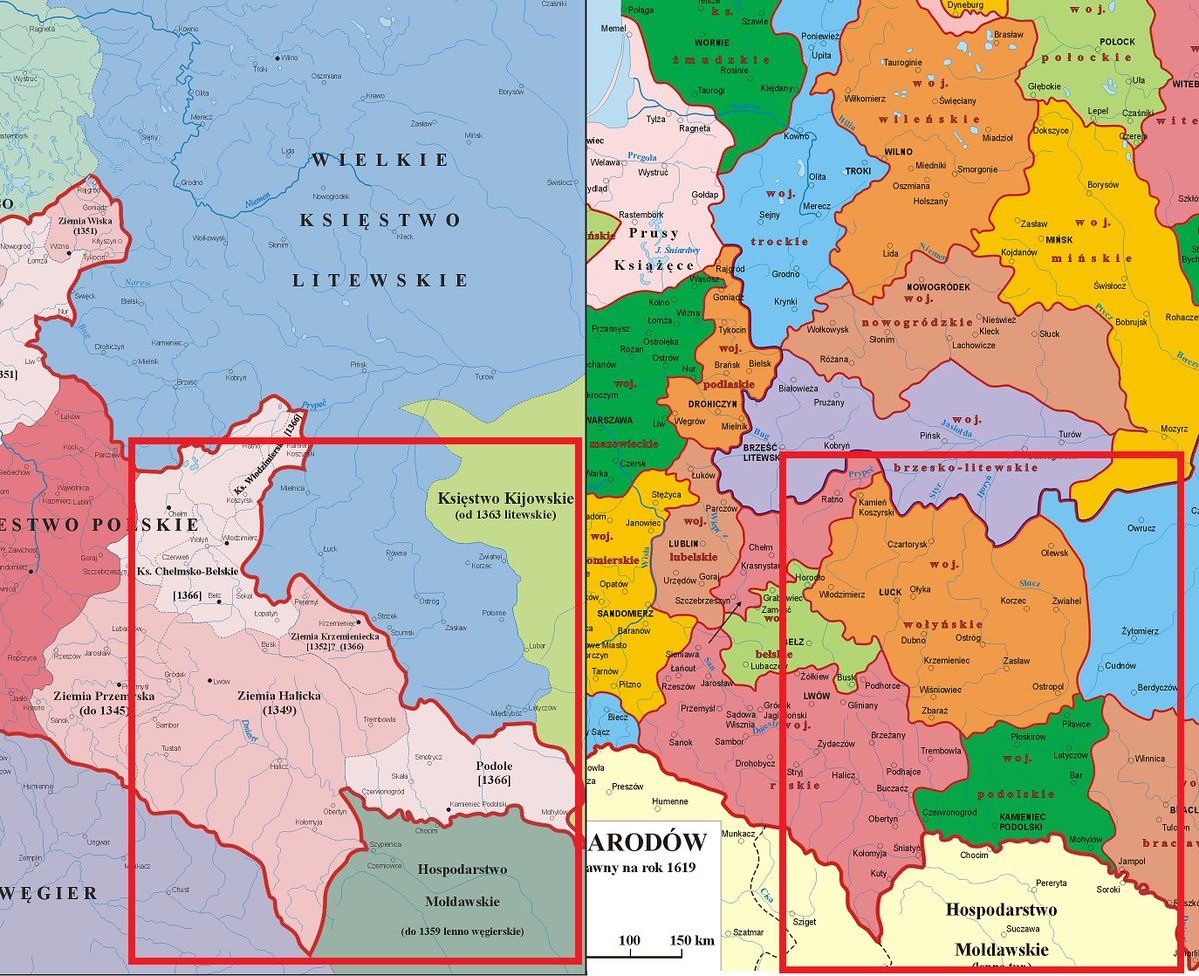
Claim that Poles were occupiers in Ukraine is absurd. Poles lived (and still live) in Volhynia, Podolia, Ruthenia because these lands were part of the Crown of the Kingdom of Poland from the 14th and 16th centuries - several hundred years before Ukraine was established.
⚔️👑📜🛡️
The world is watching.
From Australia to Georgia, Canada to Poland. Henry Nowak’s name is on the lips of millions.
We stand together. We remember.
Justice for Henry. 🕊️
@FBI@FBIDirectorKash You really need to look into the corruption inside the American Fork Police department @afpolice in Utah . What they're doing should be considered mafia type behavior
Die deutsche Regierung gerät massiv unter Beschuss, nachdem bekannt wurde, dass die Bankverbindung der pensionierten Mutter des regimekritischen Journalisten Hüseyin Dogru eingefroren wurde – ohne Anklage, ohne Gerichtsverfahren und offenbar ohne jede offizielle Benachrichtigung.
Kritiker sprechen inzwischen offen von politischer Repression und Einschüchterung durch die Behörden. Der Fall löst heftige Debatten über #Meinungsfreiheit und den Umgang mit unliebsamen Journalisten aus.
🇮🇹 Rzym. 32-latka została porwana z ulicy przez bandę nielegalnych imigrantów. Zmusili ją do wejścia do furgonetki i wywieźli do opuszczonego budynku zajętego przez nielegalnych imigrantów z Afryki i Afryki Północnej.
Tam była zbiorowo gwałcona przez trzy dni. Po trzech dniach udało jej się uciec: półnaga wybiegła na ulicę i poprosiła o pomoc przechodnia, który wezwał policję.
W budynku policja zidentyfikowała 22 nielegalnych imigrantów. Pięciu z nich aresztowano i postawiono zarzuty zbiorowego gwałtu ze szczególnym okrucieństwem. 11 otrzymało trafiło do ośrodków dla cudzoziemców dla deportacji.
So @HantsPolice laughed as Henry Nowak was dying, they took his and his dad's phones to search for "racism" in a sickening attempt to justify his murder!
Illegal products have no place in the European market.
Protecting European consumers from harm is a top priority for the European Commission. That's why, today, we are taking decisive action against Temu and issuing a fine of € 200 million under the Digital Services Act.
https://t.co/UaVnrK3VUR
The nazi's final solution wasn't the government shooting people that were violent brainlet XD
Why do liberals have to exagerate so much?
The border is not a sugestion.
The imigration customs is not decor.
But fine if you hate asmongolds solution so much then just get rid of the welfare state.
The problem goes away over night and i guarantee every right winger will stop complaining.
The EU No Longer Holds Back 🇪🇺🚨
I was just arrested at Munich Airport and prevented from leaving the country.
My fundamental right to freedom of movement has been violated because I allegedly threaten the reputation of the Federal Republic of Germany.
Right before the Remigration Summit, they’re panicking. They’ve already lost every single debate and the culture war.
Every European can see the devastating consequences of the population replacement with his own eyes. So they’re playing their final card: raw repression.
They’re trying to jail Dries Van Langenhove, and now they’ve stopped me from leaving my own country.
They want to scare millions of patriots into submission before they vote for change.
But there’s one thing they forgot in their desperation: repression backfires.
Every unjust arrest and every violation of our rights only draws more attention to our cause and brings more people to our side.
But this only works with your help.
Make them pay: share this post. Tell everyone what’s happening.
And most importantly, join the debate and support @RESUM26.
Because that is precisely what they are trying, and failing, to silence!
🇵🇱 A Polish soldier who fired warning shots towards a group of illegal migrants at the Polish-Belarusian border in 2024 has been acquitted of abusing his powers and threatening the lives or health of others.
The judge stated that he found no evidence that the accused had committed a crime and said that the soldier was fulfilling his obligation to defend the border.
“It should be clearly stated that every soldier has a constitutional obligation to protect the border of Poland…
The law cannot yield to lawlessness… The soldier was sent to the border to protect its inviolability, and that is what he did,” said the judge.
Poland's Zondacrypto Scandal: A Missing Founder, $336 Million in Frozen Bitcoin, a CEO Who Fled to Israel, and the Russian Mafia Allegations Tearing Polish Politics Apart.
The founder disappeared in March 2022, leaving behind a white Porsche Taycan at a petrol station hangar and a cold wallet containing what is now worth $336 million in Bitcoin. Nobody has been seen with him since. The CEO who replaced him has fled to Israel. Thirty thousand Poles cannot access their money. And Poland's Prime Minister is accusing the Russian mafia of financing the whole operation.
This is not a Netflix script. It is happening right now, in real time, in the country that is supposed to be Europe's most dynamic economy.
The collapse of Zondacrypto — once Poland's largest and most visible cryptocurrency exchange — is the most politically explosive financial scandal Poland has seen since Amber Gold. It involves a missing founder whom investigators believe may have been murdered, $336 million in Bitcoin locked behind a private key nobody can find, a CEO who went dark after fleeing to a country that does not extradite its own citizens, Russian mafia allegations, the deliberate blocking of EU financial regulation, and a political war between Poland's prime minister and president that has been burning for months.
Here is the full story, from the very beginning.
Part One: The Origins — BitBay and the Bitcoin Pioneer of Katowice
In 2014, a young entrepreneur named Sylwester Suszek founded a cryptocurrency exchange in Katowice, in the industrial heart of Silesia. He called it BitBay. Poland had almost no crypto infrastructure at the time, and Suszek was early — genuinely, significantly early. Within a few months of launch, BitBay had 3,000 users. By the late 2010s it had grown into one of the largest crypto exchanges in Central and Eastern Europe, allowing Polish users to buy and sell Bitcoin, Litecoin, and other cryptocurrencies directly for złoty, euros, and dollars.
Suszek was a prominent, recognisable figure in the Polish Bitcoin community — evangelical about crypto, prolific on social media, known for a collection of luxury cars and a red Eurocopter helicopter hangared at a private airfield near Katowice. He was, by any measure, a success story of post-communist Polish entrepreneurialism.
The problems began early, and they were never fully resolved.
Polish investigative journalists from the TVN Superwizjer programme conducted an investigation in 2020 that alleged BitBay's shareholder structure included individuals with criminal histories. Suszek himself had a prior conviction for making false statements, trading illegal software, and misappropriating property. According to the journalists, they were threatened during the investigation and offered one million złoty — approximately $275,000 at the time — to remove Suszek's name from the report.
They published anyway.
Part Two: The KNF Warning, Malta, and the Move to Estonia
In 2018, Poland's Financial Supervision Authority — the KNF — placed BitBay on its public warning list on suspicion of conducting unauthorised payment services. This was the same regulator that had warned about Amber Gold six years earlier, and had been similarly ignored.
Facing regulatory pressure in Poland, BitBay relocated its operations — first to Malta, then to Estonia. The move was legally rational under EU law: Estonia, like all EU member states, operates under the freedom to provide services across the bloc, meaning an Estonian-licensed company can legally operate in every EU country. By registering in Estonia as BB Trade Estonia OÜ, the exchange gained an EU passport while placing itself beyond the immediate reach of Polish regulators, who had limited jurisdiction over a foreign-licensed entity regardless of where its customers lived.
This structure — Polish customers, Polish marketing, Polish operations, Estonian licence — became the central legal problem when the scandal broke. Polish authorities were left pursuing a company technically under Estonian supervision, with an inaccessible cold wallet, a missing founder, and a CEO who had by then left the country.
In November 2021, BitBay was rebranded as Zonda. In 2023 it became Zondacrypto. With the rebrand came a change in management. Przemysław Kral — who had previously worked as Suszek's personal lawyer — became the new CEO.
Suszek sold the exchange and stepped back. Then he disappeared entirely.
Part Three: The Disappearance of Sylwester Suszek
On the morning of 10 March 2022, Sylwester Suszek, 34 years old, drove his white Porsche Taycan from his home in Katowice. He dropped his young son at kindergarten. He then drove to a petrol station in Czeladź, where the station's hangars housed private helicopters — including Suszek's own red Eurocopter and the Robinson R44 belonging to a businessman identified in Polish reports as Marian W. He had a business meeting scheduled with Marian W. that morning. The meeting was supposed to end at 3pm.
Sylwester Suszek never came home.
His sister Nicole found out he was missing when Polish police called at 2:51am on 12 March. "Your brother has disappeared on the Delta," the officer told her. From that moment, she began her own private investigation into what had happened to him. Over the four years since, she has received anonymous threats, a recording purportedly of her brother's voice, and lawsuits for defamation — including, reportedly, from Przemysław Kral, Suszek's own former lawyer and successor.
Polish police have treated the disappearance as an ongoing missing persons case. Investigators believe Suszek is likely dead, though no body has been found. Foul play has not been ruled out.
Here is the detail that transforms a missing persons case into the central crisis of Poland's biggest financial collapse: before he disappeared, Suszek had transferred ownership of BitBay's shares to three entities registered in Dubai — two of which had their registered addresses in the Burj Khalifa. All three UAE companies were established using the "nominee agent" mechanism, in which a local citizen formally holds ownership without having actual control of or access to bank accounts. Polish financial investigators and the newspaper Rzeczpospolita identified this structure as one frequently used by Russian oligarchs to invest illicit funds and circumvent Western sanctions.
And Suszek, it emerged, had retained the private key to a cold wallet containing 4,500 Bitcoin — a wallet he never handed over to the new management. At current prices, that wallet is worth approximately $336 million.
No one has been able to open it since the day he vanished.
Part Four: The Collapse — 99.7% of Bitcoin Gone
For years after the 2021 rebrand, Zondacrypto presented a picture of expansion and legitimacy. It sponsored Polish football clubs. It signed a general sponsorship deal with the Polish Olympic Committee — a partnership that drew criticism from Poland's Sports Minister, who said the exchange had "exploited the sacred image of an athlete." It sponsored Italian clubs Juventus, Bologna FC, and Parma Calcio. It opened an office in Zug, Switzerland in January 2025, and entered into a partnership with Incore Bank. It brought on high-profile names to its supervisory board, including Guido Bühler, a co-founder and former CEO of SEBA Bank (now Amina Bank) and former board member of UBS Investment Bank.
The exterior was polished. The interior was rotting.
The first cracks became public in December 2025, when users on the exchange's official Telegram channel began reporting that withdrawal requests were sitting in pending status for days. Management blamed high demand and new security protocols. Few took the explanation seriously. Complaints multiplied through January, February, and March 2026.
Then, on 5 and 6 April 2026, two of Poland's most widely read news outlets — https://t.co/U6Xm2uJpwq and Wirtualna Polska — published an investigation built on blockchain analysis by Recoveris, a crypto recovery firm. The numbers were devastating.
Between August 2024 and April 2026, Zondacrypto's operational Bitcoin reserves — the hot wallets used to process day-to-day customer transactions — had collapsed from an average monthly balance of approximately 55.7 Bitcoin to 0.18 Bitcoin. A 99.7% decline in twenty months. Over the same period, Recoveris recorded 511 transactions from Zondacrypto's wallets to the competitor exchange Kraken, totalling approximately $21 million — suggesting funds were being systematically moved out rather than held for customers.
A whistleblower website, https://t.co/SUX79SsORC, launched to collect victim testimonials. It was overwhelmed within days.
On approximately 17 April 2026, CEO Przemysław Kral made his last significant public statement. He acknowledged, in a video address, that the exchange's cold wallet — the reserve containing 4,500 Bitcoin — was inaccessible. The private key had been held by Sylwester Suszek. Suszek had disappeared in 2022. The wallet had last shown any activity in November 2025. No one in the company's current management had the key.
Days later, Kral himself was gone.
Part Five: The CEO Flees to Israel
Polish outlet Onet reported in late April 2026 that Przemysław Kral had departed for Israel, where he holds citizenship. His email address — previously a functioning channel of communication — had been deactivated. Phone calls went unanswered. His last public post on X dismissed the mounting political allegations as "absurd" and threatened legal action for defamation.
The extradition problem is immediate and unresolved. Israel does not extradite its own citizens to foreign countries. Polish Deputy Interior Minister Czesław Mróczek acknowledged publicly that Poland has no experience handling extradition requests of this kind.
The Katowice Prosecutor's Office had opened a formal criminal investigation on 17 April 2026, on suspicion of large-scale fraud and money laundering. Identified losses at that point stood at a minimum of 350 million złoty — approximately $97 million — with up to 30,000 affected users. Investigators expect the total to grow substantially as the investigation continues.
Poland's National Prosecutor's Office also opened its own separate investigation. Monaco's Prosecutor's Office opened a money laundering case. The Office of Competition and Consumer Protection in Poland confirmed it had been collecting complaints since 2022.
The entire supervisory board of BB Trade Estonia OÜ resigned en masse on 20 April 2026 — Veronika Togo, Guido Bühler, and Georgi Džaniašvili. In their resignation statement, the board cited "material inconsistencies between public statements, operational reality, and the information previously provided to the supervisory board" and a "systematic breakdown of governance fundamentals." Bühler added, pointedly, that the board had learned of the crisis through Polish media reports — not from management.
A former board member, Džaniašvili, confirmed publicly that Kral had been unable to provide them with "verifiable information" about what was happening. The people nominally responsible for oversight of the exchange had been kept in the dark.
Part Six: The Financial Backing — Switzerland, Dubai, and the Shadow of Russia
The ownership structure of Zondacrypto, as gradually revealed by investigators and journalists, is labyrinthine in a way that suggests deliberate opacity.
The operating entity is BB Trade Estonia OÜ, registered in Estonia. Its majority owner is Divisio Holding AG, a Swiss company registered in Zug at the address of a Dr André Terlinden, incorporated on 24 June 2021 with a share capital of CHF 100,000.
Before Suszek's disappearance, as noted above, the exchange's shares had been transferred to three Dubai-based shell companies using nominee ownership structures — the same mechanism identified by financial intelligence analysts as characteristic of Russian capital concealment and sanctions circumvention.
Prime Minister Tusk went further than the corporate structure in his parliamentary address of 17 April 2026. He explicitly named the Tambov group — a powerful Russian organised crime network, associated with figures connected to the Kremlin — as having financial links to Zondacrypto's origins. Poland's Internal Security Agency (ABW) had, according to reporting by Gazeta Wyborcza, produced a classified memo linking Zondacrypto to the Tambov group — a document shared with selected MPs at a closed parliamentary session in December 2025.
Tusk said: "The roots of this company are purely sinister. It is the disappearance — or, most likely, the death — of the company's founder. It is Russian money from the Russian mafia. It is the influence of Russian special services."
Kral denied all of it and threatened to sue Tusk for defamation.
Whether or not Tusk's Russia allegations are proven in court, the financial architecture of the exchange — Estonian licence, Swiss holding company, Dubai shell subsidiaries, nominee ownership, a missing founder who transferred shares before vanishing — is structurally consistent with the kind of opacity that serious financial crime demands.
Part Seven: The Political Scandal — Two Governments, One Exchange, and a Veto That Changed Everything
This is where Zondacrypto becomes not merely a financial fraud but a political crisis that may reshape Polish governance for years.
Poland, uniquely among all 27 EU member states, had failed to transpose MiCA — the EU's comprehensive Markets in Crypto-Assets Regulation — into national law by the required deadline. The Sejm had passed a version of the bill on 19 December 2025, by 241 votes to 183. President Karol Nawrocki vetoed it on 1 December 2025, before it could be enacted. He vetoed it again in February 2026. A parliamentary override required 263 votes — the coalition mustered only 243. Poland remained in regulatory limbo.
Nawrocki's stated objection was substantive: he argued the government's bill went beyond what MiCA actually required, imposing fees and administrative burdens "not found in other EU member states," which would push crypto businesses out of Poland into more permissive jurisdictions. He submitted his own alternative draft, broadly similar but with softer penalties.
The debate might have remained a technical argument about regulatory proportionality. Zondacrypto made that impossible.
In his April 17 address, Tusk made a series of allegations that turned the crypto regulation debate into a national security matter. He accused Zondacrypto of financially backing politicians who had voted against crypto market rules — payments that, he implied, were the real reason for the vetoes. He said the exchange had donated more than 700,000 złoty to foundations connected to former Justice Minister Zbigniew Ziobro, a figure closely associated with the former Law and Justice (PiS) government, and to the Dobry Rząd foundation run by Konfederacja MP Przemysław Wipler.
Wipler confirmed a 70,000 euro transaction between his foundation and a company linked to Zondacrypto's president, describing it as a payment for "analysis services."
Tusk then landed the most explosive charge: that Zondacrypto had been the main sponsor of the 2025 CPAC conference held in Poland, at which Kristi Noem — then US Homeland Security Secretary — had publicly backed Nawrocki's presidential candidacy. The implication was unavoidable: a company that Tusk alleges was funded by Russian organised crime had helped sponsor the events that boosted Poland's president-elect.
Nawrocki denied being aware of Zondacrypto's financial difficulties at the time of the first veto. He did not deny being aware at the time of the second one.
Konfederacja fired back, accusing Tusk of abusing ABW intelligence data for political purposes and threatening to report him to prosecutors for defamation. PiS denied any improper relationship with the exchange. The Zondacrypto exchange itself accused Tusk of dragging it into political theatre harmful to the Polish innovation sector.
Poland's parliamentary parties are now using Zondacrypto as a weapon against each other across every faction. Tusk uses it against Nawrocki, PiS, and Konfederacja. His opponents use it to question the government's three-year delay in bringing proper charges. Poland's Justice Minister Waldemar Żurek called it "a pyramid scheme, the purpose of which was fraud and extortion, not fair investment by our citizens." The exchange's former board members used their resignation statement to condemn management. Everyone is pointing at everyone else. Thirty thousand investors are waiting to find out if they will ever see their money.
The Sejm passed a revised MiCA implementation law on 12 May 2026, sending it back to President Nawrocki. If he vetoes it a third time, Poland will become the only EU member state in breach of the MiCA framework when the CASP licence deadline expires on 1 July 2026.
Part Eight: Where Things Stand Now
The investigation is active and expanding. The Katowice Prosecutor's Office is pursuing charges of large-scale fraud and money laundering, with documented losses of at least 350 million złoty and potentially far more. Monaco has opened its own money laundering probe. Poland's internal security agency is examining alleged Russian connections.
CEO Przemysław Kral is in Israel. Israel does not extradite its own citizens. Polish authorities have acknowledged they have no experience navigating this situation. No extradition proceedings have been formally confirmed as filed at the time of writing, though investigators are examining every legal avenue.
The 4,500 Bitcoin cold wallet — currently worth approximately $336 million — remains locked behind a private key that went with Sylwester Suszek when he drove to a petrol station in Czeladź on the morning of 10 March 2022 and was never seen again. Polish investigators believe he is likely dead. His body has not been found. His sister continues her private investigation into what happened to him.
The exchange's Estonian licence is due to expire on 1 July 2026. Without it, the company cannot legally operate across the EU.
Up to 30,000 Polish investors cannot access their funds.
The Lessons — For Poland, and for Every Crypto Investor in Europe
The Zondacrypto case is not simply a crypto story. It is a story about how regulatory gaps are exploited by those who understand them better than the regulators do, how political influence is purchased systematically and quietly over years, and how the absence of a single enforceable legal framework allows damage to accumulate until it becomes irreversible.
Several lessons are already visible.
The EU passport is only as strong as its weakest issuer. Zondacrypto operated across the EU under an Estonian licence while its customers were overwhelmingly Polish. When problems emerged, Polish regulators had limited tools. Estonian regulators had jurisdiction over a company they barely knew. The MiCA framework is intended to close exactly this gap — but it cannot close it while member states remain without implementing legislation.
Opacity in ownership structure is a red flag that cannot be overlooked. Swiss holding companies owning Estonian entities owning Dubai shell companies with nominee directors are not accidents. They are architecture. When an exchange serving retail investors operates behind this kind of structure, regulators and investors should ask why.
A cold wallet no one can access is not a reserve. Zondacrypto's management pointed to the 4,500 BTC cold wallet as evidence of solvency while simultaneously admitting no one in the company could open it. A proof of reserves cryptographic audit — which Kral declined to publish — would have exposed this immediately. Any exchange that refuses to publish a verifiable proof of reserves should be treated with extreme caution.
Political capture is real. The allegations of systematic payments to Polish political foundations and events — regardless of how the criminal investigation concludes — illustrate how a financial company seeking regulatory protection can invest in political relationships rather than operational improvements. This is not unique to Poland. But the Zondacrypto case has made it visible with unusual clarity.
For investors in Poland specifically, the case reinforces the same principle that Amber Gold established fourteen years ago: the KNF warning list exists for a reason, regulatory warnings are not bureaucratic noise, and the appearance of legitimacy — sponsoring the Olympic Committee, opening a Swiss office, hiring former UBS board members — is not the same as actual financial soundness.
The Missing Key
Somewhere, there is a string of characters — a private cryptographic key — that would unlock 4,500 Bitcoin worth $336 million. It is either with Sylwester Suszek, or it is not. If it is not with him, it exists on a physical device somewhere, or in someone's memory, or in a document in a Dubai registered office that no one will open.
Thirty thousand people are waiting to find out.
Sylwester Suszek left his son at kindergarten, drove to a petrol station, and disappeared. He was 34 years old. Whether he was a victim, a participant, or something harder to categorise, his story is not finished. Neither is theirs.
@Smallism_org@MichaelAArouet We still managed to stay out of Euro-zone and keep Polish Złoty (PLN). This is a strong asset. We can’t adopt EUR without changing the constitution, bur EUCOM and pro-EU Tusk already demonstrated that they do not bother themselves with such tiny details as a constitution.
@Smallism_org@MichaelAArouet There are calculations that show, that Poland would possibly be better off without EU funds, if Germany would not use them to take over our economy. Just access to common market would be enough.
Obviously “what if” but still…
@Smallism_org@MichaelAArouet Whole „EU funds for new members” schema was just a way to pump money from EU budet (that everyone was paying into) to German economy. Poland was not even most efficient one, but because or size most important one.