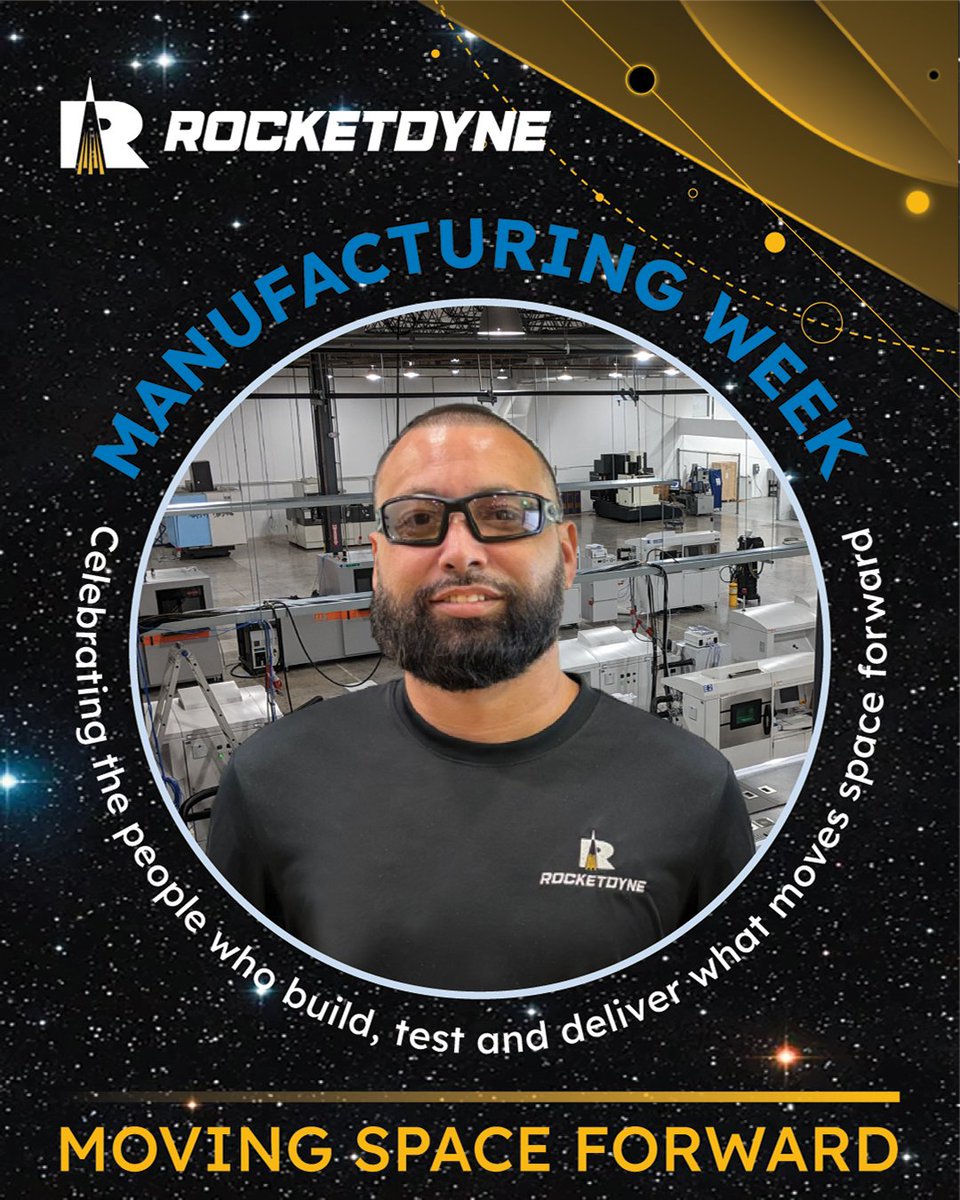
Before Rocketdyne hardware can perform in space, it has to prove itself on the ground.
During #ManufacturingWeek and #WorldSpaceWeek, we’re recognizing Test Engineer Jess K., who helps ensure propulsion hardware is ready for the missions ahead.
#MovingSpaceForward
Turning additive manufacturing into flight-ready hardware takes skilled people who can solve what comes next.
During #ManufacturingWeek and #WorldSpaceWeek, we’re recognizing Rocketdyne senior machinist Daniel C., whose work in Daytona Beach is #MovingSpaceForward.
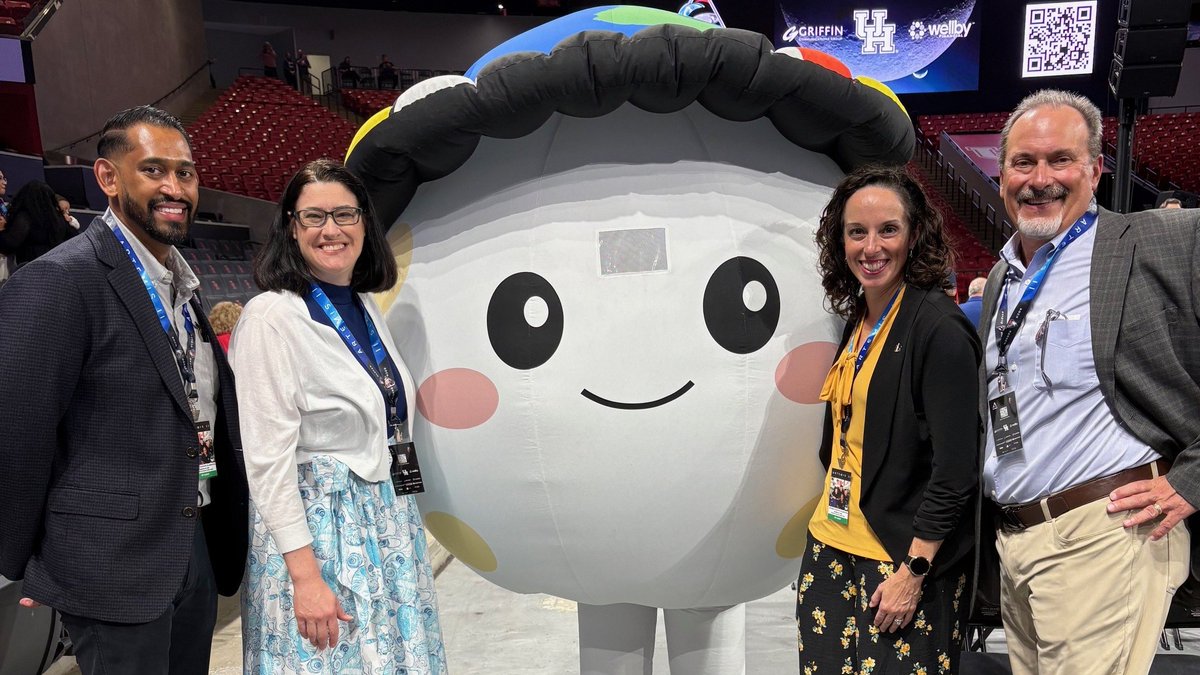
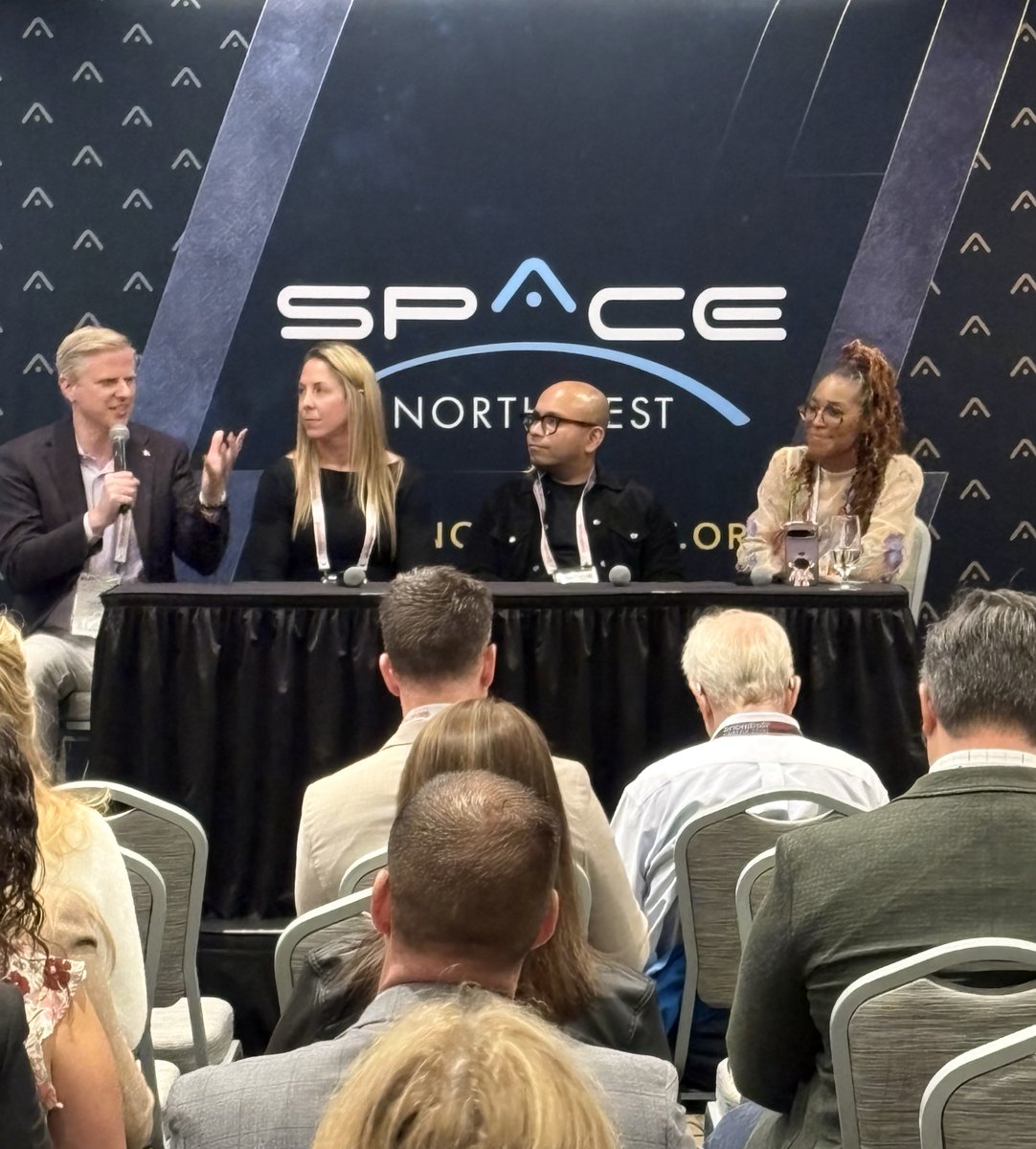
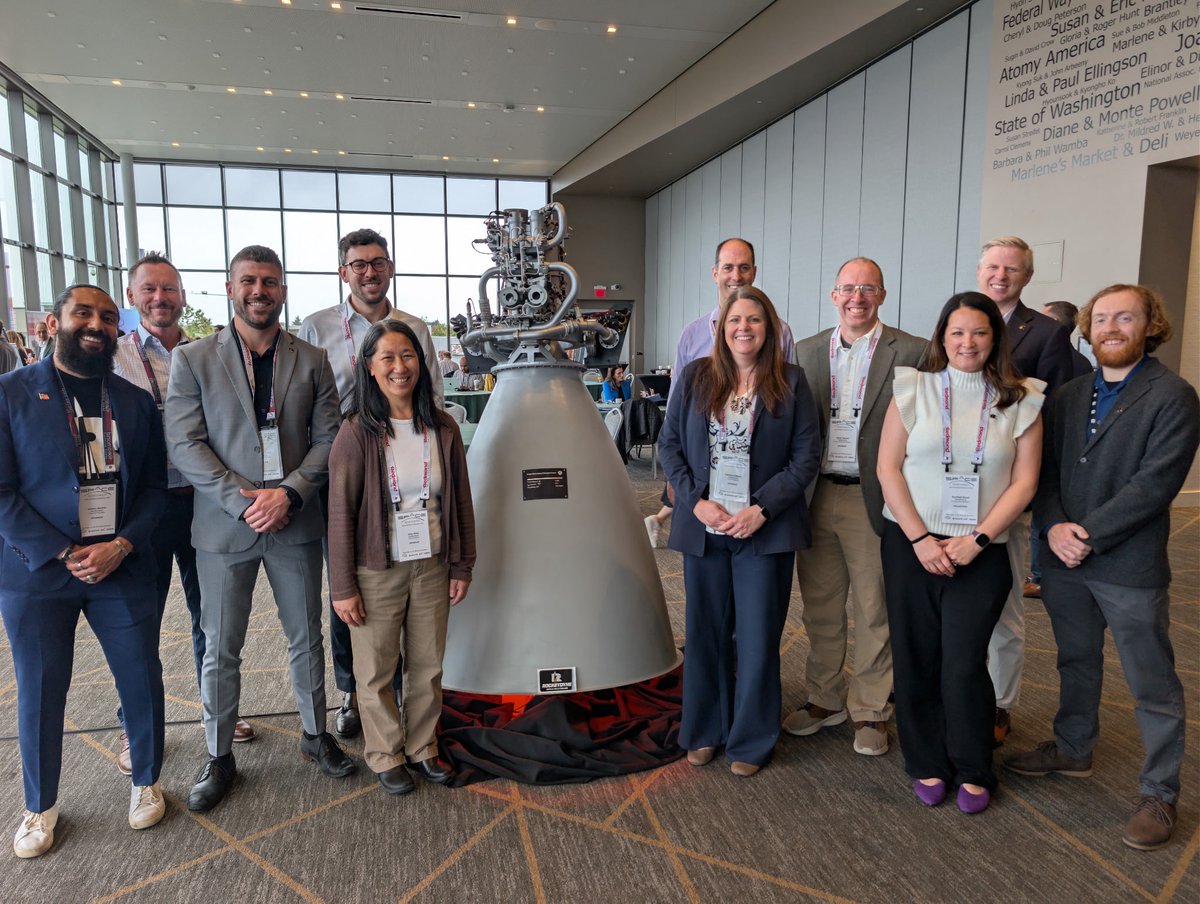
What an incredible week celebrating #SeattleSpaceWeek and the #ArtemisII Crew! From the Space Northwest Symposium in Seattle to the streets of Houston, TX, it was a week that reminded us why we love what we do!
Rocketdyne is teaming up with the @Commanders through a new partnership.
As we build our next chapter, we’re building on 60+ years of trusted performance to advance the space technologies behind national security, exploration, and the missions shaping the future.
Ohio Space Week may be wrapping up, but the momentum is just getting started. A highlight: CEO Kristin Houston’s Ohio Space Forum keynote on the critical role space propulsion, space electronics, and power systems will play in what’s next.
Our CEO Kristin Houston was at the @AFA_Air_Space ASC Conference this week! We’re glad to be part of the conversation with leaders across government and industry about the growing demands of the space domain and what those demands mean for the capabilities missions need next. 🚀
Space is no longer a static domain. From launch to on-orbit maneuvering to mission electronics and power, Rocketdyne delivers proven technologies that help enable America’s most demanding national security space missions.
Read more: https://t.co/VHLTrxzPow
🖖 Happy 60th Anniversary, #StarTrek! 🚀
Science fiction 🤝 science fact: Rocketdyne’s NEXT-C ion propulsion system powered NASA’s DART spacecraft, the same system that powered the USS Enterprise.
60 years later, we’re still boldly going. 🚀 #StarTrek60
49 years ago today, Voyager 1 left Earth to explore Jupiter and Saturn. Then it kept going.
Rocketdyne propulsion helped send it on its way and has supported its journey into interstellar space. Nearly five decades later, Voyager 1 reminds us just how far we can go.
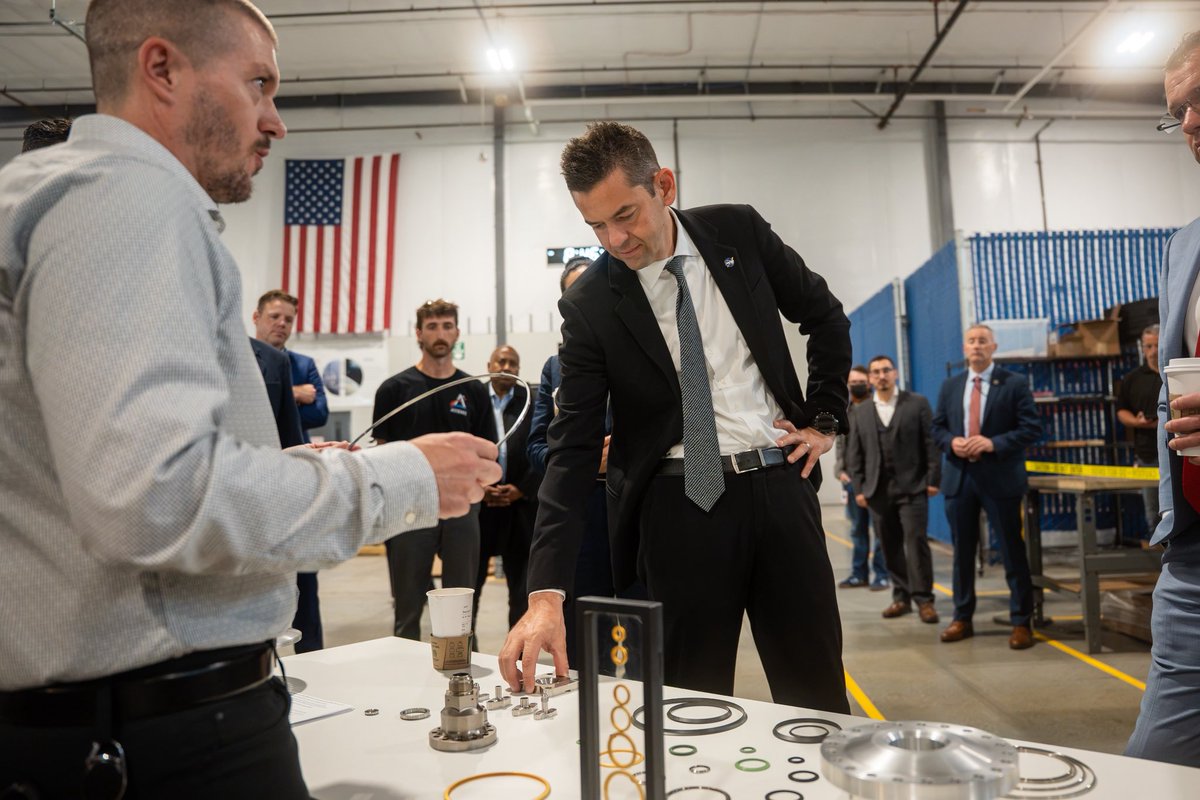
Always good to get out of DC and into the field where the action is happening.
From @Livermore_Lab to United Precision, @Boeing, @_Rocketdyne, and @stoke_space, we spent the last few days with the scientists, engineers, and technicians putting some of America’s most ambitious missions into motion.
We saw incredible science, aerospace manufacturing, propulsion hardware for ESM, Orion, and SR-1, and wrapped it up with live Zenith and Andromeda tests at Stoke’s test site, which were extremely impressive.
We have an enthusiastic and engaged President @POTUS who has given us the policy, the resources, and even a new Space Academy. We have bipartisan support from Congress, the talent of the NASA workforce, the best of industry, and a playbook that changed the world in 1969 and will do so again.
@NASAAdmin Jared Isaacman’s latest Rocketdyne stop: Redmond.
Our team shared the propulsion work behind missions in space, including MR-106L thrusters aboard NASA’s recently launched @NASARoman Space Telescope.
Thanks for visiting! 🚀
@NASARoman is on its way, and Rocketdyne is going with it. Eight of our MR-106L thrusters are aboard Roman, ready to support critical orbital maneuvers and maintain its orbital position at L-2 throughout the mission. 🚀
Getting excited about the @NASARoman launch? Watch here to see how our MR-106L thrusters (2:54 in the video) are going to keep Roman pointed in the right direction and keep the reaction wheels from saturating. https://t.co/SCr0J3xh92
Launch day is almost here!🚀Rocketdyne thrusters aboard @NASARoman will help guide the observatory once in space, enabling it to see 100x more sky than Hubble and explore dark energy, exoplanets & beyond. What a mission to be part of!
It’s almost time!
Yesterday, @NASARoman arrived at @NASAKennedy's @SpaceX hangar, where it will be joined to a Falcon Heavy rocket—the telescope’s chariot for its journey to orbit. Roman is scheduled to lift off on Sunday, Aug. 30. https://t.co/5HIvoPOXuT