Personal update: I've joined Anthropic. I think the next few years at the frontier of LLMs will be especially formative. I am very excited to join the team here and get back to R&D. I remain deeply passionate about education and plan to resume my work on it in time.
6 months ago, I moved to San Francisco.
It’s the best place in the world to build, and one of the worst places to stay human. My unfiltered take:
1. SF is both overhyped and underrated
The overhyped part: there are a lot of people with incredible resumes who are deeply unimpressive in real life. They were at the right company, at the right time, in the right market, and got carried by the wave. They made money, got comfortable, and now spend their time “exploring opportunities” over coffee, wasting your time.
The underrated part: the top 1% here is insane. But almost impossible to get. Hiring in SF feels like being a guy on a dating app: everyone you want is out of your league, and everyone in your league wants someone out of theirs. The best people have unmatchable packages, endless options, and are optimizing for maximum impact: labs, frontier companies, or startups raising $100M pre-seed rounds.
If you raised $10M from Tier 1 investors, you’re not hot shit here. You’re a B-player. It’s humbling.
2. There are fewer mission-driven people than I expected
Especially on the application layer. A lot of people are in “secure the bag before it’s too late” mode. And honestly, it gives me the ick.
The real religious builders I’ve met are often in labs, hardware, biotech, deeptech, defense — places where the work is hard enough that you can’t fake obsession.
3. The status game favors builders
This is what SF does better than anywhere else. It rewards obsession. It rewards weirdness. It rewards people who make building their entire personality. Europe punishes that. SF gives it status. If you’ve felt like an outsider your whole life because you care too much, work too much, think too radically, or refuse to be chill about things that matter, this city will make you feel less insane.
4. The market liquidity is absurd
Even if you don’t build a billion-dollar company, if you manage to build a strong product with a great team, someone smart might still acquire you for $ 100M. Yeah I know, it’s not your dream outcome as a founder, but on the days you feel desperate, it helps to keep going.
5. SF does not care about the meaning crisis that’s coming
Anyone paying attention here can feel that something massive is happening with AI. But I’m shocked by how little people talk about the meaning crisis coming next. Everyone wants to talk about AI liberating humanity. Almost no one wants to talk about what happens when work — the thing that gives most people identity, structure, dignity, status, and purpose — starts disappearing. The vacuum will not be peaceful. People are underestimating the chaos that comes from humans suddenly having no idea why they matter. And I really feel like no one cares.
6. Personally, I’ve never been more unhappy
I moved to SF and entered the matrix. I’ve always been intense. I’ve always worked crazy hours. But here, I lost the last parts of myself that were not about building.
I don’t go to events. Most networking events feel like theater for people pretending to be important. The only events worth going to are small, curated dinners with people who are actually alive. I’ve made 0 real friends. I don’t do well with transactionality. I don’t do well with people constantly performing greatness. I don’t do well with rooms where everyone is optimizing and no one is being honest.
So yes, SF is lonely, transactional, delusional, addictive, inspiring, boring, extraordinary, and completely insane.
But it is still the only place to be right now if you’re a founder trying to build the next wave of humanity.
And for now, that’s enough.
Introducing Mesa: the most powerful filesystem ever built, designed specifically for enterprise AI agents.
Every team building agents eventually hits the same wall: where do the files live?
Not the chat history, the actual artifacts the agent works on.
> The contracts your agent redlined
> The claim files it updated
> The 200-page audit report it edited overnight while you were asleep
Today those documents live in a sandbox that dies in 30 minutes, an S3 bucket where concurrent writes clobber each other, or a GitHub repo that was never built to absorb agent-scale traffic.
So we built Mesa.
The world's first POSIX-compatible filesystem with built-in version control, designed from the ground up for agents. You mount it into your sandbox like any other filesystem. Your agent reads and writes files normally. Behind the scenes every change is versioned, branchable, reviewable, and rollback-able — like a codebase, for any file type.
Mesa provides
– Branches so agents work in parallel without locking
– Durable storage that survives sandbox death
– Sparse materialization so massive document sets load instantly
– Fine-grained access control per agent
– Full history for human review and audit
Design partners are running Mesa in production across legal, healthcare, GTM, business ops, and coding agents.
Private beta is open: link in the comments
Some of the most beautiful architecture in the US was built by the Works Progress Administration in the late 1930s and early ‘40s
We need a bold return to ambitious public projects
„Wir investieren in Deutschland keinen Euro mehr!“. Energieintensive deutsche Hightech-Unternehmen flüchten vor zu unzuverlässiger und zu teurer Stromversorgung. Bitter, was der BR hier berichtet. Interessiert das den Krisen-Kanzler? #Germany2026
ANTHROPIC HAS RELEASED OPUS 4.7!!
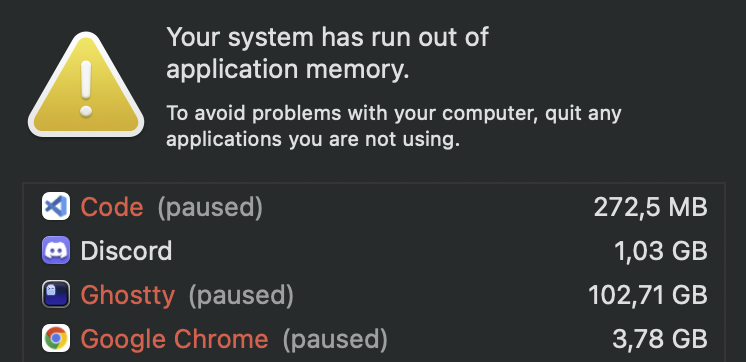
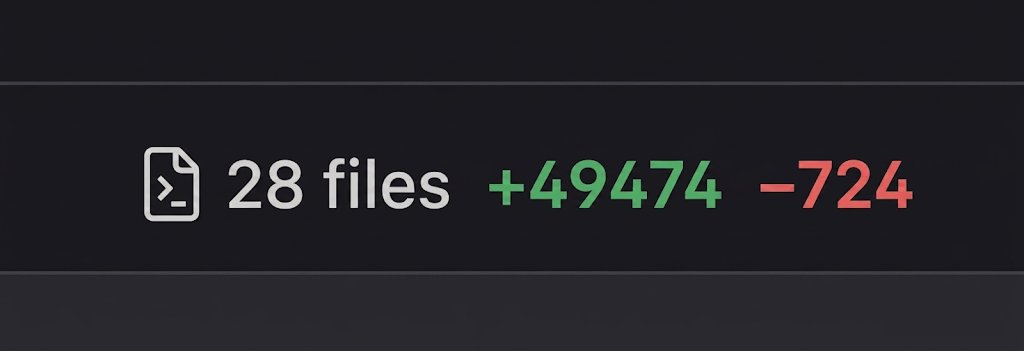
i asked claude opus 4.7 to refactor a large codebase. 68 minutes, millions of tokens burned - it finished
nothing worked. app completely broken
but god it was beautiful
CLAUDE CODE CAN NOW COPY ANY UI ON THE INTERNET.
It scans real websites and rebuilds their design system instantly, turning any page into your own starting point.
We've been tricked, again. Many of the thousands of bugs and vulnerabilities Mythos found are in older software are impossible to exploit. And the severe zero-day reports rely on just 198 manual reviews https://t.co/WhDRhTtCX2