We’ve lost an icon. Margaret Hamilton, a computer science pioneer best known for her work at MIT leading development of the flight software for the Apollo missions to the moon, has died at 90. Read about her legacy via MIT News: https://t.co/ODkbdIsoHw
E perdemos Margareth Hamilton, falecida aos 90 anos, um dos Ícones da Informática. Os tiktoks adoram postar a foto dizendo que ela escreveu todo esse software usado no Programa Apollo. Não, ela criou as METODOLOGIAS e gerenciou o desenvolvimento. Com mais de 130 papers publicados, ela criou a base de muito do que se usa até hoje, como man-in-the-loop, desenvolvimento distribuído e linguagens de modelagem.
Adeus, Mags, obrigado por tudo.
Aqui meu artigo contando parte da vida desse monstro sagrado.
https://t.co/fJ4xFcey7h
ML researchers know Python. Proof engineers know Lean. Never the two should meet..
Until now! Announcing https://t.co/Z4jWDRPQEL, effortless Lean to Python and Python to Lean bindings!
- Write Lean tactics in Python
- Access the Python ecosystem in Lean
https://t.co/ENHtR3nDVQ
O Open Finance Brasil é o maior sistema de Open Finance do mundo. Mas é difícil se integrar a ele - os docs são mais "referência" que "guia".
A Juspay, o maior processador de pagamentos da Índia - e nosso cliente - sentiu essa dor integrando o Open FInance usando a Cumbuca.
Por isso, construímos junto a eles o Open Finance Playground - o guia passo-a-passo, interativo e open-source para builders de como construir no Open Finance Brasil.
Com o Playground, é possível simular cada chamada de API dos fluxos de dados e pagamentos e e começar a planejar seu acesso ao ecossistema de pagamentos que cresce mais rápido no Brasil (de R$ 3.2bi transacionados em 2024 pra R$ 15.3bi em 2025).
Além disso, o Playground é totalmente open-source. Nosso objetivo é começar um esforço coletivo para que os participantes dos sistemas de pagamento brasileiros criem uma grande documentação colaborativa que facilite o trabalho de quem constroi.
Links do Playground e do GitHub nas respostas.
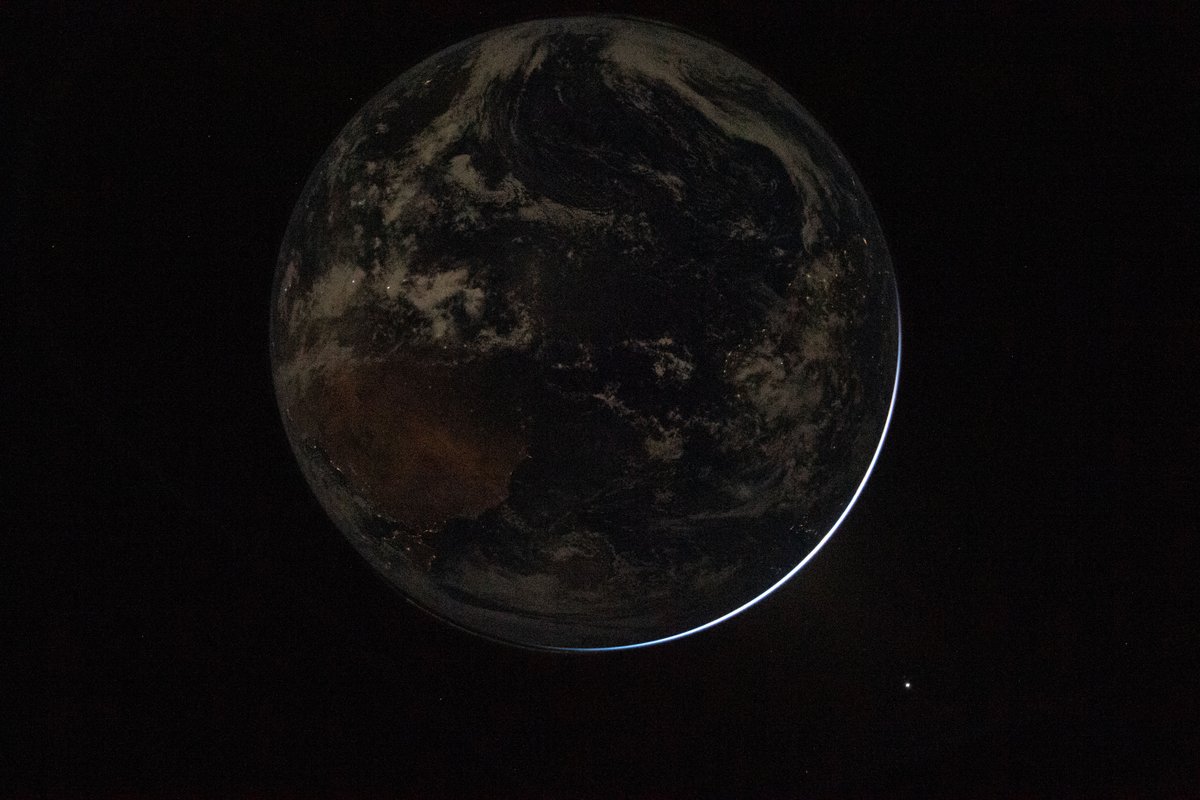
Even in darkness, we glow.
In this image of Earth taken by the Artemis II crew, we can see the electric lights of human activity. In the lower right, sunlight illuminates the limb of the planet.
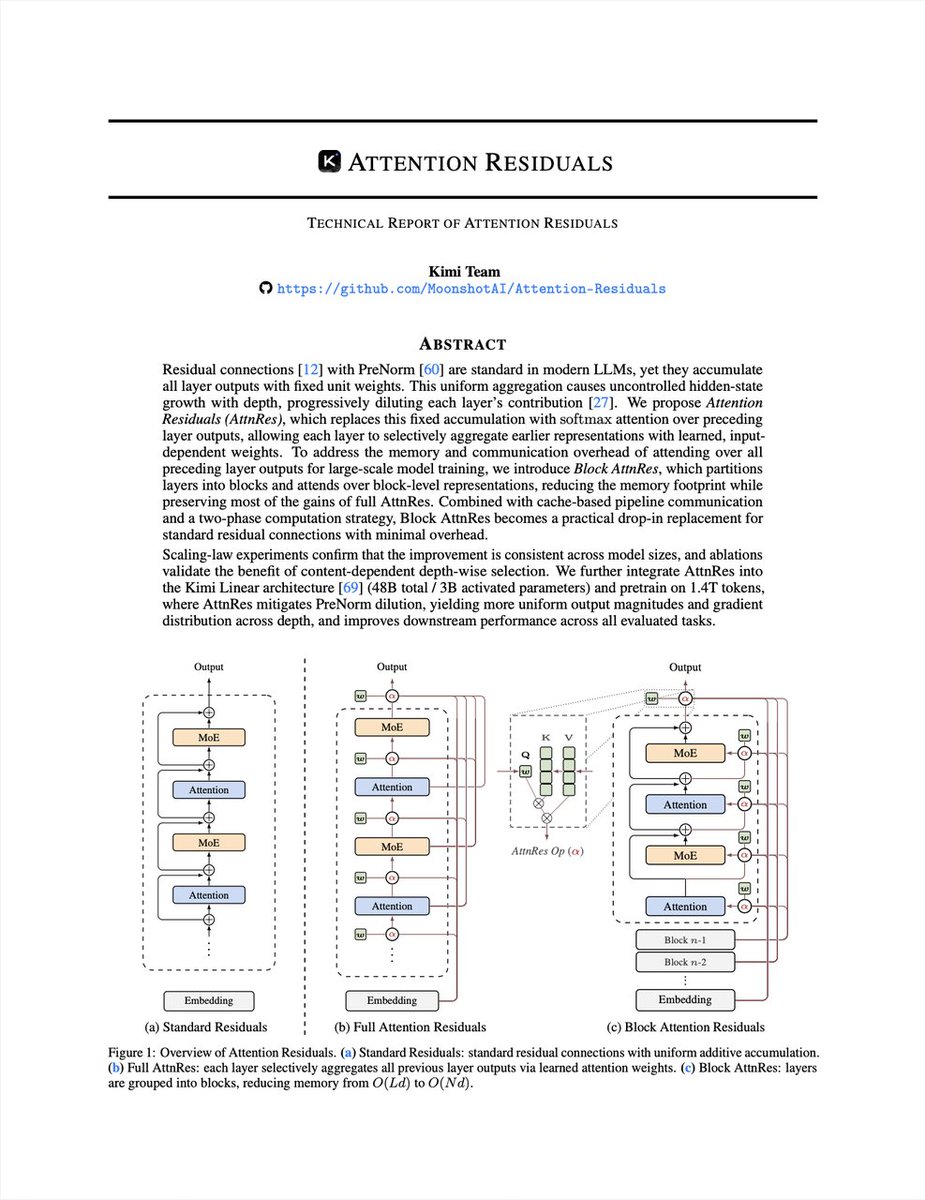
Introducing 𝑨𝒕𝒕𝒆𝒏𝒕𝒊𝒐𝒏 𝑹𝒆𝒔𝒊𝒅𝒖𝒂𝒍𝒔: Rethinking depth-wise aggregation.
Residual connections have long relied on fixed, uniform accumulation. Inspired by the duality of time and depth, we introduce Attention Residuals, replacing standard depth-wise recurrence with learned, input-dependent attention over preceding layers.
🔹 Enables networks to selectively retrieve past representations, naturally mitigating dilution and hidden-state growth.
🔹 Introduces Block AttnRes, partitioning layers into compressed blocks to make cross-layer attention practical at scale.
🔹 Serves as an efficient drop-in replacement, demonstrating a 1.25x compute advantage with negligible (<2%) inference latency overhead.
🔹 Validated on the Kimi Linear architecture (48B total, 3B activated parameters), delivering consistent downstream performance gains.
🔗Full report:
https://t.co/u3EHICG05h
Why is there no content on yt about
- database internals
- compiler internals
- lower level systems stuff in general
I want more deep technical content please somebody make it happen
There is something very attractive about chaotic attractors, so this time I built the Thomas attractor with Three.js and GLSL shaders. This 3D visual features automatic and manual color theme switching, an info panel, and an animated UI. Best with sound on. Demo/code ↓
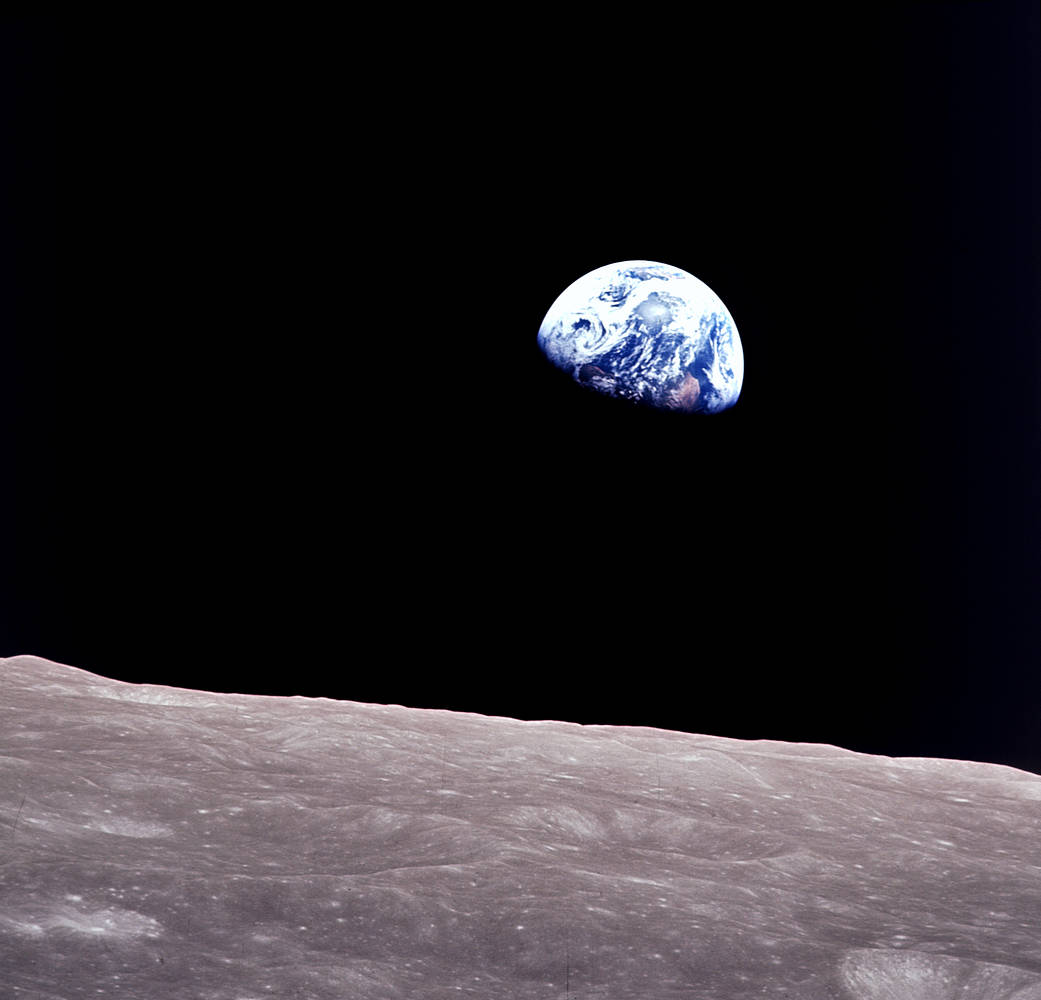
"Merry Christmas, and God bless all of you—all of you on the good Earth"
Astronauts orbited the Moon for the first time in history on Christmas Eve, 1968. On their fourth orbit, they captured the sight of the Earth rising over the Moon's horizon, a photo dubbed "Earthrise."
This bodes ill. Readers used to outnumber non-readers 2 to 1. Now non-readers outnumber readers 3 to 1.
It's hard to imagine a change of that magnitude not having significant effects.
I didn’t start doing physics until I was 33 and now I work on a cutting edge research project at one of the top labs in the world. You can just do things
Galois has to have one of the tuffest mathematician lore of all time dawg
>fail math exam at 16 bc examiners cant follow your proofs
>submit insane papers to academy but they lose the manuscript twice
>get rejected by basically every institution
>join the artillery division of a revolutionary group
>fall in love with some random girl
>gets called out for a duel
>writes down a paper that basically shapes modern algebra the night before and write “I have no time” in the margins
>gets shot and dies unknown at 20 years old (hyperstitiously called out his own end years before)
>it takes decades for anyone for his writings to be published and a few more decades for anyone to actually understand them
>basically founded two entire fields of mathematics, solved a 350yo open problem
>has an entire wikipedia page named “List of things named after Évariste Galois”
insanely hard