For when you need cargo or effects, and you need it NOW
So excited to share a sliver of the vision we’ve been quietly building. Arc is a real game changer for the US and the world.
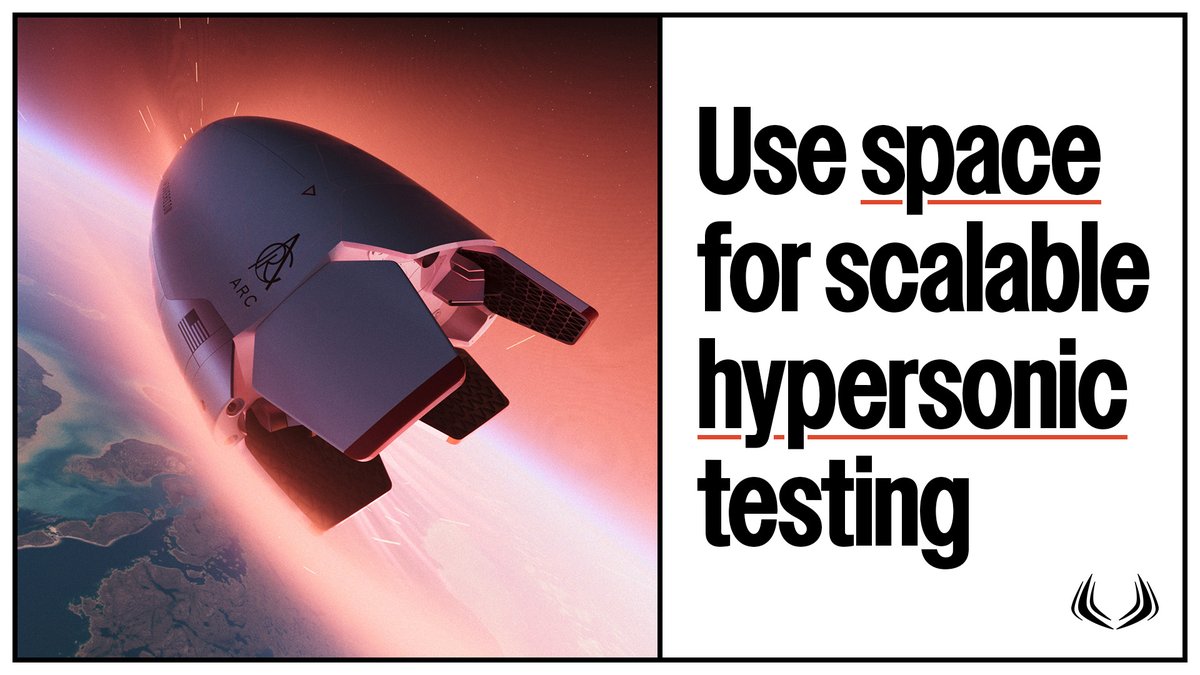
Introducing Arc – the world’s first space-based delivery vehicle.
Arc enables the on-demand delivery of cargo and effects to anywhere on Earth in under an hour, and offers unparalleled hypersonic testing capabilities.
Arc reshapes defense readiness by enabling access to anywhere on Earth in under an hour – allowing for the rapid delivery of mission-critical cargo and effects to austere, infrastructure-limited, or denied environments. This capability establishes space as a new global logistics domain, introducing unprecedented speed, reach, and resiliency for national security.
Arc features a versatile payload bay designed to accommodate a wide range of mission-critical cargo and effects. When launched to low-Earth orbit, Arc vehicles will form constellations of varying sizes and locations tailored to each customer’s needs. When called down on demand, Arc spacecraft descend from orbit, maneuver through hypersonic reentry, and touch down safely under parachutes – all autonomously.
Inversion was on Capitol Hill yesterday for the MACH-TB Congressional Reception and Showcase.
We’re proud to support the nation’s premier hypersonic test program that is making hypersonic flight testing faster, more frequent, and more affordable.
Arc is built for this mission.
Thank you to @KratosDefense for hosting yesterday’s reception and bringing together leaders from across government and industry.
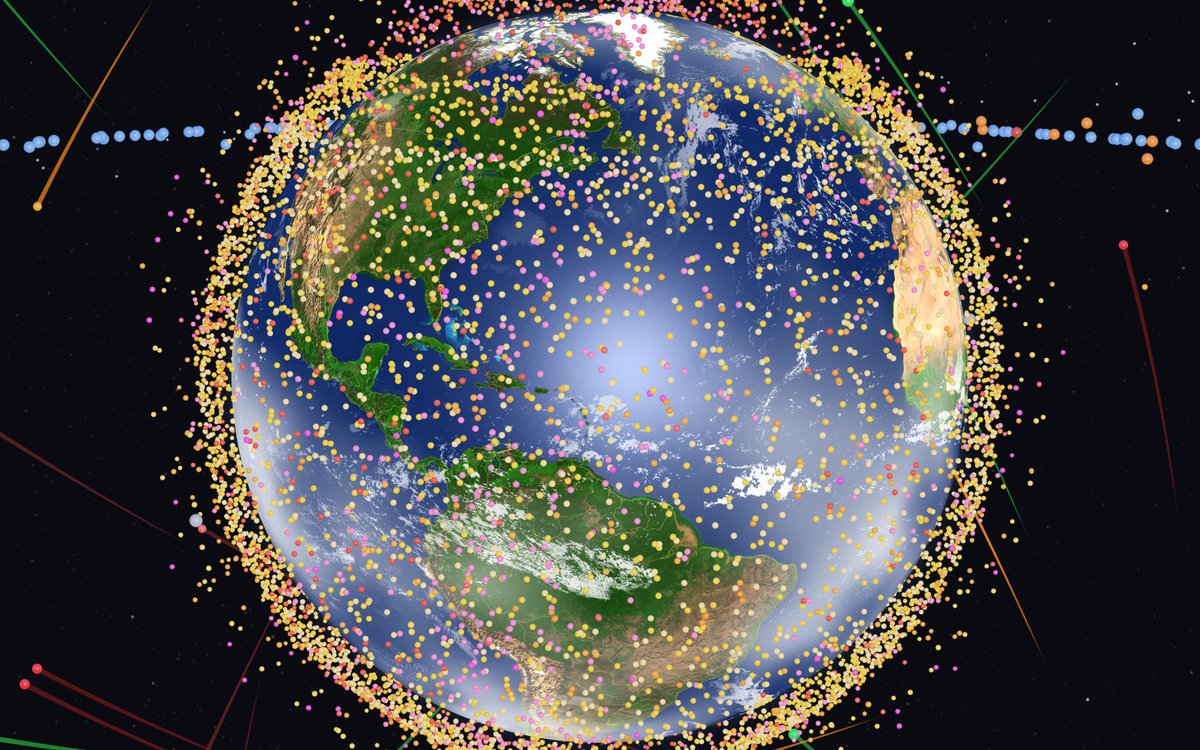
I built SatRadar as a weekend project: every active satellite orbiting Earth, live, at up to 120 FPS in your browser.
The entire SGP4 orbital propagator runs on the GPU — inside a WebGL2 shader. The CPU does nothing per frame. 10,000+ working spacecraft, no debris.
🧵👇
I'll be speaking at @tectonicdefense's Inside the Dome event on Thursday in DC about Space Based Interceptors alongside GDA leadership and other awesome companies.
Space is no longer just a destination, but rather a platform whose core value is providing near-instant access to the entire world.
If you're there, come and say hi! I’m hearing there are a few tickets still available. Link below
Inversion is partnering with @anduriltech to work on Space-Based Interceptors for Golden Dome.
We are proud to support such a critical national security and technical challenge.
https://t.co/zn6CD01q7b
Phenomenal achievement from @InversionSpace, one of a very small group of new technology startups building on this hyper critical space-based interceptor program.
One of the most important missions for the future –– and the present –– of U.S. and allied capabilities in space.
Inversion is proud to partner with Anduril on Space-Based Interceptors for Golden Dome.
Anduril has set the standard for building real operational capability at speed and scale. @InversionSpace is thrilled to be building alongside them.
Space offers access to the globe at unprecedented speeds. Advanced reentry lets that become physical, and will play a critical role in SBI.
Work is already ripping.
YC for Hard Tech is YC
-Astranis
-Boom
-Starcloud
-REGENT
-Hermes Robotics
-Stoke Space
-Astro Mechanica
-Shinkei
-AstroForge
-Atomic Industries
-Nox Metals
-Turion Space
-Inversion Space
-Albedo
-Gecko Robotics
Reentry is hot.
We’re deep in the throes of Thermal Protection System (TPS) testing at Inversion. Our spacecraft Arc relies on it to survive the high hypersonic conditions of reentry.
Our in-house TPS testing capability allows us to expose materials to extreme flight-representative heat fluxes and temperatures to validate our designs long before they go to space.
Arc uses a proprietary material we can’t show — so in this video we’re torching cork.
The US shouldn’t be looking to catch up to China in hypersonics technology, we should leapfrog them.
Our investments need to flow to actually scalable approaches to testing: commercial space.
Read my full thoughts here: https://t.co/o1KR0tfUOb
I'm convinced that Space is the answer to scalable hypersonic testing.
Everyone knows that the U.S. is behind in hypersonics and is working hard to catch up. Spending on hypersonics rose from ~$3.8B in 2022 to ~$6.9B in 2025.
Pouring more money into legacy testing methods will yield the same inadequate results. The US's investments should follow the industry where market forces are bringing costs down and increasing flight rate: commercial space. 🧵
One year ago today our first spacecraft Ray launched to orbit.
Here's a photo Ray just took — we're still in contact with her regularly.
Ray’s mission was a major milestone for Inversion. With a team of just 25 people, Ray was designed, built, tested, and flown at an order of magnitude lower cost than comparable spacecraft. Ray delivered substantial technical validation and invaluable real-world operational experience for the team.
A few key technologies successfully tested include:
• Two major delta-v maneuvers
• Our in-house designed separation system
• Validation of our full avionics stack
• Repeated on-orbit software updates
The final planned milestone, controlled reentry, was not executed due to a short circuit that prevented deorbit engine ignition. Ray has since been repurposed as a long-duration on-orbit testbed, and we continue to maintain full control of the spacecraft.
Ray’s mission provided the team with deep technical validation and operational insight. Everything we learned and built — from in-space systems to software to operations — now carries direct flight heritage into our next spacecraft: Arc.